Cornfield Strong

            Last Wednesday, I took a walk along the route I usually follow near my house.  The afternoon and evening before, Hurricane Isaias had barreled through the Pioneer Valley in Massachusetts, where I live. But by the time it got to us, it brought only tropical storm-force winds. Although people across town from me lost power, and many trees were downed, I didn’t notice much out of order in my neighborhood on my walk, at first: only a few small branches lay on or along the road here and there. But then I came up alongside the big cornfield that lines a long stretch of my walking path.

            The corn here is about five or six feet tall now, the stalks well-tasseled, deep green. Tufts of silks hang from the slim, immature ears on each stalk. Although I’m well aware that each acre of corn in this field sweats off 3,000-4,000 gallons of water into the air each and every day – yes, “corn sweat” is a thing! – I always enjoy passing by the thousands of corn stalks on my walks. It’s as if each of them is standing up as straight as it can, in an effort to show its serious devotion to bringing its one or two offspring to tasty ripeness. A series of Walls of Corn Moms, perhaps? The corn’s spiky tassels look like a jaunty, spiked haircut to me – a bit of irreverence amidst the stalks’ arrangement in formal rows.

            As I walked, I saw that the rows were all in order for about the first third of the field. Then, I noticed that a big swath of cornstalks on the edge of the field –  at least ten feet wide, and thirty or more feet long – had broken formation. They were all tipped over in the direction of the road I was walking on, bent fully over. They looked like they’d just fallen asleep standing up and had all tipped over. The stalks weren’t uprooted, just toppled, as if some giant foot had tramped over them and pressed them down hard.  Which is, basically, what had happened, if you think of Isaias as the giant, and its winds as the foot. 

            It struck me that only part of the field had been affected by the strong winds. I thought of the iconic photo I saw as a child, growing up in Illinois, where tornados were common: a photo of a piece of hay that had been driven into a barn board by a twister’s crazy winds. The scene before me now reminded me of the strange ways strong storm winds can affect the landscape, and how those effects can seem capricious. Here, I wondered why only this section of the field had been affected, and why the cornstalks hadn’t been uprooted and flung about the area, but merely folded over, firmly pressed down to meet the ground.

            This question of unpredictability – Who gets struck down? Who remains standing, untouched? – seemed so relevant to me as I passed by. As I continued walking, I wondered what would become of those stalks that had been brought to their knees, so to speak, by the swirling winds that rushed in without warning the day before. Could they recover? It seemed unlikely that they could simply pop back up, like some plant version of those inflatable toys with the weighted bottoms that spring back up when you punch them over. And yet, unpredictability is the hallmark of our very existence… I really have come to believe in recent years, that anything is possible – in terms of both positive and negative events. What might this cornfield be capable of?

            I found out this morning:

You can see a few still-folded stalks in the forefront of this photo. But the rest are standing back up at attention, looking none the worse for wear than their comrades.  I almost couldn’t believe my eyes when I saw that. Almost. But I had to believe it, because the evidence was staring me in the face.

            Perhaps their recovery had to do with evapotranspiration – the process whereby a corn stalk draws water from the earth up into itself, before spewing it out into the atmosphere in ungodly amounts, in the form of corn sweat, to create hideous levels of humidity that plague nearby humans…  As much as I would like to be able to find a way to feel really good about evapotranspiration (aside from the fact that it makes tasty sweet corn possible), in this case I prefer to ascribe the corn stalks’ recovery to something less concrete: resilience.

            The mechanics of resilience are more mysterious than the those of evapotranspiration, its manifestations much more varied. And I’m thinking of people here, now.  What does each of us draw up into us, that enables us to right ourselves in the aftermath of powerful storm winds? And where do we draw whatever we draw up from?   I’m sure this varies for each of us.  For the corn, maybe it was partly some form of rejuvenating nourishment from the earth, a kind of elemental supporting stake. Or maybe – as I enjoyed imagining – the farmer came by and tipped each individual stalk back up, into place, fortifying it with an encouraging touch and gentle, loving words. It could also have been that those hundreds of cornstalks were able to rise up thanks to support that each of them – the fallen ones and those surrounding them protectively as they struggled – offered to the others. “Come on back up.” “One at a time.” “We can get through this.”

            I like thinking of that chorus of spiky-haired corn-stalks boosting and spurring each other on.  I like thinking of us that way, too. Resilient. Drawing from reserves we may have to tap down deep to access, and then sharing them with those around us. Drawing on and supporting each other in whatever way we can at any given moment, as individuals and as community. This is so important now – and always: being resilient. Oh, and also: believing that we can get through whatever winds whip through and push us over. So, let’s do that. Let’s be strong. Cornfield strong. Spiky haircuts optional.

Above the River, Chapter 24

Chapter 24

June to July, 1949

Gassmann-Bunke homestead

            Here it was, the second half of June, 1949. Hans, who’d been gone from his ancestral family home for twenty-nine years, was more of a topic of conversation now than he had been at almost any point in the past nearly three decades.

            Did Hans anticipate, when he made the phone call and invited the Gassmann-Bunke family to his daughter’s wedding, that this would lead to yet another of those situations with which he had been so intimately familiar during the years he lived here? Did he know full well that it would be his mother and father – Renate and Ulrich – who would decide which two lucky family members would be the first to bridge the long, intercontinental gap between the two Gassmann households?

            Or did he imagine that protocols had changed in the years since his departure? Did he picture the whole, extended family discussing the options around the supper table, and coming to a joint decision? If he was, indeed, imagining the latter scenario, perhaps it was because the memory of his intense feelings of being excluded from all decision making had faded over time. Or perhaps he felt content to allow the process to play out however it would, now that he no longer felt that the course of his own life depended on what was decided, no longer felt at his parents’ mercy.

            Whatever musings Hans did entertain about how the question would be decided, it seems unlikely that he would have been surprised to learn that no revolution took place in the old log house: as always, the final word rested with, and was revealed by Renate:

            “Ulrich and I have talked about the wedding,” she announced at supper the day after Hans called.

            Everyone at the table, including even Kristina and Ingrid, who weren’t even related to Hans, paused in mid-bite, or mid-sentence. It was as if they feared that continuing to eat or move at all might cause them to miss this important news. Renate waited to continue until she was certain that all eyes were upon her, all ears fully tuned toward her. This was her habitual way of enhancing the drama of any positive moment. Everyone could see the sparkle that arose in her eyes as she paused.

            “We feel it’s best for Ethel and Lina to go,” she said, finally.

            Ethel, who had been holding her breath in anticipation of hearing the decision, let out an excited sigh, but managed to suppress the exclamation of delight that wanted to burst from her lungs. Looking quickly around to the others, she was relieved to see the others nodding.  Both of her parents were smiling. Ulrich patted her hand affectionately, as if to say, “Did you doubt we’d send you?” Even so, Ethel felt it best to protest at least a bit.

            “But, Mama,” she began, “shouldn’t you go?”

            Renate smiled. “On these creaky knees?” She shook her head. “And entrust the running of the household to you, only to come back to who knows what state of things? I think not!”

            Ethel was crying now. She understood the great generosity of her mother’s decision: She was willing to forego what might be her last opportunity to see her son again in her lifetime.

            “Papa?” Ethel managed to say, looking questioningly into her father’s eyes, her gaze asking whether he, too, was really prepared to make this same sacrifice.

            Ulrich didn’t joke the way his wife had. It wouldn’t have been appropriate to do so. He genuinely was concerned about what might happen if the left the family business to Viktor and Peter and Marcus for even a week, never mind two months.  Things already felt on the verge of collapsing here, what with the tensions between the three men. As much as his heart ached to see his son once more, as much as he wished to have the same chance to smooth things over with him, once and for all, he couldn’t risk it. Nor could he give voice to those thoughts at the table. So, he made do with nodding to Ethel and patting her hand again.

            “Besides,” he did joke, though, almost as an afterthought, “what do I need to go to Illinois for? We already know there are no decent forests there. Isn’t that right?”

            Of all of them at the table, only Renate and Ethel and Viktor understood Ulrich’s reference. And each of them was immediately transported in their minds back to 1921. They each recalled clearly how Renate’s brother, Ewald, visiting for the first time after emigrating to Illinois himself, admitted that forests were few and far between around the small town of Durand where he now lived.

            Although Ulrich intended for his remark to bring some levity to the situation, he saw tears begin to fall from Renate’s eyes after he spoke. He realized that he’d miscalculated. Twenty-eight years had passed since that suppertime conversation took place, but its reverberations were still strong enough to tear Renate’s heart open.

            Ethel saw this, but so did Lina. And just as Ethel opened her mouth to say that Renate absolutely had to go, in her place, Lina spoke up.

            “Grandma, you and Grandpa can’t be serious about sending me to the wedding.” She paused and looked back and forth between Ulrich and Renate. “I mean…” Here she silently patted the arms of her wheelchair. In doing so, she expressed what others at the table had also thought, but not voiced. Even Marcus remained uncharacteristically silent.

            No one had gone back to eating yet. They were all awaiting Renate’s reply. She, for her part, had anticipated that Lina would object. In fact, Ulrich had questioned her reasoning the night before, as they talked the question over before bed. But Renate had convinced him that this was exactly what their granddaughter needed, as difficult as she knew the trip would be: by train to the coast, and then by steamer to New York; then another long train ride to Illinois.

            On the surface of it, if you looked at it from the standpoint of logic, the idea did seem, frankly, insane. Yet, Renate had a strong feeling that this was just the right way to proceed, even if she couldn’t put her finger on all the reasons why. She couldn’t say whether this idea and her belief in it came from God, or from deep inside herself, or whether it represented the kind of collaboration between God and human that the family had been talking about recently, around the supper table. But, although she couldn’t determine this, Renate nonetheless took the great leap and chose to trust her feelings.

            “Lina, dear”, she said, facing her granddaughter, but speaking to everyone present, “I don’t want to hear that kind of talk. Aren’t you the one who sat here, just the other evening, and told us that beautiful story about that bird? What was it, a swallow?” Of course, Renate knew full well what kind of bird it was that Lina had mentioned. In this moment, she simply intuited that it was essential to shift Lina out of seeing herself as doomed to be always a prisoner in her wheelchair.

            “Yes, Grandma,” Lina replied, nodding a bit wearily. “It was a swallow.”

            “Well, then,” Renate said, also bobbing her head, “you see?” She forged ahead, ignoring the fact that no one else seemed to be following the logic that seemed to her so iron-clad. “It’s settled, then! Ethel and Lina will go to Katharina’s wedding.” Then, as everyone began to heed Renate’s urgings to eat while the food was still hot, the Gassmann matriarch added, cryptically, “Besides, Lina. Something tells me that you and your Uncle Hans will have much to talk about.”

            This remark registered only in the most superficial way in Lina’s mind. She was too overwhelmed by the prospect of the trip to take in one additional bit of information. What can they be thinking? she wondered as the meal progressed. How can I possibly make it to the coast on the train, much less manage the crossing… It’ll be too much for Mama.” She was nearly in tears by the time supper ended.

            A bit later, during her evening stroll with Lina, Kristina did not even broach the topic of the trip. She could see that Lina was overcome by fear and confusion, and not up to talking. So, feeling no resentment whatsoever this time at her friend’s reticence, Kristina pushed the wheelchair in silence, pausing occasionally to lay her hand on Lina’s shoulder and give it a comforting squeeze. I’m here for you, whenever you’re ready to talk.

*          *          *

            In the days following her grandmother’s announcement, Lina often fell under the sway of fear and dread that settled onto her shoulders like a great weight. She couldn’t imagine how going to Illinois would be possible if she was still wheelchair bound.  At the same time, though, she found herself daydreaming about attending her cousin Katharina’s wedding with her mother – in America, no less! When she came out of such reveries, she always noticed that she was smiling.  But how to reconcile these two opposing thoughts? Having concluded – despite what her grandparents had concluded – that being paralyzed and traveling to America were mutually exclusive, Lina’s rational mind told her that there was only one possible course of action: If she wanted to go to America – and she did! – then she simply had to get out of the wheelchair.

            Even before Renate’s announcement about the travel plans, Lina had already felt cautiously hopeful about investigating this Bruno Groening she’d read about. There did seem to be promise in what the man was doing. More than that, even. Right now, given that the doctors had not been able to help her at all the past five years, Groening seemed like her only hope. And now, with the trip looming (that was how she thought of it, now, as something “looming”), she began to feel more and pressure each to get healed.  How long have I got? Lina wondered. Six weeks until we leave? Two months?  

            For this reason, Lina now approached the reading of each day’s newspaper with increased intensity. She spent each morning wondering whether there would be another article about him, and then she feverishly scanned the paper each afternoon. For a few days, she found nothing.  Then came June 23rd.

            Lina was seated in her usual spot at the edge of the forest.  The afternoon was cloudy, but warm, and despite the slight breeze, she didn’t need a shawl.  With a hope that she consciously tempered, in case today’s paper once again brought no more news of Groening, and anxiety that she consciously chased away, she turned to page three.  There, in the bottom right hand corner, was a short article, unaccompanied by a photo: “No More Canes for Herford Visitor to Bruno Groening”.  The subtitle read, “First-hand account by a Groening assistant”. The part that caught Lina’s attention read as follows:

“I noticed an old man one day who was literally hanging on his two sticks. He suffered from Bechterew’s syndrome – a progressive ossification and stiffening of the spinal column. As sorry as I felt for him, I couldn’t allow him in, because all the rooms in the house were already filled with help-seekers, about sixty people.  Even the corridor was full.  He had already waited for nine hours. It was well past midnight when I met him again in the corridor, not knowing who had let him in.  I was able to show him a spot where he sat down with extreme difficulty. I pointed him out to Bruno Groening who came in soon and addressed him.  Within a fraction of a second, the old man’s tired and drawn countenance was transformed.  He had told me shortly before that he had already suffered from that disease for ten years and had been given up as a hopeless case by the doctors. He got up from his seat – in this case the healing effect was particularly abrupt – and walked immediately without canes!  The wish to live had been so strongly awakened in him, that he immediately expressed the wish, followed by the action, not only once, but several times, to go up and down stairs without using the walls or banister for help.  After ten years of extreme restriction of movement, here was a newborn man!  He had come to Bruno Groening with a careworn and bitter face and radiantly happy and glad he left him now, filled with renewed courage for living.” [Author’s note: quoted from The Miracle Healings of Bruno Groening, p. 34]

            By the time Lina came to the end of the article, her hands – and, consequently, the newspaper – were shaking so much that she had to lay the paper on her lap, or else it would have fluttered off like a butterfly on the afternoon breeze. She noticed the same tingling in her hands that she’d felt when reading the first article three days earlier, and then she became aware of something else: a subtle sensation in both her feet.  Not a tingling, as in her hands, but a light fizziness. A barely-perceptible effervescence. Then she noticed a slight feeling of being weak in the knees. If this had happened under other circumstances, such as before she’d had her accident, she might have been frightened by it.  But not now.  It was a feeling, after all!  In her feet and in her knees!  Feeling! At the same time, a deep joy rushed into her heart, and she sensed the same underlying deep calm she’d experienced after reading the first article a few days earlier.

            Lina glanced down at her hands and turned them this way and that, as if she might be able to discover some visual clue for the source of the tingling sensation. But her hands looked the same as they always did.  So did her feet, when she pulled up her skirt to examine them, too. Of course, she had her shoes on, so she couldn’t tell for sure. She’d have to check them at bedtime to see whether anything was different about them…

            Then Lina picked up the newspaper once more and reread the story.  She noted with particular excitement that fact that Groening didn’t just talk to people from the balcony of that house he was staying at in Herford. He also met with people inside, individuals, evidently. People like her, who were sick, who couldn’t walk…

            Lina felt her chest constrict, as if a tiny cry was about to try to burst out of it.  How did they get to do that? she thought. That man, he waited nine hours to get into the house. Lina bit her lower lip and let her gaze wander to the path that led into the forest, while her thoughts traveled to that house in Herford. She imagined the corridor, and the old man sitting there, and Groening speaking to him.  The moment of healing in the corridor.  The stairs he had then climbed up and down, up and down.  I’d wait nine hours.  I’d wait more than that.  But how to get there? Then she remembered what she’d told Kristina a few nights earlier, when she’d shown her the first newspaper clipping, when they’d talked about God and how He could help them.  She’d said to Kristina, “I think it starts with our own wish. Like the swallow’s wish to fly free.”  And here was the old man whose “wish to live had been so strongly awakened in him.”  At that moment, Lina felt that the wish to live had also been strongly awakened in her, along with another wish:  I will go to Herford and see Bruno Groening!

            Lina took out her sewing scissors and resolutely cut the article from the newspaper. She folded it and placed it inside her apron pocket, next to the original piece about the “miracle doctor”.  Over supper later that afternoon, she animatedly related the tale – also gleaned from that day’s page three – of the dispute between their client Mr. Kropp and a belligerent town resident who’d refused to pay an extra postal charge.  Everyone found the story amusing, but not as amusing as Lina’s bright face and cheery voice had led them to expect it would be.  And Lina didn’t bother to explain a thing when Ulrich, seeing the neatly-trimmed edges of the newspaper where she had evidently cut something out, asked what she’d found there of interest. “Oh, just this and that,” she replied casually as she rolled herself over to the sink, her lap full of dishes from the supper table.

*          *          *

            “’Just this and that?’” Kristina asked Lina with a laugh, as they were taking their evening stroll down the road that ran along the forest.  The evening had cooled off, and Kristina adjusted the shawl around Lina’s shoulders. “Is there something new?” Lina’s mood seemed so much lighter than it had been a few evenings back, that Kristina knew it was all right to ask.

            “Oh, yes!” Lina replied animatedly, and waved her hand energetically in the direction of the forest entrance a ways down the road. Kristina correctly gathered from this gesture that Lina wanted Kristina to push her to what they now both thought of as their spot. She’d the wait until they were seated there before sharing her news.

            Once Kristina positioned Lina’s wheelchair at the edge of the path opening and took her seat on the fallen log opposite her friend, Lina pulled the fresh newspaper clipping from her pocket and read it to Kristina.

            “You have to go there!” The words burst from Kristina’s mouth as soon as Lina finished reading.  But then, realizing that it wasn’t her place to tell Lina what to do, she placed her hands demurely in her lap, but she clasped them together so tightly that the knuckles grew white.  In her excitement for her friend, though, she couldn’t keep quiet for long.

            “You want to go, don’t you?” she asked gently, looking at Lina intently.

            Lina immediately nodded and met Kristina’s eyes. “More than anything, Kristina.”

            “Because you have your wish,” Kristina replied.

            “That’s right. I do!” Lina smiled.  “I just don’t know how to go about it.” She paused and looked into the forest, as if following that path with her eyes could show her how to make her way to Herford.

            Kristina studied her friend’s face and saw the hope there, and the doubt that accompanied it, the fear of moving ahead. “I don’t know, either.  But Lina, think of it this way. If God hears our wishes, our deepest wishes, and He wants them to come true – which I believe He does – then don’t you think He will help?”

            “I haven’t thought things through that far,” Lina told her with a smile.  “What do you do with a wish once you have it?” She paused. “And what if it fails? I’ve already failed at being able-bodied. I might fail at being healed, too.”

            “You can’t start thinking like that!” Now Kristina looked into the forest, too. “Maybe it’s the way you said the other night. It starts with the wish.  And then God helps.”

            “But don’t we need human help, too, Kristina?  After all, we can’t walk all the way to Herford, with you pushing me along the road.” She looked at her friend and laughed, but then fell silent. Maybe I’ve made assumptions I shouldn’t…

            But Kristina seemed to have read her mind, and she was secretly relieved to realize that Lina wanted to include her in whatever plan was beginning to take shape. “Oh, don’t worry, dear one. If it comes to that, we’ll do it! But don’t you think we could start by mentioning it to your parents?  Or your grandmother, at least? Don’t you think she would want that for you?”  Kristina was about to add that, surely, Renate wanted Lina to be able to board the ship to America on her own, two legs.  But she thought better of mentioning this.

            Lina shrugged and looked down at her hands, which had once again begun tingling as she read the article to Kristina.  The thought of sharing all of this with her mother, or even her grandmother, terrified her.  She knew that Kristina was probably right, but this new wish felt so fragile to her, as if it could be ground to dust by the slightest opposition from those around her.  She wasn’t sure she was up to having her hopes dashed.  It was hard enough the day when she fell out of her wheelchair in the yard. She didn’t want to go through that kind of humiliation again.  She raised her eyes to meet her friend’s.  “But what if they laugh at me, Kristina? Poo-poo the idea?  I don’t think I could bear that.”

            Kristina reached out and took Lina’s hand.  “Do you think you could bear the rest of your life in this chair? Could you bear that any better?”

            Lina’s eyes filled with tears, and she shook her head.

            Kristina squeezed Lina’s hand in both of hers. “Then it’s settled.  Tomorrow we’ll find a time to talk with your mother and grandmother.  I’ll be right there with you.  Assuming you want me to be…”

            Lina nodded.  “Yes, I do.”  She freed one hand so that she could wipe away the tears that were flowing freely down her cheeks now.  “But Kristina, what if they do laugh at the idea? What do we do then?”

            “Then I get myself a pair of good, sturdy walking shoes,” Kristina replied with a smile.  “You seem to have forgotten that I walked halfway across Germany to get here. Herford would be a mere stroll for me!” Then, seeing Lina smile in response, she stood up and took her position behind the wheelchair to begin their walk back to the house.

*          *          *

            Lina found her moment – and her voice – the next morning.  Ethel was just finishing submerging the laundry in the two large kettles on the stove, while Renate cut up meat from two rabbits, in preparation for making a stew for supper.  Lina sat at the big kitchen table, shaping pieces of dough into the rolls that would accompany the rabbit stew. And Kristina? She had just come back into the house after collecting eggs from the hens.  She’d just set the wicker basket down on the table, when Lina began speaking.

            “Mama? Grandma?” She waited until both Ethel and Renate turned in her direction before continuing.  “I’d like to talk with you about something.”

            Ethel waved her arms in that wing-like way of moving she had as she wiped her hands dry on the towel tucked into her apron pocket.  Renate laid down the carving knife and smoothed her skirt.  They could tell that Lina wanted their full attention. But they weren’t so sure how she felt about Kristina being there. Mother and daughter looked discretely toward Kristina and then back to Lina.

            “It’s all right,” Lina reassured them. “I asked Kristina to be here for this, too.”

            Renate and Ethel sat down at the table. “What is it?” they asked, nearly in unison.

            Lina pulled the two newspaper clippings from her apron, then passed one to Renate, and the other to Ethel.  Then she patted the seat of the chair next to her and nodded to Kristina, who sat down and rested her hands in her lap, not sure where to look while the women opposite her were reading.  She didn’t want to seem adversarial, just supportive of Lina…

            Ethel finished first – she’d received the shorter, more recent of the two articles.  But she didn’t say anything right away, preferring to wait for her mother to read all the way through the other piece.

            Of course, from the first moment they glanced at the newspaper clippings Lina handed them, both Renate and Ethel surmised what Lina wanted to talk with them about.

            “We’ve been wondering when you would mention this to us,” Ethel said, but her face betrayed no hint of how she felt about the topic at hand.

            Lina’s mouth gaped. “You have?” she asked, looking back and forth between the two of them.  “But… You mean you already know about Bruno Groening?”  It took only a few seconds for the initial surprise she’d felt upon hearing her mother’s words to shift first into relief, and then hope.

            “Lorena saw this first one, too,” Renate said, laying the clipping onto the table in front of her.  She held its edges with one hand and smoothed it out with the other, looking at the photo of Bruno Groening as she spoke.  Then she raised her gaze to meet Lina’s. “She read it and told me about it.”

            “And?” Lina asked expectantly. She was still feeling stunned by this revelation. But now, an element of anger was beginning to creep in, too.

            “Well,” Renate said, glancing over at Ethel, who nodded, “I told your mother about it…”

            “And we talked…” Ethel continued.

            “And?” Lina asked once more, and a frown came to her face. She looked over at Kristina, who was doing her best to keep her face neutral. She didn’t really want to be drawn into the conversation, but she did want to show Lina that she was on her side.  She reached over and placed her hand on Lina’s.

            Renate let out a deep sigh. “Now, Lina, dear…”

            Lina knew from experience that when her grandmother began a sentence this way, it didn’t bode well. Not for Lina, at least.

            “’Now, Lina dear’ what?” Lina asked, sitting up stiffly in her chair.

            “Lina,” Renate repeated, summoning her inner strength as the Gassmann family matriarch, and reminding herself that she really did know best, “We decided not to mention it to you.”

            “And why was that?” Lina’s voice was dry and her gaze sharp as she stared at her grandmother.

            Smoothing the newspaper clipping once more, Renate began to explain. “We…” – and here she motioned to Ethel with her free hand –  “We felt it would only give you false hope. And Lord  knows you don’t need that!”

            Lina’s mouth dropped open again. She felt like she’d been punched in the stomach.  “False hope? Grandma, I’ve had no hope for the past four years.  Here is a man –“

            “Perhaps a charlatan!” Ethel put in, leaning toward her daughter. “You can’t be too careful.  Someone comes along and sways a crowd, and…”

            “Perhaps a charlatan?” Lina responded, her voice rising now along with her anger. “On the strength of that perhaps – when you have no evidence of that, by the way – you decided not to mention it to me?”

            “We felt that was best,” Renate repeated flatly.

            “I can’t believe what I’m hearing!” Lina said. Without even realizing it, she began rocking her wheelchair back and forth, and each time she rolled it forward, the front edge of the armrests tapped against the table’s edge. “Why do you get to decide what’s best for me? Was all that talk about free will just for show? Was it, Mama?”

            Ethel was swaying forward and backwards in her chair now, as if in subtle tune with her daughter’s movements. “We just want to protect you, Lina. Surely you can understand that?”

            “But what makes you so sure I need protecting from Mr. Groening?” Lina responded in a challenging tone.  Then she gestured at the clippings.  “Do you not believe that these people were really healed? Do you not believe it’s possible?”

            Here Ethel stopped swaying. She suddenly felt transported back to that awful suppertime conversation in 1921, when Uncle Ewald told them the tale of how a young boy named Bruno supposedly healed the young German soldier.  She recalled the heated conversation with Hans about faith and healing and belief in God and His ability to heal.  The look of recollection and shock on Ethel’s face stopped Lina just as she was about to launch her next salvo.

            “Mama, what is it?” She took her hands off the wheelchair wheels and leaned over, resting her elbows on the table and stared at her mother across the table. “What is it?”

            Ethel glanced at Renate, but the matriarch’s face gave no sign that she knew what had just occurred to Ethel. 

In fact, Renate knew full well what was going through Ethel’s mind. Really, she was surprised that Ethel hadn’t made the connection a week earlier, when Renate showed her the clipping Lorena brought over. Renate had been hoping that Ethel wouldn’t recall that the boy in the 1921 story was also named Bruno.  The last thing Renate wanted was to dredge all that up again. They all knew what that conversation about faith and healing and God had led to. Don’t say it, she silently willed Ethel. Leave it be. But then Ethel spoke.

“Lina,” she began, reaching across the table to take her daughter’s hand, “this Bruno Groening… This isn’t the first time I – we – have heard of him.”

“What?”

Even Kristina leaned forward now, in spite of herself. “You knew about him?”

Ethel nodded. Renate, realizing that a floodgate was about to be flung open, took a deep breath and nodded. Then, still looking at the clipping on the table before her, she absently waved a hand at Ethel. Go on, then. You’ve started it. Might as well get it all out.

“You know about how your Uncle Hans left in 1921, emigrated to Illinois in America to work with our Uncle Ewald?” Then she added, for Kristina’s benefit, “Ewald is my uncle, my mother’s brother. Hans is my brother, the one whose daughter is getting married.”

Both Kristina and Lina nodded, but said nothing. Lina was barely even breathing at this point. She was so full of surprise in anticipation of finally learning what her mother and grandmother had steadfastly refused to tell her all these years: the real reason Hans left for America.

“All right, now, how to tell this in as few words as possible?” Ethel mused. She paused briefly, to collect her thoughts, then continued.

“Well, Uncle Ewald came back from America to visit.  It’d been, what, fifteen years since he’d left?”

“Seventeen,” Renate corrected.

“Seventeen, then.” Ethel was looking past Lina to the opposite wall, aware of the fact that she was sitting in the very same chair she’d occupied during that fateful supper. “So, I don’t recall how we got onto the topic, but that doesn’t really matter. What’s important is that Uncle Ewald said that one of their neighbors had a nephew, back here in Germany –“

“In Danzig,” Renate put in.

“Yes, that’s right, Danzig.”

Now Kristina’s ears perked up. Danzig? Where she and Ingrid had sailed from? Something occurred to her, but she pushed the thought aside. She didn’t want to miss any of Ethel’s story.

“So, there was the nephew, a soldier, in a military hospital. Something with his leg, wasn’t it, Mama?”

Renate smiled and waved her hand. “I don’t recall what the problem actually was now. I recall that Ewald went back and forth about it.  Wasn’t sure himself, at first, and now I don’t remember what the true diagnosis was.”

Ethel laughed then, too. “Yes, that’s right! But in any case, it was serious, as I recall. Right, Mama?”

“Yes, that wasn’t in dispute,” Renate said, smoothing the part of the clipping that showed Bruno’s face.  “The doctors’ treatment hadn’t been working, and this nephew –“

“Leo!” Ethel exclaimed. “Yes, his name was Leo!”

“Yes, Leo,” Renate confirmed. “The doctors said that they’d have to amputate Leo’s leg the next day.

Lina couldn’t help herself. “And what happened?” She was leaning forward now, her long braid in her right hand. She’d wrapped it around her wrist and was twisting it back and forth.

“Well, as Ewald’s neighbor told it, there was this woman who came to visit the soldiers now and then.  And she usually brought her little boy with her.  His name was Bruno.”  She paused, looking from Lina’s face to Kristina’s, but neither said anything.  Too early in the story for them to react, Ethel decided. And she went on. “So this little boy, Bruno, goes over to talk to Leo, and he says to Leo, ‘I wish for you…’ Mama, do you remember what he said?”

Renate nodded. Every detail of that suppertime conversation had been etched into her memory, and she spoke out the young Bruno’s words to the women at the table, so softly that they had to strain to hear. “‘May you be totally healthy soon, by God’s grace’. That’s what he said to him.”

“And what happened?” Lina asked in a whisper.  Ethel could tell from her face, and from the look that she and Kristina exchanged, that now they’d gotten it.

“The next day, Leo’s leg was perfectly healthy. The doctors didn’t have to amputate it after all.” Ethel stopped there.  She knew that she needn’t say any more. There was plenty in what she’d already said for Lina to ponder. 

Indeed, Lina was sitting stock still in her chair, except for the absentminded twirling of her braid, as she sought to put all the pieces together in her mind. Finally, she asked, “Just how old was this Bruno then? What year was that?”

“It was just after the war ended,” Ethel told her, “the Great War. The boy was ten or eleven, Uncle Ewald thought.”

Lina reached over and took hold of the clipping in front of Renate, the one with the photo of Bruno Groening.  “Thirty-one years ago, the story with Leo.  If he was ten or eleven then, he’d be, what, early forties?” She brought the paper up to her face and studied the man in the photo.  Again, she felt the familiar tingling –in her fingers at first, and then streaming through her whole body.  “Could it be him?” she asked, showing the photo to Kristina, as if her friend could tell her the answer.  Then she turned her gaze to her mother and grandmother. “Could this be the same Bruno?”

“I thought so,” Renate answered slowly, “as soon as Lorena showed me this article.  I remember Ewald’s story so clearly, and I just knew this was the same person.”

Lina turned her eyes to her mother. “And you? Did you realize it, too?”

Ethel shook her head. “Not until just now, when we started talking. Maybe that seems strange, but it’s true.” She gently took the clipping from Lina’s hands and took a good look at Bruno Groening.  “To think he’s who we were all arguing about that day.”

“What day?” Lina asked, still not understanding what Bruno Groening had to do with her Uncle Hans’ emigration.

“The day we had the big argument about God and faith and healing and whether God can heal us if we want it enough,” Renate told her in a resigned voice.

“Or if someone else believes strongly enough that He can do that,” Ethel added.

“So, if I understand what you’re saying,” Kristina asked gently, “Mrs. Gassmann’s brother Ewald told about the boy Bruno, and the idea is that Leo and his family believed that it was Bruno who healed Leo.  Is that it?”

Renate and Ethel both nodded.

Now Kristina noticed a tingling in her hands, slight at first, but growing in intensity.  She stopped talking and gazed at her fingers in surprise, wondering what this sensation was. She had no idea that Lina, sitting next to her, was experiencing the same thing, only more strongly.

“But Grandma,” Lina persisted, “I still don’t understand how the story about Bruno and Leo is related to Uncle Hans leaving.”  Lina herself was surprised to hear this remark pop out of her mouth. After all, what she wanted most was to keep talking about Bruno, to convince her mother and grandmother that she just had to go see him. At the same time, though, she also sensed that if she didn’t get to the bottom of the Hans question now, when the topic was on the table – for the first time in her life! – then she might never get the chance again.

Renate didn’t answer at first. She let her gaze drift to where Kristina was sitting – Hans’ old seat. She let her eyes rest in that direction for a brief period. The other women at the table supposed that she was reaching far back into the recesses of her memory, to the same spot whence she had retrieved Bruno’s words to Leo, to find the answer to Lina’s question.  But the truth was, Renate had no answer.

“I can’t really say,” she told them finally.

Even Ethel looked shocked by this answer. “Mama, really?” she asked.  “How can that be?  How can you not know?”  Mama has always known everything…

“We never talked about it, Hans and I,” Renate explained.  “Or your father and I,” she said, looking at Ethel.  “Honestly, I don’t believe Hans ever told your father his reasons.  He certainly didn’t tell me.” She went back to looking in the direction of where Kristina was seated, but didn’t say any more.

Lina was entirely dissatisfied with this answer. I’ve waited my whole life to find out about this, and Grandma says she doesn’t know?? “Didn’t he tell someone? Maybe Uncle Ewald?” She looked back and forth between Ethel and Renate.

“Maybe he did,” Renate said slowly, finally shifting her gaze to her granddaughter.  “But if he did, Ewald never shared that with me.  Or with Ulrich. At least as far as I know.” Now the other women noticed that a thin layer of bitterness had crept into Renate’s voice. None of them wanted to poke at that layer, lift it up to discover what lay underneath.

“Mama,” Lina tried, “What do you think? What about the story about Bruno and Leo could have upset him so much that he up and decided to leave the country? That seems…”

“Crazy?” Ethel asked.  “It does.  I think we’ve all asked ourselves that question since 1921. Me, all I can say is that I hinted – we were talking about whether God will grant a healing if the person who’s praying believes – and I hinted, or, rather, just posed the possibility, that Hans didn’t believe God could heal someone if a person has strong faith.”

“No, Ethel,” Renate said, coming back into herself. “‘Maybe you don’t really believe He exists’. That’s what you said to him.”

Ethel sighed. “Yes, that was it, Mama.  He took it very personally, as if I was attacking him.”

“He took your remark to mean that if he’d had stronger faith, his leg would have been fully healed.” Renate glanced at Kristina and then added, for her benefit (although Lina didn’t know this fact, either), “He was injured in basic training.”

“Which is not what I meant at all!” Ethel protested, her cheeks reddening as if she were living through the whole conversation again.

“What did you mean?” Lina asked. She was starting to get confused.

“You see,” Ethel said, her hands raised in the air before her, “once Ewald told Leo’s story, we were all talking about whether what had happened was possible –“

“What exactly do you mean?” Lina broke in, her brows knitted.

“Oh, that the boy Bruno had asked God to heal Leo –“

“When he said, ‘May you be totally healthy soon, by God’s grace’,” Renate interjected.

“And that that’s what happened,” Ethel went on. ” That Leo was healed overnight because Bruno prayed for his healing with such faith and belief.”

“But…” Lina began again, “then what was the disagreement you all had about that?”

Ethel closed her eyes and spoke, as if she needed every ounce of concentration in order to present the situation clearly. “Hans doubted that someone’s faith could be so strong that God would grant a healing. And then I had to respond, and that’s when I said, Maybe you don’t really believe He exists.”

“And that was all there was to it?” Lina asked, thinking she must have missed something.

“Well, basically, yes,” Renate said.

“But not entirely,” Ethel said with a sigh.  “Hans asked me whether I believed such a thing was possible, and I said –“

“’I sure want to be able to believe,’” Renate put in. “That’s what you said.”

Ethel nodded, and then fell silent.

Kristina and Lina exchanged glances again. Then Kristina, surprised at her own boldness, asked a question.

“Do you think that’s why he left? Because his faith was called into question?”

Renate spread her hands out before her.  “As I said, I can’t say. I don’t know why he left.  All I know is that everything was going just fine until that whole topic came up, and once it did, things fell apart.”  She pointed a finger at the newspaper clipping. “Which is why we have stayed away from such discussions since 1921.”

Lina opened her mouth to say that this made no sense, since they had, in fact, not stayed away from them. What is it we’ve been talking about these past couple of weeks, if not that? But then Ethel caught her eye, and Lina realized from this non-verbal signal that the window of opportunity to discuss both Hans and Bruno Groening had slammed shut, at least as far as her grandmother was concerned. So she said nothing.  But as Renate stood up and turned her back on the table to return to carving up the rabbits for the stew, Ethel leaned across the table, gave Lina’s hand a quick squeeze, and whispered to her, “We’ll talk tonight, at bed time.”

The rest of this day passed more slowly than any day Lina could remember, except perhaps for the earliest period following her accident, when the passage of the hours had been marked only by pain and immobility.  Her evening walk with Kristina couldn’t come to an end too soon for her taste, since it meant that her daily routine was nearly over.  She didn’t even ask to go sit by the forest’s edge, as Kristina had expected she might. So, they talked only briefly as they walked, with both of them speaking in an unnaturally loud voice, so as to be heard by the other.  This arrangement didn’t lend itself to a thoughtful, subtle discussion.

“What do you think your mother will say?” Kristina asked her, the volume of her voice at odds with the gentleness with which she wanted to pose the question.

Lina shrugged. “It could go either way.”

“I know what you mean.  I couldn’t tell whether she’s sympathetic or not.  Certainly, she knows why you showed them the clippings.”

“Yes, without a doubt.  Especially since they’ve already seen the first one, thanks to Aunt Lorena.”  Kristina couldn’t see Lina’s face, but she didn’t have to in order to know that her friend was frowning.

“What do you think about them knowing already?” she asked softly, as if not wanting to intrude on Lina’s thoughts.  “And not telling you?”

“What did you say?” Lina replied, turning her head. “You’ll have to speak louder, Kristina!”

“I’m sorry.  I wasn’t sure you wanted to talk about it…”

“If I didn’t want to, I just wouldn’t have answered you,” Lina told her, and Kristina could see the corner of her mouth rise into a smile.

“All right, then, I’ll keep shouting!” Kristina joked.  “I said, what did you think about them already knowing. And not telling you?”

“At first I thought, oh, that’s wonderful! Now I won’t have to explain anything, won’t have to convince them. We can move right to talking about how to get me to Herford.” She paused.  “But then, I saw how my grandmother dropped her eyes to the table.  That is not like her at all.”

“I thought not,” Kristina said.

“Yes, you know her well enough to know that she’s one to look you straight in the eye and tell you exactly what she thinks. Exactly how things are going to be.”

“That’s Mrs. Gassmann, all right!” Kristina laughed. “But couldn’t that be a good sign? That maybe she’s not sure of herself?”

Lina shook her head. Kristina could see that with her right hand, Lina was twirling the end of her braid thoughtfully.  “No. I think that meant that she’d already made up her mind, and she knew her decision would upset me.”

“But even that is a departure from her usual behavior. You said it yourself!” Kristina said, leaning forward with her hands still on the handles of the wheelchair.

“That’s true.” Lina paused. “To tell you the truth, Kristina, my mind is in such a whirl, I’m not sure what to think.” Here she took hold of the wheel rims and turned the chair around so that she was facing Kristina. “I was so upset that they knew about Mr. Groening but didn’t tell me. That they thought they could make that decision for me!” She let go of her braid and slapped the arm rests of the chair with her hands.  “What gives them the right?”

Seeing that Lina was tearing up, Kristina leaned down and hugged her friend as best she could.  “I know. It doesn’t seem fair, does it?”  She could feel Lina shaking her head in response.  “Why don’t you just wait and see what your mama has to say tonight?” she suggested.  “Then we can figure out what to do next, once you know what she’s thinking.”

Kristina pulled back a bit, and Lina began drying her eyes with her handkerchief. “Yes. I guess that’s all we can do.”  Lina patted the armrests with her hands and then laid them on the wheel rims.  “Come on,” she said to Kristina. “I’ve got to move, get some of this feeling inside me out of me, or I’ll never be able to sleep. Race you!”

            With these words, and a mischievous smile, Lina braced herself against the back of her seat and began propelling her chair forward.  Kristina was caught by surprise, but she knew this was a good sign: Perhaps Lina was guarding a bit of hope inside her that her mother and grandmother might yet agree to take her to see Bruno Groening.  Kristina watched as Lina began picking up speed and rolled down the road in the direction of the house. Then she saw that, after about fifty yards, Lina abruptly spun herself around and raced back to Kristina, who was moving along at just a walking pace.

            “Come on!” Lina laughed, her face flushed.  “You’re not even trying!”

            This was not the first time they had played this game, and each time, Kristina would shuffle along at first, waiting for Lina to double back for her.  Then the race was really on, with Kristina running full tilt and Lina’s arms a blur at her sides, as she spun the chair’s wheels as fast as she could. On the occasions when Lina reached the lane to the house first, it was never for lack of Kristina trying.  Tonight was one of those times.

*          *          *

            “Mama,” Lina asked as Ethel was brushing out her daughter’s braid.  “Why didn’t you and Grandma want to tell me you already read that article?”

            Ethel had kept quiet about this subject while helping Lina get ready for bed, in the hope that her daughter might have decided not to revisit the conversation from that morning.  It was not a talk Ethel was relishing. But once Lina brought it up, she couldn’t very well stay silent. After all, she’d been the one to say they could talk at bedtime.

            Ethel paused in her brushing, choosing her words. “We didn’t want to call your attention to this Groening if he’s some kind of fake. Just think, Lina, how awful it would be for you to go to him, only to find out he’s like some swindler, or carnival snake oil salesman.”

            “But think how awful it would be, Mama,” Lina replied softly, “if he can genuinely heal people, and I never get the chance to see him. And maybe be healed, too.” 

            Ethel nodded, and Lina could see the nod in the mirror atop the dresser at the other side of the room.  But Ethel said nothing.

            “And just think, Mama, how awful it would be for me to sit in this chair for the rest of my life. Isn’t it worth taking a chance?”

            “We just don’t want you to get hurt,” Ethel said, her voice full of emotion. 

            “I already have been hurt,” Lina reminded her, her tone chilly.

            Ethel rested her hands on her daughter’s shoulders. “All the more reason to be protective of you! Grandma and I would never forgive ourselves if we took you to see him and nothing came of it. Can you see that?”

            “I don’t know,” Lina replied truthfully. “When I heard that you already knew about him and decided not to say anything to me, it felt like a real betrayal. I’m so sorry to say that, Mama.”  In fact, her heart was in her throat.  She had never dared to say anything remotely unkind to her parents or grandparents, and now she was accusing her mother of betraying her.

            “It’s all right, Sweetheart,” Ethel said quietly.  “It’s so hard to know what’s right to do.  Unless you’re Grandma, of course,” she added with a smile. “Grandma always seems to know exactly what to do.”

            Lina smiled at that, too.  “But you, Mama. Do you agree with her about this? Especially since this Bruno was able to help that boy Leo?”

            “Assuming it’s even the same Bruno,” Ethel replied, cautiously. 

            “But don’t you think it is?” Lina asked, turning her head as far as she could so that she could see her mother’s face.

            “I do, actually,” Ethel told her.  “I didn’t remember about Bruno and Leo – I mean, about the boy’s name being Bruno – until we were talking about it this morning.” She paused, not sure whether she should add what she was thinking. But then she did continue.  “And you should know, Lina, that it wasn’t just Leo that the boy Bruno helped.  There were lots of injured soldiers in that hospital. He helped a lot of them.”

            “You see?” Lina cried.  “It must be the same Bruno!  Oh, Mama, I want so much to go see him!”

Ethel had known in her heart that it would come to this tonight, and she had been wrestling with herself all day.  It was as if she was squarely back in 1921 again, at the supper table.  Now, as she stood behind Ethel, she could clearly see Hans right across the table from her – in her mind’s eye – and she clearly heard him ask his question: “Do you believe Leo could actually have been healed because that boy Bruno prayed so hard and believed so hard that God could heal him?” She also clearly remembered her reply, all of it: “I don’t know, Hans. I just don’t know.  But I can tell you this: I sure want to be able to believe.  Because, think of it: Wouldn’t that be a grand thing?  To be able to believe that if you have enough faith, then God will heal someone no doctor’s been able to help?  I want to be able to believe that.”

“Mama?” Lina asked, jostling her hand.  “Mama? Did you hear me?”

Ethel nodded. Of course she had heard her.  But she had to finish wrestling with herself before she could answer.  It’s not enough to want to believe any more. I have to either believe or not believe. And in that moment, Ethel made the decision to believe. For Lina’s sake. And possibly for her own, too.

“I want you to see him, too, Dear.”

*          *          *

            Renate dreaded the next day’s suppertime more than any other, even the one back in 1921. She couldn’t have dreaded that one, after all, since she’d had no idea what would ensue. But today… She knew the same questions would come up on this day as had done back then, and she blamed herself. If only I hadn’t allowed things to go so far the past couple of weeks.  If only I hadn’t let Lina go on about God’s will and God’s plan. That’s what Renate was thinking to herself this morning as she sliced the potatoes and put them into a pan to bake with some bacon and onion. 

            But in her heart, Renate knew that she couldn’t have stopped all of this from happening. She recognized that this condemnation was a thought from her old self.  Not that she knew what her new self was.  But she had managed to hold onto the deep, newfound sense that she really was working with God now, instead of trying to handle and figure out everything on her own. Somehow, now, she was able to remind herself of this, which meant that she could summon a bit of courage in regard to supper. 

            She couldn’t imagine – with her mind – how it could be a good thing for Lina to go see this Bruno Groening, for the reasons Ethel had laid out to Lina. What if he’s a swindler?  Then there was also her general aversion to situations that had a lot of emotion connected to them, and uncertainty. She so much preferred everything to be quiet, and in order, and stable. But at the same time, there it was, inside her: a quiet voice. This voice – was it the voice of God? – urged her to overcome her fear that another 1921-like situation would develop, and to embrace the plan that Ethel had broached with her the night before:  They would find a way to get Lina to Herford to see Bruno Groening.

            But before they could formulate a way to make this happen, the idea had to be presented to the whole family. Not for discussion. Renate had not changed that much! No.  As with all other decisions involving the family (the domestic side of their life, remember, since Ulrich handled the business end of things), Renate would simply announce what she had decided. And everyone would fall into line.  That was her fervent hope.  By “everyone”, Renate really meant Viktor and Marcus and Peter.  She had already spoken to Ulrich, who, though surprised, knew better than to throw up roadblocks where Renate had a clear direction laid out in her mind.  Ethel had spoken to Viktor, too, Renate knew. But how had he reacted? Ethel didn’t elaborate on their conversation when Renate asked her about it after breakfast. All she said was, “He won’t stop us.” That was not as enthusiastic a response as Renate was hoping for, but beggars couldn’t be choosers. As suppertime grew closer and closer, Renate unexpectedly found herself whispering, “Dear God, please give me the right words.”

            Renate waited to share the plan until everyone at the table had eaten their first helping of sausage and potatoes.  Let everyone at least have something in their stomachs first.  She began by saying that Lorena had given her a newspaper clipping about this man named Bruno Groening.  She even produced the clipping – the original article Lorena had given her, since Lina wouldn’t let her own copy leave her side – and laid it out on the table for anyone who wanted to peruse it themselves. 

            “Ethel and I discussed it,” Renate told them all.  “We thought this Groening might be able to help Lina. We talked with her about it yesterday, and she felt that way, too.  So, we decided to take her to Herford and try to see him.”

            Kristina glanced at Lina, concerned at first that her friend might object to how Renate was presenting the story of the way Bruno Groening had come into their lives.  But she could tell by the slight smile on Lina’s face that she appreciated her grandmother’s artistry.  Indeed, for perhaps the first time in her life, Lina truly understood how gifted Renate was. She could discern a larger picture and then paint it for her family so that her words would highlight what she wanted them to notice, while laying a gentle shadow over what she wished for them not to see.  All of this she did with the aim of presenting a situation in the way which would be most aesthetically pleasing – and convincing – for her family.

            Thus, here, when explaining the situation to the family, she summarized the success Bruno Groening had had in his healing work, pointedly retelling the story of the man who came to see Mr. Groening with canes and left without them.  If you didn’t know she’d initially been against taking Lina to Herford, you never would have guessed it, to hear her now.  As we have seen already, once Renate came round to an idea, she held on to it as tenaciously as a dog who comes across a bone in a neighbor’s yard and then proceeds to defend it as if she was the original owner.

            Those who already knew about the plan – Viktor, Ethel, Ulrich, Lina, and Kristina – listened quietly to what Renate had to say, each with his or her own thoughts regarding it.  Peter felt both shocked by his grandmother’s words, and intrigued.  This didn’t sound at all like the kind of plan she would come up with: Renate, who, like a sheep dog, preferred her flock to be either in the meadow or the paddock, all together, and not wandering off somewhere unfamiliar. But when he cast a glance across the table at Lina and saw her face beginning to glow, he knew that something almost magical must have taken place to shift their grandmother into a frame of mind – or heart – in which she was willing to take a risk of this type. To be clear: He had no doubt that there was a risk.  But that look of hope and joy on Lina’s face was enough for him.  If there was something to be hoped for, let her hope.

            It was – not surprisingly, somehow – Marcus who responded first to Renate’s announcement that Lina would go to see Bruno Groening.  To his credit, he let Renate say her piece before going on the attack.  Most likely, he felt the pressure of the stern gaze his father was directing at him from across the table.  He understood that look.  It was not unlike the feeling that the vice grip of Viktor’s arm around his shoulder in the barn a couple of weeks earlier had produced.  And Viktor’s words echoed in his mind: “It’s not worth it, Marcus.”  “But,” Marcus thought stubbornly, as the anger rose in his chest, “It is worth it. I have to speak up.  I have to.” And he did.

            “Why is it,” he started in, as soon as Renate stopped speaking, “that when Lina wants something, everyone bows and scrapes to make it happen, but when Marcus wants something, we do ‘what’s best for the family’, and not for Marcus?  Can someone explain that to me?” He furrowed his brow and narrowed his eyes and looked in turn from one family member to the next.

            “That’s not what’s going on here, Marcus,” Ethel replied calmly. “It’s just that –“

            “Oh, that is what’s going on, Mama!” Marcus retorted, not even bothering to turn and look around Lina to try to find her gaze. Instead, he directed his eyes to Kristina, hoping to find support.  But Kristina’s eyes were on her plate, as she strategically pursued a potato in the hope of staying out of this family discussion.

            Renate straightened herself up in her chair, smoothed her apron skirt, and then tapped her right forefinger on the table near Marcus’ elbow.  “It’s been decided, Marcus,” she said in a voice that was both stern and kind. “And I don’t see that this is anything but good for all of us.”

            Marcus looked stunned. “You don’t? You think dragging my crippled sister to a charlatan will be nothing but ‘good for all of us’? Are you all blind?”  He looked at Viktor.  “And you agreed to this?” he nearly shouted.

            Viktor looked hard at Marcus, trying to discern whether the young man across from him was actually feeling some concern for Lina’s welfare, or whether this was a calculated ploy.  The latter seemed unlikely to him, but perhaps he underestimated Marcus’ ability to think on his feet when presented with a threatening situation.

            “So, you’re worried only about that?” he asked calmly.  “About Lina being disappointed? Or misled?”

            “And about this family pouring money we don’t have to take her to see this swindler who will undoubtedly bleed us dry with pleas for more and bigger payments.”

            “He doesn’t accept any money for his work,” Ethel told them. “Says what he has is a gift from God, and that he’ll lose it if people pay him.”

            Marcus snorted. “My God, you people are even more gullible than I thought.  It’s bad enough to believe he can heal people – we haven’t even talked about that!  But to believe he doesn’t want to get anything out of it for himself? Come on.  You –”and here he gestured to everyone at the table “- may like to think the best of everyone around you, but the whole world is not like Bockhorn. What makes you think you can trust this… what’s his name?”

            “Bruno Groening,” Lina said quietly.  She wanted to tell him and all the rest of them about what she’d experienced when reading the articles, about the tingling, the joy, the sense of connection with God.  But she couldn’t bring herself to utter one word about it.  She knew Marcus would scoff, and she didn’t think she could bear to be attacked that way right now.  The hope she was feeling was still a very young and tender shoot, so vulnerable to being cut down.  So, instead of speaking, she laid her hand against the newspaper clipping in her apron pocket and focused on gathering strength from it.  Then she looked across the table at her father, hoping he would say something to salvage the situation.

            “If Lina can be healed by going to see this Groening,” Viktor began, glancing at Lina before settling his gaze on Marcus, “then it will be good for everyone in the family.”

Lina felt a twinge in her heart as she had the thought that her father was supporting the plan not out of love for her, but because of a rational assessment of odds and benefits.  But then he gave her another quick look, and, just for a second, she glimpsed love in his eyes.

Upon hearing Viktor’s remark, Ethel, too, at first found his tone business-like and cold. But a second later, she realized that he had carefully calculated how best to achieve Marcus’ acquiescence, and she had to admit that he was insightful. Marcus was likely to sign on to any project if he stood to gain by it.

“With Lina back on her feet, and in the forest,” Viktor went on, “things will change around here.”

Ethel was impressed by Viktor’s dexterity in handling Marcus, but the question remained in her mind (and in everyone else’s, too): Did he really believe Groening might be able to heal Lina, or was he just hedging his bets and supporting the plan most likely to keep things calm in the family? Not that she would condemn him if it was only the latter.  Not necessarily. He’d shown over the years that he was quite capable of acting in ways others would find objectionable, if those actions meant his family would be safe.  Ethel really wanted to know what was motivating him now, but he wasn’t showing his hand, and she hadn’t asked him last night how he really felt.  At that moment, she’d been content that he agreed to do whatever it took to get Lina to Groening.  Now, though, she was back in 1921 again. During that conversation, Viktor hadn’t said whether he believed that little Bruno had healed Leo or not. The most he said was that he’d come to believe in God again once he was on the Gassmann homestead.  Looking at Viktor now, at his cornflower blue eyes that now had much more of an edge to them than they had back in 1921, Ethel wished she could read her husband’s mind.

Viktor, for his part, was thinking of 1921, too, about how he’d thought, during that suppertime conversation, that if anyone was capable of mustering enough faith to believe in Bruno’s healing abilities, it would be Ethel.  The night before, when she told him what Lina wanted to do, he looked at her and saw that the bright light of that faith – which had shone so intensely in her hazel eyes when they first met – had faded some over the past twenty-eight years.  That was partly his fault.  He knew that. But he hoped, deep in his heart, that Ethel still had the ability he’d sensed in her then, that she’d be able to call up her reserves of faith now, at this time when maybe they – including him – needed help more than ever before.  So, he agreed to help, to find a way.  Then they’d all find out how much faith there was in each of them.

First things first, though: Marcus had to be pacified.

“Things will change?” Marcus asked, tilting his head to the side suspiciously. “Just what do you mean?”

Viktor leaned back in his chair and draped one arm over the chairback. “If Lina gets back to being able to work in the forest again, we won’t need you to work here in the business anymore.” That said, he picked up his fork and began to eat the sausage that had been patiently awaiting his attention.

Marcus’ mouth dropped open.  He looked at everyone at the table in turn before replying.  “Are you serious?” he asked quietly, as if afraid to scare the possibility away by asking too loudly, or too enthusiastically.

Viktor just nodded, without even looking up from his plate.  Everyone else was silent, too. Ethel felt a rush of affection for her husband, and pride, even, at how he was handling the situation.  Renate was pushing potatoes onto her fork with her finger, too excited to look at anyone else, for fear of jinxing what seemed on the verge of transpiring. Ulrich was sitting back in his chair, a slight smile on his face, his eyes shining.  The whole situation seemed magical.  Everything hung in the balance here. It floated before all of them in the air, like a circus trapeze artist who’s let go of the swing he’d been holding onto and, after executing a somersault, is hurtling toward the partner who awaits him on the opposite side of the arena, arms outstretched. Will he grasp onto those strong arms, or fall to the hard, unforgiving earth? Lina held her breath and pressed her hand hard against the newspaper clipping in her pocket. Peter was dumbstruck, barely even understanding what was going on, it was all moving so fast.  Kristina and Ingrid, who, despite their four years here, still knew little of the ins and outs of the family dynamic, were as if spellbound, sensing that this moment was of monumental significance for all of them.

Marcus paused, floating in mid-air in the circus tent of the Gassmann-Bunke kitchen, taking in everyone around him once more.  Then he slowly extended his right hand out across the table.  Viktor looked up from his sausage and potatoes. As everyone watched, he calmly wiped his hands on his napkin, then leaned forward, took Marcus’ hand, and shook it. As Viktor wordlessly returned his attention to his meal, Marcus spoke.

“I’m in, then.”

It seemed as if all of them exhaled at once. This sigh of relief filled the room, despite the fact that not a single person in the room knew what now awaited them.

Lina flashed a smile at Viktor and noticed that her hands were trembling. She felt her mother’s arm wrap around her shoulders, and realized that tears were streaming down her face.  Looking across the table to where Kristina sat next to Viktor, she smiled again and mouthed the words, “To Herford. We’re going to Herford.”

*          *          *

            That night, as they got undressed for bed, Ethel walked up behind Viktor and, wrapping her arms around his waist, leaned her head against his back.

            “Thank you,” she said quietly.  “Did you see how happy Lina was?”

            She felt him nod.  He glanced down, and his gaze alighted on the wooden ring on her right hand. He traced the flower on its top – a bit rubbed down by now, after all these years – with his finger.  He recalled how he had worked so carefully and lovingly to carve it, nervous about how Ethel would receive it, and whether she’d accept his proposal. Twenty-eight years ago.  Only twenty-eight years.  It felt like much more than that to him – so much had transpired since the evening he slipped the ring on her finger. So much he wished he could take back. So much he didn’t understand. How did everything come to what it came to? He could see now that he’d made terrible mistakes, committed terrible lapses in judgment, terrible deeds, even. Four years now, since the end of the war, and yet he still carried those burdens – and the lapses that led him to where he ended up during the war. How to make it all right again?

Viktor had been asking himself this question quite often during the past four years. And clearly, he hadn’t yet come up with a compelling answer. Otherwise, he felt, everything in the household, in the family, and in the business would be back in order again. Whatever that means. That’s how untethered he felt now – and had felt for the past four years.  Certainly, he still exuded his old confidence, and was still able to exert a large measure of control here on the homestead. But when Viktor had the time and inclination to reflect on where things were headed for the Gassmanns and Bunkes, he felt very much at a loss regarding what course was best.

Once he came back from the war, Viktor hoped that returning to the physical work in the forest and in workshop would set him back on the right path in short order.  Not that he was quite sure what “the right path” was. That’s how bad things were with Viktor.  All he knew when he separated from the unit he served with during the war, and set foot back on the Gassmann-Bunke homestead, was that he couldn’t muster any sort of tender feeling for anyone: not for Ethel, not for Peter or Marcus, and not even for Lina, with her devastated body.  When he first saw her, he just took in her condition without any emotion whatsoever.  He’d seen worse during his time away.

But don’t think that Viktor was unaware that he felt nothing for any of his loved ones.  He noticed his numbness, and he concluded that it had taken possession of him unnoticed, at some point during the war.  He couldn’t say precisely when. Thinking about it now, which he did do occasionally, he assumed it came on little by little: Most likely, he concluded, the little voice inside him – the one that nudged him to open his heart to those around him who were suffering terribly – just gradually found it more and more difficult to make itself heard amidst the sights and sounds of the suffering he witnessed or inflicted.  For this reason or that, he began shushing that little voice, more and more forcefully, until, finally, he didn’t have to endure hearing it any more.  Or maybe it had even stopped calling out to him.  This last explanation was more frightening to him than the other, somehow, because he knew all along that the small voice was God speaking to him.  What did it really mean, then, that he stopped hearing the voice? Did God give up on me?

That’s what Viktor began asking himself when, after a year, then after two, and three and four years, the voice did not return.  He told himself he’d given it every opportunity to come back.  He was working and living on the homestead again, with his wife and his children and his in-laws.  He recognized now, that he never should have spent that time away in Schweiburg, back in the early thirties.  But you know what they say about hindsight…he told himself. He knew there were still things that needed to be made up for, set right again. At least he’d reached the stage where he wanted to set things right. For all his sincere belief that a man needs to take action and be firm and uncompromising in order to succeed, in order to bring his family life into order, Viktor also felt that this was not entirely the way to go about things now, after the war.  Was it that he saw the limitations of relying on force? That’s unclear.  But what Viktor did see was that the family was not happy, and he understood that the reason for this went far deeper than Lina being crippled. 

He realized this right away, in the summer of 1945, but this understanding wasn’t based in some intuitive, affectionate connection with his family members. Because, to his surprise, Viktor did not experience the burst of love and affection for them that he’d assumed he’d feel when he finally got back home. In fact, he realized that he felt far more distant from his so-called “loved ones” now that they were reunited, than he had at any time during the war.

It wasn’t that he felt particularly connected to his family as he served in a location not so terribly far from home – not so far, in terms, at least, of kilometers. Quite the opposite, actually. The nature of Viktor’s assignment during those years created an unbridgeable emotional and spiritual gulf between him and his family. No loving letters came to him from home: He made it clear to Ethel that it was best not to write, and, instead, to pass verbal messages to him through the underlings who made those deliveries of food and goods the family could sell on the black market.

It wasn’t just concerns about security that led Viktor to make this request of his family. It was also his awareness that he would not be able to bear to read expressions of others’ love for him while he was doing what he was doing. As he saw things – not that he consciously considered this point – such letters would have drawn him into the realm of kindness and affection, and there was no room for that in his wartime heart.  How could love exist alongside killing?

Thus, it wasn’t that Viktor felt a stronger bond of love with his family during the war than he felt now. Back then, he just locked his relatives away in a part of his mind and heart that rested far from his conscious awareness. Only once he got back home did he realize that opening that part of himself back up was not as simple as retracing his steps along the physical road he travelled to get back to the homestead.

  Give it time, Viktor told himself at the beginning – by which he was instructing himself to give time to both his family and himself.  But the situation – the family’s emotional situation – did not improve over time. Certainly, they settled into a routine of caring for Lina. He and Ulrich got the forestry side of the business back on its feet, and Peter did the same for the woodworking.  Marcus, for all his bluster and arrogance, really did provide the essential financial contribution to carry them over from month to month.  Even so, Viktor noticed that as time went on, other families – take Lorena and Stefan and their children – appeared to achieve a stable and even enviable way of life, in the sense that they seemed to have come closer together after the hardships they endured as a family.  But for the Gassmann-Bunkes, the thin, oppressive layer of sadness that Kristina noticed upon arriving in the summer of 1945, just never seemed to fully lift.

Viktor did a very good job of giving the appearance that he had a clear idea of what the family needed to make its way forward. And since his own ideas generally coincided with Renate’s on the home front, and Ulrich’s, as regarded the business, there was no discord when it came to making decisions.  (Not until it came to Marcus, in 1949, that is.)  But Viktor had to strive hard to maintain this veneer of power and competence, because beneath it lay a persistent emptiness, both emotional and spiritual.

Over these past four years, Viktor reflected more than once on how his life had changed after he first arrived on the homestead in the spring of 1921.  He’d felt numb in those days, too, but to only a very slight degree, compared to what he was experiencing now. Back then, what turned his life around was spending time in the forest. That was where, under Ulrich’s tutelage, he discovered God, where he sensed the divine power of God flowing in all the trees and plants and forest creatures he encountered.  And then there was Ethel. She was so full of that divine energy that it seemed to have replaced every drop of anything earthly within her.  Coming to work and live with the Gassmanns, Viktor found both God and the love of God, in the form of his love of Ethel.

After returning from the war, Viktor wanted to regain all of this, and he knew instinctively that the forest was the place to start looking for it.  That was one of the reasons he threw himself into the forestry work with all his might (not with all his heart, mind you, since his heart was not yet up to such a task). He knew God was in there somewhere, or had been before the war, anyway, and he meant to find Him.

That is something that’s easy to say, and easy to want, but not so easily accomplished.  It was during the moments and hours that he spent in the forest, back in the 1920s, alone or with Ulrich, surrounded not by human voices, but by the sounds of the trees and the wind and the birds and the animals, that Viktor came to know God.  He gradually became aware of the ways God spoke to him, through the forest, and through his own body and mind.  He learned how to take in that divine energy that Ethel radiated with her whole being. And although he never attained that level of fullness that he sensed in her, Viktor knew what it felt like when it coursed through his body. He knew the lightness of spirit that came along with it, the joy, the peace. He became well acquainted, too, with the quiet voice that eventually began riding into his heart atop that wave of divine power.  He could sense what it wanted to tell him, translate its message into words when he shared it with others, and be content with just knowing the message when he was keeping it for himself.  It was this voice which he gradually ceased hearing during the war.  Or, rather, if he was going to be honest with himself, Viktor had to admit that he began hearing it less and less way back in the early thirties.

This was what Viktor was seeking in the forest, beginning in the summer of 1945: to feel the divine power streaming through him again, to feel the joy and peace it brought along. And the voice.  The voice that used to guide him, but had stopped. Which he had stopped. But, despite spending hours and hours in the forest, days and days, over the past four years, Viktor still did not feel reconnected to God, to the divine that he had once accessed with such ease.  True, on some days, after a good morning or afternoon of work amongst the trees, a subtle lightness might appear, unexpectedly. He would notice it and seek hungrily to hold onto it, only to feel it drain away once he came out of the forest and glimpsed his crippled Lina and limping Peter.

During these nearly four years, he did not confide anything about his state of mind and spirit to Ethel, or to anyone else, for that matter. He preferred to muddle along on his own, despite the fact that he did not truly want to be alone in solving this problem. He felt the need to preserve his image as the strong, male protector of the family. Ulrich’s near 70 now, for God’s sake!  Someone has to take care for everyone… And so, he trudged along, doing the forestry and woodworking, and toiling on his own in the spiritual sense, too.  At least, he believed himself to be toiling alone.  Why was that? It was because, although he had gone down on his knees in the forest many times and asked God for help, he felt he had not received the wished-for assistance: His heart still felt empty. He still heard no inner voice giving him the guidance he at least knew enough to know he needed. 

Then, finally, one day in late June of 1949, after nearly four years of asking for help, Viktor felt something.

He happened to be out deep in the forest at the time, coincidentally – or perhaps not – near the old treehouse where love had first sprouted between him and Ethel, and where he had given her the carved wooden engagement ring.  The sight of the treehouse caught him by surprise, and he immediately walked over to the old beech tree and laid his hand against its thick bark.  Without even thinking, he laid his axe against the tree trunk. Then he hauled himself up onto the lowest branch (although not as nimbly as he’d done in 1921), and stretched out a hand toward the opening in the side of the treehouse. Is the ladder still there? Could it be?

Improbably, Viktor detected the knot of rope that still tied the ladder to the treehouse floor. He reached his hand as far over the edge and toward the interior of the structure as he could, and pulled on the bit of rope he felt there.  He pulled and pulled, and the ladder, along with the accumulated detritus of years of fallen leaves and beechnuts, tumbled over the side and downward, until the ladder hung, just as it had done so many years earlier.  The difference was, Viktor noted soberly, that he was alone now.  No Ethel below him to impress by clambering up into the treehouse.

Still, clamber he did, but without carefully testing the ladder the way he’d done when Ethel first took him there. And as a result, he slipped and fell a short distance when his left foot tore through a rung that had been weakened and nearly torn through by the ravages of time and weather, or perhaps by the persistent teeth of a mouse looking to soften its nest with the fibers.  But he recovered and was soon resting on his belly on the floor of the treehouse, amongst the leaves and small branches that blanketed it.  He lay that way in silence for a bit, comforted by the firm support of the branches that formed the floor beneath him.  Then, finally, he sat up and scooted backwards until his spine and shoulders came to rest against the trunk of that old, old beech.

He closed his eyes and allowed his palms to rest atop the layer of leaves, decaying ones on the bottom and last fall’s drier ones on the top. Memories of the time he’d spent here with Ethel flooded his mind.  It was like watching a newsreel: the first time she brought him here; the early evening talks they had here as the sun got lower and lower and the light more and more golden; the day in the woods when he understood that he really did love her – that day when he saw how he’d lived his life until then and vowed, No more ploys!; Ethel’s surprise when he gave her the little leather pouch with the wooden ring, and the joy on her face when she realized what it meant, and when she said yes.

As Viktor relived these experiences in his memory, he began to feel a sensation in his heart.  It started as a quiet, dull ache and then grew stronger and stronger, until it felt like someone had taken hold of his sternum and, after digging deep into the bone with both hands, was wrenching it apart.  The pain was more intense than any he had ever felt, the way he imagined a lightning bolt might feel.  He cried out, but that lasted but a moment, because the pain grew more intense and prevented him from making another sound.  He found himself plunging his hands down into the bed of leaves beneath him, as if seeking something to grab onto. But there was nothing he could grasp.  I must be dying. That thought briefly flitted into his brain. Then it, too, was eclipsed by the pain. 

Perhaps strangely, Viktor felt no fear at this thought, only a distant, analytical awareness. Then other words came. I can’t die like this.  Without making everything right. Then, still other words came to him, words that he actually spoke out loud.

“Please, God. I just want to do what’s right. Help me make it right, Lord. Please.”

It was as if a dam opened within his heart when he pronounced this plea.  He felt sadness welling up inside him, decades’ worth of sadness that had lain there deep within him, pushed down, unacknowledged. Now it all flowed out of him, in a minutes-long flood of tears and vomit and wrenching sobs and screams. When it finally came to a halt, Viktor gazed around him in a daze. He felt surprised to still be in the treehouse, although who knows where he imagined he should be at that moment.

Still disoriented, he managed to get himself down the ladder, and find his way back to the homestead.  When Ulrich asked Viktor where his axe was – because his son-in-law never, ever, left his tools in the forest – Viktor made no reply. He just went to the faucet on the side of the workshop and doused his head with water.  The Gassmann-Bunkes being the Gassmann-Bunkes, there was no discussion of this incident. Ulrich didn’t ask Viktor about it further, and he never mentioned it to Renate, either.  He just concluded that Viktor had been working something out, deep in the forest. He concluded that it must be between Viktor and God.  And he was right.

It was two days after this occurrence that Ethel broached the topic with Viktor of taking Lina to see Bruno Groening. She would have been a bit worried to bring it up, if not for what she experienced two days earlier, on the afternoon we’ve just described. What she experienced was that Viktor came in from his afternoon work in a state none of them had ever seen him in before.  He was pale and looked distracted at best, confused at worst.  He smelled a bit like vomit to Ethel, and when she reached her hand out to touch his shoulder, he barely reacted.  He just walked slowly up the stairs to their bedroom. When he came back down, he was wearing different clothes. That was something he never did, unless he was very dirty from working.  He didn’t explain anything to any of them, and no one asked, although Ethel noticed that she and Renate and Ulrich were keeping a close eye on him, in case it should seem that he’d suddenly been taken ill.  But although he was mostly quiet at their light evening meal, he ate normally and even discussed a bit of business with Ulrich later on. 

That night, when she and Viktor got into bed, Ethel sensed that something was different with her husband.  All these four long years, she had felt like she was sleeping next to a board.  Or no, rather, a stone, since even boards carry the divine energy of the forest in them.  He had never been a big talker, but after the war, he was even more silent with her.  When they were first married, they had to remind each other lightheartedly to stop talking and go to sleep. That’s how much they used to enjoy sharing everything from their day with each other.  Ethel recalled how it often happened that they agreed to finally go to sleep, and then one of them launched into one last thing.  At that point, the other one silently reached over and laid a hand on the offending spouse’s lips. They both laughed, and then they really did close their eyes to sleep, most often lying in each other’s arms.

This is not at all how they went to sleep now.  To be honest, that way of welcoming the night faded in the early thirties, and it never fully returned. Ethel so missed that closeness they had in the early years.  There was a rekindling of sorts after Viktor came back home from his time alone in Schweiburg, but it faded again in the run-up to the war.  And since the war ended… Well, there was no rekindling in 1945, and none since then, for that matter. It was something Ethel missed terribly.  She prayed about it.  Please give me my Viktor back, she often asked God.

In actuality, Ethel began offering this wish to God during the war, and back then, the plea was mostly about having him come home alive.  He did come home alive, but once he was back, Ethel no longer felt the love that had always radiated from him toward her. Even during the difficult years, she could always sense it coming from him.   And, back then, he never stopped being affectionate toward her, even when things were hardest between them, when the challenges they were facing made them angry with each other. But now, since he came back from the war, he seemed dead inside to her.  They rarely even kissed any more.  They occasionally made love, but you couldn’t call it that any more. Viktor’s embraces were devoid of the vibrancy and loving energy that used to combine with Ethel’s to bring them so close together that it seemed impossible that they could ever be torn apart. But that’s exactly what happened. And so, Ethel prayed for things to turn back around.

Then, on the night of the day that Viktor went through what he went through in the treehouse, he came up behind Ethel as they were getting ready for bed. Ethel was already in her nightgown. Lightly, hesitantly, even, Viktor leaned over and slipped his arms beneath his wife’s and wrapped them loosely around her waist. He bent his head down and rested his cheek on her shoulder.  This was something he used to do, years ago, just to feel the way her body felt against his, and to silently take in her energy. 

Surprised, Ethel glanced in the mirror and saw that he had his eyes closed. After resting like that for a half a minute or so, Viktor tightened his arms gently around his wife and, almost shyly, kissed the bare part of her skin that peeked out between her shoulder and her neck.  And she felt it then, something she hoped she wasn’t imagining: a thin little stream of love coming from him.  Not as strong as back in the early days, but it was definitely there.  She reached down and took his hands in hers.  His hands began to shake, and a moment later, she felt his face contort. He was crying, softly, and silently.  And she could hear him saying to her in a low, hoarse voice, “Forgive me, Ethel.  I just want to make it all right again.”

There wasn’t any sharing of thoughts that night, or any jolly shushing of one by the other.  No lovemaking, and not even any kissing.  But they got into bed and lay in each other’s arms, and something that reminded them of their love in the old days flowed gently through them as they fell asleep, feeling each other’s breathing in their own chests.

It was this experience that emboldened Ethel to raise Lina’s wish with Viktor two nights later.  Certainly, things between them had not suddenly – miraculously – shifted back to how they’d been twenty years earlier. But even so, they both understood that something had cracked open in Viktor that was allowing them to feel connected in what was both a new and also familiar way. 

It was thanks to the reappearance of this connection that Ethel ended up slipping her arms around Viktor’s waist that evening, an action that mimicked the way he’d come up behind her the other night.  She felt him take her hand and run his finger over the carved ring. Then he turned around and embraced her, gently, and with a tenderness that surprised her. Even though a bit of love had been peeking out from inside him for the past two days, Ethel didn’t wanted to hope for more.  Be patient, she told herself.  Don’t try to rush him. But now here he was, with his arms around her and his head buried in the curls of her hair at her neck. And now he was kissing her there, too, the way he always used to do. On this night, when they got into bed and leaned into each other’s arms, there was lovemaking, and it was worthy of the name.

After Ethel fell asleep, lying with her head on Viktor’s chest, he stayed awake a while longer. Partly, this was because he simply wanted to savor the joy he was experiencing now, the peace of having his Ethel asleep in the crook of his arm. Partly, it was because he was full of wonder at what had taken place within him over the past forty-eight hours.  He couldn’t explain it, at least not in words.  He knew that it was, as Ulrich had put it, between him and God. He also knew, deep inside him, that God had not ever given up on him, not once during all the years of trouble, not during the war years, either.  He understood that he, himself, had allowed the connection to God – and, in turn, to his family – to be squashed down within him, and God’s voice to be silenced.  He listened to Ethel’s steady breathing, synchronized with his own, and was overcome with a feeling of gratitude.  If what he experienced out in the forest two days earlier wasn’t grace, then he didn’t know what else would qualify.

This realization, in turn, was the other reason Viktor had not yet closed his eyes to sleep. It led his thoughts back to the fateful 1921 suppertime conversation.  The memory of that day had sprung vividly into Viktor’s mind when Ethel told him about the newspaper articles about Bruno Groening, about Lina’s wish to go see him, and about how Renate was in favor of the plan.

Viktor assumed that not only he and Ethel, but his in-laws, too, were revisiting that day now, too, especially given the topics that Lina had recently raised at their 1949 table.  In fact, it surprised him that Ethel didn’t immediately put the Bruno of Ewald’s story together with the newspaper article Lorena passed on to Renate.  Gazing down at her now, he almost touched her shoulder to ask her about it.  Then he smiled wistfully and put a hand to his own lips to seal them. It didn’t really matter that Ethel didn’t think of young Bruno as soon as she read the newspaper article. Even without that, neither of them had to remind the other of the questions that formed the crux of that long-ago argument: What do we believe is possible, and how strongly do we believe it? But Viktor knew that pondering those questions really would keep him up all night if he pursued them. So he chose instead, to pursue the sweet embrace of sleep while embracing his sweet Ethel.

*          *          *

            Lina, on the other hand, was coming to believe she might never sleep again.  She barely slept the night before, after her mother  promised to talk things over with Lina’s father and grandparents.  And after Viktor and Marcus shook hands across the table this afternoon, she felt like she might fly right out of her chair from excitement!  Her evening walk with Kristina didn’t calm her down a bit, either.  Quite the opposite. Kristina was almost in shock that everyone had actually agreed.

            “How did it happen,” Kristina asked Lina thoughtfully, as they made their way out to the main road, “that Marcus didn’t put up a fuss? I mean, given the way he was talking those other days about God’s will and all that… I’ll just say I was flabbergasted.”

            Lina nodded. “I was, too.  But at the same time, I wasn’t.  You don’t know Papa, or at least not very well.  What he did today… that was pure Papa. Papa at his best, in regard to Marcus.”

            “What do you mean?”

            “It goes back a long time,” Lina told her, looking off into the distance, as she went back in time to dig up a memory that would explain the dynamic between her father and Marcus.

            Kristina waited in silence for Lina to continue. She had the sense that whatever Lina told her would give her deeper insight into the man she had come to love.

            “All right,” Lina said finally, as if spying a lost button in the grass.  “Here you go. This was when we were all little.  I was probably seven or eight, so Marcus was twelve or thirteen.  There was some conflict over Papa being away from home so much.  Papa happened to be home at that point, and I remember the whole thing clearly, because – well, you know it yourself – no one ever makes a fuss openly in this family.”

            “Except for Marcus, it seems,” Kristina put in.

            “Yes, that’s true!” Lina laughed. “I don’t know why I always say no one ever makes a fuss, when he’s done it all his life!” She shook her head and then went on. “So, Papa had been away from home a lot. I don’t know what it was all about –“

            “Because no one talks about things like that!” Kristina said, laughing.

            Lina nodded her head and smiled. “Absolutely right! So, this was one of those times when it was only Marcus who spoke up.  He was saying all sorts of things about how Papa was ruining the family, not taking responsibility for taking care of us all…”

            “Really?”

            “Do you mean, did Marcus really say that, or was Papa not taking responsibility?”

            “Both,” Kristina replied in a quiet voice.

            “Well, yes, he really said it, and he really meant it. I don’t know to what extent it was true. I was too little. All I can say is that Papa was gone for what seemed a long time, and there was a lot of tension at home, probably about that.”

            “So what did your father do?”

            “Well, so there was this hunting rifle of Papa’s that Marcus really coveted.  But Papa wouldn’t let him use it. You see, it was Papa’s favorite rifle, and Marcus was often not very careful with tools and things, so Papa didn’t want to risk Marcus ruining it.”

            “I can see that,” Kristina said.

            “But that day – I recall it. It was after the evening meal, and we were all out in the yard, for some reason. Maybe it was too hot in the house? I don’t know.  But we were all out there.  And Marcus – Papa sent him outside during dinner because he wouldn’t stop yelling about Papa being away.  So, Marcus was out there, sulking, and then all the rest of us came out and sat down.  Without saying a word, without even looking at Marcus, Papa went into the workshop. And he came out holding the rifle, which he proceeded to hand to Marcus. ‘You can use this while I’m gone,’ he said to him. ‘But if you damage it in any way, you’ll regret you ever held it in your hands.’”

            Lina couldn’t see Kristina’s eyes grow wide, but she could sense the chill that passed through her friend’s body.  After mulling this all over a bit, Kristina asked, “And what happened? With the rifle?”

            “Oh,” Lina replied with a laugh, “I think that rifle was in better condition when Papa came back a year later than it was when he left.”

            “But how can you laugh about it?” Kristina asked her in a whisper.  “It’s horrifying, in a way, isn’t it?”

            “It is, yes,” Lina said, serious again now.  “But you have to understand, Kristina, Marcus was so awful to Peter and me growing up.  He was mean to anyone he could get away with being mean to, and Papa is the only one who could ever really get him in line. And it was, as far as I recall, mostly Papa using violence or threatening to use it that did the trick.” She let out a long sigh.  “At least there wasn’t that today.”

            “No,” Kristina agreed. “Today was all carrot and no stick, as far as I can tell.”

            Lina nodded. “And that’s a good sign, I think.”  

            “Especially since it means that you’ll be going to Herford!” Kristina told her, pushing aside the discomfort she felt at Lina’s story. 

            For the rest of the walk, the two of them chattered excitedly, wondering how soon the trip could be arranged.  But neither voiced the question that concerned them both most: Could Bruno Groening really heal Lina?

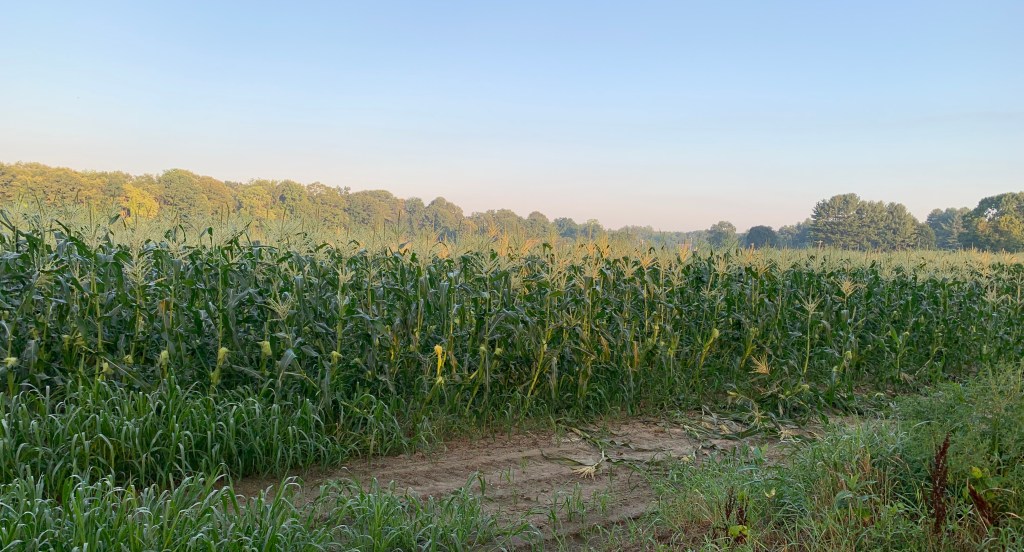
Enter your email address to subscribe to this blog and receive notifications of new posts by email.

Above the River, Chapter 23

Chapter 23

Fall, 1921

Gassmann homestead

            When Hans knocked on the Walters’ door that evening in 1921, he was met by his Aunt Lorena.

            “It’s a shame you didn’t come by a bit earlier,” she told him, motioning him into the kitchen. “You could have had some coffee and cake with your father and us.  But that’s okay, I’ll put out some more.”

            But Hans, acting as if he hadn’t even heard her, said that he’d stopped by to have a word with Ewald.  Lorena was taken aback, since Hans was always one to say yes to sweets. But she called Ewald, who emerged from the main room. 

At Hans’ request, the two men went back outside.  Hans wanted to speak to his uncle in private.  The conversation didn’t last long.  Lorena wasn’t shy about looking out the kitchen window in the men’s direction, as she tried – and failed – to catch some of the conversation taking place out in the yard beneath the apple tree. She saw Hans shake his head once, vehemently.  Ewald nodded and clapped his nephew on the shoulder. Then watched as Hans turned and walked quickly down the lane and back out onto the main road, heading in the direction of home. 

Back inside, Ewald, uncharacteristically, rebuffed his sister’s request for information about the conversation. Then, seeing that she was hurt by his reticence, he put his arm around her.

“Don’t ask, Sis. Guy stuff.  That’s all.  Nothing for you to busy your head with.”

Ewald may have been gone for the past seventeen years, but Lorena still recognized the look she now saw on his face.  It was the expression that he always wore – beginning when they were tiny kids – when he had a secret.  Not a secret he was holding off telling her, just to tease her, but one it might not be safe to tell. Back then, it was because one of them might get a thrashing if he told. Like the time when their cousin accidentally broke a piece of farm equipment they were playing on, and Ewald had been with him.  But what about now? Lorena wondered. What here might not be safe to tell?

*          *          *

            For the remainder of Ewald’s visit – and for nearly the next 28 years, for that matter – there was no more discussion of God or faith or faith healing or that little boy Bruno over supper or dinner or breakfast at the Gassmanns’ place.  Renate made sure of that. Her brother’s time with them was too precious to her to allow it to be marred by any discord caused by religious topics.  Everyone else clearly felt the same way, because the rest of the month flowed by with little more than small talk when the family was all together.  There were plenty of other topics to explore, such as more details about Ewald’s life in America. But even at these times, all parties were vigilant, censoring their own words when it occurred to them that the remarks on the tip of their tongues might lead someone to feel hurt or insulted or left out… The list of emotions to avoid causing in others was long, and this naturally limited the mealtime conversations. 

As a result, the rest of the month passed very smoothly, it seemed to Renate: no ill will, no bruised feelings, no resentment. Renate made this assessment based on what she herself observed, and on all that she heard from the other individual family members.  Of course she was sorry to say goodbye to Ewald that day when they all got together at the Walters’ farm to send him off, but she wasn’t despairing, the way she’d been when he left the first time, in 1904.  This time, the whole family gathered around him, and the tears that were shed were of sadness, certainly – at the fact that he hadn’t been able to stay longer, and at the knowledge that they had no idea when they might see each other again, if ever.

But there were other kinds of tears mixed in, too.  Ulrich and Ewald embraced in tenderness and love, grateful that they had swept away the misunderstanding they’d carried with them for so long.  Renate, too, had forgiven her brother for what she had interpreted as his slight of her, in writing to Ulrich and not to her.  As well, she had learned enough of his life in America, that she could feel genuinely joyful for him.  Thank goodness he had found a wife who made him happy, and that they were raising a wonderful family.  Renate kept reminding herself of this and pushed away her own feelings of regret that she’d never meet her sister-in-law and nieces and nephew.

“You know that young man is in love with you, don’t you?” Ewald asked Ethel quietly as he hugged her goodbye.  Taking her blushing cheeks as an answer, he said, “Be happy, Ethel, dear. This family’s been through so much. Allow yourself to bring some joy into it. Some new life.”

Only a few words passed between Hans and Ewald as they took leave of each other, and no one overheard what they said. The two shook hands heartily, and Ewald clapped Hans on the shoulder.

Lorena and her mother shared their own, private words with Ewald. Then he hopped up in the front of the wagon, alongside his father, who was taking him to the train station in Varel.  The two men would talk about whatever needed discussing on this ride and make their final, brief, and undemonstrative goodbyes on the platform.

A job well done! Renate thought to herself, as she walked slowly back to the homestead with her husband and children, hand in hand with Ulrich.  Now life can get back to normal. God knows there’s enough work to be done to prepare for winter!

*          *          *

About a month later, on a sunny Saturday afternoon in November, Viktor and Ethel took an after supper walk to the old treehouse.  They walked together nearly every day now, in the early evening, after the light meal was cleared and the dishes washed, and the horses and goats and chickens put in for the night, and whatever woodworking project was under way put to bed, too. Although their strolls took them in various directions – toward Bockhorn or Varel, or down any of a number of paths through the Gassmanns’ forest – the treehouse had become their favorite spot to sit with each other and share their thoughts.  So, on this day, it didn’t surprise Ethel when Viktor expressed the wish to go there.

The days were growing both shorter and cooler, and when they climbed the rope ladder, they found the treehouse floor littered with fallen leaves in various stages of dryness. 

“I love the scent of the leaves!” Ethel exclaimed, as her head emerged from over the edge.  This time, Viktor had gone up the ladder first, since he enjoyed reaching a strong hand out to Ethel to grasp as she reached the top of the ladder. She delighted in this part of the visit, too. So, she often shooed Viktor up the ladder before her, even though, as he had learned on their first visit, Ethel needed no help whatsoever climbing the rope rungs and hoisting herself onto the treehouse floor.

“They do smell wonderful, don’t they?” Viktor replied, nodding. “The green ones still smell like the tree, somehow, and the dry ones already smell like the earth.  It’s the whole yearly cycle before us.”

Ethel hadn’t been up in the treehouse during the autumn for many years, and she had missed being there at that time. She began sweeping the leaves up into a small pile using the small broom she’d found resting against the railing when she and Viktor had first climbed up here a couple of months earlier.

“I can still hardly believe this lasted all those years,” she said with delight, pausing in her sweeping to wave the broom in Viktor’s direction.

He laughed, swept up himself by Ethel’s childlike joy.  “It must have magical properties,” he said.

“Oh, yes!” Ethel replied, sweeping again now.  “Or maybe the fairies used it while Hans and I were absent.  Maybe they replaced any broken or rotted straws.”

It didn’t even occur to Viktor to ask if he could help.  He understood that this was Ethel’s own personal communion with the leaves. So, he watched silently from where he sat near the ladder, as Ethel moved the leaves into a pile against the beech tree’s trunk, next to where he was sitting.  It seemed to him that she was nudging them the way she’d urge a goat kid or a kitten along, not wanting to hurt it, but with her goal still clearly in mind.

When the leaves were all gathered together into the shape of a narrow bench, Ethel motioned to him.  “Come, sit!”  He did, and the two of them settled down atop the leaves, some of which crackled, while others slipped.

“Did you do this with the leaves when you were growing up?” Viktor asked.

Ethel nodded.  She was picking up leaves, one by one, examining them, crumbling some of the driest ones, and bending the ones that were holding tight to their green-ness this way and that, testing their flexibility.  “What we liked best was to cover the whole floor with a thick layer. Then we’d lie on them for hours, like they were a featherbed and look up at the sky.”

“There must have been more leaves then – or did you do that later in the fall?”

Ethel laughed, remembering it. “No, we didn’t wait. We couldn’t wait. As soon as the leaves began falling, we’d bring a rake along with us, and collect all the fallen leaves around this tree. Sometimes for a long ways in all directions. Then we’d put them in baskets we’d brought with us– we came prepared! – and haul them up to the top of the ladder with a rope and dump them out here, and spread them all around.”

“Quite the production!” Viktor said, laughing, too.  He loved watching her when she told these stories of her childhood, as she often did when they were up here in the treehouse.  She really came alive out in the big beech.  Although the treehouse was barely ten feet above the forest floor, it was as if Ethel was transported even higher, into some divine realm free of all domestic cares, or worries about family matters.  Not that Ethel ever really seemed weighed down to him, not the way others in the family often did, but here she was even lighter. When he was with her in this spot, Viktor understood why her brother and parents had felt the need to tether their dear, ethereal Ethel, lest she float away, up into the heavens, and never return.

Sitting with her now, Viktor suddenly began to wonder about that tethering.

“Ethel,” he asked thoughtfully, “do you ever feel that your parents, or Hans even, have kept you from being yourself?” He had turned to face her, and his serious question surprised her.

“What do you mean?” she asked, even though she grasped what he meant right away.

“I mean… you’re so full of joy and life. I see it so clearly up here in the treehouse.  You’re like a beacon of happiness here.  Even in the way you swept up the leaves.”

“And I’m not full of life when I’m not up here?” she asked, with a light tone and a slight teasing smile she hoped would mask her emotion, the love she felt so strongly for the man beside her.

Viktor shook his head and, smiling, wagged his finger at her. “Don’t try to trip me up, now!  That’s not what I meant at all.”

Ethel took his hand and tapped it against his leg. “I know. I was just teasing you, Viktor.”

            He laid his other hand atop hers. “But I asked in all seriousness, Ethel,” he continued. “Because I see your quilts.  And how close to God you are.  I think you’re the one in the family who most believes in God.”

            “Why are you bringing this up, all of a sudden?”  Ethel scrutinized his face.  The two of them hadn’t ever discussed the question of faith, even after the argument about it when Ewald was visiting.  That was probably because of the to-do that the discussion caused that day when Hans had left the table.

            Viktor shrugged. He wasn’t quite sure of the answer himself.  He hadn’t planned to bring it up.  “I just see how full of the divine you are, Ethel.  And I remember how – that day when your Uncle Ewald was still here and we were talking about God and why he doesn’t stop us from doing certain things, even if they’re bad for us. I saw it then in you”

            “I remember that conversation well,” Ethel said with a nod.  “And Hans asked me whether I believed God could heal you if only you believed enough. Is that what you’re thinking of?”

            “Yes, but not just that.  You talked about how we all have free will.  Because …. I think you said it’s because God wants us to learn for ourselves what’s right and wrong.”

            “I do think that. I don’t remember exactly what I said that day.”

            “I do,” Viktor told her, squeezing her hand. “You said that God is always around us, giving us signs that He’s there, and showing us the way. The right way. Helping us choose.”

            “Yes. Even if He can’t stop us from walking off a cliff. That’s the phrase Hans used, isn’t it?”

            “I think so. Something like that.”

            “But, Viktor, dear, why did you want to talk about that now? And here?”

            Viktor turned and looked out through the branches that formed the pillars of the railing that ran around the treehouse. 

            “I guess,” he began slowly, “because I see how light a spirit you are, and I want you never to lose your connection to God.”

            “But why would I lose it?” Ethel asked him, a confused frown forming on her face.

            “I saw how hard it was for you when Hans disagreed with you. You had this beautiful idea and hope and belief, and he did his best to crush it.”  He waved his hand to encompass the treehouse around them.  “But here. Here, Ethel. This is your pure element, where you’re surrounded by God. Where no one would dare tell you not to believe in that.  At least I hope they wouldn’t.  I wouldn’t.”

            Ethel was so surprised by the turn the conversation had taken that she didn’t even know where to start with a reply.  So she just looked at Viktor and allowed her hand to rest in his, and to feel the love for him that rested so strongly in her heart.

            “And I would never want you to walk off a cliff,” Viktor went on, his voice very earnest now. 

            “A cliff?  What cliff?” Ethel asked, feeling a bit exasperated.  “Viktor, what are you talking about?”

            Silently, Viktor pulled his right hand free and began brushing aside some of the leaves in the pile that lay between them. Then he stopped and motioned to Ethel. “Go on,” he told her, indicating that she was to keep brushing the leaves away.

            She did so, and after a moment, she came upon a small, dark gray, cloth bag with a drawstring closure. She looked to Viktor, still confused. He motioned to her to pick it up.

            “Go on, look inside,” he urged her.

            Ethel picked up the bag, which was light as air in her hand, and slowly loosened the drawstring.  First she peered into the opening, but since she couldn’t see anything, and could only feel that there was something rather solid, but light inside, she tipped the bag upside down above her palm.  She had to give it a bit of a shake, and when she did this, something small and wooden fell into her hand.  She realized right away that it was a ring, and she brought it up to her face to get a closer look. Carved of light wood, with a band the width of the nail on her pinky finger, it had been sanded to silky smoothness. But it wasn’t just a plain band: A carved flower nestled amongst delicate leaves rose up from one edge. 

            “I carved it from a piece of a fallen branch, from beneath this tree,” Viktor told her quietly.  “Since this tree means so much to you.”  He paused and took her free hand in his. “And since you mean so much to me.”

            Ethel was quite literally speechless, captivated by the beauty of the little wooden ring, and overwhelmed by the surge of joy that was rising up in her. 

            Viktor, seeing that Ethel didn’t know how to proceed, gently picked the ring up from her palm.  “Can we see if it fits?” he asked, and when Ethel nodded silently, he slipped it onto the ring finger on her right hand. 

            “How did you get it just the right size?” Ethel asked in amazement, having found her voice. 

            “That’s a woodworker’s secret,” Viktor whispered, leaning down and kissing her hand.  “Do you like it?”

            “It’s beautiful,” Ethel whispered back. “I can’t even imagine how you made it.”

            “With love,” Viktor told her, somewhat embarrassed by his show of emotion. “I love you, Ethel,” he went on.  “Am I wrong in thinking you feel the same way?”

            Ethel shook her head and smiled, as tears began flowing down her cheeks.  “I love you, too, Viktor.”  It felt so wonderful to say this to him, after all the times she had said the words in her thoughts.

            Viktor turned so that he was sitting cross-legged before her. “If that’s the case,” he said, “then, will you marry me?”

            “Yes, yes. Oh, yes, of course!” Ethel told him, her arms around his neck now, and her head resting on his shoulder as she allowed her tears to flow freely now. 

            Viktor stroked her hair with one hand, taking in the sweet scent of her hair and the joy that filled him, too.  After a minute, he turned his head and found her lips with his. Their first kiss as a betrothed couple.

            They sat up in the treehouse for a while after that, watching as the sun got lower in the sky.  Ethel was leaning against Viktor, his arm around her shoulders.  For a bit, neither of them spoke, each taking in the love that flowed through them, and the divine love they felt coming more strongly now from the forest around them.

            Then Ethel, her head still on Viktor’s shoulder, remembered something he’d said earlier.  “Viktor, tell me: Why did you mention all that about free will? And the cliff?”  She felt him shrug.

            “I didn’t intend to talk about that,” he told her.  “It’s just that I wanted to ask you to marry me up here, in this most heavenly spot in this divine forest you love. That we both love!”

            “But that doesn’t explain the cliff,” Ethel persisted.

            Viktor felt a little sheepish, but he answered her. “Well, I wanted to ask you in this spot, because this is where you feel closest to God.  And since you believe God guides us along the right path, I was hoping you’d feel guided by God to give whatever answer was best for you. To decide with your own free will.”

            “Even if that was a ‘No’?” Ethel asked.  She lifted her head off his shoulder, so that she could look at his face.

            “Yes,” he told her, facing her now, too. “If marrying me would mean that you were jumping off a cliff, then I wanted God to tell you that now, so that you could refuse me. Because I don’t ever want to lead you off a cliff, Ethel.”

            Ethel shook her head and looked at him, hoping that he could see all the love she felt for him.  “No, Viktor.  I don’t feel God’s telling me there’s any cliff up ahead with you. Just love.  That’s the way it feels to me.  I’ve never felt so happy in my life.”

            Viktor wrapped his arms tightly around her and held her close.  “As God is my witness, Ethel, I don’t want to ever tether you to the earth the way I saw Hans do. I want you always to feel as light and free and happy as you feel here tonight.”

*          *          *

            Ethel was feeling a bit anxious when she went back into the house that night, after accepting Viktor’s proposal. When Ethel came in from the yard, Renate was laying a towel over a bowl of bread dough on the counter for its overnight rise.  Ethel approached her mother from behind, but said nothing, not knowing quite what to say.  But, hearing her, Renate turned around and looked her up and down, barely able to conceal a smile whose origin Ethel couldn’t surmise.

            “Well,” Renate asked in a jolly tone, “what do you have to say for yourself, Ethel, dear?”

            At a loss for words, Ethel simply stretched her right hand out toward her mother.  Renate noticed the trembling fingers and immediately grasped her daughter’s hand. First she brought it up to her lips.  Then, smiling now without trying to hide it, she leaned over to study the beechwood ring on Ethel’s finger.

            “Mama,” Ethel said quietly, with a mixture of excitement and trepidation, “Viktor asked me to marry him.”  She held her breath, waiting to hear what her mother would say.

            Renate took her time responding. She realized this was perhaps not the kindest way to treat Ethel, since it left the young woman in doubt for long, long seconds, but this was a big moment, and Renate wanted to dramatize it as much as possible.  After all, there seemed to be so few occasions these days for big bursts of happiness in their lives.  So, she peered at the ring, and then up at Ethel’s face, and then back at the ring. Finally, she squeezed her daughter’s hand.

            “Well, I hope you said yes!” she replied, beaming now.

            Ethel threw her arms around her mother, grateful that Renate approved of the engagement. Now she could let her tears out, and her breath, too. 

“I did, Mama!” Ethel burst out. “I did!” 

As the two women were hugging each other and swaying in a joyful dance, Ulrich walked into the kitchen.

“What’s all the commotion about?” he asked, smiling, too, but acting as if he knew nothing.

“Our Ethel’s engaged,” Renate told him, lifting Ethel’s hand up to show him the ring.

“Papa, look!” Ethel said.  “Viktor made it for me, out of wood from the beech tree the treehouse is in.”

Ulrich inspected the ring, turning Ethel’s hand this way and that, with dramatized seriousness, as if he were a jeweler taking the measure of a rare and expertly-cut diamond.

“Lovely work,” he said finally, and he clasped her hands in his.  “He’s a good man, Ethel.  He’ll do right by you.”

“I think so, too, Papa.  I know so.”  She hugged her father, too, noticing a look of happiness and peace on his face that she hadn’t seen for many years.

She also noticed that neither of her parents looked the least bit surprised.

“Did you know he was going to propose?” she asked them.

Renate and Ulrich exchanged glances, as if deciding who should be the one to tell her.

“He came to me yesterday,” Ulrich said.  “Asked me for your hand. Once I said I’d be very happy to have him as my son-in-law – as long as you agreed, of course –” Here Ethel laughed.  “- he showed me the ring.  Asked whether it would be an insult to give you this instead of a traditional ring.”

“And what did you tell him?” Ethel asked.

“That I thought it couldn’t be more perfect.”

“Oh, Papa, you’re right!”  And she began pointing out this or that detail of the ring to her parents, marveling at the beauty of the design, and at how it was both delicate and sturdy at the same time.

“An engagement ring should be just like this,” Renate told her.  “It should be just like your love for each other: beautiful enough to inspire you to make each other happy, and strong enough to weather everything you’ll have to go through together.”

*          *          *

So, as it turned out, the news of Viktor and Ethel’s engagement came as no surprise to anyone but Hans.  He noticed the ring on Ethel’s finger at breakfast the next morning.

“What’s that, Ethel?” he asked, reaching across the table to take her hand.

Ethel looked over at Viktor, seated on Hans’ left, but he encouraged her with a tip of his head. Their news was hers to share.

“Well,” Ethel said, for some reason smoothing her apron with her free hand and then looking at the ring herself once more before continuing, “Viktor asked me to marry him last night.  And I said yes!”

Hans’ jaw literally dropped open. He turned to Viktor, his eyes squinting in disbelief.  He looked like he was hoping Viktor would deny it. 

“It’s true,” Viktor told him.  “I’m the luckiest man alive.”

Hans looked to his mother’s face, and then his father’s.

“Did you two know about this?” he asked, his tone accusatory.

Is he upset we didn’t tell him earlier? Or about the engagement itself? That’s the question they were all asking themselves.

Renate, wanting to calm the turbulent waters they could all feel rising inside Hans, quickly answered.  “Now, Hans,” she began, immediately realizing she’d chosen the wrong words. Now, Hans… She knew he hated when she began sentences that way, because it meant she didn’t agree with whatever opinion he was voicing.  Striving to salvage the situation, she forged ahead, using a different tack.

“Ethel just told us last night,” she told him, “after you’d already gone up to bed.”

Hans sighed audibly, looking from one to the other of them.  Ethel was beaming. Their parents had donned subdued expressions, but Hans could tell they were happy about it, too.  Viktor was keeping his mouth shut.  Smart man, Hans thought.  He’ll fit in well with the Gassmanns. Even as this thought came into his head, Hans didn’t yet realize that he was already distancing himself from the family.  His family.  Now they weren’t “us Gassmanns”, but, rather, “the Gassmanns”.  I’m on the outside. Yet again. That thought came into his head, too. Along with, They couldn’t bother telling me. But, at the same time, he wasn’t yet ready to relinquish his lifelong role as Ethel’s closest ally, as her protector. 

“I’d like to talk to you later,” he said to Viktor. “I have a few questions for you.”  He was trying to strike a tone that would show Viktor that he had something of a say in his sister’s future. That Viktor would have to satisfy both Ulrich and him if Ethel was going to be allowed to marry him.

Ethel did not take his words the right way at all. “Hans!” she whispered as if no one else at the table could hear her. “Stop. You’re embarrassing me.  Viktor already talked to Papa, before he proposed to me.”

Ulrich nodded and was about to speak, but Hans held his hand up. 

“I’m your older brother. I should have the chance to discuss this with the man who wants to marry you.”

Now Ethel tossed her napkin onto the table. She opened her mouth to speak, but Renate quickly laid her hand on Ethel’s and squeezed it. This was the motion she had always used to signal to her children that they were going off the rails in a conversation. But she hadn’t had to use in years, not since they’d been little. What’s going on with them? she asked herself. First Hans last month, and now Ethel…

Renate would have squeezed Hans’ hand, too, but Viktor was in the way: His seat at the table was next to Hans, while she was seated to Viktor’s right, at the end of the table. But, after his six months living with the Gassmanns, Viktor possessed keen enough insight into the various family members, that he’d anticipated Hans would react this way to the news.  The evening before, in the treehouse, he even thought of suggesting to Ethel that she share their news with Hans right away, so that he wouldn’t feel left out. But she was so giddy with happiness when he proposed to her, that Viktor didn’t have the heart to dampen her high spirits by trying to guide the situation.  Besides, he figured Renate would be equally aware of the possibility that Hans might feel left out, and would make sure Ethel confided in her brother before bed. A second line of defense. Evidently, though, Renate, too, was overcome by the high spirits of the occasion. And the news came to light in a clumsy way.  No problem, Viktor thought. I can still make this right.

“It’s fine, Ethel,” Viktor said calmly, looking at his fiancée and nodding gently to her when she seemed on the verge of continuing her protest.  Then he turned to Hans and went on. 

“I’ll be happy to sit down with you. It’s natural that you feel protective of her. If Ethel were my sister, I’d want to do just the same.”

Hans nodded and pressed his lips together, an expression that said, Yes. That’s good. This is the way men who respect each other act.

“Later on, then,” he said to Viktor, and clapped him on the shoulder.

Now that the crisis was averted, everyone could all turn their attention back to their rolls and cheese and coffee.  The conversation shifted to lighter topics. When Viktor happened to glance in Renate’s direction a minute later, she gave a barely perceptible nod and a quick blink, showing her appreciation that he had salvaged the meal.  We’re going to do well together, Mr. Bunke, Renate thought to herself.

Renate was genuinely happy that Viktor had proposed to Ethel.  It was clear that he doted on her, and although they hadn’t known each other long, certainly not as long as she and Ulrich had been acquainted before getting engaged, she felt this would be a good step, both for Ethel and for the family.  Viktor had shown himself to be a good worker.  More than good, even. He’d grown so connected to the forestry work since he came: Ulrich had even remarked to her that it was as if it was in the young man’s blood.  Renate could see how much this pleased her husband, especially since Hans showed no interest in the forest itself.  As we’ve noted before, Ulrich’s melancholy had noticeably eased since Viktor’s arrival, and Viktor himself had grown more open and joyful as he worked alongside Ulrich and his connection to the forest deepened. 

Renate had noticed the atmosphere in the home growing lighter these past six months, too. Seeing everyone else’s growing happiness, she, too, grew more at ease, and when she gave Ethel her assent for Viktor’s courtship, that felt like just the right move: Reflecting on Ethel’s giddy delight at her engagement, and Viktor’s considerate treatment of Hans at breakfast, Renate concluded that this current state of the Gassmann household was a clear sign from God that she’d taken the right approach in her carefully-planned management of the family.  She even sighed with relief, thinking about the engagement and what this meant for the future here on the Gassmann homestead.  She’d learned from Ulrich that Viktor no longer had any family left. That means he and Ethel won’t be moving away, back to any Bunke family home.  They’ll marry, there’ll be children… The Gassmann homestead will become the Gassmann-Bunke homestead.  Renate felt such joy rise up in her at the mere thought of it…True, as she contemplated the various ways her daughter’s marriage would affect life there at home, Renate did feel a faint undercurrent of unease where Hans was concerned, but she pushed it away. I must be sensing some holdover from last month’s kerfluffle. That’ll pass, too.

*          *          *

            Viktor had begun considering how to deal with Hans late the previous evening, after Ethel accepted his proposal. Imagining that Ethel must already have told her brother, Viktor pondered the question as he lay in his bed in the room off the workshop.  He did his best to put himself in Hans’ position, to see the various reasons Ethel’s brother might view their engagement as a threat to himself and his position in the family.  Viktor, like Renate, had felt tension in Hans during the past month.  Also like Renate, he attributed most of Hans’ prickliness to the awkward suppertime discussion about God that they’d all endured during Ewald’s visit. Unlike Renate, though, Viktor also saw that other factors were contributing to the chip his future brother-in-law seemed to have on his shoulder. 

            He’d seen Hans tense when Ulrich praised Viktor’s work. And there was the afternoon when Ulrich and Viktor emerged from the woods, laughing and high-spirited after a day spent soaking up the trees’ heavenliness as they worked.  They met Hans as he came out of the workshop. At the sight of them, his placid expression shifted, and he greeted them with a dour countenance. This wasn’t the last time this kind of scene played out, and so, then – at the beginning of the summer – Viktor began approaching his interactions with Hans with extra care and forethought.

            Here was Viktor’s dilemma: How could he establish a good relationship with Hans, while also strengthening his connection with Ulrich?  Good relations with Ulrich were absolutely key, if he was to fit in here over the long term.  (He began considering all of this right from the start, long before he even considered trying to court Ethel, but once he made up his mind to woo her, he knew that cultivating good terms with her father and brother could only help…)

Looking at all of this from the outside, it might seem that Viktor had sought – and was continuing to seek –  to actively manipulate both Hans and Ulrich, so that he could reach his goal of a long-term job at the Gassmann homestead.  Indeed, he was striving for this goal.  At least that had been his objective at the beginning.  And really, Is there anything wrong with that?  After all, for the first time in his life, Viktor had landed in a spot where he had good work amongst good people. He wasn’t about to let that slip away through inattention, or because he overlooked something in the relationships.  Thus, he felt he had to not only utilize his powers of observation and intuition, but hone them. 

When Viktor began falling in love with Ethel, though, the situation grew more complicated.   Yes, doing the best job he could do, both in the forest and the workshop, was still paramount for him. But Ethel gradually came to occupy an equally important place in his life. There was his work on the Gassmann homestead, and there was Ethel, and he felt he couldn’t do without either of them.  He pushed aside worrying thoughts that sometimes came into his head: that Ethel’s family might suspect him of courting her as a way of solidifying his work position. 

When this concern finally made its way fully into his head, Viktor, for the first time in his life, actually examined his motives with a critical eye.  He reflected on all of this one summer afternoon in the woods.  He was taking a break from cutting down a thick spruce. Ulrich had gone back to the workshop and left him to his task.  As he sat there, his back against another spruce, he realized how others might view his interest in Ethel.  This awareness was a gift of insight from the divinely-infused forest around him. And a question formed inside his heart: Do I really feel this way about her, or is this just a ploy? 

It was a moment of deep honesty for Viktor.  He felt a chill run through his body. Whether it flowed up into him from the spruce behind him, or whether the cold originated in his heart and was now streaming out and down into the forest floor beneath him, he couldn’t tell.  But as it flowed, he realized, for the first time ever, the extent to which he had spent his life jockeying for position, employing ploys: sensing what others wanted and giving it to them so that he could gain a measure of security for himself.  His had been a lifetime of doing things that he maybe didn’t even really want to do.  He could see this now.  It horrified him. What do I want? he asked himself. What do others want of me? Can I even tell the difference?

How terrifying it was for him to come face to face with these thoughts!  It was as if his entire life had been called into question.  And it wasn’t just the realization of how he had lived up until now that horrified Viktor. No. Now that he knew what he knew, he had to make a decision: How do I live from now on? How do I know what I really want? And then the next thought: Do I really have the right to move toward what I do want?

At this moment, Viktor was grateful for Ulrich’s absence, since it gave him time to ponder. But at the same time, part of him wished the other man would come back, so that he could put off trying to solve this dilemma he’d uncovered.  But Ulrich didn’t come back.   Viktor, leaning against the spruce, which seemed to be linking him to the divine power of the heavens, found himself also resting his palms against the forest floor, so that he could feel the earth and its power, too. Help me, Lord, he mouthed silently. He closed his eyes and allowed himself to notice the energies flowing into him from, as it seemed to him now, two directions. 

Gradually, his breathing slowed, and after a bit, he noticed that all his anxiety and fear had drained out and away from him. In their place, he now felt deep peace and calm.  Joy. And a strong feeling of love in his heart.  Love for the forest and the trees, for this place on earth where he now found himself. But the love he felt most strongly… that was his love for Ethel.  

This love was so profound in him that Viktor knew it was genuine. That it was his. That he really felt it, and could trust it. He knew then for certain, that his motivation for courting Ethel was pure.  He could move forward now without doubting himself.  He hoped this would be the start of a new way of approaching life: He would strive to feel in his own heart what it felt right to do, and then to do that.  To deal honestly with others, to take note and care of other’s wishes, but without manipulating them. No more ploys, he vowed as he sat there anchored firmly between heaven and earth.

But Viktor’s determination to be keenly aware of what both he and those around him were feeling, actually had an unintended consequence: It led him into what we could characterize as a double life. While working in the forest with Ulrich, he gave full rein to expressing his genuine love of the trees and his growing affection for his employer. But when Hans was around, Viktor dialed back the intensity of his enthusiasm, so as to not cause tension between father and son, or son and himself.  He also allowed his true inclinations to come out when he was speaking with Ethel, and even, though in a more subdued form, with her mother. 

The upshot of this was that, while Ulrich, Renate, and Ethel saw before them a jovial, open, and strong young man who was full of joy for the natural world and for those whom he held in affection, Hans – although he didn’t consciously think about this – felt that he was working with a man who had a habit of keeping everything inside.  Not that their whole family didn’t do this, but Hans was confused: He saw his family members treating Viktor with a kindness and affection he himself didn’t understand.  What is there in this man to be so fond of? The two of them hadn’t formed a close bond, despite working together for months now, not even a friendship, really, and Hans began to wonder whether he was missing something that all the others saw. Or whether he was seeing the real Viktor Bunke. 

As it turns out, all of them were seeing the real Viktor Bunke, just different sides of him.  And although Viktor did manage to avoid seeming overly fond of Ulrich and Renate and Ethel in Hans’ presence, this duplicity didn’t feel right to him in his heart.  He wondered whether the fact that he was – as he saw it – less himself when Hans was around, caused the others to doubt his sincere affection for them.  He didn’t see any signs of this in his interactions with Ulrich or Renate, and certainly not with Ethel, but it weighed on him.  He didn’t want to have to dampen the joy inside him around Hans, just because he felt it was crucial for relations between them to be good.  Viktor didn’t see the irony of this: that his careful attempts to avoid giving Hans cause to fear that he was trying to usurp the other man’s position in the family actually caused Hans to feel more and more of an outsider in his very own home.  

The engagement brought everything to a head for Hans.  Upon discovering, that November morning, that everyone but him already knew that Viktor had proposed to Ethel, and that she had accepted, Hans felt he had been suddenly and violently and permanently shoved outside his family circle.  Certainly, he knew how things were decided around here: His parents were the decision-makers, giving a thumbs up or thumbs down on any matter of importance, i.e., one that would affect the whole family.  Hans had long ago accepted that way of doing things. But upon seeing Ethel’s ring, he suddenly suspected that the whole system had been controverted. That was why he asked his parents whether they’d known about the engagement.  Later on, he wished he hadn’t posed the question, because it seemed to him too revealing of his true feelings: To Hans, this engagement represented the final step in Viktor’s gradual invasion of his family. First he won Ulrich over, then Renate, and now, Ethel. Now there’ll be no getting rid of him.

As we know, Viktor foresaw that Hans would feel left out if Ethel didn’t tell him of their engagement right away.  When he heard Hans’ question at the breakfast table, Viktor kicked himself for not discussing with Ethel about how to handle telling Hans.  What he felt was a combination of frustration with himself at mishandling the situation, and a genuine desire to be on good terms with his future brother-in-law. It was this feeling that led him to immediately express his willingness to talk with Hans.  It would have been better if they’d avoided this awkwardness in the first place.  But what’s done is done, Viktor told himself.  Now go make it right.

*          *          *

            After spending the morning in the forest with Ulrich, Viktor sought out Hans. He found him in the workshop, where he was planing a piece of wood for a table leg.  Viktor stood for a moment, just inside the door, watching Hans rhythmically lean forward and then straighten up, as he pushed the plane along the wood and then drew it back, brushing aside the thin, curling wisps of wood so he could see his path clearly for the next round.  Viktor knew Hans had caught sight of him out of the corner of his eye, but Viktor didn’t want to disturb him in the midst of this delicate work.  So, he sat down on a stool at the workbench at the far end of the room and waited until Hans leaned back and reached over to set the plane down on the workbench.

            “You could have told me, you know,” Hans said, speaking even before he turned toward Viktor. “No one in this family tells me anything.” He brushed some sawdust off his forearms and then turned to look at Viktor.  “Not that you’re family,” he added snidely, without giving Viktor a change to reply.  “Not yet.”

            Viktor stayed seated, surmising that if he stood up, Hans would perceive this as a challenge. Don’t take the bait. “No,” he said calmly. “I’ll never be family.” Good to tell him that.

            “But you want to be, right?” Hans asked in a clipped voice. “Isn’t that what you’ve been doing? Worming your way into everyone’s affections here? First my father’s, then my sister’s?”

            “Hans, I…” Viktor began, but Hans interrupted him.

            “It’s a nice setup here, isn’t it?  We’re all so nice, except for me, of course. I was on to you from the start.”

            Viktor could tell that there was no point in trying to rebut anything Hans was saying.  He was too upset to be able to take anything in right now. Besides, Viktor had the sense that if he took even a single step forward, Hans would immediately strike him.  And that would be hard to walk back. So, Viktor stayed seated and let Hans have his say.

            Now Hans walked right up to Viktor, who was still seated on the stool, his right knee bent and his foot on one of the stool’s rungs.  To Hans, he looked relaxed, cavalier, even.  Bastard! Hans thought. He doesn’t give a damn!

            “No one even thought to ask me,” Hans went on.  He was standing right in front of Viktor, and he slapped his palm against his own chest, emphasizing the words as he spoke.  “Me, who has taken care of Ethel since she was a little girl.  I was the one who made sure she was always okay, that she never got hurt.  Spent all those hours, days even, with her in the treehouse.” He paused and shook his head, then let out an exasperated laugh.  “And now,” he said, looking Viktor in the eye, “she thinks she can take care of herself.  So does my father, evidently.  Good God!” He looked away now and, hands on his hips, strode back to the workbench.  He placed his hands on the edge of the bench and leaned forward, head down, tapping one toe.  He stayed like that for a bit, then spun around and walked back to Viktor.  Raising one hand before Viktor’s face, as if he were about to hit him, he extended his index finger toward Viktor and said, in a low and angry voice, “If you do a single thing to hurt her, Bunke, you’ll have to answer to me. Do you understand?”

            Viktor, doing his best to maintain a calm demeanor, despite his inner desire to defend himself, both verbally and physically, simply nodded. 

            “I gather that you asked my father for her hand before you proposed?” Hans was a bit less agitated now.

            Viktor nodded again.

            “But you didn’t think to confide in me. Me, your future brother-in-law.” Hans gave his head a disgusted shake.

            What can I say to that? Viktor thought.  Better to say nothing than to start explaining myself. Is he hurt that I never brought the topic up, never let on that I was in love with Ethel?

            “To tell the truth, Hans,” Viktor said finally, “I wasn’t sure how you’d feel about it.  I know how protective you are of Ethel.”

            “Damn right!” Hans frowned, then scratched his arm where a bit of sawdust still clung.

            “Like I said this morning,” Viktor went on, “I would be, too, in your place.”

            “Do you have a sister?” Hans asked, challenging him. “Have you looked out for her?”

            “I had a sister,” Viktor told him. That was all he said.

            “Then you do know, maybe,” Hans replied, softening a bit.  “What it’s like.  All I want is for her to be happy.”

            “I love her, Hans,” Viktor said, his tone serious and sincere. “All I want is for her to be happy. And safe. Just like you do.  I’ll do all I can to make sure she is.  We all will,” he added. “I mean, you’re still her brother.  Always will be. That won’t change just because she’s getting married. Besides, we’ll still be living here.  You’ll be able to keep an eye on us.” He gauged whether a bit of a smile might be in order, and determined that it would.  But Hans seemed not to notice.

            “Well, actually, it will change,” he said.  “I won’t be able to keep an eye on her. Or you.” He’d pursed his lips and was looking over toward the workbench now, instead of at Viktor.

            “What do you mean?”

            “What I mean is, I’m not going to be around here much longer.” Now he turned to face Viktor again.

            “Not around much longer? How’s that?” Viktor was the one frowning now.

            Hans let out a big sigh and stood up straighter.  “I’m going to Illinois, to work with my uncle Ewald.”

            At this, Viktor let out a long whistle.  “For a while? Or forever?”

            “Seems like it’ll be forever.”

            “But why?” Viktor asked, although he didn’t much expect that Hans would give him an answer. 

            “What, now that we’re going to be brothers-in-law, you think suddenly I’m going to tell you all my secret thoughts and desires?” Hans smirked.

            “I’m just surprised, that’s all,” Viktor told him.  In fact, his mind had begun to race, full of questions about the business and how they’d carry on without Hans. “Does Ulrich know?” he asked.

            “You two are so close,” Hans said sarcastically, looking Viktor in the eye. “I’d think you’d already know the answer to that question.” With that, he turned and strode out the side entrance of the workshop, pulling the door closed behind him with just enough force that it banged, but not loudly enough that you could call it a slam.

            Viktor sat motionless on the stool for several minutes, as if rooted to the spot.  Here, he’d come out to make things right with Hans, but he seemed to have failed completely.  He hadn’t even gotten a clear idea of how Hans felt about him marrying Ethel, or even about him personally, for that matter. But he had learned that one bit of crucial information. Leaving for Illinois to join Ewald? That came as a total shock.

            Viktor wondered whether he’d missed any clues in the past month.  He’d been so caught up in everything to do with Ethel and proposing to her that he hadn’t paid much attention to Hans, aside from the projects they were working on together. Damn it.  Great job he’d done of cultivating a relationship with his future brother-in-law. 

            As he thought over their conversation now, Viktor wished Hans had never told him about his plans. Did Ulrich know? To be honest, Viktor had felt a sting at Hans’ remark about his closeness to Ulrich. Wouldn’t Ulrich have told him what Hans was planning, if he knew himself? Damn it. Now he was in a difficult spot. Do I mention it to Ulrich or not? It’s not my family.  Not yet, anyway.  Which means, it’s not my business.  But it’s not entirely not my business, either… I’m damned if I ask Ulrich about it, and damned if I don’t.  And now Viktor realized that Hans was pleased to have put his not-yet-brother-in-law in this difficult position by telling him a secret.   Holy hell.

*          *          *

They set the wedding for June 11th, the Sunday after Pentecost.  This would give enough them time to make arrangements for the church in Bockhorn, and for Renate and Ethel to sew the wedding dress and get the trousseau ready. On an early December day, Renate brought up the topic, so that she and Ethel could discuss what all they’d need to make.

            “Mama,” Ethel protested, “why bother with that?  It’s so old fashioned.  It isn’t as if I’m moving away, to his family’s home. Viktor will just be moving into the house. I’ll even be in the same room!”

            Renate shook her head.  “But Ethel, we need to do things the right way.”

            “Who are we trying to impress, Mama?” Ethel protested again.

            They were talking while making supper in the kitchen, and at this question from Ethel, Renate set the pot of stew she was about to warm up onto the stove, wiped her hands on a towel, and turned to her daughter.

            “It’s not about impressing anyone, Ethel.  It’s about starting you and Viktor off on your married life in a beautiful way.  You’re beginning a whole new stage of life, and everything about it should be very special and new.”

            Ethel nodded. “I hadn’t thought of it that way.  And it’s true – I am excited to make a quilt for us.”

            “See?” Renate said, smiling, and running her hand over her daughter’s blond hair.  “It’s not just a regular day, and we don’t want to treat it that way. We want to celebrate in every way possible.”

            “All right, then,” Ethel told her, acquiescing.

            “Heavens, child,” her mother remarked, turning back to the stove, “you must be the first girl in the history of the world not to care about a new nightgown for her wedding night.”

            Ethel laughed, but said nothing. Her mother was right: She really didn’t care about the nightgown or towels or sheets, or even the wedding dress, if you came right down to it.  She knew that Viktor loved her for the person she was, not for any trappings she might adorn herself with.  The two of them would be happy to live in the treehouse with a bed and blanket of leaves.  They didn’t really need anything other than each other.

*          *          *

That night in bed, Renate related her conversation with Ethel to Ulrich.

“Like mother, like daughter,” he told her, smiling as he thought back to their own engagement.

Renate objected. “What do you mean?  I wasn’t like that!”

Ulrich nodded.  “You certainly were. How can you have forgotten? Lorena was going on and on about what she and your mother were going to make for your trousseau, what embroidery patterns they’d use, where they’d get the silk for your dress – “

“I don’t recall any of this!” Renate objected again.  “You’re making it up. My dress was made of cotton.”

“And where they’d get the silk for your dress…” Ulrich went on.  “And you – “ he held up his hand playfully to silence Renate, who was about to protest once more.

“And you said that you wouldn’t have any of that talk, because none of it mattered.  It was too frivolous to spend time and money making fancy dresses everyone would wear only once, and embroidering sheets no one but you and me would see.”  Ulrich raised one eyebrow and waited for Renate’s response.

She pursed her lips, so as not to laugh, then raised her chin and replied haughtily, “It was frivolous.  And my dress was not made of silk!”

“I know.  I remember that very well, too. You told your mother you’d be just as happy to get married in a cotton flour sack.”

Here Renate couldn’t contain herself anymore, and a smile spread across her face.

“So yes,” Ulrich said, “your dress wasn’t silk, but it wasn’t a flour sack, either.”

“That’s right,” Renate relented, taking his hand in her two.  “Mama’s a good negotiator.  She realized I wouldn’t accept silk, so cotton was the compromise.”

Ulrich nodded. “Yes.  That’s exactly the way you originally told the story to me.  Funny that you didn’t remember that when Ethel started down the same road.”

Renate gave him a sly smile.  “I didn’t want to remember, silly.  I knew I was happy with the cotton dress.  Maybe I’d even have been happy with silk in the end. Who knows?”

“Cotton was perfect,” her husband replied, pulling her to him.  “Come to think of it now, though, the flour sack would have been even more perfect. You bake so much, you’re as good as covered with flour most days, anyway!”

The two of them, married now for a bit more than twenty years, laughed at this memory. Ethel, who heard their merry voices from her room above theirs, smiled, too, imagining how she and Viktor would be just as joyful and in love twenty years hence.

Enter your email address to subscribe to this blog and receive notifications of new posts by email.

Above the River, Chapter 22

Chapter 22

July, 1949

Gassmann-Bunke homestead

            So it came about that Marcus began the process of extricating himself from his job in Varel so that he could return home to work in the family business.  His supervisor, was shocked by Marcus’ decision, as were all his coworkers, given how lucrative Marcus’ position was, and how much room there was for advancement.  Everyone knew that you don’t give up a Civil Service post – and the financial and career security that come with it – just like that.

            Besides that, everyone at the office knew how happy he was with his position. Marcus had felt so at home working there. He’d felt that this was just the right spot for him: He was respected, and the confidence that arose as a result of that respect lent him a greater feeling of worthiness at home – not that he’d have put it that way, or even consciously recognized it, but that was definitely part of his feeling of satisfaction. So, there was a lot of speculation at the office about Marcus’ reasons for leaving.  Certainly, everyone there was aware that now, after the War, even though nearly four years had already passed, many families were still in disarray, with able-bodied workers in short supply. 

            Indeed, this is exactly the way Marcus explained his departure when he submitted his resignation and gave notice.  But despite the objective reasonableness of this explanation, it seemed feeble to Marcus, and felt certain that people would see through him, that they’d see the situation for what it was: proof that he did not have control over his life.  It was his father who was calling the shots.

            Marcus didn’t want to go through the pain of seeing that realization in his coworkers’ eyes. But that was exactly the way the situation at work began to play out. Although Marcus had hoped to be able to leave immediately upon tendering his resignation, this wasn’t possible: There were protocols to be followed, documents to process, and so on. So, in the course of his last month, Marcus’ tasks diminished as the supervisor began shifting his duties to other officials there. As this happened, Marcus found it increasingly difficult to maintain his image as a strong and independent civil servant. He began to feel a sting of humiliation which grew steadily more intense, as if he’d been fired from his post, instead of resigning. 

            It was precisely this experience – this feeling of somehow having been shamed – that Marcus had wanted to avoid by leaving his job immediately.  Instead, the day after he informed his supervisor of his plans, the news began to spread like wildfire.  By the next morning, he noticed all the other officials looking at him – some with curiosity, but most with an air of superiority, and a few even with pity in their eyes.  Although some of his colleagues approached him and expressed regret that he’d be leaving, Marcus saw through this false collegiality. He sensed in each man who approached him this way – with a clap on the back or shoulder, or a handshake – an unspoken satisfaction that was rooted in the speaker’s hope that Marcus’ departure would open up room for his own advancement.

Now, Marcus could have viewed these interactions as a sign that the other officials did, in fact, recognize him as a rising star in the Civil Service and, thus, a threat to their own careers. Sensing this, Marcus could, then, have taken pride what he’d accomplished during his four years of service.  But Marcus being Marcus, he took their reactions as a slap in the face, as if his colleagues and supervisor – and not his very own father – had been the ones to send him home to the Gassmann-Bunke family homestead.  In each conversation with the other men at the office, he felt sure that they were both congratulating themselves on their unexpected good luck, and also – and here was what really stung Marcus – silently expressing their view that Marcus was weak, unable to stand up to his daddy.  Marcus glimpsed what he interpreted as this unspoken contempt for him in each of his colleagues’ eyes.  No matter how good he was at his work, no matter how much his supervisor valued his contributions, he was still, when it came down to it, subject to Papa’s wishes.  “A twenty-six-year-old wet noodle of a boy.”  “Not at all a man.” That’s what Marcus imagined they said about him behind his back.

None of the men in Marcus’ office had ever met his father. His supervisor, Mr. Weiss, though, had heard the name Viktor Bunke – which meant, of course, that whatever Weiss knew gradually became common knowledge for all who worked there.  But what, exactly, did he know, aside from the name?  Mr. Weiss never revealed those details with Marcus, perhaps assuming that the young civil servant knew very well what one of Mr. Weiss’s own superiors had shared with him.  But he was wrong on that count. 

Marcus, thanks to his father’s insistence on utter secrecy about where and how he had spent the war, knew nothing aside from the fact that his father’s wartime position had kept the family well-supplied with food and commodities that could be sold on the black market.  No one in the family had asked for an explanation.  Not as far as he was aware, anyway.  Did his mother and grandparents know the details?  He wasn’t sure. But what he did know was that Mr. Weiss knew something about Viktor Bunke and, as a result of that something, Mr. Weiss had a healthy respect for the man.  “Not a man to be defied,” Marcus overheard Weiss telling one of his deputies by way of explaining Marcus’ departure at his father’s request. “A man to be reckoned with,” Weiss told another.

Based on his limited, but powerful impression of this picture of Bunke the elder that Weiss had painted for those in the office, Marcus came to believe that every man there now saw him as Viktor Bunke’s cowardly son – the son who had backed down when push came to shove.  So much for free will, Marcus often told himself bitterly as he faced his colleagues’ false smiles and good wishes. But he did this without asking himself why, exactly, he had acquiesced to his father’s demand, given the emphatic defense he’d offered around the supper table of our right to control our own lives.  Rather than pondering why he himself hadn’t exercised his God-given free will, though, Marcus jumped right to resenting his father for – as Marcus saw it – depriving him of it.  He didn’t see the contradiction between these thoughts and his suppertime assertions a month earlier.  If God couldn’t force us to do anything, how was it that a mere mortal father could do so? 

Marcus didn’t entertain this line of thought.  It was easier to condemn his father than to ask himself, “How is it, exactly, that a father so thoroughly overrides something given by God?  And that a son allows him to do so?”  These are relevant questions, but neither Marcus, nor Viktor, nor Mr. Weiss, nor the colleagues – nor even the Gassmann-Bunkes, who considered this step undeniably necessary and right – gave any thought to such religiously-tinged queries.  Marcus knew only that the pain of humiliation was growing within him with each hour he spent at the office. By the second day after he submitted his resignation, he couldn’t wait for his final month to be over.

That was at work.  Upon arriving home each evening, the feeling of humiliation that Marcus experienced all day long shifted swiftly and easily to anger, as he unconsciously sought to assert himself on the home front in a way he was no longer able to do in the office.  He picked fights with his siblings over trifles, remained mostly silent with his parents and grandparents, and endured business-related conversations with his father only with the greatest effort, always on the verge of lashing out at the older man physically or verbally. Only with Kristina and Ingrid was he able to exhibit some measure of genuine affection, since he considered them blameless.  Besides, now that he was losing his Civil Service position, it felt all the more important to him to hold on to his relationship with the two of them.  To show that in some way he was still very much a man.  A man to be reckoned with in his own right.  So that Kristina would still see him as worthy of her.

This was one of the reasons Marcus was most upset at having to leave his position in Varel: His plan to gradually move up through the Civil Service ranks played a key role in his courtship of Kristina. He was convinced, although he couldn’t have explained why, that he couldn’t win and keep her as just the son of a forester – or now, even worse, as just a forester himself!  He needed to stand out from the crowd in some way.  Not that there was a stream of men coming to court Kristina, but he sensed that she was beginning to wonder why he hadn’t yet proposed to her.  After all, they’d been courting now for two years, and he hadn’t even told her he loved her.  Not using those three words, anyway.  She hadn’t come out and declared her love for him, either.  That in itself made him a bit anxious. He didn’t understand that her position in their household left her feeling like something of a second-class citizen.  How, she thought, could she dare to declare herself to him first, even though she was quite sure of her love for him?  Not grasping this, Marcus concluded that he hadn’t yet impressed her sufficiently.  So, he pinned all his hopes on advancing through the Civil Service to a level where Kristina couldn’t fail to be dazzled by him.  But now… How am I to win her now?  How can I prove to her I’m every bit a man? Or even more of a man than his father. That would be preferable.

However, this was not such a simple task.  There was one incident during that transitional month that entirely erased any doubt Marcus might have had about the truth of Mr. Weiss’s characterization of his father.  It was a Saturday, a few weeks before Marcus’ final separation from his job.  Marcus, Peter and their father were all in the workshop. Viktor and Peter were standing at one of the workbenches, consulting over plans for a piece of cabinetry that had been ordered.  Marcus walked into the building, and for the first moments, just watched his father and brother as they stood conversing, their backs to him.  Marcus could hear the friendly tones of their conversation. He saw the intent, respectful way his father listened as Peter, indicating various points in the drawing before them on the bench, explained what he had in mind.  Viktor was listening and nodding thoughtfully.  When Peter finished, Viktor nodded once more and, laying his hand briefly on his son’s shoulder, and said, “It’s a good plan, Peter.  Move on ahead on it.”

“What about the carving, Father? Will you do it?”

“No, Son,” Viktor replied.  “You can handle it on your own.”

Peter smiled, and a feeling of satisfaction spread through him.  Viktor was a gifted carver, and although Peter had learned at his side from early childhood, Viktor’s skill still surpassed his son’s, and that of anyone else in the area, to be honest.  Peter was touched by his father’s confidence in his abilities.

            Marcus witnessed this exchange, and something in his father’s tone, the sight of his hand on Peter’s shoulder, and Peter’s smile, brought a rush of anger up in Marcus. As Viktor turned to greet his other son, he detected the fury in Marcus’ narrowed eyes, and took note of his flushed cheeks and tightly-set mouth.  Instinctively drawing himself up a little taller and straighter and extending his chin a bit forward, Viktor took a step toward Marcus and put out his hand. Viktor himself recognized this gesture as ill-timed and inappropriate, insufficient, but this was the habit he’d developed during the war when faced with resistant subordinates.  There was something about grasping a potential adversary’s hand in a seeming act of respect and even friendship that also allowed him to transmit his own power and take control of the situation. But in this case, Viktor realized too late, when he was dealing not with a subordinate, but with his own son – who, nonetheless, had felt more and more like an adversary these past weeks – the extended hand telegraphed too much formality and distance to have the desired effect of assuring complete control. 

Certainly, Viktor understood from Marcus’ expression that his easy familiarity and affection with one son had infuriated the other, but he had no inclination to show Marcus a similar measure of affection. Had that been the case, he would have gone over and jovially clapped Marcus on the shoulder, too.  But no.  Viktor had calculated the effect of his actions, wishing to exhibit a harder edge with Marcus, so as to show him that he was, if we can use Mr. Weiss’s words here, “a man to be reckoned with”. It was important to Viktor to maintain dominance over Marcus: Fully aware of his son’s dissatisfaction with the shifting situation, and of his general tendency to seethe and cause disruption wherever possible, Viktor felt that a strong hand was necessary if Marcus were to eventually settle in as a cooperative and submissive contributor to the family work. 

A different parent – or a parent with a different upbringing, or a different war experience – might have felt that a kinder approach was worth a try, a show of equal affection to both sons, perhaps.  But that was not how Viktor saw things. He’d had enough life experience to know that seething resentment that was allowed to grow unchecked or undisciplined was dangerous.  Of course, it was best to avoid creating the environment for such resentment in the first place.  But that battle had long been lost, where Viktor and Marcus were concerned.  Viktor knew that.  He also knew full well that once resentment toward you crept into someone’s heart, there was generally little you could do to turn it around, because whatever had caused the ill will hadn’t necessarily been your fault in the first place. So, why spend your time pussy-footing around your son or wife or subordinate, trying this or that to make better what you couldn’t make better anyway?  No.  Viktor had no patience with others’ resentment. He saw it as a weakness of character, as a choice a person makes to see himself as a victim, instead of as an actor.

Interestingly enough, however, Victor was not bothered by his son Peter’s physical handicap.  True, he was frustrated that Peter had been unable to help with the forestry work, but Peter didn’t anger him the way Marcus did.  Peter had been injured while serving his country in battle, which was more than could be said of Marcus: He spent the war safe inside the confines of the Censorship Office and never had to face down an enemy.  What’s more, when Peter came back too injured to work the forest, he’d thrown himself into the cabinet making, toiling away tirelessly, with never a complaint. Viktor was actually proud of Peter and of how hard he worked to help the family prosper.

Let’s note that whenever Viktor went over these facts in his mind and reflected on the differences between his sons, and between his feelings for the two young men, he conveniently chose not to recall that he was the one who pulled strings to get Marcus that post in the Censorship Office and, then, his position in Varel.  Had he reflected on that stage of Marcus’ trajectory, Viktor probably would have concluded that the two sons might have fared better if they’d switched roles: Marcus’ arrogance might well have been tempered by time at the front that would have left him humbled, and grateful to be alive, even on a boring homestead in the countryside. Peter , meanwhile, might have brought a kindness to the Censorship Office which would have benefited all around him and spared him the nagging belief that his wound proved that he had not been a good enough soldier.

Viktor believed he possessed keen insight into his sons’ current patterns of viewing the world around them: Marcus’ overly-high opinion of himself was combined with a conviction that he could in no way be even partly responsible for anything that ever went wrong for him. As Viktor saw it, when things took a direction which felt unfair and unjustified to Marcus, he always saw himself as a victim of others’ jealousy and ambition.  Why can’t they just not see my great skill, my unlimited potential, and allow me to fulfill that potential? That’s how Viktor imagined Marcus’ self-perception. But, as intuitive as Viktor was when it came to others, he failed to intuit the insecurity that lay beneath Marcus’ bravado.

He was quite accurate when it came to his view of his other son, however: Peter, unlike his brother, was quick to assume that everything that went wrong was, in fact, somehow his fault.  Inattention, insufficient skill, or simply carelessness: These were the behavior traits Peter ascribed to himself, and the way he explained the misfortunes that seemed to dog him.  His war injury and his role in Lina’s accident were just two examples.  There were others, dating from earliest childhood: the pot of boiling laundry that somehow ended up on the kitchen floor while he and Marcus were wrestling, and the scalding of his (Peter’s) foot that resulted; the goat kid that ended up strangled by its own lead rope after Peter tied it where it could subsequently become tangled in amongst the bushes; and the time Lina fell from the top of the treehouse ladder while climbing up, because he lost his grip on her hand as she was coming up over the top. Luckily she wasn’t hurt, and he begged her not to tell their parents. She didn’t.  So, while Marcus early on come to feel he should be the boss of everything and everyone, Peter learned to stay as quietly possible in the background, trying to do as little damage as possible, while also making a great effort to be useful and respectful.  If Marcus tended to constantly make waves of tsunami proportions, Peter was more like a backwater fed by gentle runoffs and small snowmelts, but offering no strong movement of its own accord.

Now, Viktor’s view that it wasn’t worth trying to be kind or understanding to those who resented you, because you hadn’t caused the resentment in the first place – this was a view he adopted in the mid-1930s, when his relations with his wife Ethel were particularly strained, and when Marcus began nursing a strong and, as Viktor saw it, unwarranted, grudge against him. The situation was this: Marcus took exception to what he (as just an adolescent!) saw as the ill effects that his father’s decisions had on the life of the family.  But Viktor, seeing these decisions as sound and positive, concluded that if his family objected, then that was their problem. Viktor decided that it be wrong for him to capitulate in the face of his family’s resistance when he knew he was in the right.  If they wanted to resent him for holding to his principles, then so be it.  So it was.  And so it continued, up to and throughout the war and, to a certain extent, even following his return home once the war ended.  Viktor was a man who made decisions independently and confidently. He did not really care to hear dissenting views, once he made his decisions – or while he was making them, for that matter. That was why he always chose a course of action on his own.  When this was possible, of course.

During the war, Viktor had the good fortune to serve under a superior officer whose views nearly always coincided with his own. Only rarely did Viktor find himself tasked with implementing a decision with which he disagreed.  But on these occasions, as a fully-professional officer who understood and believed that order needed to be observed and upheld, he carried out his orders.  Without any qualms? Without even a hint of resentment?  The answer to that question can wait for the moment. Because now Viktor’s son Marcus was standing before him, not grasping his outstretched hand.

I’ll be damned if I’m going to shake his hand, Marcus thought, glancing in silence from his father’s hand to his face. The two men stared each other down, neither wanting to give. Viktor sensed he was about to lose the upper hand.  He couldn’t allow that to happen.  Before Marcus could say anything, Viktor, who stood half a head taller than his son and was stronger, too, than his wiry appearance suggested, wrapped the proffered arm around the younger man’s shoulder in a smooth motion, and pulled him toward him.  Marcus tried to pull back, but Viktor’s grip was firm. Marcus found himself with his shoulder and upper body pressed tightly to his father’s chest, sideways, so that his left ear was directly in front of the taller man’s mouth.  Viktor held his son that way for a few seconds, waiting to see whether Marcus would resist.  The latter made no effort to free himself, but his whole body tensed.  Finally, Viktor spoke, his voice barely above a whisper – Peter on the other side of the room would not have heard what he said – but full of power, nonetheless.

“It’s not worth it, Marcus,” Viktor said.  “Believe me. It’s not worth it to fight me. You’ll get nowhere.”  He tightened his grip more as he spoke, so that Marcus felt his father’s arm running along his back and holding his, Marcus’, shoulder in a vise-like grip, with his forearm in front.  But that was only for a couple of seconds. Then Viktor’s muscles relaxed, he loosened his hold and, stepping back, the father used his other hand to pat the son on the released shoulder, a movement that to Peter, who saw it as he turned, perplexed by the silence behind him, seemed identical to the affectionate pat Viktor had placed on his shoulder a minute earlier.  It was not the same, of course.  The now light palm on Marcus’ shoulder was a signal to him that things were settled: His father would not tolerate any insubordination or show of disrespect.

“Head out to the aspen grove and help your grandfather and Stefan with the survey,” Viktor told Marcus. Then he strode out of the workshop without even waiting for a reply, leaving Marcus full of anger he was at a loss to know what to do with. 

“Morning, Marcus,” Peter said, smiling, not understanding what had just passed between his brother and their father.

It was all Marcus could do to keep from rushing Peter and slamming him against the workbench. Instead, he gave his brother a curt nod, turned, and walked out of the building.  He headed down the main path into the forest to join Ulrich and Stefan, but then paused, once he’d gone a good ways into the woods. The blood was pounding in his temples, and his breathing was sharp and shallow.  His chest felt tight, and he could feel his face burning. He wanted to regain his composure before his grandfather saw him. But after even a few minutes of standing there, he felt that the rage inside him, instead of receding, was picking up steam.  Casting his eyes about the woods around him, he spotted a fallen birch log roughly the length and thickness of his father’s arm. 

Marcus picked it up and, bringing it first high above his head with both hands, slammed it over and over again against the forest floor.  The repeating, dull thud it produced when it hit against the earth felt satisfying to him.  He noticed with curiosity the vibrations that traveled up into his arm from the birch branch following each blow, and he kept pounding the branch until it gradually split into long pieces, until the vibrations flowing from the wood were joined by ever-increasing pain in his arms.  Stopping then, Marcus looked at the splintered wood and wondered whether the log, too, felt any pain or discomfort from the beating; and whether the vibrations had spread far enough through the ground that his grandfather and Stefan could also feel them where they were working, deeper in the woods.  But that was only a moment’s reflection.  Marcus threw the remains of the log to the ground and kicked it for good measure, before continuing on along his path.

Enter your email address to subscribe to this blog and receive notifications of new posts by email.

Above the River, Chapter 21

Chapter 21

Fall, 1921

Gassmann homestead

            Sometime during the second week of Ewald’s visit, the dinnertime conversation turned once more to the topic of the Germans living in America, and their ties to loved ones still in Germany. 

            “It was so hard during the war,” Ewald told them. There was no longer awkwardness about the discussion taking this turn. By now everyone was once again feeling that Ewald was one of them. So, it was acceptable to talk about these deeply personal experiences that transcended the restraints that the political and geographical distances had placed upon them during the war years.

            “Tough not being able to send letters back and forth,” Ewald continued. “That was such a torture for all of us German families there who have family here still.”

            “It was awful for us, too,” Renate told her brother. “It was hard enough to get accurate news about what was going on near us –“

            “Or in Germany as a whole!” Ulrich put in.

            “Yes,” Renate continued. “We just had no idea which way was up, what was happening in Varel or Oldenburg, never mind the other side of Germany.  To try to imagine what was going on over there in America, in Illinois, in Durand… No, that was just impossible!”

            “For us, too!” Ewald told her, nodding. “What with all the patriotic news … I almost said ‘propaganda’, but I guess I wouldn’t go that far…”

            “Oh, I would,” Ulrich said.  “I mean, about what we were reading here.  We basically gave up trying to figure anything out. We couldn’t tell at all what was really true and what was meant to give us hope, or to turn us against… you, against America… So we just gave up.  We concentrated on getting through each day here. And on praying that each person we knew – whether here or over there with you – would be safe and sound.”

            Everyone around the table nodded.  Even Viktor nodded this time, since he really had done something akin to praying while his father was off fighting, and when he, himself, had gone into the army, too.  It had been too late to pray for his mother, but he’d hoped for his step-mother and Hannelore and Walter to all come through the war alive, too…

            “We only got news now and then,” Ewald told them.  “But mostly not.  It was only after the armistice that the mail began getting to us again. That’s when we all really started to get a picture of what our relatives went during the war, and what it was like afterwards.  We all felt so helpless then, over there, stuck without a way to help you all here, afterwards, even, with so many injured and trying to get back into some kind of normal life.”

            “How could life ever be normal after that?” Hans asked.  “I mean, I never got into the fighting.” He looked around the table, gauging how the other men in the room felt about this. 

            “Thank the Lord for that,” Ewald said, and Ulrich nodded.  Viktor gave a quick bob of his head.  “Me, neither,” he said, adding, for Ewald’s benefit, “I never saw the other side of basic training.  War ended in the middle of that for me.”

            Ewald gestured at Hans. “Even so, you were still injured, without even being in battle.”

            “My injury was nothing,” Hans said. “Not compared with what others went through.  I thank God to be home alive and safe, even with one slightly bum leg.”

            There was a pause while everyone turned their attention to their plates.  Then Ewald spoke again, gesticulating with his fork.

            “You know, what you say about your leg, Hans – it reminds me.  Elise’s parents’ neighbors heard something really kind of crazy just after the war ended.  Turns out their nephew – the son of one of the brothers or sisters who stayed behind in Germany when the others, Elise’s parents’ neighbors, left for America – they live in Danzig.  And, well, this nephew – Leo was his name – Leo was badly injured in battle and sent home. He was in some army hospital there in Danzig, for a long time. I don’t know the details, what exactly had happened to him, but he had to have some surgery, something with his legs, I think. Lots of broken bones, maybe?  Or maybe partial paralysis?  I don’t know, I don’t remember. Elise might. But he was in a bad way. He just didn’t seem to be getting better.  I think there were open sores on his legs. Maybe they were going to amputate a leg? Or both of them.  Gangrene, maybe?”

            Ulrich interrupted him, laughing. “For heaven’s sake, Ewald, what do you know about what happened?”

            Everyone laughed, and Ewald opened his hands and nodded. “Yeah, I know it. Sorry. But the point is this: There was this woman who came by regularly to visit the soldiers in the hospital. And she had a son. He was maybe ten or eleven. And sometimes she brought him with her.  And all the men in the hospital, well, they noticed that when she brought her son with her, for some reason, and nobody knew why it was, they all felt better by the time he left.”

            “Do you mean they felt better as in they weren’t sick any more, or they were in a better mood?” Ethel asked, intrigued.

            “Well, now,” Ewald said, turning to her and tipping his fork in her direction, “Now, that’s the odd thing about it. Yeah, they felt happier, and, this Leopold told his family, they weren’t in such pain.”

            “Really?” Renate asked.  “What did he do?  He wasn’t a doctor, was he?”

            “Mama,” Hans said, “the kid was ten!  What kind of doctor could he have been?”

            “True,” Ewald went on. “But all the same, all the same, the sick soldiers felt different somehow. Better.  And if this woman came one time without her son – Bruno, that was his name, yes, Bruno! Yeah, if the woman came without him on a given day, the boys in the beds, the soldiers, they’d say, ‘Ma’am, please bring your Bruno with you when you come.  We feel better when he’s here!’ And so she did do that.”

            “And?” Ethel asked. “Is that it? The soldiers were happier?”  She paused and looked down at her lap, and then added, “I mean, I’m sorry. It isn’t that I mean that that’s not enough, because, of course, that’s enough. Who wouldn’t want the wounded to feel better, even just a little bit?”

            “But that’s just it, Ethel,” Ewald said.  He sat up straighter and turned to her.  “That wasn’t all! Some of those young men in the beds actually got better. Totally healthy, I mean.  Including Leo.  He had all this pain in his legs, even after the surgery that was supposed to cure him.  So much pain, and his wounds weren’t healing after the surgery. Now I remember. He seemed to have some infection where he’d had the surgery on his legs.  The doctors were really worried about it, because they weren’t having any luck clearing it up. And the day before they were actually planning to cut off his leg – I remember now, that’s what his aunt said – this boy Bruno came by.”

            “And so what happened? With the boy Bruno, I mean?” Renate asked.

            “Well, it’s hard to say. That is, it’s clear what happened: The boy was there one day – the day before they were going to amputate – and he sat down on Leo’s bed and talked to him for a little bit. Then he shook Leo’s hand and said, ‘May you be totally healthy soon, by God’s grace’.  Then he left.  As Leo’s aunt told it, it was a very funny scene.  I mean, think of it: a little boy shaking a soldier’s hand in a very solemn way.”  He mimicked the gesture.  “And by the next morning, when Leo woke up, the infection was gone, and the wound was nearly healed up.  And his pain was gone.”

            Ulrich frowned.  “I don’t understand,” he said. “What did the boy do?  He must have done something. It’s impossible otherwise.  And he wasn’t a doctor…”

            “That’s just the thing,” Ewald said emphatically, tapping his fork on the table for emphasis. “Nothing but talking and taking Leo’s hand and wishing him well.  Nothing more.  And then he was nearly all healed up the next day. Within another day, it was complete.  No one could explain it.”

            “And you heard this from who?” Viktor asked with a frown, speaking for the first time in the conversation. He was trying to keep the skepticism out of his voice, but inside he was thinking that this is the sort of story that gets passed around and garbled the further it goes.  No way that could happen.

            “Leo’s aunt,” Ewald told him.  “In a letter she wrote to Elise’s parents’ neighbor, her sister.

            “How could that be?” Viktor asked.  “That kind of thing just doesn’t happen.”

            “Exactly!” Ewald said. “But it did!  And that wasn’t the only time. Some of the others were cured, too.  One of pneumonia, another of appendicitis – he didn’t need the surgery after all.”

            There was a pause as everyone chewed – both on their food and on what Ewald had told them.  Then Ethel spoke again, as if thinking out loud.

            “Do you think it could be some kind of faith healing?” she asked, addressing no one in particular. 

            “Sis,” Hans told her, “did you hear?  This kid was only ten. Where’d you ever hear of a ten-year-old faith healer?”  He shook his head and returned to his dinner, but, almost unconsciously, he laid his left hand on his own leg, the one that had been injured during the war.  And he wondered…

            “So he’s young,” Ethel retorted.  “Does that mean he can’t be close to God?”

            “Close to God is one thing,” Ulrich said. “But to have some kind of healing powers?  Again, how would something like that work, even?”  How?

            “Through faith?” Renate suggested, thoughtfully pushing her potatoes around her plate. “Faith that God could heal those boys, those soldiers?”

            “Who has that kind of faith?” Ulrich asked, his tone thoughtful, rather than critical. “Especially now?” His mind was wandering to thoughts of war injuries and atrocities, and to just the war itself. “How do you keep your faith in God after all we’ve been through?”  Looking at Ewald, he added, “All of us.  Not just us Germans. The whole world.”

            Viktor nodded. “That’s right.  How do you believe in a God who would allow this to happen?”  The words jumped out, and now, surprised at his own openness and honesty, Viktor looked down and cursed himself for getting into a discussion of religion.

            “But God gave man free will,” Ethel said, directing her gaze at him.  “And man has chosen to make war.”

            “Then what does God do all day?” Hans asked, an edge coming suddenly into his voice.  “Can’t He do something to stop all of this? Why not stop the war?”

            “Because then He’d be violating man’s free will,” Ethel told him, her voice firm.

            “Then what good is this God?” Hans threw back at her, “If He just sits and watches everyone in the world try to wipe each other out without doing something to stop it?”

            “But He does do something,” Ethel retorted, sitting up straighter. She was surprised at the annoyance she felt rising inside her.  “He is here with us always, letting us know He is here, that the divine is here. All around us.”

            “In the forest, say,” Viktor added quietly.

            “That’s right!” Ethel pointed across the table at him.  “You can feel Him there. Papa, you’ve felt God’s presence there.” Ulrich nodded.  “You know He exists,” Ethel went on.

            “But what good does that do us, God being around us?” Hans persisted.  “I don’t understand how that helps us. Especially when He sits by and lets wars and everything else bad go on.”

            Ethel frowned.  It took a moment for her to reply, but everyone at the table waited patiently until she did.  “Hans, I guess what I’d say is that when I feel God is near me… or when I feel connected to God, to the divine … Well, then it’s easier for me to feel what it’s right to do. I’m calmer. Not upset. And I don’t get so worked up about things.”

            “So,” Hans said to her, “you don’t feel like making war when you feel God. Is that it?”

            “Is there something wrong with that, Hans?” Ethel asked him, a slight edge to her voice. “With feeling connected to God? Maybe if more people were really connected – then maybe there’d be less war.”

Renate felt the conversation heading in a direction she didn’t like, and jumped in.

            “I’m no theologian,” she began, “but I think that having God, knowing He’s there – even if you don’t feel it yourself – I personally think it helps a person feel safer.”

            “How in the world does that make you feel safer?” Hans exclaimed, exasperated.  “I certainly didn’t feel safer during the war because of believing in God.”

            “Maybe you don’t really believe He exists,” Ethel suggested. Although there was no edge to her voice this time – she was simply thinking aloud again, not casting aspersions on her brother’s faith – Hans heard an edge. He sat up straighter.

            “What, so now I’m a bad believer? And that’s why I got hurt in the war?”

            Ulrich laid his hand on his son’s arm. “That’s not what Ethel meant.”

            “But that’s what she said. ‘Maybe you don’t really believe He exists’.  Well, maybe you’re right, Ethel. Maybe I don’t.  Maybe I don’t.”  He took a breath in and exhaled loudly.

            “No, Hans,” Ethel told him, “I wasn’t accusing you of that. I was just reflecting, thinking about that boy Bruno and about the idea of faith healing and about what it means to have faith. About what might be possible if we really do have faith and are very strongly connected to God.”  She looked at everyone else around the table.  “I don’t know whether I really have faith myself. I mean, the kind of faith that believes those soldiers could be healed by the grace of God.”

            “Do you think that’s what happened with them?” Renate asked her. “That that boy Bruno asked God for them to be healed? And then it happened because he believed it would?”

            Ethel turned to Ewald. “What was it he – that boy – said to Leo?  About wishing him….”

            “Yes, wishing for him to be completely healthy soon, by the grace of God.  That’s what his aunt told us, anyway.”

            “So, this boy wished, really, really wished, for Leo to get healthy,” Ethel said. 

            “It sounds like he asked God for that, a kind of prayer,” Renate added.

            Ethel nodded.  “And then it happened.  Leo did get healthy.”

            Hans shook his head and leaned back in his chair.  “No way that could happen.”

            “Why not?” Viktor and Ethel inquired at the same moment, and then both laughed.

            Hans scowled at them.  “You know how many men on the battlefield, or in hospitals all over Germany, and not just Germany, all over France and England… How many of them begged God for healing, at the top of their lungs?” He paused. “And how many of them got it?”

            No one replied.  “And now, this little slip of a boy comes into a ward, and suddenly the wounded start jumping out of bed and throwing away their crutches?”

            “No need to make fun of it,” Renate told him.

            “But Mama,” Hans went on. “Really!  How many?  Ethel, tell me, if you believe this story – and don’t take it personally, Ewald. I’m not saying you’re lying, but –“

            “Hans, do you believe Leo actually got better?” Ethel asked.

            “I’ll grant you that.” Hans absently picked up his napkin and began twisting it in his hands.

“Then how did it happen, if it wasn’t from God?” Ulrich broke in.

“How should I know?” Hans snapped.  “Maybe he was actually on the mend anyway, and the doctors just didn’t realize it. I don’t know. Why does it have to be God? And besides, can God really even heal like that?” He looked around the table at his family’s motionless faces.  “Why’s everyone ganging up on me?  I asked a simple question: How many wounded men in that war prayed to God to get healed, and how many did get healed?  How many didn’t?  And if they didn’t, then why not?  Maybe they didn’t really believe, either? Maybe there’s only this one little boy in Danzig who really believes enough, that God answers?”

Now Viktor, uncomfortable at the rising tension, and also feeling protective of Ethel, who was bearing the brunt of Hans’ rant, reentered the conversation.

“I don’t know what it takes for God to answer a prayer,” he said.  “For myself, I can say that I gave up asking God for anything after he let my mother die when I was little…”

“You did?” Ethel asked, incredulous.

“I gave up then, and never started up again until I came here.”  Don’t mention the forest. Don’t mention feeling God there. He managed to keep his mouth shut, and prayed a small, but fervent prayer that no one at the table would ask him to explain himself. 

“Exactly!” Hans cried, and Viktor silently thanked the Lord for this small miracle.

“’Exactly!’ what?” Ethel asked, her attention shifting from Viktor to her brother.

“What I mean is, why pray when our prayers aren’t answered?” Hans continued. “When we don’t even know whether God can answer them.”

“There may be all sorts of reasons a prayer isn’t answered,” Renate offered. “Because I believe God can do anything.”

“But doesn’t this God want everyone to be happy?” Hans persisted.

Renate nodded. “I believe He does. I absolutely believe that.”

“Then why allow the suffering?” Hans asked, opening his arms, palms open upward. “What kind of God allows that, assuming He has the power to turn things around?”

“It’s what Ethel was saying about free will,” Ulrich suggested. “Each man has to make his own choices about how to live and act.”

Hans gave a dry, sarcastic laugh.  “Is this how you people explain it to yourselves – explain that God has abandoned you?  Or that he hasn’t been able to help you? By resorting to this idea of free will? By blaming all of our misfortunes on us? We do every possible harmful thing to ourselves, but God just stands by and lets us do it?”  He looked from one to the other of them, then went on.  “Even just a human parent pulls a child back if he’s about to walk off a cliff. Why not God? If we’re about to walk off the cliff toward war, say.”

“Because we have to learn on our own,” Ethel said. “That’s what I think. We have to learn on our own what’s bad and what will hurt us. If God just keeps saving us, we’ll never learn for ourselves what’s right and wrong.”

Renate nodded. “I see it that way, too.  We choose. And God helps us choose the right path.”

“How does God help you choose, Mama?” Hans asked. “Because I never have the feeling God is helping me choose.”

“He shows us the way,” Ethel continued.  “Sends us messages. I’ve heard them in the forest.  And I know you have, Papa.”

Ulrich nodded.

Hans sighed loudly, but said nothing for a moment. Maybe he didn’t know how to respond to this. Maybe he was sick of fighting about it.  Maybe he just didn’t have any hope that they’d come to any agreement on the topic.  Or any hope that he’d come to understand whether or not he did have any real faith in God. Finally, he turned to Ethel.

“So, do you believe Leo could actually have been healed because that boy Bruno prayed so hard and believed so hard that God could heal him?”

Ethel inhaled slowly and deeply and then let out a big sigh. “I don’t know, Hans. I just don’t know.  But I can tell you this: I sure want to be able to believe.  Because, think of it: Wouldn’t that be a grand thing?  To be able to believe that if you have enough faith, then God will heal someone no doctor’s been able to help?  I want to be able to believe that.”

Viktor gazed at her. And in that moment, he was at least able to believe that if anyone could muster enough faith to be able to achieve something like that, the only one around this table who had a shot at being able to do it was Ethel.  She has as much faith, as much connection to God, as all the rest of us put together.

“What about you, Hans?” his mother asked him softly.  “Do you believe it’s possible?”

Without answering, Hans folded his napkin and laid it on the table.  “Thank you for the meal, Mama,”’ he said, rising from his chair.  “I need to get some air.”

He didn’t look angry, and didn’t sound it, either, and yet, everyone at the table was stunned.  His sudden departure might have been more comprehensible, had it been accompanied by yelling, or by sharp, abrupt motions.  But there was none of that.  That wasn’t his way.  He just calmly left the table and the house.

Ethel followed him with her gaze. Then she looked at her mother, who, reading the question in Ethel’s eyes, said, to her as much as to everyone else, “Leave him be.  He just has something he needs to think out.”

In fact, this was true for all of them.  Only Hans had taken the step of removing himself from the group in order to do his thinking somewhere else.  The rest of them stayed at the table and conversed only about topics they were certain would be free of controversy.  The stormy discussion they’d just endured was so unlike what they usually experienced during meal time, that they were all at a loss.  Behind the bland words that continued to come out of their mouths, questions floated through the background of each mind, each question unique to its thinker, but each prompted by the uncomfortable scene that had just played out.  Before long, this evening meal ground to a halt. The thoughts of those sitting at the table seemed finally to have overwhelmed the thinkers’ ability to think about one topic – the topic they really wanted to be attending to – while speaking about another, uninteresting, and unsatisfying topic.  Renate rose from her seat and began collecting the dishes from the table.

“I’ll head back to the farm, then,” Ewald said. He stood up and stretched.  His words and tone sounded formal and awkward, as if he were some stranger they’d invited to dinner. Have I been away so long that they don’t feel I’m family anymore?

“It’s a nice evening,” Ulrich said. “I’ll walk with you.” And Ewald felt a bit relieved. 

The two men remained silent until they came to the main road and turned left to head toward the Walter farm. Each was beginning to allow some room in his head for the thoughts that had been pushed to the background by Hans’ hasty departure from the table.

“Sure wish I hadn’t told that story,” Ewald said finally. What he was feeling most at this point was anxiety that, in his new role as outsider – for this really was how he’d come to see himself since his arrival, despite the warmth of everyone’s welcome – he had unwittingly, out of ignorance of everyone else’s state of mind, caused a great upheaval.

“No need,” Ulrich replied, reaching over to lay his right arm across Ewald’s shoulder.  He allowed it to rest there for a few paces, even though it wasn’t comfortable for either of them to walk that way.  “How could you know it’d be such a touchy subject for Hans?”

Ewald turned to him. “Did you know it would?”

Ulrich shook his head and allowed his arm to return to its natural position, but not before giving Ewald’s shoulder a firm pat.  “Came as a complete surprise to me.”

“Me, too. But I thought it was maybe because I just wasn’t here while he was growing up.  If I knew him better, I might have known better than to bring it up.”

“I’ve lived with him his whole life,” Ulrich said, smiling, “and I never had any idea.”

“I guess most folks don’t sit around the table talking much about God and faith. We never did, growing up, and we sure don’t now, either, at home.  In Illinois, I mean.” Damn it.  “At home.”  You’re just making it worse.

But Ulrich smiled again, clearly not taking any offense.  “You mean to say,” he said, “that you Illinois Germans are just as tight-lipped as us German Germans?”

“Mmmhmm.”  Now Ewald smiled, too. “There’s so much that those Midwesterners just don’t say. Sometimes it seems like they’re just the same as us Germans, as if I didn’t really leave home – home here – at all.  Of course, there really are a lot of German families there, even if they left a generation or two ago. But still…  The pure Americans in Illinois are mighty quiet, too.  No one wants to say the wrong thing.  Nothing controversial.  ‘Do the right thing.’  ‘Be considerate.’  ‘Don’t upset Mr. Smith.’ That kind of thing.  And what that translates to is everyone keeping their thoughts and feelings to themselves.”

“Sounds pretty German to me!” Ulrich said, his smile broadening.  “And here, I thought you’d become more American, somehow.”

“What do you mean?”

“Hard to put my finger on it.”

They were walking past the forest on their left now, the Gassmanns’ forest, and farm fields on their right, and both men studied the landscape as they walked along it. Ulrich made a brief attempt to imagine how it would look to him if he’d been away for seventeen years and was seeing it anew after that long absence. Ewald, meanwhile, was delighting in the way the early evening’s sunrays played amongst the tree leaves and rendered the forest more achingly beautiful with each moment.  The silence reigned until they reached the end of the Gassmanns’ land. Then Ulrich spoke again.

“Seems to me you’re freer.  You seem more open to me, happier than you were way back then, more willing to speak your mind.”

“Not that you liked it back then, on the occasions I did speak my mind,” Ewald half-joked.

“True, true,” Ulrich agreed.  “There was that one particular, last, time you spoke your mind that I’ve wrestled with all these years.  But the others – those times I always agreed with you, as I recall, so there was no bite to them.  But still, they were few and far between, don’t you think?”

He turned to look at his old friend. Although Ewald was nearly two decades older than when they’d parted, he still looked fresh and full of life. Ulrich, though, felt as if he, himself, had been hauling heavy weights around all this time. And that, despite all his physical labor and his strong and basically healthy body, this inner weight had caused his very being to sag and droop in a way that Ewald’s didn’t.

“Oh, I do. I agree with you!  Before I went to America, I think I kept most everything inside, or at least the things I figured would cause a commotion if I brought them up. But the things that would cause a commotion – they didn’t go away just because I didn’t talk about them.  They just kept building up in me until I couldn’t not let them out.  I can see that now. That’s why my decision to go to Illinois came as such a shock to everyone.  It was totally new to all of you, totally out of the blue, like a lightning bolt.”

“Yes, that’s true,” Ulrich told him.  “We none of us could understand it at all.  Where did that come from? That’s what we were all asking ourselves and each other. It seemed so sudden to us that we couldn’t believe you were serious.”

“What you didn’t know was that I’d been thinking about it from the time Ralf went over. And the idea just got stronger and stronger until finally I made up my mind.”

“But why didn’t you ever talk to us – or at least to me – about it before you announced it?” Ulrich asked. Ewald could hear the combination of a sigh and his friend’s persistent sadness about this topic.

“Ulrich, I can’t explain it.  Well, I can a little bit now.  I couldn’t have, back then.”  Ewald paused and turned to look at his old friend.  “The way I’d describe it now is that I was afraid that if I brought it up early on, when it was still just a thought I was considering, then I’d never have the chance to decide about it on my own.”

“What do you mean?”

“Well, I knew for sure that the family wouldn’t be happy.  You remember how rough it was for Ralf when he made his decision?  It was months of arguing and hard feelings in that period before he set foot on the boat.  And I knew I’d get resistance from my folk, too.  I mean, my parents would have been tough enough, but Renate?” He shook his head in a combination of awe and the respect.  “I preferred to give her the healthy distance you’d give a cyclone you know has the power to crush you.   She may talk about free will,” he went on, with a smile, “but that’s for her, not for anybody else. So, I announced my decision and high-tailed it out before the cyclone could get up to full power.”

Ulrich knew exactly what Ewald meant.  “Yeah, she packs a punch,” he said simply, smiling.

“A big one.  I think she’s mellowed out a bit these past years,” Ewald said. He raised his hand when Ulrich began to object.  “Really, I do.  And I think it’s because she’s happy, Ulrich.  Happiness does that to a person.  That’s what I feel, about myself.  You call it more open, being more willing to speak my mind.  Maybe that’s true, but if it is, it’s not so much because I’m in America, but because I’m happy. Despite everything I told you the other day. I love my family and they love me.  It’s the love that does it. I believe that.  And Renate has that, from you and Ethel and Hans.”

“Yes, that’s true,” Ulrich granted.  “Maybe she is a little less fiery than when she was younger.”

“Less combative,” Ewald suggested.  “Oh, I don’t know how to put it.  I guess what I mean is that when I announced I was going, it was as if she felt it was a threat to the whole family order, that everything would unravel if I left, that her own personal vision of how the family should be would crumble.”

Ulrich listened, evaluating Ewald’s explanation.  Then he said, “She hasn’t changed a bit in that regard.”

“Oh, no?”

“Nope.  It’s just more under cover.  I never analyzed it, but what you say – it makes sense.  She really is like that, still.  She has her idea of the way things need to be so that everyone will be happy, and she’ll do what she needs to do to get them there and keep them that way.”

Ewald stopped and pointed emphatically at Ulrich. “Exactly!  That’s exactly it!  And that is why I waited until everything was set for me to go before I breathed a word of it.  I knew I couldn’t hold up under months of her pressure. Or at least not until I was a hundred percent sure myself it was what I wanted and that I could do it. Otherwise she would have worn me down.”

Ulrich nodded. “I can see what you mean.  That’s where you and I are different, my friend.  Your sister and I have never had that kind of disagreement.”

“Why’s that?  Haven’t you ever wanted to do something she didn’t want you to do?” Ewald was looking at him in amazement.

“Oh, I wouldn’t quite put it that way.” Ulrich turned and gazed into the woods, recalling the times when he’d wanted to do things one way and Renate another. 

“How would you put it, then?”

“Like this: In the end, the things we disagreed about… they didn’t matter enough for me to fight against that force of nature that is your sister.”  He smiled, but Ewald was still looking at him in surprise.

“But if it was something you really felt strong enough about?  What then?”

Ulrich shrugged. “It never was, Ewald. It just never was.  I take my cue from her, as far as family matters go.  Always have done, probably always will. She knows how to adjust things, keep them in order in the family. Her way of doing things keeps everything calm and good.  Happy.  For all of us.  I’d rather have her as an ally than an opposing force.”

Here Ewald understood that all the apparent peace and joy in his sister’s household came at a price, at least for Ulrich.  And what about Hans? And Ethel?  What weren’t they speaking about out loud as they went along with Renate’s way of doing things?

“Well,” he said to Ulrich, “I’d say your Hans isn’t afraid of speaking his mind.”

“Are you saying I am?” Ulrich objected, and Ewald could tell from his tone that he was hurt.

“I’m sorry, Ulrich.  I didn’t mean it that way. All I meant was that Hans is willing to go head to head with his mama, if need be.”

They were just coming to the lane that led onto the Walter farm, and Ulrich turned to face Ewald. “Do you think there’ll be a need?”

“Wouldn’t be surprised at all, judging by the dinner discussion tonight,” Ewald told him.

“That did come out of the blue, him getting riled up like that.”

“Exactly my point.  And I’m sorry if I caused some harm there.” It was Ewald’s turn now to put his arm around Ulrich’s shoulder.

“Not at all,” Ulrich said, embracing his brother-in-law.  “People need to be free to think their thoughts and speak their mind. Thoughts are free, aren’t they?” He spoke, apparently without realizing that his own life was not necessarily lived in accord with this ideal.  “I understand now why you kept quiet about your plans for so long.”

“Even to you,” Ewald told him.  “Especially to you, maybe.  I knew you’d tell her if I told you, and then…”

“Cyclone winds?”

“Mmmhmm.”

The two men laughed then walked into the farmyard. Lorena – also a force of nature, but a refreshing summer breeze to her sister Renate’s cyclone – caught sight of them and herded them along into the kitchen for cake and coffee.

*          *          *

            Ethel also felt the need for fresh air as an antidote to the stultifying effects of the dinnertime conversation. So, once she and her mother finished cleaning up after the meal, she walked out into the yard.  She felt the desire – and need, even – for Viktor’s company, and was delighted to see him sitting on a bench outside the workshop. He was bent over a thin board with a piece of paper on it, pencil in hand.

            “What are you working on?” she asked, coming over and leaning down to look at the paper.  He motioned for her to take a seat next to him, which she did.

            “Just a sketch for a design on that chest of drawers Hans and I are going to do. For a family in Varel.”

            Ethel nodded and leaned over again, studying the graceful lines of the ivy design.  “I like your carving so much, Viktor.  This will be beautiful.”

            He thanked her and then placed the board on the bench next to him, positioning the pencil so it would stay put.  “Feel like a walk?  I need to move.”

            Ethel jumped up.  “I was just about to ask you the same thing.  I love a walk at this time of day, with the sun just starting to get low.”

            Out of force of habit, they headed for the main path into the forest.  Walking slowly, they both remained silent for a bit, allowing their breathing and thoughts to be calmed by the energy of the trees and the beauty of the golden light filtering through the branches and leaves.  Viktor spoke first.

            “Will you show me the treehouse? The one you and Hans built?  If it’s still there, that is.”

            Ethel smiled.  “Oh, it’s still there.  Probably will be as long as the tree stands, and it’s a beech, so I imagine it’ll be there for decades!”

            “For your children and even grandchildren to scamper up into it,” Viktor suggested, imagining such a scene, even though he couldn’t fully picture the house, not having yet laid eyes on it.

            Ethel turned and smiled at him, but said only, “Over here, then.  Follow me.”

            She led him off the main path, into a stand of pines, and then through a section with more oaks, and then back to pines and spruces.

            “How do you remember where it is?” Viktor asked.  He could see no discernible path, unless it was beneath the fallen leaves that muffled the sound of their footsteps.

            “Have you forgotten I grew up in these woods?  I could probably find it blindfolded.” She blushed.

            “No need to test that,” he told her.  “I believe you.”

            “All right, then, come on. And stop doubting me.”

            After a few more minutes, Ethel raised her hand and pointed to something in the near distance.  “There it is.  See it?”

            “Nope,” Viktor replied, after following the direction of Ethel’s pointing finger.  There were still some leaves on the trees, mostly the oaks’, so he figured the structure must be hidden behind them.  He saw some beeches, but no treehouses.

            “Oh, my goodness, and you call yourself a forester!” she teased.

            “Never!” he objected.  “Cabinet maker, yes, forester – not yet!  So, please take pity on me!”

            Ethel shook her head in mock disgust.  “All right, then, keep going.”

            After tramping about a hundred more yards through the leaves, underbrush and small fallen twigs, Viktor finally saw it.  A tall, spreading beech tree, its silvery bark both in shadow and yet also shimmering in the early evening light. He was surprised to see that the treehouse was only about ten feet off the ground.  He wasn’t sure what he’d been expecting, especially given that it was built in a beech tree.  

            Viktor said nothing at first, just walked with Ethel up to the tree.  He laid a hand on its cool, smooth bark and looked upward, studying the floor of the treehouse: Perched on the low-slung branches of the beech, it had a roughly hexagonal deck, which consisted of small logs – birch, it looked like to Viktor – that had been laid like a floor. The treehouse rested on and was supported by five large branches spreading out beneath it from the central trunk, which ran, unhindered, up through the house’s center. A series of rough planks had been nailed from below to the birch log “floorboards”.  At the house’s outer edge, one end of each of the supporting planks rested on two of the tree’s main branches, one at each of the plank’s ends. At the center, a series of short logs slightly thicker than the floorboards supported the floor.  Viktor was impressed by the design: the thicker supports were needed at the center, because the beech’s branches were not level.  If the floor had been allowed simply to rest on the branches, the floor of the treehouse would have tilted down in the middle, like a funnel. 

Stepping back so he could see how the house itself had been constructed, Viktor discovered a simple, but effective design that was also economical in terms of the amount of materials it had used: Five or six upright birch logs had been nailed to the floor logs as posts, and long twigs had been woven between these posts and tied around them to form what served as the house’s walls.  The roof, such as it was, started as a round length of thick rope affixed to the beech trunk about six feet up from the floor.  Long, thin willow branches had been looped or hooked or tied over this rope – all of these methods had been used in various spots –  and then anchored between the woven branches of the walls.         

            “Doesn’t look like you nailed any of the planks or posts to the tree itself?” Viktor asked Ethel, still studying the construction.

            “That’s right!” Ethel told him, patting the tree. “That was the whole thing. Papa said we could build the treehouse, but we had to plan it so it wouldn’t hurt the tree in any way.”

            “So that’s why there had to be the rope ladder, instead of nailing boards onto the trunk.”

            “Exactly.” Then Ethel laughed.  “Although I think Hans suggested it more to keep me from climbing up there on my own than to protect this dear tree.”

            Viktor smiled, too.  “You all did such a beautiful job.”

            “I can’t take credit.  Except for clamoring for it to be done.  I was only three.”

            “Still,” Viktor told her, struck by how beautiful she looked in the soft light.  “Can we go up?  Is it still solid?” he asked, peering here and there.

            “I imagine so. It’ll have to be, if it’s going to last for kids and grandkids!” She smiled at him.  “I’m not sure whether the ladder will still hold us, though.”

            “I don’t see any ladder,” Viktor replied.  “Where is it?”

            Ethel pointed up to the square opening in one wall of the treehouse, about three feet wide.  It took Viktor a few seconds, but then he saw two thick, curving sections of rope wrapped around one of the floor branches.  “Ah,” he said, “the end of the ladder’s attached to those?”

            Ethel nodded. “When Hans and I got older and stopped using the treehouse, we just folded it up up there and left it.  Papa wanted to cut it, but we protested so much he relented.”

            “Why did you stop using it, if you couldn’t bear to have him cut the ladder down?”

“It wasn’t that we lost interest in it, not at all.  It was our favorite place.”

            “What happened, then?” Viktor asked. 

            “The war,” Ethel answered. “It was during the war. Papa was worried that hobos or other people travelling across the land, people who didn’t want to be found, might see the treehouse and decide it was a good place to hide.”

            Viktor looked around, at the deep forest surrounding them. He thought that if he had been travelling the land without a job back then, the treehouse would have been very appealing, indeed.

            “And so Papa ordered us to stay away from it.  Didn’t want us to stumble on anyone, or startle someone who might hurt us.”

            “Seems sensible,” Viktor replied.

            “Sensible, yes,” Ethel said, patting the tree trunk once more. “But it was very sad for Hans and me.  This was our safest place, where we could come and sit and read. Or I would work on my ‘pictures’ up there.”  She looked up wistfully. “Every time we came out here – and for the first couple of years, I was only allowed to come here with Hans – I had such a strong feeling of anticipation and joy.  The closer I got, the happier I felt.  I’d fly up that ladder and find my spot, back against the beech trunk, looking out through the gaps in the sides. It was heaven.”

            Viktor was studying her face. It was glowing now. Some color had come into her cheeks as she told him of those treehouse times.

“That last time we were here,” Ethel went on, “I climbed down the ladder, then Hans pulled it up and half-climbed, half-jumped down.  He was lanky by then. It wasn’t such a big drop!”  She laughed, remembering that afternoon. “But to me, it looked like a mile from the house down to the forest floor!  I was in awe of him, that he could do that.  He’s never tired of reminding me of that ever since – of how in awe of him I was!”

            “So, how’re we going to get up there, to get the ladder?” Viktor mused aloud.  Perhaps he could perform some feat of strength and dexterity that would impress Ethel as much as Hans’ had…  He studied the tree and the arrangement of the lower branches.

            “I bet I can hop up on this branch,” he said, “then stand up and lean over and grab the ladder, pull it down.” It wasn’t a super-human feat by any means, but it might do.

            “Yes, if you think you can, go ahead!” Ethel said.  “I’m so eager to see it again myself!”

            Striving to appear both as graceful and strong as possible, Viktor hoisted himself up onto the lowest branch – about four feet above the ground – and was pleased that he managed to do so in one, smooth movement.  All that chopping and moving of wood had made his arms strong.  Then, steadying himself against the trunk, he straightened up.  At this point, his head was just below the treehouse floor, and so it was easy for him to stretch out a hand to the left and catch hold of the side of the rope ladder nearest to him, just above the spot where it had been secured to the branch at the edge of the opening.  Gripping one of the supporting planks with his right hand, he began tugging on the rope.  It felt heavy, but it was moving more or less freely. Soon the first rung came into sight, the rope pushing a layer of old dead leaves and small twigs and beech nuts ahead of it and out over the edge, down to the ground.

            “Step back, Ethel,” he called down. “Who knows what might be resting up here on the rope.” 

            Ethel, who was standing right at the bottom of the tree, where the ladder would eventually come to rest, moved back about five feet, and was shortly glad that she had: Viktor began pulling harder on the rope, and soon, years of detritus was cascading from the floor of the treehouse as the ladder snaked out and over the edge. Swinging his left foot over and resting it on one rung of the ladder, Viktor slowly shifted his weight to that side and examined the loop of rope that evidently was still holding the ladder tightly to the floorboard.  He ran his left hand over each of the two rope loops, testing with his fingers for any frayed parts or other damage that might compromise the ladder.  The rungs themselves appeared undamaged, too, which amazed Viktor, since the ladder had lain on the treehouse floor for a number of years now. But, finding no damage, he brought his right leg onto the ladder, too. Then he slowly lowered himself down, step by step, testing each rung by bouncing slightly as he moved gradually downward.  If one of the steps did give way, at least he wasn’t so far above the ground. It was his pride more than his body that would be most hurt if he did fall at this point!  But the rope rungs held, and before he knew it, he was standing next to Ethel once more.

            “Heavens!” she exclaimed, a broad smile on her face. “I’m so excited!  It’s been six or seven years, Viktor!”  She grasped the ladder and put a foot on it.

            “Maybe I should go first?” Viktor said suddenly, taking hold of the side of the ladder.  “I mean, who knows what might be up there.  Maybe I should take a look?”  Besides, he felt that it was not quite proper for him to come up the ladder behind – and beneath Ethel – with her skirt billowing.  And what if she needed a boost to get up onto the floor?  If he went up first, he could take her hand and pull her up, but this way… he certainly couldn’t support or push her from beneath.

            But before Viktor had time to decide how to approach the situation, Ethel began making her way up the ladder, alternately lifting her skirt’s front hem and holding it in her right hand, which also gripped the side of the ladder, and then stepping up to the next rung, pulling herself upward with her left hand.  Watching her, Viktor knew he needn’t have worried that she’d need help.  She scampered up the rope. As she reached the very top rung, she deftly leaned over slightly and half gripped, half rested her hands on the second log in from the edge and lifted herself up and onto the floor.  A moment later, she was leaning over the edge, summoning Viktor.

            “It’s still perfect up here!  Lots of leaves, and probably some squirrel or mouse nests, but it’s perfect!  Come up and see!”

            He did.  Unused to climbing this sort of ladder, he felt clumsy.  Going down was easier than coming up! But Ethel didn’t seem to notice, and when he reached the top, it was she who tugged on his sleeve to pull him up onto the floor.  Not because he needed the assistance, but because she was so eager for him to see her favorite childhood spot.

*          *          *

            Hans, too, went out for a walk when he left the house abruptly, but he didn’t head for the forest.  Rather, as his father and uncle would do a bit later, he headed in the direction of the Walter farm, although he had no intention of stopping by to visit with his relatives. Enough family for one day, he thought to himself glumly. He wanted to be alone.

            Hans couldn’t pinpoint what it was, exactly, that had upset him in that evening’s conversation.  He had suddenly just grown so agitated that he couldn’t sit still.  It was all that about that stupid boy, Bruno.  Who was he, after all?  Why did people believe he’d gotten those soldiers healed?  They were all so gullible!  As if something could happen just because you want it enough.  That’s the way it seemed to him.  Why was that boy’s wanting more powerful than mine?  Almost unconsciously, he stopped for a moment and stretched out his left leg, his weak leg, as the doctor referred to it. That was the way he thought of it, too. Damn it! he thought. Damned weakness!

            He started walking again, glancing at the woods he was passing on his left, the Gassmann forest that was such an important part of his family’s history and identity.  But he didn’t feel the least bit drawn to go into their forest, which didn’t feel like it belonged to him at all in this moment. He didn’t understand it when his father or Ethel went on and on about sensing the divine when they were amongst the trees.  To him, trees were just trees, sources of future furniture.  He respected them as the means of his livelihood, but some kind of spiritual relationship to the trees?  Come on. So, he always felt left out, when the two of them got going on about God in the forest.  Isn’t it enough for God to be in the church?  Not that he ever felt God there, either. 

            Hans kept walking, looking almost resentfully at the trees – another place where he felt all on his own, excluded, even. Their trunks looked more solid and sturdy than his own, “weak” leg, which was beginning to object a bit to the fast pace of Hans’ walking.  Those trees are standing there mocking me.  “Don’t you hear us? Feel us?” they seemed to be asking him.  Or maybe they aren’t even bothering to ask meNot even bothering with me, Hans concluded now.  Just standing there, stock still, looking at me blankly, as if I’m not worth the effort.  They’ve given up on me, clearly. Turned their backs on me, in fact.  They prefer Father, or Ethel. Or Viktor: Now he claims to have found God in the forest, too. 

Hans shook his head in disgust and began walking faster, ignoring the signals from his leg to slow down. He passed the Walter farm without even noticing it, so full of thoughts was his mind.  More thoughts of being left out: out of the connection with the forest. Out of the family, out of being connected to God.  Do I even really want to be connected to God? He asked himself.  He wasn’t sure he did want that, but being without it left him feeling he’d somehow been passed over.  Why is that?  Why am I not good enough to feel God, too?  Not good enough to have my leg healed by God

Not that Hans had really ever prayed to God for his leg to be healed, or for anything else – at least not with all his heart. Before he left for basic training, he prayed with his family, first in church and then at home, on the morning of his departure, that he’d return safe from the war.  Which he had done, except for a broken tibia and fibula that left him with a persistent weakness in his leg. Plus a constant, if subtle, fear of taking a wrong step that would land him on the ground once again, with more broken bones and more pain. 

He was also left with everyone in the family looking at him as if he were now not fully himself any more. They saw him as broken and weak. Not that they said it, but he saw it in their eyes sometimes, when he stumbled – I just tripped, and not because of any problem with my leg, damn it! – or when he absently reached down to rub his lower leg after a tiring day of work.  It was as if they were looking out for him, expecting him to fall or stumble.  Because they see me as weak.  So do others in town. He was sure of it!  “Oh, that Hans,” he was sure they thought, and even said to each other behind his back. “Hans who couldn’t even make it through basic training without getting himself hurt and discharged.  Lucky thing he didn’t make it into war.  He’d never have made it back out.”  That’s what he imagined others were saying. And worse, even: Hans imagined that some even harbored suspicions that he’d contrived to break his leg on purpose, hoping to be sent home.  But I didn’t do that! he objected in his mind.  I fell when I was running over the iron barriers on the obstacle course. That soldier behind me fell on top of me, and my leg got wedged between the iron bars, and Bam! – both those bones snapped.  Sure, I took a wrong step, but I didn’t mean to.

All these thoughts and memories flooded Hans’ brain as he walked – sprinted, nearly – down the road, far past the Walter farm. His face grew flushed with a combination of anger and shame.  Damn that Bruno! Damn those healed soldiers! He stopped short of damning God, too, because he was beginning to fear, although he didn’t want to accept such a thought, that he himself was to blame for the fact that his leg still gave him pain.  I’m not worthy of being healed, a small and quiet voice inside him whispered, so softly that he couldn’t quite make out the words.  But he felt the emotion that accompanied these undecipherable words.  It was a painful and sad emotion, despair, even.  But the words that he could hear were quite clear: Ethel was right. I don’t believe God exists. Or at least I don’t believe enough. I really don’t. If He exists, why didn’t He save me from the pain of this broken leg, from this weakness?

It was almost fully dark by the time Hans turned around and began making his way back home.  Only a faint pink still hung above the edges of the horizon. As he moved steadily closer to it, it grew more and more subtle and diffuse, like a beautiful flower fading in a vase, until its bright petals turned dark with decay. All Hans could see before him, at the horizon, where his family home lay, were his own weakness and his own lack of belief in God. 

If only Hans had been able to jump forward to 1949 and sit with his as-yet-unborn niece Lina that day in June!  She might have shared with him her idea that was just beginning to blossom, the one about how maybe there really was a purpose to our pain and suffering.  About how God has a plan for each of us, and about how maybe He intends each of us to work with him to discover that plan and our purpose in life.  And to carry it out, by striving together with Him.  But Hans was still in 1921, certain that a God he didn’t even really believe in had cursed and abandoned him in his pain and weakness.  Did God have a plan for Hans?  Of course He did, Lina would say later.  But Hans was not thinking along these lines and could not yet have the benefit of discussing this with his niece.  There would be time for that.  But not yet.  In the meantime, here’s a question that was floating beneath Hans’ consciousness now: Can God help us even if we don’t believe in Him?  Does He?

Hans was now coming up on the Walter Farm.  He saw the windows lit by lamp light, and made the sudden decision to stop in and ask Ewald the question that had been taking shape in his mind as he walked.

*          *          *

As Hans was walking briskly further and further from the Gassmann homestead, Viktor and Ethel were settling themselves in the treehouse, their backs against the beech tree’s trunk.

            “Wasn’t I right?” Ethel asked, smoothing her skirt absently.  “Isn’t it just the most perfect place?”  She gave Viktor a quick glance, then focused her gaze on the wall of the treehouse and the twigs that served as its roof. She examined each part of the structure, trying to determine what had changed since she had last sat in this spot. On the one hand, she wanted to sit still, peacefully. On the other, she felt too much happiness to do that.  It was as if every cell in her body were dancing. 

            “It’s like being with an old friend!” she continued, without giving Viktor time to answer. In fact, he opened his mouth to reply, but then Ethel piped up again, turning her gaze back to the floor and walls and roof. So, he just sat there silently, smiling a bit in amusement as he took in her excitement.

            “Has it changed much?” he managed to ask finally.

            Ethel turned to him, her face bright and a little flushed. Then she took in a big breath, tipped her head back to rest against the tree’s trunk, and, eyes closed, let the breath back out in a contented sigh.  “Well, yes – I mean, there are all the leaves…”

            “And definitely a mouse nest, over there,” Viktor put in, pointing to the far corner (although “far” was relative: The whole treehouse measured not more than ten feet across).

            Ethel nodded and laughed. “Oh, yes, that’s different.  It was always very clean, back when Hans and I were up here all the time.  I had a little broom I brought out here to sweep the floor with!”

            Viktor smiled, too, and waited for Ethel to continue.

            “And there are some gaps in the thatch, of course. That’s to be expected.”

            “But aside from that?  Is it different?”

            Ethel closed her eyes again for a few seconds. Then she shook her head. “No.  It has the same feeling.” She paused. “No, that’s not quite true.  I guess what I mean, is that I feel the same kind of peace here as I used to. It makes me so happy to be here!”

            “But what, then? What’s changed?”

            Ethel laid her palm atop one of the logs that formed the floor and then turned to Viktor.  “The tree has missed us,” she said, holding her hand still, as if to sense something in the wood. Then she turned to face the tree trunk and, kneeling, laid one cheek against its smooth bark. She wrapped her arms as far around the trunk as they would go.  “I’m sorry,” she whispered to the beech.  “Sorry I’ve been gone so long.”

            Viktor turned, too, sideways, so that his shoulder leaned against the tree and he was looking at Ethel.  She was facing away from him, so that he saw only the back of her head and the mass of light curls that were beginning to gleam in the early evening light.  He welcomed this chance to study her. His eyes took in her shoulders and back, the way her apron the ties hugged her waist, and her gathered skirt flowed out beneath the apron.  He was gazing at her arms, their graceful curve visible beneath the white sleeves of her dress, when she turned her head back toward him and sat down, cross-legged and facing him.

            “Maybe you think I’m silly?” she asked him.  “Hugging the tree?”  Her look told him that although she was hoping he did not find her silly, she was also prepared to stand her ground, and defend her love of this particular tree.

            “Not at all,” he told her, quite honestly.  True, he hadn’t really given any thought to this question of whether or not she was silly for hugging a tree.

            “Really?” she asked.

            “Now, well, no, I don’t think you silly.  To tell the whole truth, I was distracted.”

            “By what?” she asked, her brows knitting in curiosity.

            “By how beautiful you are,” he told her.

            Ethel looked down and straightened the folds in her apron between her fingers.  “Well, then, maybe I shouldn’t have mentioned hugging the tree at all, if you didn’t notice!”  She looked up at him, and he saw that she was smiling.

            “I noticed, but I didn’t take note.  Of that in particular.  Just of you.”

            Now she was smiling even more. “All right.  We can leave it at that.”

            “Or maybe not?” Viktor asked her, turning so that he was once again leaning back against the tree trunk and looking out through the gaps in the wall.

            Ethel wasn’t sure quite what he was getting at, but she felt her cheeks flush fully.  Her heart had picked up its pace, too, but she was at a loss. She had no idea what to say.  Maybe we shouldn’t be up here together?  She sat up a little more stiffly now.

            Sensing Ethel’s confusion, Viktor sought to reassure her.  He adopted a cross-legged pose across from her, and although he wanted to take her hand, he crossed his hands in his lap instead.  Then, meeting her gaze, he said, “Don’t be worried.  I’m sorry. All I meant is that I want to tell you that you’re so beautiful.  And that I feel honored that you’ve shown me this favorite spot of yours.  That you’re sitting here with me.”

            Unable to keep looking him in the eye, Ethel shrugged. “You asked me to see it,” she said quietly.

            “True.” He paused, fighting the urge to take her hand in his. “Would you have brought anyone here? Just anyone, I mean?”

            She shook her head and looked back up.  “Oh, no. Not at all.  Only you!” Then she cast her gaze back down at her lap again, her fingers worrying her apron.

            Now Viktor did take hold of her hand, very gently. He cradled it in both of his, striving to take in all of its qualities as it lay there.  “That makes me very happy,” he told her, quietly, just loudly enough for her to hear.  Releasing first her palm and then her fingers, he allowed her hand to come to rest once more on her apron. Then he stretched out his legs and leaned back against the tree again, his hands clasped in his lap.  Now it was his turn to take in a deep breath and let it out.

            Ethel shifted her position, too. The two sat that way, their shoulders nearly touching, and the old, old beech supporting them both. She eventually spoke.

            “It makes me happy, too, Viktor.  I wouldn’t bring anyone else here. I only want to share it with you.”

            In this way, the treehouse gained a new significance for Ethel: The revisited joy of a personal and sacred space now expanded to embrace the new joy of a young woman sharing this space with a man she was coming to love, and whose love for her was solid enough to embrace even the image of his beloved hugging of a tree.

Enter your email address to subscribe to this blog and receive notifications of new posts by email.


Above the River, Chapter 20

Chapter 20

Fall, 1921

Gassmann homestead

            There was much to be happy about and thankful for on the Gassmann homestead as the fall progressed.  The family business was picking up: More and more orders for furniture were coming in, and since construction was up in the area, they were also able to easily sell all the wood they wanted to the saw mill in Varel.  For the first time in so many years, there was a sense that work was going in the right direction: They were able to support themselves (and pay Viktor his wages), and Ulrich even hired two workers from Bockhorn to help out in the forest, since Hans and Viktor were increasingly occupied with cabinet-making.

It was also a banner year for the vegetable garden and fruit trees and bushes. Renate and Ethel were flat out with canning and preserving now, as harvest season approached its end. For her part, Ethel was also working on several quilt commissions, thanks to the enthusiastic reviews of her handiwork that Mrs. Kropp and Hannah had given to relatives and friends. Ethel thus found herself in the kitchen with her mother by day, surrounded by canning jars and crocks and vegetables and fruits waiting to be put up, while her evenings were spent in her joyful creative pursuits.  She was looking forward to the onset of fall: The jars and crocks would be lined up in the root cellar, and she would be free to sew and quilt during the day, too.  She would also have more time to herself, which meant more time to spend with Viktor.  She was looking forward to that at least as much as to the quilting. Perhaps more, even. 

Their courtship was proceeding quietly, without fanfare.  Or, at least that was how it might have looked from the outside.  A casual observer who passed by the homestead or an acquaintance who stepped into the yard might see Viktor and Ethel in quiet conversation. Fairies in the forest might glimpse them sitting together in the woods beneath cover of a decades-old lean-to. Quiet laughter might be heard, but no more.  And although Ethel often popped into the workshop to check on Viktor’s progress with a chest of drawers or kitchen table, none of their gestures or words indicated more than simply a cordial, friendly relationship.  That was the way the two of them wanted it, especially for Hans’ benefit.   But despite the lack of any outward show of affection or words that would betray a growing depth of feeling and attachment, the connection was, nonetheless, there, and the young couple themselves felt it growing deeper and deeper. 

This strengthening of their bond was clearly visible to Renate, though, and she was, on the whole, pleased by it. After all, her gauge of whether any given development was good or not was how much harmony it produced in the family. For now, life in the home was as harmonious as she had ever experienced since her marriage to Ulrich. There was a combination of hard work that produced good results and good prospects for the future; a stability in the supply of foods and other goods they needed to live; and a state of peace and joyfulness between everyone in the household.  Touched by the sweetness that new love contributed to the atmosphere on the homestead, Renate told Ulrich that she was glad she’d given Ethel the go-ahead to think about Viktor, to allow him to court her, if he wanted to. 

Ulrich, who hadn’t been informed previously of his wife’s initial discussion with Ethel, saw no reason to question Renate’s judgment.  When had he ever done so? Why start now? Besides, he himself was growing fonder of Viktor, seeing in him a hard-working man with just enough creative vision to help the business, without derailing it with frivolities.  There was also the sensitivity Viktor showed to the forest, his clear love for the trees, and for communicating with them.  Ulrich was grateful for this younger man, whom he felt might be a good match for his daughter, in both his dedication to his work and his blossoming spiritual awareness.  Unlike Renate, Ulrich didn’t really realize anything was growing between Viktor and Ethel until she pointed it out to him.  But like his wife, he did recognize how Viktor had changed. He’d been observing with interest the young man’s transformation since the two of them had begun spending more time working together in the forest.

Hans, on the other hand, hadn’t yet caught onto either of these developments.  What had captured his attention, and was holding it fast, was the swift growth of the business.  Seeing the positive effects of Viktor’s methods – that’s what he called Viktor’s approach to working with clients: his methods – he discarded his initial skepticism and suspicion of the newcomer in favor of outright enthusiasm, and even respect.

Hans’ new view of Viktor was revealed quite powerfully toward the beginning of November, when Uncle Ewald, Renate’s older brother, came from America – “all the way from America!” “From the state of Illinois!” – to spend a month with the extended family. 

Hans was only three years old when Ewald emigrated to Illinois, and so had almost no memory of his uncle. But he could see that Renate and Ulrich were – in their own, understated ways – growing more and more excited as Ewald’s arrival drew closer and closer, and this piqued his interest, too. Both Hans and Ethel – who had been born a few months after Ewald’s emigration and thus, had no memories of him whatsoever – noticed a combination of anticipation and impatience in their parents in the week leading up to arrival day. Ethel also sensed an anxiety in both of them that surprised her. In the course of the eighteen years she’d lived so far, she hadn’t yet had to endure the pain of such a separation from a beloved person. Thus, she didn’t have the personal experience with the doubts, offenses, resentments, disappointments, hopes, and fears that might have enabled her to interpret this fleeting expression on her mother’s face, or that moment of seemingly anxious silence in her father’s presence. But, although she lacked insight into her parents’ feelings, she was nonetheless fully aware of them, since they represented shifts in the homestead atmosphere.  As a result, she, like the rest of the extended family, felt a strong sense of anticipation in the days leading up to what everyone saw as Ewald’s homecoming.

He spent the month staying with Renate’s sister, Lorena and her family, and their parents, on the farm where he’d grown up. Indeed, part of the reason he decided to make this long trip by boat was to see his parents, perhaps for the last time.  Both Ingo and Veronika were very elderly now, and although of hardy farmer stock, both were failing. Ingo was nearly deaf, and Veronika was so crippled with rheumatism that Lorena had almost entirely taken over the running of the household, with her daughter Esther’s help. Lorena’s husband Stefan ran the farm with several hired hands. (Life was good for the Walters now, too.)

Since it was only a short walking distance between the Gassmanns’ homestead and the Walters’ farm, various members of both families trooped back and forth each day – sometimes even more than once a day! – so they could spend as much time as possible with this beloved son, brother, and uncle.  And brother-in-law. Ulrich, who had been so saddened by Ewald’s emigration seventeen years earlier, was perhaps the most moved of all of them to lay eyes once again on this man who had headed off across the sea so long ago.  Thirty-nine years old now – to Ulrich’s forty – Ewald reminded Ulrich so much of the way his father-in-law had looked back then, as if both elderly Ingo and young Ingo were somehow standing side by side. 

At that first meeting, on the day of Ewald’s arrival, Ulrich sought in his friend’s face traces of the young man he’d once been so close to. He asked himself: How? How did I not write to him these past seventeen years? How did I not write about what was really important?  It suddenly seemed inexplicable to him: the combination of sadness and the feeling of loss, and of betrayal, even, that crept into his heart when Ewald first announced his plan to leave. He realized now, that this pain had remained there ever since, lying atop the layers of those same feelings which were laid down during his childhood, and which bore fruit as the melancholy that he couldn’t name, but felt nonetheless.  How will Ewald greet me? Ulrich wondered as he walked to the Walters’ that first afternoon with Renate and Hans and Ethel. He was feeling nervous, wondering what lay within Ewald’s heart. Was he angry back then, too? Is he still? These questions flooded Ulrich’s brain more and more powerfully as the Walters’ farmstead came into view.

But now, in 1921, when the two men met anew, the time that had passed since 1904 – and all the myriad, conflicting thoughts and emotions –  seemed not to exist.   Ulrich and Ewald clasped each other in a strong, tender, and long embrace, each man’s cheeks wet with tears long kept inside. Their hearts overflowed with the love they both still held dear, despite the years and the distance and the as yet unresolved tensions.

The first time Ewald joined them all for dinner at the Gassmann homestead, he immediately and naturally took a seated next to Ethel (which, it turned out, had always been his spot) and opposite Viktor. Renate sat on his left, at one end of the table. This was the first look Viktor got at Ethel’s uncle: He, perhaps naturally, hadn’t been invited to the big welcome dinner at the Walters’.  Here was a very strong man, Viktor saw right away. He also noticed a lightness and confidence that set him apart from Ulrich and Hans, and from Renate.  He wondered whether this was part of Ethel’s family inheritance. Did she come by her ethereal nature thanks to the same hereditary qualities that seemed to inhabit her uncle? Of course, Viktor noted, Ewald’s ethereality was expressed not in his body, which was strong and solid, but in the very air with which he moved through space. Ethel’s, by contrast, manifested not just in her ringing voice and light hair and energy, but also in her seemingly weightless body.  

How much of Ewald’s relaxed and self-assured air, Viktor wondered, could be attributed to the fact that he’d lived so long in America and – more to the point, as far as Viktor’s current reflections were concerned – that he hadn’t lived through the war in Germany?  Sure, Viktor was willing to grant, America went through the war, too.  But not the same way we we did here. Glancing at each person sitting around the table, he saw inscribed on each of the Gassmanns’ faces the imprint of the wartime cares and trials. Least of all on Ethel’s, it seemed to him, but still, it was there, too.  But not on Ewald’s.  His face radiated health and joy and strength. It seemed to Viktor that part of the reason for this must be the life he’d been living since he’d crossed the ocean to start a new life abroad.

Viktor’s suppositions were borne out when Ewald began telling about his life in the small town of Durand, in the large Midwestern state of Illinois, in the inconceivably – in Ewald’s view – sprawling country of America.

“I don’t know how to give you the idea of how large it is,” he told them as they all sat at dinner. The table was barely visible beneath the plates and platters and bowls full of the foods Renate knew her brother loved. 

“When the ship arrived in New York, a relative of Mr. Becker – he was my sponsor from the Methodist church there – met me, took me home with him, and then got me on a train to Chicago.  How long do you figure it took me to get to Chicago on that train from New York?” Ewald asked, looking to each of them in turn, already delighted in anticipation of what were sure to be their wildly inaccurate guesses.

Hans sat there, his brows coming together as he evidently strived to work out in his mind how long the train took from Oldenburg up to the coast, and how many times he’d have to multiply that number… He was good at calculations, but this was stumping him.  While he was still working out this math problem in his head, Ethel blithely called out her answer:

“Eighteen hours!” She, too, looked at each other person around the table, her bubbly mood evident in her light tone and the laugh that followed her answer.

Ewald shook his head and looked at Ulrich.  “Well, my friend? Your guess?”

Ulrich took in a deep breath, let it out with a sigh, and leaned back in his chair before answering, “A year and a day.” 

“Close!” Ewald laughed, and Ulrich’s mouth showed a good-natured grin. It’s good to be laughing together again.

“Sis?”

“I’m not playing your game here, big brother,” Renate told him, shaking her head affectionately.  “I know you too well.  You love nothing better than when you know something we all don’t!”

“Anyone else?” Ewald asked.  Viktor put up his hands in a gesture of surrender, not sure whether he had even been included in the invitation to guess.

“Going once….” Ewald began.  “Going twice…”

“Three days, six hours!” Hans shouted out at the last moment, hurrying to raise his hand, like a bidder at an auction.

Ewald wagged his finger at Hans.  “You always were good at measuring,” he told his nephew, “even at three.”

“Did he guess it?” Ethel piped up.  “Tell us!  How long?”

“Two days, nine hours,” he announced. “To Chicago.  And then another two – hours, that is – to Rockford.  That’s where Mr. Becker picked me up.  But if you count the time waiting at Union Station in Chicago – now that’s  a train station! – for the connection, add on three hours…”

“For a total of two days, fourteen hours!” Hans announced.  “I win!” He jumped up from his chair, fists raised in triumph.  

Renate observed this exchange with satisfaction. She was heartened by seeing Ewald and Ulrich in the same room once more, and by the generally lighthearted atmosphere.  Life had been so demanding and draining for so long that she almost thought they’d all forgotten how to laugh and relax and simply enjoy each other’s company. Even Ulrich, she thought, although she could tell there were words yet to be said between him and Ewald.  But that time will come, she knew.  Soon.

As the many dishes were passed once, and then again, and again, everyone was eager to hear about Ewald’s new life. 

“What’s Illinois like? Durand?” Ethel asked.

Ewald paused, knife at the ready to slice the piece of roast pork that his fork had already pierced, so as to think how best to describe the town where he lived.

“It’s a small town, smaller than Bockhorn, certainly,” he began.  “A town square, a ‘downtown’ they call it, with a little park in the middle, between the two sides of the main street – that’s where most of the shops are.”

“Is that where your shop is?” Hans inquired.

Ewald shook his head as he chewed a bit of meat. “No. We’re off on one of the side streets.” He stretched his hand out, in front of Ethel’s face, in fact, as if to show which direction they should walk to find it. “But the town isn’t big, like I said. Doesn’t take long to walk from one end of it to the other.”

“What’s the land like?” This from Ulrich.

“Rolling in some places, flat in others.  Flatter than here.  You can see so far. That’s when you begin to be able to see how large the country is. Goes on forever.  Farms. Corn fields. Cows and pigs.”  He shook his head from side to side, as if still amazed by this.

“And what about the forests?” Ethel asked. 

“Not so many forests there, I’m afraid,” Ewald told her.

She put down her fork. “What do you mean?  I thought you went there to be a woodworker. Didn’t you?”

Ewald nodded. “Yes, yes, I did. And I am.  But not a forester.  No one does that there.”

This bit of information was met with disbelief.  How can that be? they all seemed to ask at once. They looked back and forth to each other.

“I know,” Ewald told them. “Took me a while to get used to that, too.  Here I get to Durand, to work with Mr. Becker, and all the way we’re riding there in the wagon, I’m looking around. Fields, farm houses, cows, and grain silos – these tall round buildings they store the grain in.  But hardly any trees. Trees by the farmhouses, trees along the edges of the fields. Maybe a small stand of oaks or maples here and there. Finally, we get to Durand, and I say, Mr. Becker, Sir, where are all the forests?  And he laughs and says to me, Son, this is farming country.  Trees block the light!”

Ulrich was frowning by now. The rest of them were just staring, until Hans finally spoke up.

“But then where does the wood come from for your carpentry work?”

Ewald shrugged.  “Up north. Minnesota, Canada. Still forests galore up there.”

“So,” Viktor said, speaking up for the first time, “looks like Germany has something on America after all – our forests!”

They all laughed, but then also felt a certain awkwardness. Everyone felt certain that Viktor wasn’t intending to bring politics or the recent war into the conversation.  But his comment reminded them all that Ewald, although German by birth, was now an American citizen.  What had that meant: being a German and an American, too, in America during the war?  This was not a conversation anyone wanted to begin, at least not now, and Viktor was quick to try to shift the tone.

“I mean, we do have the best forests, right? That’s just a fact.”

“Yes, sir!” Ewald confirmed, his convivial tone and smile showing that he had taken no offense, and was even grateful to Viktor for understanding what he’d been thinking.  “I may be a citizen of America now, but I am still a German in my heart, and it does my German heart good to see our woods again. And you’re right, Mr. Bunke, even the Americans admit that our forests can’t be matched. I’ve missed them,” he added, sighing. “I really have. The landscape just looks barren without them.  Funny, isn’t it?  All those fields there growing food for the whole country, and all I want to do is walk in the woods!”

“Well, we’ll do that, too, that’s for sure!” Ulrich told his old friend. He felt relieved that the rough patch had been smoothed over, and glad for the chance he knew a walk in the woods would give them to talk.

“Enough about wood and forests, now,” Renate announced, pointing a serving spoon from the bowl of potato salad at her brother.  “What can you tell us about American women?  Specifically, about your American woman.  And those half-American children you’ve managed to produce.”

Ethel turned to face her uncle, tipped her head to the right, and pursed her lips slightly, while taking one braid in her hand and bobbing it up and down. “Now, you’d better tell me those American girls can’t hold a candle to us German girls!”

Ewald laughed and then looked from Ulrich to Renate, but neither showed any inclination to help him out of this pickle.

“You’re on your own,” Ulrich told him. 

“Well?” Renate nudged.

“Now, you’re putting me in a difficult spot,” Ewald began.  “I want to ‘plead the fifth’, as we – they – say in America. That means you don’t have to say anything that’ll incriminate yourself.  But, as we say, damned if you do, damned if you don’t.  Between a rock and a hard place.”

“Enough stalling!” Ethel teased him. “What’s your answer?”

“Can’t a man eat a homecoming dinner in peace?”

Hans shook his head. “Nope.  This is crucial information about American culture.” He turned to Viktor and winked.  At this, Ethel looked at Viktor and raised one eyebrow. Viktor wisely maintained a poker face.

“All right, all right,” Ewald replied.  “Well, if push comes to shove, I’d have to say that my Elise is the most wonderful girl in any country.”
            Ethel feigned offense, frowning and planting her hands on her hips.

“Sorry, my dear Ethel,” Ewald told her.  “I should have said, the most wonderful girl for me in any country.  And I’m sure there’s a man right here in Germany who will say the very same about you someday.”

Ethel blushed, and it was all she could do to keep from turning her eyes to Viktor. Instead, she just said, “Well, all right, Uncle Ewald, I’ll let you off the hook.”

Having once more avoided discord, Ewald went on to tell about his family.  Funny to think, Renate mused, as she listened to her brother, that he has a family of his own now.  But then again, I have my own, too. Nothing so strange about it. As natural as could be. That’s what she told herself, but deep inside she detected a sadness that her brother had built an entire life for himself on the other side of the world, a wife and two sons and a daughter she might never meet. How can such a state of affairs be natural? Renate didn’t voice these thoughts, not wanting to dampen the high spirits of the occasion.  At the same time, she recognized that Ulrich was feeling something similar: a regret that he had not been alongside his best friend as he built this new life, that he had missed standing up with him at his wedding, or being godfather to his children.

Hans and Ethel, though, Renate noted, were genuinely taken with Ewald’s tales of life in America. Especially Hans. He told Ewald that wanted to know more about the social life of Durand, by which he really meant that he wanted to know more about the girls there.

“What, not enough eligible young women here, in Bockhorn, or in Varel?” Ewald asked.

“Do you see anyone here with me?” Hans replied, spreading his hands open and turning to gesture at those at the table.  “No such luck. Haven’t found anyone to suit me.”

“Another condemnation of German maidens!” Ethel announced with a ringing laugh.

“Well, my Elise is a German maiden,” Ewald objected.  “By blood, anyway.  She was born there, in Illinois, just in another town, but not far off.  Lots of German families settled there, for some reason, in Freeport, in Lena. Durand, too.  Lucky for me, they raised their children to speak German. Otherwise, I wouldn’t have had anyone to talk to when I got there!”

“And your children?” Renate asked him.  “Do they speak German, too?”

Ewald nodded.  “We speak German at home.  Or, German with a bit of English thrown in. That started once the kids went to school.  Elise knew English, of course, since she went through school there. But she speaks perfect German.  Cooks perfect German, too!” he added with a laugh. “But don’t get on your high horse, Renate.  German food still tastes more like home here than it does there.  Same ingredients, but they taste different there, somehow.”

Renate, pleased at her brother’s praise, immediately began spooning more potatoes onto his plate from the serving bowl.  He didn’t object.

“Tell us about our cousins,” Ethel asked.  “But eat, too!  I’m sure we can come up with something else to talk about and give you a break for a few minutes.”

“Yes, let me eat!  Ulrich, Hans, tell me about the business, how it’s going.”

“We had some tough years,” Ulrich began, “during the war.  You know. Or can imagine. All I can say is, thank the Lord above for our forest.  It’s the game and the mushrooms and berries that saved us when rations were scarce, or when there weren’t any at all.  Naturally, there was no carpentry work for us then.  Folks wanted wood from us, but without any money to pay for it.”

“Sometimes folks bartered with us for wood, or for meat, for eggs,” Renate explained.  “And sometimes we just gave it to them,” she added. “What did we need with their heirloom plates or lace or jewelry?” She shook her head. “Could I really sit here now, eating off someone else’s plates, our serving bowls on top of some other woman’s doilies, knowing I’d taken their possessions for the rabbits that happened to breed on our land by happy circumstance?”

“Plenty of people did,” Ethel said quietly. “Barter that way, I mean.”

Ulrich nodded.  “True.  But your mother and I, we didn’t want to do that.  Between Ingo and Veronika’s farm and our woods and garden, we were better off than most.  We shared when it felt like we could.”

“But we also kept an eye on the forest,” Hans reminded him.  “I patrolled.  You patrolled, Papa.” He turned to Ewald.  “Firewood was scarce or, as Papa said, people couldn’t pay for it. So they came in at the edges of the forest and wanted to cut their own on our land.  We couldn’t let that happen.”

“We did do our best to hold the line on that,” Ulrich agreed. But those times of need and despair, and those moments when they had to confront trespassers in the woods weighed heavily on his heart.  Hans, though, was a teenager at the time, and his devotion to protecting the family assets was more pronounced than his consideration for their neighbors’ plight.  Still today, he saw little reason to apologize for safeguarding what was precious and life-preserving from those who sought to take it without right or permission.

“We were blessed,” Ethel remarked. The lightness in her eyes and smile took on a different quality now, as tears began flowing.  “God protected us.  We always had enough, and we had enough to help others, too.  I know that most people wouldn’t say that – that we were blessed.  And Hans,” she said, glancing over at her brother, “please forgive me for saying it, because I know you didn’t feel blessed when you were injured and sent home from training…“ She raised her hand to show that he needn’t say anything in response.  “But you know, during that time, during the whole war, I never felt in danger, not really.  We were always hearing news – from Aunt Lorena and Uncle Stefan, and Grandma and Grandpa, from the folks who came by. It was always bad news, and they poured out their hearts and their sorrows.  But I always felt in my heart that we would all survive. And we did.  By the grace of God.”

“By the grace of God,” Renate repeated softly. The others bowed their heads briefly in prayer, too.

“Let us give thanks for God’s bounty that He provides for us still,” Ulrich said.

He held out a hand to each of his children beside them who, in turn, reached to clasp the hand of the person sitting next to them, until they were all holding hands around the table, each silently expressing gratitude to God that they had come through the war. Except for Viktor, who had become acquainted with God only in recent months, in the forest that helped the Gassmanns survive the war.  It wasn’t that Viktor wasn’t giving thanks.  He was. It was just that, at this moment, he wasn’t focused on having lived through the war – he managed that, he reckoned, more by the skin of his teeth and the sharpness of his wits, than thanks to any divine help.

Precisely because Viktor hadn’t opened up communication with God before arriving at this heavenly spot, he concluded, during all those tough years of growing up and making his way, that God wasn’t working on his behalf.  It was only once he landed in this divine spot and got acquainted with God, that he came to believe – totally, one hundred percent! – that God was protecting and helping him.  He knew this had to be the case. Otherwise, how would I have found Ethel?  He had watched her and listened in amazed silence as she said what she’d just said. He took in the shining light in her eyes – the light of God, he felt –and the depth of faith and love that her whole being expressed to a degree he had not seen before this. Certainly, both the faith and the love also found expression in her quilts and her cheese and her bread, but now it was simply radiating from her, Viktor saw.  It was for this that he was offering thanks to God.  For Ethel.  For the gift of her in his life.  Glancing around at everyone else at the table, he could tell that each and every one of them felt the same away about her.

“Yes, things have come back since then,” Ulrich began, slowly and softly, as if reflecting on the war years and the nearly three years that had passed since the war ended.  “People are rebuilding, and even though so many are still out of work, enough are working that there is work for us, too.”

Ewald had taken a look in the workshop with Ulrich earlier in the afternoon, and he’d been pleased to see several projects in progress and hear that the orders were coming in steadily.

“Enough work for a new helper, too, I see!” Ewald said, gesturing at Viktor, who nodded.

“He’s a clever one,” Hans said, even clapping Viktor on the shoulder.  “Always seems to know what’ll bring a client in, what they’ll like.  And then we make it. We’re on more solid ground every day, thanks to him.” 

  “I’m glad to be able to help out,” Viktor said plainly. Then he added, “and grateful for the work.  It’s been a scarce commodity, as you’ve heard.”

Viktor felt pleased at Hans’ praise, but cautious, too, since he was well aware that Hans didn’t feel at all welcoming to him early on. He knew he was treading a narrow path here: He was a valued employee, and Hans was even presenting him as key to the business.  But Viktor was also developing a new role here – not just in business dealings, but in the family, with his courtship of Ethel. And he knew that he had to proceed with utmost care as he moved forward, so that Hans wouldn’t feel threatened by his success with the clients, or by what he hoped and prayed would be success with Ethel. 

“We’re grateful to have you,” Ulrich said. Then he inquired of Ewald, “So you have plenty of work there, too, in Illinois?”

Ewald nodded.  “We fared better there than you did here…” He paused.  “It pains me to say that, though. It was really hard being there while you all were here, and knowing I couldn’t do anything.” Ewald knew how much his family had gone through here during the war years, and he felt guilty, somehow, for having always had enough food at home – home in Illinois – and for never having to worry that his daughters or wife would be in physical danger.  And yet, it didn’t seem right to pretend that all had been smooth sailing. “I had to keep my own head down, actually.”

“Germans not so popular in America then?” Ulrich asked, without any trace of a smile.

Ewald nodded.  “Some folks we know – other German immigrants – they forbade their kids from speaking any German, and spoke only English themselves at home.  We didn’t.  We reckoned, everyone we worked for or with already knew who we were, knew us well. If they didn’t want to work with us, they wouldn’t.”

“Your Mr. Becker,” Ulrich asked, “he’s a German, too, if memory doesn’t fail me?”

“That’s right.  But his family came over late in the last century, and they married Americans, some of them.  He and his brothers and sisters, they all learned English first, along with German. Actually, his German’s kind of old-fashioned, stilted. His schooling was in English, and he picked up what German he did at home and from relatives.  So, Germans like him, they had an easier time of it.  Since his shop has had a good reputation for years, and since he vouched for me and Ralf – we’re the only two German Germans working there – he didn’t lose any business.”

“But what about you and Ralf, and your and Elise’s family?” Ethel asked, laying her hand on her uncle’s wrist.  “Did you run into any trouble because of the war?”

Ewald shook his head.  “The benefit of living in small towns where everybody knows each other, I guess.  I mean, I can’t say what people thought in their heads, or what they said in their own kitchens. But what I can say is that we really encountered mostly kindness from everyone.”

“Mostly?” Renate asked.

“There’s always this and that,” Ewald replied with a shrug. But the look he gave her, and which she immediately understood, told her it was better not to get into this topic more than they already had.  She got it: This is a happy occasion.  Let’s count our blessings

Ethel, who also intuited her uncle’s wish for a shift in topic, asked him to tell them everything about her cousins, and he happily obliged.  Pulling out two cardstock black-and-white photographs from the satchel he’d hung on the back of his chair, he proudly displayed them, introducing his children to their cousins, aunt, and uncle.

“This is Marie, our oldest,” he began, pointing to the tallest of the three children.  Thirteen years old, she had blonde braids, like Ethel, and she was healthy and strong looking.  She wore a gingham dress and dark stockings and black, lace-up shoes. 

“She looks like you, Mama, don’t you think?” Ethel asked Renate.

Peering at the photo, Renate nodded.  “More like you when you were that age, I’d say.”

“And this is John.  He’s in the middle, twelve now.”

“And already tall like his dad,” Ulrich noted with a smile.  He liked the look of the young man in the plaid shirt and the dark pants that hung on him.  “Got some filling out to do, hasn’t he?”

“Yep, a bean pole!” Ewald laughed, too.  “He’ll tower over me before long, I think.”

“Interested in carpentry?” Hans asked.

“Afraid not,” Ewald told them.  “For some reason, he’s gotten into the dairy business, helping on one of the farms with the milking.  Who knows why?  Can’t stand the animals myself.  My God, the smell that comes off those cow fields when you ride by!”

“And who’s this one?” Hans asked, pointing to the third child, a dark-haired girl, with braids that matched her sister’s, and a similar dress, too.

“Little Erika.  She’s just about to turn ten.”

Ethel held the photo up close to her face to study it, while the others complained that they couldn’t get a good look at the girl.

“Who’s she look like?” Ethel asked. “What do you think?” She passed the photo around, but no one had a clue.

“She might have your mouth, Ewald,” Renate ventured, “and your hair, except hers is dark, but other than that, I don’t see any of you there.”

“Yep,” Ewald confirmed with a nod. “She’s practically all Elise.”  And, so that the group could draw their own conclusions, he took out a second photo, one of him and Elise together, and laid it on the table next to the photo of the children.

“Oh, yes!” Renate exclaimed.  “Erika’s the spitting image of your wife!” She noted her own delight and marveled at it, somehow both surprised and pleased that she was experiencing genuine happiness at Ewald’s family, pleased that joy had replaced her earlier disappointment at having missed out on being near Ewald over the past seventeen years.

“You weren’t lying,” Hans told him, eyebrows raised. “A real beauty!  If she’s what your Midwest has to offer, sign me up!”

Everyone laughed and expressed their agreement with Hans’ assessment. But Ulrich’s smile faded before the others’, and Renate noticed some slight anxiety in her husband.

Ewald, though, pleased that his wife and children seemed to have won his family’s approval, was in an expansive mood. 

“Plenty of good girls to marry,” he said, tipping his head to the side as he looked back at Hans. “And plenty of work for good cabinet makers.”  Here, he, too, must have sensed that Ulrich was becoming tense, and he tried to turn it all into a joke.  “For all of you,” he said, taking in Ulrich, Hans, and even Viktor in an encompassing gesture. “We can move your whole operation to Illinois!”

“That won’t do at all!” Ethel objected lightheartedly. “I’d miss our forest too much, seeing as how they’re in short supply there in your Illinois.  Unless we can take it with us, that is. Can we?”

“Guess not,” Ewald told her.  “Guess not.”

“Then count me out,” Ethel told him firmly. “I’ll stay a German girl in Germany.  Especially since you have plenty of German girls there!”

And so, the discussion of the life in the great American Midwest ended for now, and although it seemed to have finished up on a light note, Ulrich felt a rising anxiety in his guts. Renate noticed it. So did Viktor, who had, over the past few months, grown more attuned to his employer’s moods.  But Hans noticed none of this. A seed had been planted.

*          *          *

            The very next day, Ulrich got the chance for the private conversation with Ewald that he’d been wishing for ever since he learned his old friend would be coming to visit.  It was Saturday afternoon, and Ewald walked over from the Walters’ farm, also eager for some time alone with Ulrich.  When Ulrich saw him walk into the workshop, he immediately set down the piece of wood he was holding and put his hand out.  Ewald took it, drew Ulrich in, and gave him a hearty hug.  Without even talking it over, the two men headed out into the forest. They eventually came to sit on a fallen spruce trunk that was waiting to be attended to before the snow set in.

            They sat silently at first, both men taking in the sounds and smells of the forest. This helped calm Ulrich, and soothe his mind, so that he’d be able to speak clearly with Ewald. But Ewald was overcome with nostalgia: Once again, after seventeen years, he was sitting deep in the forest, and not just any forest, but one in which each and every sound and sight and scent came together to form a whole that to him represented that very specific German forest of his youth.  He was so moved by the unexpected feeling of being home, that he felt tears rising.  Ulrich knew Ewald – at least the Ewald of their shared youth – well enough to let him sit, quietly, until he felt ready to speak.  This approach also had the benefit of giving Ulrich time to decide what he wanted to say to Ewald.

            After a bit, Ewald sat up straight and let out a long sigh.  “It’s been a long seventeen years, Ulrich,” he said finally.  “Don’t get me wrong.  A good seventeen years, very good.”

            “You have a beautiful family,” Ulrich said, nodding. “Mostly, I think that’s the most important thing – family.”

            Ewald grasped two meanings to Ulrich’s words, even if his brother-in-law didn’t consciously mean them that way. “It’s not easy having your family split on two sides of the ocean,” Ewald went on, “even if the family you’re with is the most loving one there could be.”

            Ulrich nodded.  “Renate’s missed you.  I’ve missed you.  You parents have, too.  And Lorena.”

            What am I supposed to say to that? wondered Ewald.  He could feel Ulrich’s melancholy, and his own annoyance.  Why can’t he just be happy that I’m back for a while?  Why replay all of that again? Or if he has to, why not just shout at me and be done with it?

            “All of that” was the scene – that’s how Ewald thought of it, and had done, for all these long years – the scene Ulrich made just before Ewald set off, back in ’04.  In a rare – or, rather, singular, unique – display of strong emotion, Ulrich came to him in his bedroom, where he stood, in the middle of packing his trunk for the ship, and begged him to stay.  It’s not fair to your parents to leave, he said.  Not fair to Renate.  And not fair to me, to our work.  How will we get by without you?

            That was the only time Ulrich ever played on his brother-in-law’s emotions – or anyone’s, as far as Ewald was aware of.  It wasn’t something he did. Ewald always knew that Ulrich felt things deeply.  Even before his emigration, he’d long been aware of his friend’s tendency to melancholy.  But never had he seen Ulrich try to change someone’s mind about a decision using what, these days, we’d call emotional manipulation.  And, unwilling to be influenced by this tactic that his own mother had employed, ultimately unsuccessfully, Ewald said something to Ulrich which he had regretted for the past seventeen years:

            “Just because you’re going to have a harder time in the workshop, doesn’t mean I can’t go live and work where I see fit.”  That was it.  And it worked, if by “worked”, we mean that these words shut Ulrich up.  What could his friend say to that? Stay for the sake of those who love you. Sacrifice your plans and your dreams for us.  No.  It had cost Ulrich a great deal of pride and strength to make the request in the first place, and after Ewald’s response, he had no strength left to mount a second campaign. 

            “Look,” Ewald said, softening a bit when he saw Ulrich’s face fall, saw him drop his eyes to the floor, “I’m going to miss you all, too.  But – it’s America, Ulrich!  There’s no limit to what we can do there.  It could be good for all of us!”

            Ulrich frowned. Then he found his voice again – not to try to sway his brother-in-law, but just to set out what was in his heart. “Good for all of us, Ewald?  I don’t see how.  How is you leaving hearth and home going to be good for us when we’re here and you’re there?”

            But Ewald’s reasoning convinced him that his decision was fully validated by all Ralf had told him about Illinois and Mr. Becker and the booming carpentry business there. Why wouldn’t it benefit us all if I get set up with good work, even if it’s far across the ocean?  Ewald didn’t consider that this might be just the thought he clung to in order to justify indulging his wanderlust, as well as a certain conviction that dogged him: that the last place he wanted to be trapped for the rest of his life was on a farm in the German countryside, where he’d end up marrying some girl he’d known since he was three, a girl from a neighboring farm (and he knew full well that his mother had such a girl in mind) and raising a family of his own within no more than half a mile from where he grew up.  Yes, he certainly would miss Ulrich – Ulrich was the only one he would probably truly miss – but Ulrich was not reason enough to stay. 

This is exactly what Ewald’s original response conveyed to his brother-in-law, and it stung Ulrich: the realization that, when push came to shove, this friendship between them was just not strong enough.  But, Ulrich did not ask himself, Strong enough to what? To survive being apart? To keep Ewald here? What was it that Ulrich was really worrying about here? What did he want from Ewald, exactly?  He wasn’t able to formulate an answer for himself.  All he could do was fall back on the same thought that came to him, over and over, during his childhood, when fate dealt him this or that blow: This is not fair! That’s what it came down to for Ulrich, even if he couldn’t articulate it: It wasn’t fair that his mother left and died, that Aunt Claudia poisoned his childhood, that his father grew distant, that Erich grew distant… A whole string of It’s not fair! experiences.

In 1904, at age twenty-four, Ulrich still, remembered each of these unfair moments, but with a child’s brain and heart.  At this moment, when his closest friend was about to leave him, Ulrich felt every bit as powerless as during all those other unfair moments.  So, he couldn’t have said what he wanted from Ewald.  He had no sense of himself as someone who could take action to remedy a situation so large and painful.  All he felt capable of doing – and this was a monumental achievement in and of itself! – was to state his view of the situation.  Then, he hoped, although without consciously realizing it, Ewald himself might make a decision that would turn it all around.  That was what Ulrich was hoping for, deep inside, when he made “the scene”. But Ewald didn’t play along.  He simply and bluntly stated that his friendship with Ulrich was not enough to hold him there.  He doesn’t love me enough to stay, Ulrich concluded suddenly. Just like Mama.  Just like Erich. This realization – and all that lay beneath it in his heart – devastated Ulrich and added a new, deep, and rich layer to his mind’s already fertile field of melancholy.  

And that was how the two men left it.  That was how it was between them when Ewald’s father drove him off in the wagon to meet the train that would take him to the coast, to his ship.  

            Once in America, once he got a bit settled in Durand, Ewald began writing to his family regularly, letters full of cheery news about his work, and amusing details about life in America.  He wrote about meeting and marrying Elise, about the birth of the three children. Except during the war.  The other Germans there advised him not to write.  Indeed, the same conversations played out here, at home, in Germany. The Walters’ friends whispered, or even said in loud voices, that it would be best not to write.  Thus, during those four long years, there was no communication, while worries abounded on each side of the ocean, alongside hopes that their loved ones were being protected through all their prayers.  And so they were.  

            But throughout the years between 1904 and now, whenever the letters could flow freely, Lorena always passed them on to Renate. She read them to Ulrich, who invariably nodded and replied, “Good. He’s doing well then. That’s good.”  Or, when the first one arrived after the war ended, Ulrich crossed himself and murmured, “Thank God.”  But he never once asked to hold or read one of these letters himself.

            Several letters written just to Ulrich arrived, too, in the early years.  Ulrich didn’t share them with Renate, so she had no idea what was in them. Nor did Ulrich volunteer any information, even when Renate asked him outright what Ewald had written. “All going well.”  That was the most Ulrich ever said.  All these years, Renate had wondered.  Is he telling the truth? What does Ewald have to say to Ulrich that he can’t say to us all in the regular letters?  In her own, sisterly, sadness, she felt envious of these individual letters to Ulrich, even a bit resentful.  And envious whenever she saw Ulrich sit down and put pen to paper, to write back to Ewald.  What heartfelt things was her brother sharing with her husband, with whom he didn’t even parted on good terms?  Why did he receive letters of his own, while she, his very own blood sister, had had to make do with the family letters?           

Now, in 1921, as Renate stood at the kitchen window (her favorite vantage point for keeping an eye on the goings on on the homestead, since it afforded a clear view of the yard and the workshop, as well as the main path into the woods), she got to wondering again.  What was in the letters?  Is that what they’re going to talk about? She stood, a dish rag in her hand, and watched these two men, both so dear to her, walk slowly into the woods. The short distance between them conveyed to Renate both a desire to be physically close and friendly, and an invisible obstacle that was keeping them from achieving that, despite how warmly they’d greeted each other at their reunion.  Yes, she could see that the obstacle was still there.  At least for now. Renate prayed that they would emerge from the forest different men.

            Ulrich was surprised by the way Ewald started their conversation.  Things were hard for him? Ulrich thought.     

            “Was it really so hard?” Ulrich responded, a bit surprised that he had gotten right to the heart of it. Ewald was surprised, too.  He didn’t realize that his friend, the friend of “the scene” had learned a little about transcending feelings and moving to action in the past nearly two decades.  Ulrich had learned this, with difficulty, during the war, when it ceased being possible to live one’s life without deciding how to live it, without choosing sides, without assertiveness.

            Ewald turned and looked at him, in an attempt to interpret Ulrich’s tone, which sounded both challenging and sad.  He nodded.  Then he began to feel annoyance rising in him.  Anger, even, an old and deep feeling of resentment.  “Did you even read my letters?” He asked, an edge in his voice, too.

            Ulrich nodded.

            “And?” Ewald asked.

            “’And’ what?” Ulrich was just looking at him, and it seemed to Ewald that the sadness was winning out in Ulrich, despite his somewhat hard tone.  He seemed in some ways the same Ulrich of that departure day in 1904, the “it’s not fair” Ulrich.  Ulrich the sad sack.  But the fact that Ulrich was now questioning him so openly hinted that something had changed in his old friend.

            “Well, I mean, did you read them?  I ask, because you never wrote back.”  Ewald was holding Ulrich’s gaze now.

            “Oh,” Ulrich said with a sigh and a shake of his head, “I did read them.  And I did write back.”

            “But I never got a letter back from you,” Ewald said, his brows knitting together.

            “That’s because I never mailed them,” Ulrich told him, and a hint of a smile came to his lips. This was a very conscious choice – to write but not mail that letters – that Ulrich made once and then held to for the intervening years.

            Ewald stood up and spread his arms in exasperation. “And you’re laughing about it?”

            “Nothing else to do about it now,” Ulrich offered.  It was already seeming ridiculous to him that he stubbornly remained silent all those years. He’d realized the ridiculousness of that as soon as he saw Ewald again.  And, having understood this himself, it somehow didn’t occur to him that Ewald might not have gained the same insight.

            “But why not send them?” Ewald pressed him.  He was confused by Ulrich’s laugh. Has he been mocking me all these years? Did he really stop caring about me the day I left? “Why didn’t you send them?” he repeated.

            “Pride?”

            “Pride?” Ewald asked. “But I was the one who wrote to ask you to forgive me for being so cruel.” He paused, sat back down on the tree trunk, and asked, without looking at Ulrich, “You couldn’t forgive me?  Was that it?”

            Ulrich shook his head.  He kept his eyes ahead of him as he answered, focusing on the beetles scurrying in and out among the fallen, dried leaves.  “No, that wasn’t it.  Of course I forgave you.  I was hurt. I was mad.  But I forgave you.”

            Now Ewald looked at Ulrich.  “But then why not write?  Were you trying to punish me?  All these years, I just figured, when I never got any answers back, that you just disowned me, that you decided it was best to cut me off and show me just how bad a mistake I made in leaving.”

            This surprised Ulrich. “Do you think it was a mistake?”

            “No.  Well, not exactly. Not entirely.” He paused. “Yes, in some ways.”

            “What ways are those?”

            Ewald took a deep breath and then let it out, and lifted his eyes to stare out into the forest.  “This, for one thing.  The forest.  You know, I… I don’t know what I thought.  Well, yes, I do, in fact. I thought, if I’m going there to do carpentry work, there’ll of course be places like this.  How could there not be?  Or, well, actually, now I come to think about it, I didn’t think about whether there would be forests like this.  I assumed there would be. But not in the sense that I consciously asked in my mind, ‘Will there be forests like this?’  I never asked myself that, because it wasn’t until I got there, to Illinois and those Midwest plains, that it even occurred to me how important these forests were to me.  It dawned on me gradually, when I woke up in the morning and there was no scent of the forest nearby. When there was no place I could go where the day turned dark from all the trees around… That’s when I began to understand.  That was one mistake.”

            “And others?” Ulrich asked.  He was fully aware that he had not answered Ewald’s question, about whether he’d sought to punish him through his silence. But he wasn’t yet ready to answer the question, just as he hadn’t been ready back then to send off the letters he’d written. 

            Ewald understood this, too, and he chose not to press his brother-in-law.  He’d grant him the right to answer when he chose to do so, if he ever did.

            “Others…” Ewald replied, thinking.  “Family.  Friends.  Friend,” he said quietly, as if to himself.  “This is a cruel thing to say, Ulrich, but I’ll say it only because I don’t see things this way anymore. The way it seemed to me back then, when I was leaving, was that America was far, but it wasn’t so far, and that, anyway, what I wanted to do was most important. I figured I could do without you all.  At least for a while.” He paused.  “You may not believe me, Ulrich, believe what I wrote in those letters to you. About wanting to bring the family over, so we could all live a good, solid life there together.  But it was the truth.  I had these two ideas – and I know they don’t work together – that, on the one hand, I didn’t need you all in order to make in there in America. And on the other hand, I concocted this idea of all of us together.  As if I was just the pioneer, and you’d come along afterwards.  Ralf and I talked a lot about that, about bringing both our families over.”

            “Oh, I believed you, all right,” Ulrich told him, reaching out now to rest a hand on Ewald’s shoulder.  “And I understood both those things you’re talking about here: that here you didn’t need us, but that you wanted us there.  Clear to me.”

            “Then why not write and tell me you understood?” Ewald asked again, exasperated now.

            “I couldn’t figure out a way to say what I needed to say without it being hurtful,” Ulrich began.

            “And what was it you needed to say?”

            Ulrich swept his right hand across the view before them and then pointed in the direction of the house they’d come from.  “I couldn’t leave any more than you could stay,” Ulrich told him, turning to look him in the eye.  “Not even for your friendship.”

            The two men didn’t speak for a bit. At one point, Ewald rested his bent elbows on his thighs and lowered his head to his hands.  Ulrich saw the head shaking slowly back and forth.

            “That’s the hard thing, isn’t it?” Ulrich asked finally, laying his arm once more on Ewald’s shoulders and pulling his friend gently toward him.

            Ewald nodded.  He no longer needed an answer to his question about punishment.

            “But you know, Ulrich,” he said, “Sure, I have a good life over there. Like I said, a wonderful family, a loving family. And I love them. Don’t get me wrong! But at the same time… I’ve felt so alone there. Like an outsider in my own town. Sometimes in my own home. If you had been there, Ulrich, it would have been different. I’m sure of it.”

            Ulrich listened quietly, nodding to show that he was taking in what Ewald was saying, but staring off into the forest before him.

            Then he turned his gaze to Ewald. “I’ve felt alone, too, Brother.”

            Ewald felt a twinge in his heart. He couldn’t bear to answer for a minute or so. And Ulrich didn’t push him for a reply.

            “Are things any better now?” Ewald asked finally. “I mean, business is good. And the new fellow, Viktor. He seems to have fit in well?”

            Ulrich nodded. “I’m grateful for him. He’s great with the wood. But more than that… I don’t feel as alone with him around.”

            “I’m grateful for him, too, then,” Ewald replied softly.

            After another quiet moment, Ulrich gave his brother-in-law’s shoulder a gentle shake.

            “Let’s not make these mistakes again, Ewald. Let’s not.”

            Ewald nodded again. “Life is too short. Too much of it has already passed.”

A while later, Renate saw the two men emerge from the forest, Ewald with his arm around Ulrich’s shoulder, and Ulrich smiling and joking. Renate let out a sigh and nodded, smiling out of gratitude, as tears began flowing down her cheeks.

Enter your email address to subscribe to this blog and receive notifications of new posts by email.

Above the River, Chapter 19

Chapter 19

September, 1921

Gassmann homestead

            It was mid-September now, and Ethel was working on the quilt for the Kropps’ daughter Hannah.  She made use of several bursts of creative energy to design the top of the quilt using the fabrics she’d purchased in Bockhorn. She’d picked out the fabric with one arrangement in mind, but when she actually got down to sketching out the design on paper, she noticed that her original ideas didn’t feel right any more. 

This didn’t bother Ethel at all: From the earliest days of creating her “pictures”, she had always allowed herself to be guided by her heart in arranging the fabrics.  Naturally, as a two-year-old, she never sat down beforehand to plan how she would put the fabric scraps together.  Nor did she ever start with a completed vision of how any one “picture” would turn out.  When she began making quilts on commission for people outside the family, she went through the process of trying to pin down how it was that she did what she did. 

The first time she took an order, for a friend of Renate’s mother, she sat down at the kitchen table with a pencil and a piece of brown paper left over from something her mother had bought in town, to work out a design.  She knew what colors the woman who was buying the quilt wanted, but the actual design was up to Ethel.  That time with the paper and pencil was perhaps the most frustrating afternoon Ethel had ever experienced.  When she finally got up from the table and walked agitatedly out into the yard, leaving behind the pencil and the paper on which she’d drawn nothing at all, Renate followed her outside.  She’d never seen Ethel like this.

“What’s wrong?” Renate asked her.

“Oh, Mama,” Ethel replied, in tears now, “I took on this order, but now I don’t know what to do.  I just can’t figure it out.”

Renate put her arms around her daughter and rubbed her tense shoulders.  “Figure what out, Sweetheart?”

“What the design should be,” Ethel told her, lifting her head off her mother’s shoulder. She began chewing a fingernail absently, as she stared off across the yard.

Renate looked off toward the end of the yard, too, and the two of them stood silently that way for a minute or two. Then Renate turned back to her daughter.

“You know, Ethel,” she said, “in all the years you’ve been doing your ‘pictures’, I never once saw you sit down with a pencil and paper to plan a single one of them.”

Ethel turned her gaze to her mother, and her lips parted slightly in surprise as she considered Renate’s words.  She nodded thoughtfully. “That’s true, Mama.  Very true.”

“You know something else, Ethel?”

Ethel shook her head. “What?”

“Well,” Renate went on, “I’ve always wondered how you decide what to do with the fabric pieces.  The way it always happened was, you came and asked me for the scraps, I gave them to you, and then you sat with them in a pile on the floor.  You piled them up, moved some here, some there. Sometimes – pretty often, in fact – you got up and went and did something else for a while. Then came back and sat back down on the floor. And all of a sudden, you put the pieces in some kind of order. Then you sat up and looked at them, tipping your head this way and that. Sometimes you stood up and went and looked at them from another angle. And that was that.  It was all clear to you.  Then the sewing could begin.”

“You mean, then Hans could start sewing them!” Ethel laughed, and Renate joined in, remembering little Hans sewing, and littler Ethel supervising.

“That’s right! That’s the way you’ve always done it. Always.  Never any paper and pencil drawings.  It’s always been like some whirlwind of a wonderful idea would strike you, and then you put everything together.”

“You’re right, Mama,” Ether agreed, her head tipped to the side, as if she was running through in her mind all the countless times when she created her “pictures”.

“So why did you start with a pencil and paper this time?” Renate asked her.

Ethel gazed back across the yard, into the forest as she thought about that.

“Well,” she answered finally, looking at her mother once more, “maybe I want to make sure I do it right.”

“What does right mean?” Renate asked her.  But, before Ethel could reply, she added, “And when did you ever care so much about doing things right?” She posed the question with a smile, so that Ethel knew it was not a reproach. Both of them immediately burst into laughter.

“You have a point,” Ethel said.  Then she paused.  “But I want them to like it when I’m done.  That’s what it is, Mama.”

“And you think that they can only like it if you set to making this quilt in an entirely different way than the way you’ve done it your whole life?” Again, Renate’s tone was light, although the question was quite serious.

Ethel sighed. “Well, that’s the way it seemed to me this morning.”

“And how does it seem to you now?”

Ethel looked again into the forest, and it seemed as if she found an answer there in the way the light danced and played on the leaves and the trunks and fell in ever-shifting streams onto the forest floor.

“Now it seems to me that I need to make the quilt the way I’ve always made the things here at home.”

“Which is how?” Renate asked, encouraging her.

“That’s something I never understood until we started talking about it.  Now I can see that I’ve only ever done a ‘picture’ when I felt something inside me urging me to do it. I always feel that it’s the right time. I feel light and happy and full of energy, almost a kind of vibration.  And then I do it. And then it works.”

Renate nodded. “I understand that.”

“You do?” Ethel looked at her in surprise.  It made Renate feel sad. Evidently she had so suppressed her own creative impulses that her very own daughter didn’t know they ever flowed through her in the very same way Ethel was now describing.

“Yes. Do you recall me telling you how I made fairy houses, back when I was your age?”

Ethel nodded.

“And what you just told me, about how you go about your ‘pictures’ – that’s exactly how I always did things.  Only in a moment of inspiration.”

“Yes!” Ethel told her. “That’s exactly it. Inspiration.”

Renate expressed her next thought a little hesitantly.  “Maybe even divine inspiration…”

“I think so, too,” Ethel responded quietly.  They both smiled, and they hugged each other. They were suddenly aware of a connection between them that had always been there, but which had gone unacknowledged and unspoken until this moment.

“Just make this quilt the way you always do, Ethel,” Renate told her. “Forget who it’s for. Folks don’t love your quilts because you listen to some instructions from them. Just allow the inspiration to come, and then start.  That’s what touches everyone in your ‘pictures’. There’s life in them.  Energy.  You can feel it.  And I think it comes from the way you make them.  Trust that, Sweetheart.”

Ethel nodded.  Then the two women went back into the house.  Ethel returned the paper to the shelf atop the other pieces of wrapping paper, laid the pencil alongside the stack, and then went out for a walk in the forest. Over the next few days, she waited until she got the strong feeling to come back to the fabric pieces she was working with.  When she was ready, then she started.  She worked as long as she felt the joy for her task flowing through her. And when it began to feel heavy, instead of light, she set the quilt aside and came back to it the next day, when she once again felt drawn to pick up the fabric. The quilt that resulted was striking. Beautiful, yes, but with a beauty infused with joy and lightness of touch.

This is why, when Viktor asked her out in the yard that day about the quilt’s design, Ethel replied that she might tell him once she’d figured it out.  She was just being completely honest – although it also felt nice to tease him a bit. Her answer simply reflected the way she’d grown accustomed to working on her commissions, since that day several years earlier.

The quilt for nine-year-old Hannah ended up being a collection of appliquéd butterflies and flowers of various sizes that were fashioned from the array of fabrics Ethel had bought in Bockhorn.  She stitched each flower and butterfly onto a background square of plain muslin. Then she embroidered curling antennae rising from the butterflies’ heads, and delicate leaves and stems to support the flowers. Next she arranged the squares into a diamond pattern. But what was unusual here was the mix of sizes of the squares themselves, and the fact that in some places, Ethel even overlapped a smaller square slightly onto a larger one.  The flowers and butterflies themselves were pointing every which way on the squares. The result was that when you looked at the quilt, it was as if you were gazing at a garden of flowers, with a profusion of butterflies flitting about it. 

Ethel was very pleased with the way the quilt turned out, and she was eager to deliver it and see Hannah’s response.  So, she arranged with the Kropps to deliver it to them on the upcoming Sunday, in the early afternoon. It was a fine day, and, as it turned out, Viktor offered to walk with her to Bockhorn:  Mr. Kropp wanted to confer about having a wardrobe made for Hannah’s room, and Sunday was convenient for this discussion, too.  (By this time, Hans and Ulrich felt comfortable having Viktor go on his own, for the preliminary talk about the project. After that, the three of them would sit down together to decide what price to charge and how long it would take them to construct the new piece of furniture.)

Thus it happened that Ethel found herself walking along the road to Bockhorn with Viktor.  They had never spent more than a few minutes alone, although they, naturally, saw each other every day at meals, and exchanged greetings, and had small snippets of conversation throughout the day.  So, each of them was a bit nervous:  Both wanted to talk, but neither knew quite how to get started.  It struck Ethel that this was somewhat like the way she worked on quilts.  She was just going to have to honor her impulse to start talking and see where the conversation went. 

“Are you curious about the quilt?” she asked him, not turning to look at him at first, but he could see the slight smile on her lips as he looked at her profile.

He nodded, then realized that she probably couldn’t see that, so he said, “Yes, I am!  Especially since you’ve been keeping me in suspense about it since you came home with the cloth that day.”

Now she turned to look at him.  “I thought it would be nicer if it was a surprise. Instead of me trying to describe it to you.”

“I don’t always like surprises. Not all surprises are pleasant,” he replied.  Then, seeing her smile fade, he quickly added, “But I know this one will be!”

Ethel raised her eyebrows and tipped her head to one side. “Now, Mr. Bunke, how can you possibly know that?”

“Well, Miss Gassmann,” he replied, bowing to her slightly as they walked along, “because I have had the pleasure of looking at your quilting every day since I’ve been here. Drawing a logical conclusion from that, I believe your quilts must always be a pleasant surprise.”

Ethel’s cheeks colored, and she looked back down at the road as she walked.

“Well, I hope you’re right!” she told him.

“Are you going to give me a hint?” Viktor inquired.

“About what?” In Ethel’s voice, he heard the ringing quality he was so fond of, and he could hear her smile, too.

“The pattern, of course!”

“Oh.  No.  Not at all!” Now she laughed in a light and mischievous way.

Viktor frowned in feigned disappointment. “I don’t think that’s at all fair.”

“Whysoever not?” Ethel demanded, frowning too, now, but smiling still.

“Because I’ve already been waiting for weeks!” he announced in a jokingly petulant tone.

“And what about poor little Hannah Kropp?” Ethel exclaimed. “She’s been waiting even longer than you!  It’s only fair for her to see it before you.”

Then Viktor suddenly reached out a hand and touched the corner of the paper, where Ethel had folded it around the quilt.  “Not even a peek?” he asked playfully.

“No!  No peeks!” she cried, laughing again.  And she stepped nimbly away from him, moving the package out of reach. But as she did so, his hand brushed her elbow, and she was reminded of how he’d touched her arm in the yard that day, when they first discussed the quilt. 

Viktor sighed and acquiesced. “Fair enough.”

Ethel laughed.  She remembered how he’d said that to her that day, too.  Not that she’d ever really forgotten it.  His words and his tone had stayed with her, and she recalled them often. 

The rest of the walk passed in talk of life on the Gassmann homestead – the forest, the carpentry projects currently under way, other details of little importance.  They were both content with this, overjoyed to simply be in each other’s presence.

Now, Viktor had spent nearly his whole life not allowing himself to imagine what was possible, or what he might really want, if anything were possible. He never took the step of actually believing he could attain what he wanted, deep in his heart. Ethel, on the other hand, lived so much in a realm connected to her deepest heart’s desires, that it never occurred to her to think – to think – that she might be unable to achieve them.  Perhaps she had more of her mother in her than was visible on the surface: Both women believed firmly that God meant for all of His children to be happy. 

The difference between them was that Renate’s belief resided mostly in her head: Once she truly felt this belief in her heart, and came to trust it, many years earlier, she for some reason handed over to her mind the task of making everyone’s happiness a reality.  As we’ve seen, her granddaughter, Lina, was convinced that, once we believed in and accepted God’s plan for us, He would guide us in our thoughts and actions, and our happiness would manifest. Renate, on the other hand, was convinced that we ourselves had to figure out how to make God’s will come to pass.  Or rather, that she had to figure it out. Thus, Renate grew from a girl who followed inspiration’s fluid path into a woman who became a slave to pencil and diagrams, even if the sketching took place in her mind and not on actual paper.

Ethel, though, rarely seemed take direction from a rational thought process. The way she approached her first quilt commission shows that she was not a “sketch it out and then make it” kind of person. From the time she pestered her mother for her first scrap of cloth for a “picture”, and probably even before that, Ethel allowed her intuitive vision to guide her – with the exception of that very first quilt commission.  She moved effortlessly from creative spark to creation, without stopping to plan first.

What was it that Ethel tapped into when she was working on her ‘pictures’?  Renate often wondered about that.  She knew that when she herself made the fairy houses, she felt that some unseen force and voice were guiding her.  Not that she always heeded what she heard or felt: Even as a youngster, Renate never gave herself over fully to these promptings.  The final decision was hers, after all! Even as a young mother, though, she could still remember days when other helpful voices – from where? The spirit world? Or from her own imagination? – suggested this or that idea to her.

Thinking back to Ethel’s childhood now, Renate remembered that Ethel, too, had always had some connection to spirit presences. There were times when Renate noticed the infant Ethel staring at a corner of the kitchen, or, if they were in the yard, into the depths of the woods, transfixed by something entirely invisible to her mother.  What are you looking at?  Renate wondered, in the long months before her daughter could express herself in words.  Sometimes she asked the question out loud, and Ethel occasionally pointed to where she was directing her gaze. Then she looked to Renate, as if it was obvious what was there to be regarded. But once Ethel began to talk, Renate would ask her in these moments, “What are you looking at, Ethel?” And the little girl would reply, “That,” or, “Her,” or, eventually, “That man”.  One day, three-year-old Ethel, sitting on the floor next to her mother’s rocking chair, even said, “Mama, she can play, too?”  When Renate, puzzled, asked, “Who?” Ethel pointed to the corner and replied, “Her.”  Questioning Ethel, Renate learned that this girl was blond and had a pretty blue dress on.  “Of course,” Renate said, and this seemed to satisfy Ethel, who spent the rest of the afternoon laying out scraps of fabric in two piles: one for herself and one, presumably, for the girl in the blue dress.

This was only the first of many such instances.  There were “angels” in the kitchen and bedroom, “fairies” in the forest, “a grampa” out in the workshop.  Renate never contradicted Ethel. Rather, she thought back to her own childhood interactions with fairies in the forest.  Of course, she had more sensed these spirits than seen them clearly.  She didn’t necessarily want to encourage Ethel in these kinds of imaginative flights: What if she told Renate’s parents and they chastised her the way they had Renate? So, she never asked Ethel to describe these spirits or the way they appeared to her.  But neither did she deign to tell Ethel that it was impossible for her to be seeing what she said she was.  Because Renate herself knew it was possible.  On some level, it even pleased her that Ethel, too, was in contact with the spirit world. Thus, Ethel grew up seeing these spirits from the other world, from beyond the door that, for most humans, remained closed and opaque. Although she had not the slightest doubt that these spirits truly existed, she also came to feel a bit isolated in her knowledge, precisely because her mother never expressed interest in this dimension that was so vivid and powerful to Ethel.  And Ethel felt a very strong connection to these visitors who seemed to appear only to her.

If Renate had asked her to describe what she saw, she would have explained that she saw them as full of light, but with clearly-defined features.  They looked like flesh-and-blood humans (except the fairies, which looked like, well, fairies!), just slightly cloud-like.  Ethel felt their energy clearly, too.  They were, almost without exception, light in mood, happy, jolly, playful. Only on a handful of occasions did she felt any unease in with one of them.  When this happened, she would simply wave her hand and say, firmly, “Have that one go away!”  And it would vanish.  Thus, this realm of spirit beings was a friendly and comforting space where Ethel could pass the time and move back to the fully human sphere refreshed and happy and full of light herself.  Renate noticed that Ethel always emerged from the woods in such a state, and so, she decided that there was no need to inquire further, to mention it to Ulrich, or to worry. 

Since Ethel moved so freely into and out of communication with these spirit beings, it didn’t surprise her the first time Hans expressed his belief that if he wasn’t around to keep Ethel tethered to the ground, she would surely just float up into the sky. That’s how ethereal she was.  Everyone in the family saw Ethel this way, but only Renate understood that this quality likely resulted from Ethel’s connection to the other world. 

But what about Hans?  Did he really not know that his sister was in communication with these beings?  After all, they spent all those hours together in the forest, where the fairies and forest spirits abounded.  But Ethel never mentioned them to Hans in a direst fashion.  She’d say something like, “Let’s make this corner of the treehouse nice for the fairies to rest in,” or, “The forest sprites must string their hammocks from these twigs”.  He always took her remarks as pure fancy, probably because he, for all that he loved the forest, was a very pencil and diagram kind of boy.  It never occurred to him to ask Ethel whether she believed in the fairies she chattered about, because it never occurred to him that they could actually exist.  He was occupied with how many logs they’d need to form the floor of their treehouse. And Ethel, sensing this difference between herself and her brother, just felt – she didn’t decide it consciously, but rather just felt – that there was no need to share this with him.

As Ethel got older, she retained her ability to see and communicate with spirit beings. At the same time, her intuition grew and sharpened, so that she could effortlessly “pick up” what those around her were feeling.  Most times, she just knew what they felt, but on occasion, she also felt what they, themselves, felt in their bodies.  This was strange for her at first. Take the time her head began aching a minute before Hans announced to their mother that his head was hurting.  But very soon, Ethel got to the point where she was able to realize that she was feeling, say, Hans’ headache, instead of having one herself. On these occasions, she simply shook her head and waved her hand, and the sensation vanished, just as unwanted spirits fled when she asked for them to be gone.  So, she had the benefit of being able to understand those around her deeply, but without becoming mired in their physical pain, or overwhelmed by any upsetting emotions or energy. 

Now, if both Ethel and Viktor – and even Renate, it seems, who asserted as much to Viktor in his early days on the Gassmann homestead – “picked up” things from others, they nonetheless all made different use of this knowledge.  We know that Renate utilized everything she noticed in her “herding” efforts: She’d get a thought about what would make someone happy, and then go through intense mental planning and diagramming, so that she could put her thought into action.   This process kept her trapped in her head, where entire futures of her own construction would play out for her. 

Viktor, as we’ve seen, tended to use his insights to positively influence his interactions with potential clients, and with employers, too. In his calculation about how best to guide things, he resembled Renate. The distinction between them was, that his focus had always been on herding situations in directions that would be to his own advantage. His approach differed somewhat when it came to the cabinet making.  In this case, naturally, far more pencil and paper sketching was involved. The germs of his creative designs seemed to arise from deep within him, spontaneously, in a way very similar to what happened when Ethel conceives a design in a flurry of inspiration. But Viktor always immediately committed his creative visions to paper, thereby shifting them concretely into the realm of precise measurements and woodworking.  He always had a pencil in his shirt pocket, and a notebook in his back pants pocket.  It was as if he would be in contact with some sort of other-worldly inspiration, but also felt the need to bring it firmly down to earth as soon as possible.

Ethel, on the other hand, very rarely made any conscious use of the information she gained from others intuitively. She had no interest in utilizing what she gleaned to influence those around her. Rather, what she “picked up” was simply part of the landscape of her world, like the flowers, and trees, and butterflies.  All of it was something to notice, something which might make its way into a quilt project or an embroidery pattern.  But, as we’ve seen, this always happened quite naturally, without conscious planning or decision-making.  So, while Viktor translated his intuitive design ideas first into lines on paper and then into the physical form of wood, Ethel also translated intuitive visions – into fabric – but without committing the design to paper and thereby solidifying it.  To do that would have felt to her too constraining, too much like a contractual agreement she wasn’t prepared to enter into.  She – although she’d never expressed this to herself in words – knew that she had to be free to create as she was moved to do in each moment. 

It was this way of creating that kept Ethel from being tied down to either her body or the physical material she worked with.  This approach resulted from that strong and fluid connection to the spiritual world – and its energy and spirits – that she’d possessed from her earliest childhood. It was not her physical body that formed the core of her existence, and certainly not her thinking mind.  Rather, her essence was this spiritual energy that flowed through her body, energy that also prevented her from becoming weighed down by the physical.  This was what produced the impression that she was so light and untethered to the ground that she might very well float away.

            At the Kropps’ house, Hannah ran out into the yard as soon as she glimpsed Ethel approaching. 

            “May I take it into the house?” she asked, excited, reaching her hands out for the paper-wrapped quilt Ethel was carrying beneath her arm. 

            “Of course!” Ethel replied and held the package out for Hannah to take.  She smiled at the little girl’s ebullience, and noticed how light her own heart had grown in the course of the walk. Recognizing Viktor as the source of the joy she was feeling, she turned to look at him, and their eyes met.  He held her gaze for a few seconds, during which time a smile came to his face, too.  Then he glanced toward the door, which Mrs. Kropp was already holding open for them. After nodding to Ethel to indicate this to her, Viktor also placed his hand lightly on her back, to signal that she should go ahead of him.

            Hannah ran and placed the bundle on the dining room table, but she patiently waited until everyone else filed in before hurriedly untying the string which held the folded paper in place.  Having removed the string, she turned the paper back to reveal the part of the quilt that was visible without unfolding the whole thing. She clapped her hands in delight, bobbing up and down on her tiptoes. Then, silently, she touched the quilt, running her fingertips over the appliqued butterflies and flowers and bending down to get a closer look at the stitching of the quilting that secured the front to the back, with the batting in between the two layers.  Finally, she impetuously ran over to Ethel and threw her arms around her.

            “It’s so lovely, Miss Gassmann,” she cried.  “I just love it!”

            “But you haven’t even seen all of it!” Ethel joked, giving the girl a hug.  “Shall we take it into your room and see how it looks on your bed?”

            Without answering, Hannah snatched the quilt off the table and walked quickly into her room, unfolding the quilt as she went, but being careful not to allow any part of it to drag on the floor.  Half a minute passed, and Hannah’s bed was transformed into a veritable garden, rendered in fabric and stitching. Hannah immediately flopped down on top of the quilt, leaning this way and that to study its various elements.  Her mother, too, sat down to admire and study Ethel’s work.

            “What a beautiful, beautiful quilt,” Mrs. Kropp said finally, looking up at Ethel. She continued to rest her hand on one of the butterflies as she spoke, even stroking it lightly, as if she were touching actual butterfly wings and delighting in their fuzzy softness.  “I don’t know how you came up with this!  It’s like it’s from another world, somehow.  I can’t put it into words.  But it is simply amazing.  Thank you.”

            Even Mr. Kropp, who entered the room at this point, intending to corral Viktor so they could discuss the wardrobe, was struck by the quilt.  “I say!” he told Ethel. “Missus is right.  I know nothing about sewing and quilts, but even I enjoy something beautiful, and this is that!”

            Ethel felt particularly pleased with Mr. Kropp’s praise, given that he was clearly a man who most appreciated order, while her quilt was not at all traditionally arranged.  And then there was Viktor.  Does he like it? she wondered.  She turned to face Mr. Kropp and found Viktor staring at the quilt, his eyes moving from this to that part of it.  His lips were slightly parted, as if he was surprised at something that he was now trying to figure out.  When he shifted his gaze to her, she saw in his eyes a tenderness that surprised her.  He smiled, then looked to Mr. Kropp, as if embarrassed that she saw what he was feeling.

            Indeed, Viktor was a bit embarrassed, since Ethel’s glance had caught him off guard. But, even more than Ethel’s glance, her quilt had caught him off guard.  He had, of course, expected that it would be lovely, given the examples he’d seen of Ethel’s handiwork in his own room and elsewhere in the Gassmann house. But there really was, as Mrs. Kropp had put it, some quality of the other world to it.  It possessed an ethereal beauty, as if it somehow glowed with the sunshine of a garden late in the day, when the light was growing golden and long.  How? he wondered.  How in the world did she do that?  

In that moment, as he studied the quilt – longing to touch it, too, like Hannah and Mrs. Kropp, to run his fingers over the stitching that Ethel’s hands had made – something rose up in his chest, swelling and moving then into his throat.  He knew, understood – sensed – how she had done it:  It was her connection to the divine, the heavenly, to whatever it was he had learned to feel in the forest.  This realization surprised him, but he felt in his heart that his thought was correct.  There was a bit of the other world in the quilt because there was a lot of that other, divine, heavenly world in Ethel herself, and she had somehow allowed it to flow through her into the quilt as she was creating it.  When you looked at the quilt, you could feel the divine radiating from the fabric. It occurred to Viktor now that this was why he so loved going to sleep and waking up beneath the quilt she had made for his bed: She had put the heavenly into it, too, and he could feel it.  But, he recognized now, the heavenliness they were all sensing in this new quilt wasn’t the simple divine heavenliness (as if the divine could ever be simple!) Rather, it was the heavenly combined with Ethel’s contribution.  It was as if she had somehow collaborated with God to manifest God’s love in the physical, material form of the quilt.  He had worked through her, and together they had made the quilt.

Viktor was standing there, coming to a hazy understanding of this, so when he saw that Ethel was looking at him, he was caught unawares.  He wondered whether she could tell how he felt about the quilt – and about her.  In the moments when he was standing there, studying the quilt and coming to his realization, feeling all the joy and love she had put into the quilt, he understood that he had fallen in love with her, that he wanted to spend the rest of his life with her. 

This wasn’t a completely new feeling for him.  It had been coming into his awareness more and more strongly in recent weeks. It wasn’t the feeling or the awareness of it that surprised him. What caught him unawares was the thought – no, the conviction, really – that came up, quite firmly, as he looked at the quilt.  This is possible. Not Why would you think this could happen for you? But Yes.  You can be each other’s future. This is what he wondered whether she had seen in his eyes.

But Viktor was saved from further reflections on this topic, and from Ethel’s gaze, by Mr. Kropp, who suggested that the two men discuss details of the wardrobe he wanted to have built.  They returned to the dining room – whence Mrs.  Kropp somehow magically appeared, although a minute earlier she’d been in Hannah’s bedroom – to offer everyone coffee and cake.  Setting down a cup and saucer for Ethel, she also handed the young woman an envelope that contained payment for the quilt.  “Although I don’t know how we can ever give you enough for such a work of art. A real work of art!” she exclaimed, nearly as overcome with joy at the quilt as Hannah.

Ethel answered Hannah’s questions about how she’d designed the quilt, and made small talk with Mrs. Kropp. But she was also listening to the men’s conversation with one ear.

“I had the idea,” Viktor was telling Mr. Kropp, “when I saw the quilt Miss Gassmann made for your daughter, that some carving on the wardrobe might be nice.” He gestured at the sideboard that stood on the back wall, behind where the Kropps were sitting.  “Maybe some flowers and butterflies.”

“So my whole room will be like a garden!” Hannah piped up, nodding. “Papa, I’d like that.”

“Not to copy the quilt design exactly,” Viktor added quickly, with a glance at Ethel. “That would be impossible.” Please don’t let her think I want to copy her ‘pictures’! “But Something with the same theme. Do you see?”

Ethel nodded, even though he wasn’t asking her, at least not directly.  “I see,” she told them.  “A garden in fabric, and a garden in wood.”

“Inspired by the garden in fabric,” Viktor added, trying to sound as measured as possible, and not allowing himself to look over at Ethel, although he did smile.

Mrs. Kropp and Hannah voiced their approval for this plan, and Mr. Kropp agreed.  He’d already seen what Viktor could do with carving, and he felt that having another piece in the household would show his good taste, even if their guests didn’t ever see the future wardrobe, hidden away as it would be in his daughter’s bedroom. But still…  And so, the deal was made.

*          *          *

            “How nice that the Kropps liked your idea for the carving on the wardrobe,” Ethel said to Viktor on the walk home.  She spoke without looking at him. Instead, she directed her eyes to the dirt road before her and watched the toe of each of her shoes in turn poke out from beneath her skirt as she took each step forward.  “I’m sure it will be beautiful.”

            “I hope so,” Viktor began, and then paused.  He was gathering the nerve to speak about what was on his mind, and in his heart.  They walked in silence for a bit, and then he continued.  “Your quilt inspired that idea.  You inspired me.”

            Ethel smiled and gave him a quick glance, but said nothing.

            Viktor went on.  “I couldn’t believe how beautiful your quilt was,” he said. Then, fearing she might misunderstand him, he quickly added, “No, what I mean is… I could believe it. I expected it would be. You made the quilt on my bed, after all.” He paused again, stealing a look at her, but she was looking at the road ahead of her. Was that a little smile?

            “But what I mean is… it’s even more beautiful than I could have imagined.”  Now, when he looked over at her again, he saw a smile come to her lips, and a bit of color to her cheeks, too. She turned to face him.

            “Really?” she asked softly, knitting her brows, as if she actually did doubt what he said.

            “Really.” He nodded emphatically, his eyes studying her face. “It’s as if…” and here he looked at the sky, searching for a way to put what he was feeling into words.  “As if you somehow took heaven into you and turned it into a quilt.”  Now he was the one with some color in his cheeks.  Heaven’s sake, how could I have said that??

            “Oh, my,” Ethel responded.  “No one has ever said anything like that about my quilts. Or about anything I’ve made.”

            “Maybe they don’t know what something heavenly feels like.  Or looks like.  I can’t explain it.”

            But Ethel wasn’t going to let him off that easy. Besides, she really did want to hear what he meant.  And it wasn’t just that she wanted to hear his words of praise, although that was certainly pleasant, too. 

            “Would you please try?” she asked him gently. He could tell she was genuinely wanting to know what he meant.

            “All right.”  But he looked off into the distance again, thinking, for so long, that Ethel finally gave him a nudge with her elbow.

            “Maybe sometime this century?” she teased, smiling again.

Viktor laughed.  “All right,” he repeated. “I can only say that what I felt when I looked at your quilt back there… that I felt almost the same way inside as I feel when I’m out in the forest with your father, and we’re both very still, amongst the trees.  The’ heavenly’, the way your father put it. I feel that in the forest, as if the divine is right there, radiating out from the trees.”  He paused and looked at her, to see whether she might be giving him a skeptical look.  She wasn’t, so he went on. “I felt something very much the same coming from your quilt.”  Now he didn’t even dare to turn to look at her. 

For Ethel’s part, she was dumbstruck by what he said.  Shocked, first of all, that he felt that coming from something she had made.  Could that be true?  It never seemed that way to her. 

“I don’t know…” she said, speaking slowly, thoughtfully.  “I just make what I make.  I get a feeling about making it, and I follow the feeling, and…”

“You see?” he asked, animated, turning fully to face her now.  “That’s what I mean.  There’s some sort of feeling there, that you put into it, or that somehow moves from you to it.”

Ethel looked back at the ground. “Maybe that’s possible.  But it’s nothing I mean to do.”

“But where do you think that ‘something’ – the ‘something’ that went into the quilt – what do you think it is?  Where does it come from?”  He stopped, fearing once again that he’d put his foot in his mouth and insulted her.  “I mean… I’m not trying to say that you don’t have the heavenly in you yourself. You do!”

Here Ethel burst out laughing, that tinkling, ringing laugh that Viktor loved so much.

“I’m not sure about that… But it’s all right. I think I know what you mean.  I can say that when I work, whether it’s on a quilt, or some embroidery, or even the cheese or bread… I feel that I am being helped somehow.  I call to mind what it is I want to do, and then I begin to feel some tingling in my body, or just my hands, some kind of energy pulsing through me.  Not that it’s strong.  It’s not. It’s very, very quiet.  And it helps me do what I’m doing.”  She turned to face him.  “Make any sense?”

He nodded thoughtfully. “Yes. Yes, that’s what I was wondering.”  They walked along a few more steps in silence, and then Viktor asked, “What you feel… Do you think it’s… God?”

Now it was Ethel’s turn to walk in silence, reflecting, until Viktor nudged her ever so gently with his elbow.

“Yes, I know,” she said, laughing, “Maybe sometime this century?” And he laughed, a full, joyous laugh.

“I have never thought about it like that,” Ethel told him finally.  “I’ve just noticed the process, noticed that it happens.  But now that you mention it, the feeling I get when I’m doing the sewing especially, is akin to the way it feels for me, too, in the woods.  Maybe that’s why I always enjoyed taking my sewing into the woods, into the little lean-tos Hans and I built, or up into the tree house, later on.  I always loved sitting there to create and sew my ‘pictures’.  But I felt that way from the time I was tiny, so I never tried to explain it to myself.”

“Sure,” Viktor said. “You were little. You were just there and just felt it.  No need to analyze it.”

Ethel agreed. “I think that’s right.  I just always knew it was a very special place – divine, holy even – and I wanted to be there as much as I could. I love the peace there. And the love. There’s so much love in the forest, from the trees and everything that lives there.”  She turned to face him now. “Don’t you think so?”

“I do.  Before I came here, before I started going into the woods with your father, I never would have said that. Never.  But now I can say that, because I’ve felt it, too.  I never really believed in God when I was growing up.  But I think… I think it’s God I feel in the forest.  And I want to be there, too.”

“I think it’s God there, too,” Ethel said, nodding.  “So, maybe I have been able to take something of what is God’s from the forest and use it to inspire me, to help me make what I make.”

“I think you’re right,” Viktor told her. “And that’s one reason the quilt is so pretty, and the cheese is so tasty.”

“One reason?” Ethel asked.

“Yes. I don’t believe it’s the only reason.  There’s something special about you, in you…  I think you were born full of the heavenly. That makes it easy for you to carry more of it around with you and put it into everything you do.”

Ethel didn’t even know how to begin to reply to this.  She was happy and surprised and confused, all at once. Viktor was now back to looking at the forest that ran alongside the road.  Ethel finally found some words.

“I think,” she began. “I hope… that when you build that wardrobe for Hannah, that you’ll be able to get some heavenly help, too.  From God.  To take what’s divine, from God, into you in the forest, and to use it when you carve what you’re going to carve out of the wood that God created.”

“That is a wonderful wish,” he told her.  “I wish for that, too.”

“I’m sure the two of you will be able to do that together.  Because there’s some of the divine in you, too, I believe.”

Upon hearing this, Viktor turned sharply to look at her, to study her expression, to see whether it matched the kindness of her words.  Is she just saying it to be nice? And he saw a tenderness there, perhaps the same type of tenderness she’d seen in his eyes at the Kropps’ house.

“I thank you for that, Miss Gassmann,” he told her.  “Between God’s divine help and the inspiration of your creation, maybe I’ll be able to come up with something good.”

Ethel smiled, then looked back at the road ahead.  “You can call me Ethel,” she said. “Seems silly to be so formal.” 

“All right, Ethel,” he said, and he enjoyed saying her name.  Then he added, “I’ve been wanting to ask you something.”

“Oh?” she replied. “What’s that?”  Keep looking ahead.

“Well,” he began, and then stopped. Then he stopped walking.  When Ethel realized he’d come to a halt, she did, too, and turned to look at him.  He took the few steps necessary to catch up with her.

“Ethel,” he said, “I was wondering.  Could I court you?”  He took in a long, deep breath and let it out, waiting for her to answer. All the while, he studied her face, in the hopes of guessing her answer from her features before she voiced it in words.

She was studying him, too, taking in all she could about him: his sandy hair that reminded her of her father’s, his strength of spirit, his sun-browned face with its lines, despite his young age, and that fleeting, tender look she had seen earlier in the afternoon.

“Yes, please do,” she said. Then a smile lit up her face, and she turned and began running lightly down the road toward the homestead. Strands of her blonde hair streamed back behind her, along with the one word she called out to him as she ran, and which reached him and fell right into his heart. “Viktor.”

Enter your email address to subscribe to this blog and receive notifications of new posts by email.

Above the River, Chapter 18

Chapter 18

Summer, 1921

Gassmann homestead

            Renate lay in bed that night beside her sleeping husband – on that night when she and Ulrich discussed Hans’ seeming jealously toward Viktor. Not yet able to sleep, she was recalling the upheaval that the arrival and subsequent permanent presence of Ulrich’s step-mother, Claudia, had caused in the Gassmann household. She reflected on how delicate is the harmony in any household, and how vulnerable to destruction by the introduction of a new inhabitant, even one whose intentions seem nothing but positive.  You can never predict, she thought, what cascade of events will be set in motion with just one shift in the cast of characters: one coming, another leaving.  For this reason, the prospect of upheaval here on the Gassmann homestead due to another new arrival – Viktor – weighed heavily on Renate, whose main focus in the household was maintaining peace and harmony amongst the members of her family.  Her protective instincts were no less keen than Hans’. It was just that she expressed them differently.

Hans’ concerns were, in Renate’s view, most centered on protecting his own position – although, Renate herself realized, maybe she wasn’t being fair to him in thinking this. Renate, on the other hand, had always been one to take in the whole, big, family-wide picture. She held this large-scale view in her mind every moment of each day. It was this orientation that led her to always act in what she felt in her heart was the best way to subtly guide the people around her so that peace and love would be maintained.  But for all her ability to sense the motives and inner desires of those around her, Renate was greatly mistaken about something equally important. She believed – in error – that she possessed within her the power to shift how people felt, to pull them out of despair, or to gently nudge them away from action that could have a destabilizing effect.  Again, it came down to this: Renate was sure she knew best, simply by virtue of her love and affection for those around her. 

Renate believed in God, but she’d have been hard pressed to explain how God actually affected the way everything in their lives played out.  If you pushed her on this, she would claim that when she tried to bring about all of these adjustments, she was in some way enacting God’s will. Not that she felt she was God’s conduit.  No. It was more like this: God’s will, as she interpreted it, was for all people to be happy and to live in peace. It wasn’t clear to her where she had gotten this idea. From Mama and Papa? No. From church? Perhaps… but I don’t recall the priest ever saying that straight out … But no matter. The point is, that she’d carried this assumption around in her head and her heart for so long, that she’d never questioned it in her four decades of life.

Maybe her conviction came about this way: First, as a little girl, she asked herself, “Doesn’t everyone want to be happy and live in peace?” Adopting this as a starting point was easy: the thought was quite natural. How could you deny such a thing? Then, since this seemed an obvious conclusion to draw about human beings, somewhere along the line, Renate asked herself another question: Wouldn’t God want this for all of us? And she concluded, He would!  From here, she proceeded to the logical next step and told herself, It’s God’s will for all human beings to be happy. This conclusion comforted and pleased Renate, and at some point in her adolescence – especially when she and Ulrich began courting – she began to feel that it was fully within her rights to help God out.  She wanted the same thing God wanted. So why not do whatever I can to guide people toward happiness?

The hitch here was, that Renate didn’t really act as God’s helper. Being his helper might imply that God would give her some direction which she would then carry out.  But Renate didn’t seek out any divine guidance. Rather, in her late teens, she began to notice that ideas would come to her about how to help a state of happiness manifest for those around her.  Where did those ideas come from? Were they from God? Or from Renate’s own mind or heart? Was there a difference? Renate didn’t give this question more than cursory consideration.  She just assumed that she had come up with these thoughts she heard.  If you’d asked her, she would have replied, “Of course they were inspired by God’s own wish for people to be happy, but they formed in my own head, didn’t they?” Perhaps Renate started out framing this process in a modest, unassuming way: The ideas just came to her, good ideas about how to keep the atmosphere in the Gassmann household calm and positive, which would, of course, lead to happiness for everyone concerned. She would certainly never have told anyone that the thoughts came from God.  She might have had an easier time of it if she had viewed things that way, because as it was, Renate ended up taking upon herself the entire burden of deciding what was needed in any given situation. And a burden it was! What it all came down to was that it was all on her to make everyone around her happy.

We can see how Renate could have drawn the conclusion she drew about God’s will: Being at her core a loving and kind person, she naturally had a deep belief in God’s goodness, too. She firmly believed that He, in his infinite and unconditional love for all of His children, would place them only in situations that would bring them joy and love and peace.  But if she truly believed this, deep down in her heart, then why did she feel the need to direct the people around her?  Why not simply trust that all would be well, and allow life to play out?

The reason she was unable to do this lay most clearly in what Renate saw going on at Ulrich’s house.  Although the Walters had their own share of ups and downs in their family interactions, Renate and her relatives were all pretty much content.  Conflicts arose, but were easily worked out.  There was an air of mutual love and respect – it was this mutual affection that had so affected and attracted Ulrich.  Of course, various relatives and members of other families had passed away, and Renate had heard tell of family conflicts, but without experiencing them in any intense way herself. And the Great War was still years away.  So, it was when she encountered Ulrich’s aunt-mother Claudia that Renate truly understood, for the first time, some of the various forms human unhappiness could take. 

It was at this point – when Renate was on the cusp of adulthood, and already nearly in love – that she moved, unconsciously, into the mode of actively helping God bring about happiness. As she learned from her time spent in Ulrich’s house, some people were, in fact, desperately unhappy.  Thus, God must need her presence and help in this household, to turn things around.  Motivated by her pure and deep love for Ulrich and a pure and deep desire for him and his family to be as happy as hers, Renate set out to help the Gassmanns.  The basic ideas would come swiftly, and then Renate would apply the power of her logical mind to fine-tune them.  It was up to her. She could do it!

It never occurred to Renate that there might be some fault in her logic. Without a doubt, she did everything she did with a heart full of love for her future husband. But she also very quickly gained the conviction that she, Renate, knew just what needed to be done so that people could be happy.  This might have been fine, had she seen this whole process as a collaboration with God.  But she didn’t – beyond the idea that she and God shared the same ultimate goal. She lacked the crucial understanding that if she was to be God’s instrument, then she’d need a way to communicate with God: That way she’d know what would actually help the people around her gain happiness, and be able to avoid taking action that would not help.

This is the approach you’d take if you firmly believed that God knows something you don’t, i.e., that God knows what’s best for you and everyone else, because He can see the genuinely larger picture, the entirety of everyone’s lives. If you genuinely believed this, and if you also genuinely believed that God does want us all to be happy, then it seems natural that you’d seek a way to communicate with Him, so you could learn his views on everyone’s needs.

But Renate was working freelance, just as she’d been doing since her adolescence. Did she operate this way because she felt that she herself knew everything she needed to know, all on her own? Is that why she never consciously sought to connect with God for guidance? Or was it because, deep down, Renate didn’t trust God to achieve the all-important goal of family happiness? Did seeing others’ great unhappiness plant a tiny seed of doubt in her soul, a doubt which prompted her to act on her own hook, without consulting this God who failed to step in when people were hurt and hurting? Or, perhaps she assumed, without investigating the question at all, that the feelings themselves in her heart constituted God’s instruction to her. The thoughts and feelings that arose in her might be the score that God was providing for her to play on her own, personal instrument.

We don’t know which of these scenarios is most accurate, because Renate herself never engaged in thoughts about this question.  She just observed, and felt, and acted. So, it’s best not to be hard on her in regard to this.  After all, one could say that our intent is the major determinant of what result our actions will bring. And Renate’s intention was very good.  Even so, the fact that she didn’t seek direct communication with God came together with her firm trust in the correctness of what she felt inside her, and this led to Renate being a bit arrogant about her own abilities.

Another result was that she spent her whole life in a kind of herding action: deftly and gently guiding others in the directions she felt were best for them.  She never noticed that she gradually shifted from a professed faith in God’s ability and wish to provide everyone with a happy life, to a deep fear that chaos and despair would descend and envelop her loved ones, unless she took matters into her own hands.  Which she did.  And how much happiness did this approach bring, whether to her or to those she loved?

At the present moment, in 1921, Renate had not yet received – and might never receive, in fact – the insight that would come to her granddaughter Lina on that day in 1949, when she slammed her hand down onto the big kitchen table and announced, “Enough!  I’ve had enough!” This revelation consisted of Lina’s sudden openness to the possibility that God placed His children in situations where they would suffer, and be unhappy, so that they could grow, and learn, and find a way out of the suffering. And that this they would do together with God, and not on their own, not by trying to manipulate every person and every situation around them. This thought had never occurred to Renate the way it would occur to Lina: Lina, whose unhappiness and physical suffering would be nearly more than Renate could bear, and whose paralysis drove her grandmother to ask every day Why did it happen? 

Even so, Renate’s particular Why? never led her as far as Lina’s Why? led her: To the realization that she phrased as a question, on that day back in 1949:  “What if the swallow on the riverbank and God were working together to put God’s plan into action?”  From that moment on, Lina began seeking to learn just how she could work together with God to grasp and fulfill His plan for her.  She, unlike her grandmother, realized right away that if God was striving to talk to her – and Lina was certain He was – then it was crucial to find a way to perceive what He was striving to tell her.

Perhaps Lina began actually seeking communication with God because she was able to trust that He not only had something to say to her, but also did want them all to be happy. That He did know, and that it could only benefit them to do their best to hear His advice. Lina understood this.  How could He not be trying to guide me?

But right now, late in the summer of 1921, Lina was not even on the horizon of the Gassmann homestead’s near future – she would be born only in 1928.  At this point, her future grandmother, Renate, firmly believed that some adjustments were in order in young Viktor Bunke’s interactions with her daughter (Lina’s future mother) Ethel.  Ever true to her understanding view of God’s plan for her, Renate set about herding, focused and diligent as any sheepdog.  Although Renate had spoken to Ulrich only about the effect that the young man’s presence was having on Hans, without mentioning Ethel, she was no less concerned by Ethel’s response to the subtle, yet powerful, change that was taking place in Viktor. 

*          *          *

            Ethel wasn’t thinking at all about what God’s plan might be for her.  The war was over, and there were hints that life might be regaining some normalcy. For Ethel, this meant that she was beginning to have access to fabrics – and not mere scraps – to use to make her quilts.  At seventeen, she was delighted to once more have the luxury of creating in a less constrained manner than during the years of uncertainty and deprivation of all types.  To her, being able to walk to Bockhorn and actually choose from a variety of fabrics, felt like both a miracle and a gift.  Suddenly, even more than before the war, Ethel felt great gratitude when she beheld the bolts of fabrics stacked up on the shelves of the general store.  She noticed herself growing giddy as she ran her fingers along the edges of the bolts, as if touching them could help her decide which fabrics to have cut and folded to take home with her.  This sense of lightness she was experiencing… It occurred to her that this must be why Hans said he often felt he had to hold her very tightly by the hand when she was little, so that she wouldn’t just float off, up into the sky, to hover amongst the clouds. 

            The Kropps (clearly engaged in beautifying their home on a number of fronts) commissioned Ethel to make a quilt for their daughter’s bed, and she was excited at the prospect of picking out just the right fabrics that would suit nine-year-old Hannah. The girl’s tastes ran to flowers and butterflies – or at least that’s what she told Ethel the previous week. Who knew whether Hannah would have moved on from flowers to birds by the time Ethel produced the quilt, but for now, this was what she had to go on.  And so, she headed to Bockhorn to start the process.

            Later that afternoon, when Ethel walked back into the yard, buoyed by creative thoughts, and flushed by her walk in the summer heat, she encountered Viktor. He had just come out of the woods.  He was wiping his forehead with his bandanna and, it seemed, heading to toward the pump for a drink of water.

            “What have you got there?” he asked Ethel, nodding at the package wrapped in brown paper that she held tucked under her left arm.

            “Oh, I’m going to make a quilt for the postmaster’s little girl Hannah,” she replied with a smile.

            “One of your pictures?” Viktor inquired, with a smile and a tone that was joking, but kind.

            “I guess so!”

            He walked closer to her and touched the brown paper. “What’ll this one be?”

            Ethel playfully covered the package with her other hand, lightly brushing Viktor’s away as she did so. “Never you mind,” she laughed, her ebullient laughter filling the air around her.  “Maybe I’ll tell you later on.  Once I’ve decided for sure.”

            “Fair enough,” he said, tipping his head respectfully toward her, and smiling again.

            He watched as Ethel turned and headed into the house.  He heard the swish of her skirt and the slight rustle of the paper wrapping as she shifted the package in her hands.  But most of all, what he heard – and certainly what he remembered all the rest of the day – was the sound of her laughter. It seemed to him even lighter and clearer than the laughs he had heard from her before.

            For her part, Ethel would remember the intensity of Viktor’s gaze, which was both fully focused on her, but not intrusive, despite the motion of his hand toward her package.  There was a certain calm about him, a freedom of movement that she glimpsed as he walked from the woods and into the yard.  It seemed like… happiness.  Joy. Wonder, even.  Ethel had certainly guessed that Viktor had taken an interest in her. Even so, she didn’t automatically assume that she could necessarily assume that what she was noticing in him right then, as he emerged from amongst the trees, was necessarily related to any attraction he might have toward her.  Well, she wanted to assume that it was.  Over the past few weeks, she had begun paying attention to how he looked at her.  Actually, she’d been paying attention to that from the very beginning, since that day in the workshop when they spoke about his carving and her embroidery.  She was quite sure then that he was taking an interest in her.  She didn’t think she had imagined it… She had felt it, after all, too. 

But since then, he had seemed reserved in her presence, although he did send a smile her way now and then.  More than now and then, in fact.  And he directed questions to her at meals, and acted so very considerate of her.  But maybe he’s just that way? She asked herself this from time to time.  She’d been doing so more frequently in the past few weeks, now that she found her gaze drawn to him at each meal and noticed her eyes searching for him when she was out in the yard, or walking through the woods.  Is he there somewhere? 

She wondered how she could tell whether he liked her.  Liked her, in the way that young men liked girls they might someday fall in love with.  If they hadn’t already.  And so, on this afternoon, once she was inside the house, in her bedroom on the second floor, as she laid the package on her bed and opened it up, she paused. Gently, thoughtfully even, her heart seeming to beat a little more strongly than usual, and a little higher in her chest, she touched her finger to the spot on the paper that she imagined was the very spot Viktor had touched with his fingers.  She let it rest there, her eyes closed, imagining her hand brushing his once again.  Now what? she whispered softly to herself.

Renate witnessed the whole scene from the kitchen window.  Although she did not clearly hear the words the two young people exchanged, she did clearly understand what passed between them, perhaps even more fully than they themselves did.  She had gone through this once herself, after all, on the very same spot in the Gassmanns’ yard. So, although Ethel didn’t approach her mother to ask her any questions, or to confide in her about Viktor – what was there to confide about at this point, anyway? – Renate took it upon herself to go to Ethel in her room and discuss the topic.

She began by inquiring about how the trip to Bockhorn had gone, and by asking Ethel to show her the fabrics she’d picked out for Hannah’s quilt.  Renate was genuinely interested in Ethel’s design, and so the conversation about it flowed quite naturally, although Ethel’s creative strivings, as Renate referred to them, tended in different directions. She was happy to see Ethel excited to once again be making a quilt, but perhaps even more, she was glad that this quilt would bring some extra money into the household.

“Now,” she said, watching her daughter’s face as she refolded the quilt fabric into the paper, “what was Viktor talking with you about out there?”

Ethel looked up at her with bright eyes – showing excitement– and replied, “He was passing the time of day, Mama.  And he asked what I picked up in town.” She smiled, a smile that Renate recognized through her memory of her own face at roughly the same age.

“And what else?” Renate asked her, a slight edge to her voice.

Ethel shrugged. “Just about what I was going to do for the quilt design.”

“And did you tell him?”

Ethel smiled now and shook her head. Then she leaned toward her mother and half-whispered, in a conspiratorial one, “I told him that maybe I’d tell him later on, once I decide.”  She looked both pleased and a bit surprised at herself, for teasing him this way.

“I see,” Renate replied, nodding her head and reaching out absently (or so it seemed) to touch the paper.  “Well, my dear,” she said, “I wouldn’t spend too much time talking with our Mr. Bunke.”

Ethel blushed.  “But why not, Mama? He seems like a very nice young man.”

Seems, yes, Ethel, dear,” Renate agreed. “Seems.  But how do we know?  What do we know about him, really?”

Ethel proceeded to rattle off the information she had gleaned – and committed to memory – from amongst the details Ulrich had shared before Viktor’s arrival, and what he himself had mentioned in the course of their mealtime conversations since then.

“I see you’ve been paying close attention,” Renate said, her stern tone softened by a smile.  “Even so, dear one, these are times when not everyone may be what they seem.”

“What do you mean, Mama?” Ethel asked, smoothing her dress with her hands.

“I mean,” Renate told her, “that it’s not good to trust strangers. Especially when you’re a beautiful young woman, and any young man worth his salt would want to court you.”

Ethel suddenly took her mother’s hand. “Then why not let him, if he wants to?” she asked, the softness of her voice failing to mask her emotion.

“I just don’t know about him,” Renate told her, quite sincerely.  She’d come up intending to forbid Ethel to even talk to Viktor again.  But, surprisingly, she found herself speaking her truest thoughts.  “He could be lying to us about anything, about everything. He could be married to someone already back in Schweiburg.  He could be a criminal looking for a family and an employer to take advantage of.”

“But do you really believe that, Mama?” Ethel asked her.

“I don’t know what to think.  But I want to be cautious.  You’re my only daughter, and when you do marry, I want it to be to just the right man.”

“You and Hans!” Ethel said, laughing again now.  “If the two of you have your way, I’ll never marry and sit in the kitchen under guard until you find someone you decide is right.”

Renate put her arms round her daughter.  “Yes, I think that would be the best way to go about everything.”  Ethel could feel her smiling, and when they were done hugging, Ethel could see that her mother had softened.

“Do you want him to?” Renate asked her.  “Court you?”

Ethel paused and looked down at the paper-wrapped package.  “I think I do, Mama. I do.

Renate hugged her once more. “When he was first here,” she said, “and I overheard you talking in the workshop, I told him to concentrate on his work.  I didn’t want him thinking about you.  But now I can see he does anyway.  Guess it won’t do to try to put a wall between you, seeing as how there’s nothing bad that’s come to light about him so far.”

Ethel smiled and took her mother’s hands in hers.

“But,” Renate told her, wagging one finger before Ethel’s face, “don’t go telling him I’ve given him my blessing to court you.  I haven’t.  All I’m saying here is that, at least for now, I’m not going to run him out of the yard for talking to you.”

“Fair enough, Mama,” Ethel said.  “Fair enough.”

Now what? Ethel wondered, as her mother turned and walked slowly back down the stairs to the kitchen.

*          *          *

What have I done? Renate wondered. When she saw Viktor and Ethel in the yard, she realized, to her surprise, that she felt not only unease about his motives and his past, but also the hint of something positive toward him.  Thinking about it now, as she chopped some onions to be fried up with the potatoes at dinner, she was finding it difficult to sort out these feelings and determine which of them were “true”.  This lack of certainty was unusual for her. Typically, she would have a strong and clear sense inside her of what was right, and what it was right to do in a given situation.  That was what had happened the day she warned Viktor to stay away from Ethel: she just knew that was what she should do.

So, she asked herself now, what accounted for her words to Ethel upstairs. Good God!  I as much as told her to marry him! Renate thought back to their conversation and to the hug she and Ethel shared.  That was the moment when something shifted in her, Renate concluded.  She had felt Ethel’s heart, felt what was in her dear daughter’s heart.  Love.  Or at least a feeling that might become love, for Viktor.  As well as Ethel’s genuine love for her mother.  And in her own heart, Renate had felt her own love. For Ethel.  For Ulrich. For Hans.  And that moment of shared love, Renate concluded now, washed away her fear and skepticism about Viktor. 

Not that this made any sense to her, because when she started thinking about it again now, logically, the same concerns she’d mentioned to Ethel popped into her head again.  This was the first time Renate experienced having her inner conviction about a person or situation shift from negative to positive under the influence of love.  Now, she’d had enough experience with knowing what to do, based solely on the feeling inside her, to recognize that this was a new way of feeling for her.  She thought back over her life: Was there ever a time when she first had a bad feeling about something, and then it eventually turned around?  No, she decided after a while. 

The case she was using to answer this question was her brother Ewald’s decision to move to America.  She had that negative intuition about it from the start, and that never changed for her, despite Ewald’s excitement, despite her love for him.  Nor did her conviction that it was wrong to come live in the Gassmann household while Claudia was still in residence ever shift under the influence of some more positive feeling.  She simply never had a more positive feeling associated with Claudia.  No.  It seemed that what had happened just now with Ethel was a unique instance.  And it got Renate thinking and wondering: What was this new feeling that came in and filled me with such lightness? With such love that I suddenly felt that maybe it would be a positive thing for Ethel to come together with Viktor?

As Renate tried, with her mind, to answer this question, to explain and even justify this sprout of a positive feeling for the young man, she was able to point to certain changes she had taken note of in his behavior, and in the air he had about him.  Whereas he had at first seemed to her calculating – using his ability to “pick up on things” to curry favor with the clients, and with Ulrich, too – now, since he had been spending time with Ulrich in the forest and learning about the trees, he had begun to seem, to Renate, much more sincere and open.  His new-found and growing love of the forest was clearly genuine, and although he never spoke to her about what he felt when he was among the trees, she could see in his eyes that the time he spent there was having a profoundly positive effect on him. And, indeed, Ulrich had shared bits and pieces with her of what Viktor was experiencing as a budding forester.  Perhaps Renate was seeing Ulrich in Viktor. She recognized that to do so was, perhaps, dangerous, and so, in her conscious mind, she guarded against it.  On the other hand, she reasoned, if Viktor could gain the connection to God through the trees the way Ulrich had, then how could that be harmful?

Renate also noticed that, now that Viktor was spending more time in the forest, he seemed less on edge, less eager to prove himself by asserting his abilities as a cabinet maker. Certainly, he still suggested creative touches for the furniture orders their clients placed, but he was somehow gentler about it.  Even so, Renate could see that Hans still resented what he saw as Viktor’s interference in “their” way of doing things, even though Ulrich encouraged it.  Indeed, Renate realized, this was the heart of the matter: Hans was jealous of Ulrich’s approval of Viktor.  Naturally, then, Viktor’s growing connection to the forest and to Ulrich, didn’t sit well with Hans. His skepticism had not faded, and had, perhaps, even intensified, as Viktor grew more comfortable in the family and work setting of the Gassmann household.

Viktor himself would have agreed with Renate’s assessment.  At least, he was experiencing what she noticed, even if he might not have been able to put it all into words. But it was true that he felt different than he had when he’d arrived a few months earlier.  There might be several explanations for that: having found steady work; a master carpenter who was actually interested in helping him improve his skills, instead of just benefiting from what he did know; living amongst people who were kind and who valued the work he did; Ethel; the way he felt when he was working in the forest.  Maybe all of these contributed to the fact that he now felt happy, happier than he had ever felt in his whole life.  Not that that’s so surprising. He’d tell himself this as he lay in his bed at night, as he recalled his day before drifting off to sleep in a kind of daze induced by a combination of physical fatigue and joy.  I mean, given what I grew up with – Mama’s death, and then Papa’s, and Hannelore’s getting crippled… No wonder I feel good here. In other words, Viktor didn’t spend his time reflecting seriously on his current state.  He noted that he was happy, and he preferred to enjoy that state, rather than analyze it. 

But when Viktor was unhappy or discontent, then he did spend time reflecting. He’d done so all his life. Scheming may be a better word for it. He learned to do this at his father’s side at such an early age, that it became second nature to him. He no longer did it consciously. He just naturally shifted into this mode when he began to feel discontent or unhappy about some situation in his life. Here was his basic process: Figure out what you want.  Use your intuition to “pick up” what other people – the other people who can give you what you want – want.  Figure out a way to give them what they want.  Then they’ll be very likely to also give you what you want. 

Viktor became very, very good at all parts of this process. That’s the way he liked to see it, anyway.  There was only one problem: This approach to life had never secured him real happiness. Sure, in the course of his life, he had had food, a place to live, grown-ups to take care of him – until they weren’t around anymore – and then work that kept him fed and alive, once he survived the war. But that was it.  No big moments of joy.  Up until now, it seemed that the most happiness Viktor had felt had been the fragile satisfaction of simply surviving.  He himself recognized that this was not equal to true happiness.

The question then arises: Was Viktor actually not skilled at manipulating those around him to get the true happiness he wanted? Or maybe he just set too low a bar for the level of happiness he felt able to achieve in his own life, i.e., a life without extreme hardship or emotional pain? This was a step forward for him, of course. But did he really feel he had to just settle for this most bare-bones version of happiness, and learn to live with this feeling that something was missing in his life?   He saw other people who looked happier… But maybe he lacked the belief that more was possible for him

Viktor certainly recognized that he was not happy, but he never consciously entertained the thought that he was not worthy of being truly happy. He sought other explanations for the way things were. Sometimes he wondered whether he hadn’t worked hard enough so far, hadn’t “picked up” enough about those around him.  This despite the fact that he did consider himself good at doing so.  Here’s another thought – one related to both his unhappiness and the use he made of his intuition – that Viktor did not consider: Maybe there was a cause-and-effect relationship between his approach to living and the state of his life.  In other words, maybe he was unhappy because his way of interacting with people wasn’t quite honest.  If he had reflected on this possibility, he might have come to this conclusion:  If he hoped to have a more than subsistence-level life, he might have to change the way he treated people.  But he didn’t reflect on any of this. When he set out from Varel for the Gassmann homestead in May of 1921, then, he did so with a feeling of dissatisfaction with his life, but also without any particular hope in his heart that a big happiness might actually come his way.

Thus, Viktor walked into the Gassmanns’ yard armed with the same approach to life that he’d developed in the first eighteen years of his life. However, once he started to settle in there, he did begin allowing himself to imagine something different for himself, a new way of being.  Those imaginings, unconscious at first, began the moment he stepped into the Gassmanns’ yard and felt that joyful energy.  Something inside him opened up when he felt it, and at that moment, the quiet wishes of his heart and soul immediately perceived that opening and began making their way through it and into Viktor’s mind. They moved more firmly into his consciousness when he met Ethel and recognized her as the source of the joy he’d noticed.  But at first, all that was present inside him was an awareness: He noticed the joy and was pleasantly struck by it; he connected it to Ethel and was drawn to talk with her. In these early days, though, he didn’t make the leap from, “how wonderful it feels here, with her”, to “I can imagine a future for myself with her as my wife”. Although that tiny wish slipped out of his heart and moved toward his brain, it remained, for now, unexpressed in conscious thoughts. He wouldn’t allow himself that as of yet. He wasn’t, you see, in the habit of imagining that he could live permanently in proximity to such happiness, or alongside a person who embodied it. 

It wasn’t until that first day in the forest, when Ulrich spoke of Renate and his love for her, of their happiness together, that Viktor’s heart’s wishes took the form of thoughts.  That day, Viktor allowed himself to recognize this desire in himself: the desire for a happiness like Ulrich’s and Renate’s.  Until this day, he had never allowed himself to think such thoughts.  That is how inured he had become, at an early age, to a life of unsatisfactoriness and dissatisfaction, to subconscious beliefs in his unworthiness. 

Now, here he was, in the forest, on this day when he felt, for the first time, the divine energy Ulrich spoke of.  At that point, he didn’t connect these two moments in his mind, didn’t see how being surrounded by the divine might have helped him feel free to inwardly express his deepest heart’s wish.  But it happened all the same: allowing the divine to touch him somehow gave him the strength to wish for true happiness, and to begin to imagine a life for himself that would be infused with joy every day.  In other words: a life with Ethel, whom he correctly perceived as a strong source of pure joy. 

As Viktor began spending more and more time in the forest, and taking in more and more of the divine energy he felt there, he also made the decision to put his thought of a life of joy into action.  I’ll get it! he told himself. The problem was, he wasn’t quite sure how to go about getting it, and his indecision about this slowed him down a bit.  He was aware enough to sense that he lacked the tools this particular “project” required.  This in itself was a big step forward.  Did he somehow grasp that he had spent his whole life manipulating others (“herding”, as Renate called her own approach), but that this new situation was not a simple game of emotional chess?  Because, in fact, it wasn’t a game to him at all. 

He could tell that by the tenderness he felt in his heart: in the forest, when he was around Ethel, and even when he and Ulrich were working with the trees in the woods.  This was a new sensation for him.  Although, in fact, it wasn’t precisely that it was new. It had always been there, but at some point amidst the difficulties of his young life, Viktor stopped allowing himself to feel it, out of sheer terror that he would lose whoever inspired that tenderness in him. (Once again, he didn’t understand this with his mind.)  But now, this sensation resurfaced, and the depth of this tenderness that he could now feel in his heart sometimes brought him to tears.  Not just at night, as he sat on the edge of his bed, thinking of Ethel and this new life he was living, but even out amongst the trees, as their strengthening leaves and branches waved to him of a morning or afternoon.  He felt that a powerful opening had come about in him, and he wanted to be very careful with his new tender feelings, and with the people and other living things that inspired them. One could say that by taking in the diving energy of the forest, Viktor had naturally begun acting in a different way. 

His new desire to be careful with others was the exact opposite of the need, based in fear – which had driven him for most of his life – to be careful of others.  Viktor’s new approach began to show itself in the way he talked, not just with the Gassmanns, but also in conversations with clients. Here’s what was going on in those encounters: He still “picked up” what others felt and wanted, but something in the way he then responded to his insights changed.  Again, he would have found it hard to put into words, but instead of simply understanding how he could get something for himself from others by giving them what they wanted, he began to experience a small amount of pleasure at offering to people what he knew they would like. 

He first noticed this unfamiliar feeling when he and Hans delivered the sideboard to the Kropps.  The two of them pulled up in front of the postmaster’s house and unloaded the sideboard – wrapped in a protective layer of blankets, which rendered it mysterious and created the sense that a marvelous surprise was soon to be revealed – from the wagon. They carried it through the entranceway with its well-organized clothing hanging neatly on the pegs, and into the dining room. The whole family was there, eager for the unveiling.  Mr. Kropp indicated the spot where the sideboard was to stand, and Hans and Viktor carefully stood it there and began removing the blankets.  As the sideboard came more and more fully into view, Mr. and Mrs. Kropp and their daughter all crowded around.  Both Hans and Viktor later told each other and the rest of the Gassmanns that they were surprised by the excitement the Kropps showed: They seemed like such reserved people, but here they were, hovering around, as if the two cabinet makers were Saint Nicholas unwrapping a giant Christmas gift.

  First Mrs. Kropp, and then her husband, and then their daughter, ooh-ed and aah-ed when they saw the sideboard in all its glory. They ran their hands over the smooth finish, praising what, they remarked, must have been endless hours of sanding and finishing.  The color of the oak was just what they had had in mind, they told Hans.  They opened and closed the various doors, examined the small drawers.  They were delighted with all aspects of the piece. But they reserved their most effusive praised for the carving Viktor had done for the top edge of the back.  They ran their fingers over this, too, and Mrs. Kropp noted that Viktor really had managed to create a design in the wood which called to mind the floral pattern in the lace valance above the window.  She shook her head in amazement. Her husband, too, admitted that it was “quite striking”. He thanked Viktor for having suggested this embellishment.

Hans and Viktor left with full payment for the sideboard in hand, and their mood was light as they drove the wagon back home, allowing the horse to take a leisurely pace.  Viktor felt happy, but he also noticed a new facet to this happiness.  There was an unfamiliar warmth in his heart, and he was deeply at peace. 

His mind kept drifting back to the smiles on the Kropps’ faces, to the way Mr. Kropp shook his and Hans’ hands with such great enthusiasm as they parted.  Recalling this, a small, but contented smile came to Viktor’s face. He realized that he was happy not just because he’d finished a job and the client had paid them well for it.  He was happy that they were happy.  Simply that.  He wasn’t trying to gauge how successfully he had manipulated the Kropps.  He was simply riding along in peace, glad that something he had done had brought joy to these people.  Does my heart good! he thought to himself, for perhaps the first time in his life. 

He glanced over at Hans, who, buoyed by the Kropps’ appreciation for the sideboard, was going on about plans for future furniture designs and sales.  Viktor smiled again and let Hans’ words pass through his ears, without responding, except to nod now and then.  He was content to ride in peace and feel the words in his heart.

At home, when Hans and Viktor strode into the kitchen together, having heard Ethel’s voice ring out the call to dinner, Renate and Ethel both noticed the men’s ebullient mood. 

“The Kropps were satisfied, then?” Ulrich inquired as they all ate their midday meal.

“A triumph!” Hans declared with a broad smile.  He even reached over to Viktor, whose spot at the table was next to his own, and clapped the younger man noisily on the back.  Viktor, whose mouth was full of potato salad at the moment, signaled his agreement by nodding and lifting his knife and waving it the way a vanquishing general might wave his sword. 

“This guy,” Hans continued, looking at Ulrich while indicating Viktor with a tip of his head.  “Turns out he has a good head for business after all. For what the clients want.”

“Seems you two make a good team,” Ulrich remarked, smiling. And, wanting to show his approval to his son, he put his hand on Hans’ shoulder and squeezed it lightly.

“Seems that way,” Viktor replied.  He and Hans both smiled and exchanged warm, comradely glances.

Renate, seated at the end of the table nearest Viktor, felt her own heart grow warm as she saw the two men, who could have been brothers, given their ages, acting like brothers: relaxed, joshing each other, enjoying the good fruits of a joint venture.  Yes, this is the way it can be between brothers.  She thought back to Ulrich and Erich, to their relationship which foundered and never recovered from early wounds in the family. 

Then she recalled the suspicious way Hans had treated Viktor since his arrival in May, and she wondered whether her prayers and the guidance she’d given Ulrich about helping Hans to feel loved as a son were finally beginning to make a difference. It certainly seemed that Hans was finally coming to accept Viktor.   She gazed at Viktor, taking in his gestures. She saw that an almost carefree smile came to his lips as he swallowed a mouthful of food and reached for his glass of water.  Following Viktor’s eyes, Renate saw – not at all to her surprise – that he was looking at Ethel, and she back at him. Renate knew that Viktor’s carefree smile was meant for her daughter, and that Ethel had warmly received it. 

Enter your email address to subscribe to this blog and receive notifications of new posts by email.

Above the River, Chapters 15-17

Chapter 15

August, 1904

Walter farm, Near Varel, Germany

            None of what Ewald was saying to them was making any sense to Ulrich.  This was how the conversation over dinner went on that one summer evening at the Walter farm:

            “Ralf’s gotten set up in a town in Illinois, doing carpentry for a business there,” Ewald was explaining.

            “Where’s Illinois, again?” Lorena asked.  She asked this same question every time Ewald mentioned his friend. Lorena had heard this detail numerous times before, but she never really took it in. Probably because the information just seemed irrelevant to her. Like Ulrich, her interests were strictly local and focused mainly on her fiancé, Stefan, whom she would be marrying the following year.

            “On the bank of one of the big lakes they have there, Lake Michigan.”  Ewald paused.  “And…” he then continued, scanning his parents’ faces, and Renate’s and Ulrich’s, too, hoping to discover beforehand their response to the news he hadn’t even shared yet. 

            “And what?” his father, Ingo, asked, setting down his utensils on his plate.  He knew something was coming.

            Renate stopped chewing. Oh, no! she thought.  Her intuition had been accurate, as usual. No!

            Ewald took in a deep breath and let it out.  “He said there’s lots of good work. His boss said he’ll take me on, too. If I go over there.”

            “To Illinois?” Ewald’s mother Veronika asked, just as Renate said, “To America?”

            “Yes.”

            Stunned silence. 

“Is Illinois a city?” Lorena suddenly asked, in what seemed like a total non sequitur.

            Ewald, who was eager to proceed with discussing his plans, felt annoyed at his sister’s question. On the surface, this seemed like just one more of the absent-minded queries she often posed. But the whole family knew that although this question seemed, like her first, to be concerned with geography, the underlying emotion was different. They knew that this was the way Lorena always responded when she was worried or upset: She focused on establishing minute details, so as to stay tethered to the ground, instead of floating off on a wave of anxiety.

            “No, it’s an American state,” Ewald explained patiently. “Think of it like Bavaria. But a lot bigger.”

            Lorena nodded and turned her attention back to her schnitzel.  Although she said nothing more, they all realized that she was feeling every bit as shocked as the rest of them were.  Except for Renate, who was feeling a deep sadness rise up in her, sadness for every member of the family, and especially for Ulrich.

*          *          *

By the end of the fall, Ewald had sailed for America, his final destination Durand, Illinois, a small town in the state’s northwest corner. Ulrich had, as he saw it, lost a brother and a friend.

Chapter 16

Summer, 1921

Gassman homestead

            Just as Ulrich had found the peace and love and familial warmth his heart desired on the Walters’ farm, the more time Viktor spent living and working amongst the Gassmanns, the more his soul blossomed and his heart opened.  Not that he would have put it that way, because he was only barely aware of this growth that was going on inside him.

            Certainly, we could attribute this largely to his growing love for Ethel, and to hers for him.  But it would be a mistake to say that Ethel catalyzed this transformation all on her own.  Not that her love was not a powerful elixir for Viktor.  It was. But equally powerful was the effect that the forest exerted on him.

            Following that first walk to Bockhorn with Hans, on the day they went to meet the Kropps – the day of Viktor’s first creative contribution to the family business – Viktor felt drawn to learn about the trees he would eventually saw and carve and nail, shaping into furniture and walls and stairs. 

            Viktor’s father, who himself had thought of wood as material to be worked, rather than as a once-living source, never instilled a respect for trees in his son.  His approach to his work was much more utilitarian: he’d acquire already-prepared wood, and then create with it. But, as Viktor began working alongside Ulrich, he understood that his own father, as beautiful as his carving work had been, and as skillful a carpenter as he had been, had also lacked something. This something was clearly present in Ulrich. 

Viktor didn’t know quite how to describe it, at least not at first.  He’d never encountered it before in any of the master carpenters he’d trained with.  But it was powerful.  He sensed it already the first day, as Ulrich showed him around the workshop, indicating the various projects he was working on.  There was the care with which Ulrich touched the wood, a near caress when he picked up a table leg he’d been turning and brushed off the sawdust.  Viktor noticed this… this relationship of Ulrich’s to the wood, but it was only when Viktor went out with Ulrich into the forest for the first time that he began to understand what was going on.

One day at dinner, a couple of days after that first trip to Bockhorn, Viktor asked Ulrich to tell him about the forest, nd about his family’s connection to it.

“Our eleven hectares of heaven!” Ulrich said, and Viktor saw a sparkle come into his eyes.  “That’s what I call it.” He smiled, and as he did, Viktor noted that the Gassmann family patriarch seemed not the least bit sheepish about expressing how much he loved the forest. A less confident – or less loved – man might have looked to check Viktor’s response, to gauge whether he’d made a fool of himself. But Ulrich didn’t.

“That’s right,” Ethel said, as she bit off a piece of bread.  “It is!”

Renate and Hans nodded, too.

“Of course, it’s beautiful,” Viktor replied.  “But why ‘heaven’?” His question was sincere, but he didn’t want to look like an idiot. Perhaps everyone in the world except him knew about this.  So, he adopted an expression that he hoped would indicate casual interest instead of the yearning he was just beginning to realize he felt for the answer.

“Ah,” Ulrich said, holding up his right hand, index finger pointing at Viktor to indicate that the question was well-taken, perhaps even expected.  “Exactly. You cut to the core of it.  It really is heaven. It’s not just a figure of speech I was using there, meaning to say that I like being in the forest.”  He paused.   “Beauty.  Yes, there’s that. But beauty alone doesn’t indicate the heavenly.  In fact, I’d wager that it’s the heavenliness that creates the beauty.”  He turned and smiled at Renate.  “As with my dear wife.”

Renate shook her head and looked down at her lap, where her hands were smoothing her napkin. But a smile flitted across her lips.

Ulrich, more expansive and light-hearted than Viktor had seen him up to this point, leaned back in his chair, tipping back onto the two back legs, and cocked his head to one side.

“Why do I draw an equals sign between heaven and the forest?  I’m not saying I know what heaven feels like.  But if heaven does end up feeling like the forest, then I’ll be quite content when I take up residence over on the other side.”

That wasn’t a real answer to Viktor’s question, and everyone at the table knew it.  Only Ethel stepped in to help.

“I agree with Papa, but I, too, have a hard time saying what it is.  But I am completely sure it is heaven, and that the real heaven will feel that way, too, when I get there.”

“If it feels like heaven to you,” Viktor commented, slowly, “then maybe it actually is.

Ulrich was still resting back in his chair.  Ethel was chewing contemplatively.  Hans was saying nothing, focusing instead on his potato salad.  He took Viktor’s question as yet another attempt by the newcomer to worm his way into his father’s good graces by flattering the older man. (His father’s, not Viktor’s, as much as the young stranger might want to become like a son to Ulrich…).  Renate was eating slowly, while gazing at her husband with an expression Viktor hadn’t noticed on her face before.  She was smiling contentedly, clearly made happy by her dear husband’s sudden vibrancy and glowing face.  It was true: Renate was content. She so seldom saw Ulrich like this, free of his habitual undertone of melancholy, and she was delighted to bask in it, for as long as it lasted.  Seeing her husband come alive, her own heart opened a bit toward the young man whose genuine interest had drawn Ulrich out of his dark-lined shell. 

Ulrich laughed. “Precisely!” he nearly shouted. He leaned forward in his chair, so that its front legs clapped back into contact with the floor with a thwack.  “Come out into the forest with me tomorrow, Viktor, and you can tell me what you think makes it heaven.”

“Papa,” Ethel said playfully, “perhaps Viktor won’t find a speck of heaven in the forest.  What then?”

“Oh, I think I might, find it,” Viktor answered.  Especially if you are in the forest, too. “If you all are convinced it’s there, I’m game to search for it, too.”

Ulrich shook his head now, but not in a harsh way. “No need to search for it, son.  It’ll find you itself, if you let it. Put itself right in your very path.  And all around you.  It’ll find you all right.  If you’re still.” He paused again. “And if you wish it to.”

Hans, who was the first to finish his dinner – after all, he had been eating while the others had been philosophizing – thanked his mother and sister for the meal and put his dishes on the table by the sink.  “See you in the shop,” he told Ulrich, but without a glance at Viktor. Then he was gone, thinking to himself,  Son?

*          *          *

            The next day, Ulrich took Viktor out into the woods as he went to survey part of the forest. Thus began the younger man’s tutorial in the ways of heaven.

            Hans was not with them, having stayed behind to work on the Kropps’ cabinet.  And in any case, Viktor knew that Hans had more interest in what was made out of wood than in the trees the wood came from.  He wondered, though, when Hans’ focus had shifted.  After all, as a child, he and Ethel had spent days at a time in the forest, and Hans had told him about the treehouse and how much he’d loved being up in it.  Then again, Viktor realized, Hans had spoken most about what he and his father had made in the forest, how they’d constructed the treehouse, and not at all about how it had felt to him to be in the treehouse. Nothing at all about heaven.

            Viktor was correct about where Hans’ interests lay.  What gave Hans the most satisfaction was putting the wood of the forest to use in some way, perhaps even in a creative way.  Like other carpenters Viktor had encountered, although Hans knew the trees and how they could best be utilized – as material – he didn’t seem to know or care what else the trees and the forest had to offer, i.e., heaven.  This “what else”, Viktor surmised as he followed Ulrich into the woods along a dirt path wide enough for a cart and horse, was exactly what this forester knew.

            Viktor made a couple of attempts at starting a conversation as he and Ulrich walked, but Ulrich shook his head gently. 

            “Just walk for now,” the older man said softly.  “And notice.”

            So, for probably the first time in his life, Viktor made his way through a forest without talking to a person by his side.  As a child, he simply hadn’t played in the woods by himself, and hardly with other kids, either, to be truthful.  During his military training, his time in the woods had been about as far-removed as could be imagined from what he was experiencing now.  As for keeping silent, Viktor wasn’t used to being quiet with other people and had, in fact, never particularly liked it. He always preferred to talk, to get a sense of the other person or people he happened to be with.  So, now, at first, he had to contend with the voice in his own head, which, in the absence of words from other human interlocutors, provided both sides of the conversation. The thoughts came fast and furious: Notice what? Ask him.  No.  He said to just walk and notice.  But what?  Is this a test? God Almighty, what should I be looking at?

            Then, as if reading his mind, Ulrich said, “Don’t think.  Just walk. Forget about noticing for now.”

            Viktor relaxed a little, shook out his shoulders.  Just walk. Don’t think.  Easier said than done.  In an effort to not think, since he imagined Ulrich had a good reason for this instruction, Viktor turned his attention actively to what was around him.  To the slightly damp and still cool air.  He could feel the remnants of the morning’s mist, and it seemed to him as he looked in between the trees, that perhaps he could even see it.  Like the vaguest of thin, cottony shadows against the background of the leaves on the low branches of the young oaks.  Or maybe those were just spider webs?  Don’t think.

            As Viktor consciously looked here and there, his gaze took in the pine needles and the decayed, brown, last year’s leaves beneath his feet and in the underbrush off to the side of the path.  The pine needles sounded and felt different beneath his boots than the old leaves, and, naturally, they smelled different, too.  Both scents were rich, but the pine’s was lighter, and the smell of the leaves darker and heavier and sharper, more sour, even, he concluded.

            He felt his breathing deepen and slow, and his gait also shifted.  Up until this point, he had continually found himself having to consciously reduce his speed, so as not to bump into the older man just ahead of him.  But now, somehow, he noticed that his own pace had naturally attuned itself to Ulrich’s.   As he slowed, he began to take in the sounds of the woods. First he noticed the louder bird calls, although he had no idea what birds they were.  Then chirps of crickets and softer birds’ songs came into his ears, as if competing for his attention with the rustling of dry leaves close by and new ones further up in the trees.  At one point, Viktor was so captivated by a waving aspen leaf that, smiling, he stepped off the path and wrapped his fingers gently around it, wishing to test what it felt like.  Soft, it turned out. Softer on the top than on the bottom, where the ridges protruded.

            “Ah,” I see you’ve met one of the most welcoming trees of our forest,” Ulrich said, his voice transmitting his smile.  He had noticed that Viktor had stopped walking, and he’d turned to see what had caught his attention.

            “Welcoming?” Viktor asked.

            “I’ve always thought so,” Ulrich said, coming up alongside Viktor and grasping another leaf in what, to Viktor, resembled a handshake.  He smiled at the thought of trees and humans shaking “hands”.

            “Have you heard the phrase ‘quaking aspens’?” Ulrich asked him.  Viktor nodded.  “But they don’t look to me like they’re quaking,” Ulrich remarked. “If they were quaking, that’d be from fear, wouldn’t it?  But what’s to be afraid of here?” he asked, swiveling his head to look at the forest around them, and making a sweeping gesture with his arm. 

            “The forester’s axe?” Viktor asked, with a slight smile.  He looked down at the leaf in his hand.

            “Perhaps some foresters’ axes,” Ulrich agreed.  “But not in this forest.”

            “You don’t cut any aspens?” Viktor inquired, his eyebrows rising in surprise.

            “Oh, we do.  But not just at random. Not just to cut.”

            “How, then?”

            “That is a process of discussion between the forester and the tree,” Ulrich told him.  He ran his hand along the branch of the small aspen before him, patting it gently as his fingers progressed closer to the trunk.  Viktor waited for him to continue and followed Ulrich’s hand with his eyes. Ulrich rested his hand on the branch and spoke again:

            “They can communicate, you know.”

            “I didn’t know,” Viktor said simply.  It wasn’t that he didn’t believe what Ulrich had said, and that realization surprised him, actually.  He wasn’t sure how to respond, but Ulrich seemed to take his words as assent, as acceptance of the veracity of what the experienced forester was telling him.

            “Many people don’t,” Ulrich continued.  “I used to think they must.  I heard the trees talking to me from the time I was a boy, and figured everyone did.  Found out that wasn’t the case the first time I shared what I heard with my father.  Turned out my own father didn’t know these things. He didn’t believe it was possible for trees to communicate.  Didn’t accept it.  Tried to drum it out of me.”

            Here, Ulrich turned his gaze to meet Viktor’s.  Was he consciously telling Viktor this to gauge his response, his openness to this idea?  For once, Viktor wasn’t focused on trying to figure out what someone else was all about. He was just listening to the forester standing before him. And replying in a most natural and sincere way.

            “So, you ‘picked things up, too’,” he said simply, his voice full of a kindness that surprised him.  “And you still do.”

            Ulrich sighed deeply, and then nodded.  “My father tried to beat it out of me, but he failed.  No matter what he did, I could still communicate with the trees. I just learned not to talk to him about it.”

            “Did you tell anyone else?”

            Ulrich nodded again. “Renate.  Because she understood.  Not that she understands the trees, or even hears them, for that matter.  But she understands me, and she hears me.  And she hears and sees enough other things – like the fairies and the wood spirits – that she believed me about this.”

            Viktor thought back to the way he’d seen Renate looking at Ulrich the day before, at dinner, and he realized that Ulrich was a very lucky man, indeed. He told him as much.

            “Yes, that’s very true,” Ulrich agreed.  “Having a person with you who understands who you are, who believes what you believe to be true, even if she can’t understand it fully herself – now that is a gift from God. That is heaven.”

            “I imagine you’re right about that.”  Viktor didn’t speak from personal experience.  But he desperately hoped that this would someday be his personal experience.  Someday soon.

            “And so, the aspens…” Ulrich said, pointing to the leaf Viktor still held between his finger.  “They aren’t quaking in fear. They’re greeting us, welcoming us.  That leaf there, it was waving to you, inviting you to make its acquaintance.  And you did!  See there, son, you’re already communicating with the trees, too!”  He laughed. And as he did, Viktor once again saw a sparkling light come into the older man’s eyes, just the way it had done at dinner.  The difference was, that this time, Viktor grasped a bit about why it had appeared. He also sensed, without being able to put it into words – without even trying to do so! – a little bit about the nature of what constituted the heavenly in these woods.  And as the two men stood there, greeting the aspen, Ulrich saw something else that Viktor couldn’t possibly see: A sparkling light had come into the young man’s eyes, too.

*          *          *

            This was just the first of many mornings or afternoons in the next few weeks that Ulrich and Viktor spent together in the forest.  Having seen Viktor’s response to the trees, Ulrich correctly surmised that the newcomer could grow into a skilled forester, and that learning about the trees would only enhance his cabinetry work.  Discussion between them in the woods – about the personalities of this or that type of tree, and about why a given variety of wood was suited to being shaped into a particular piece of furniture – continued as the two men moved from forest to workshop to kitchen.  Although mealtime conversations had always been lively, with everyone present taking part, things now gradually shifted, subtly, but noticeably: Ulrich and Viktor brought an ebullience to the table, their joint enthusiasm spilling over.  Ethel and Renate and Hans all noticed the shift, but each had a unique take on what was happening.

            Hans, still suspicious of the new arrival (although Viktor had already been with them for more than two months at this point), was experiencing a combination of fear and jealousy.  It was true that he, himself, had no real interest in learning more about the forest than he already knew, more than what he had taken in as a child playing amongst the trees and using them for his own projects.  He knew which wood to use for which job, but, unlike his father – and now, Viktor – he couldn’t have explained the why of it.  He had always been eager – and content – to move ahead with whatever he was constructing. Why did he need to know more?  But despite the fact that he couldn’t have cared less about the particular properties of oak that made it suitable for cabinets and tables, it bothered him that Viktor did care about this, that Viktor’s desire to find out more clearly pleased his (his – Hans’) father.  With each meal where the conversation seemed dominated by this topic, Hans’ resentment of Viktor grew. He felt as if a wall were growing ever taller between him and his father.  What?­ he continued to ask himself.  What is this man up to?

            A different question kept popping into Renate’s mind.  Who is he? She often found herself wondering this, as she watched Viktor walk off into the forest with Ulrich of a morning, or saw their animated conversations as they emerged, hours later, full of joy, and smiling.  She couldn’t deny that a new lightness had come into Ulrich’s step since the younger man took an interest in the life of trees.  Nor did she want to deny it. She welcomed it!  It gladdened her heart to see the connection between the two of them, a connection fostered, it seemed, by their shared connection to the trees.  It was almost as if Ewald had come back, in Viktor’s form. Renate – as Ulrich had told Viktor that day in the forest – did understand this bond.  She knew from her own experience the joy and peace that come from time spent in stillness in the woods, and it pleased her that Viktor had come to know this, too.  She’d seen a shift in him since that first day, just as she’d seen it in her husband.  Viktor’s step had grown lighter, too. There was a greater ease about him, and that ease radiated from him more and more each day.  She felt it in the air around him.  She saw it reflected in the carvings he was doing on the furniture orders – of which there were more now, thanks to the Kropps’ delight with how their sideboard had come out.

            Renate was happy for Viktor, pleased that he was blossoming, both as a forester and a cabinet maker. But she could also see quite clearly that Hans felt threatened by Viktor’s steady transformation.  Hans’ habit of playing protector within the family was coming into play here, and along with it, his fear that his position in this family he loved was gradually being usurped by an outsider.  She felt, more than saw, him cringe each time Ulrich added “son” to a sentence directed to Viktor.  She even mentioned this to Ulrich one night as the two of them were undressing for bed.

            “How would you have me behave?” Ulrich asked her, a bit bewildered by his wife’s concern.  “Viktor understands the trees.  It’s natural for us to talk about that.”

            “I know it is,” Renate replied, nodding, as she buttoned up the front of her nightgown.  “And I am so happy that you two share this love of the forest.”

            “But?” Ulrich asked.

            “But do you not see how left out Hans feels when you and Viktor are lost in conversation about the beeches and the oaks?”

            Ulrich raised his eyebrows.  “I’m afraid I really haven’t noticed that,” he admitted.  Then he pursed his lips.  “I just feel so invigorated when we’re on that topic, that I guess I lose track of what else is going on around.”

            Without Renate needing to point it out, Ulrich realized where she was headed. “My dear,” he told her, coming over and wrapping his arms around her.  “Thank you.  I do not want to be my father. A father whose son feels abandoned.  You know how much I love Hans.”

            “I do,” Renate told him, leaning her head against his chest.  “But he may not.  Remember how Erich felt all those years.”

            It took Ulrich a minute to grasp what Renate was getting at.  Then he nodded.  “Yes. He felt that Aunt Claudia had somehow stolen our mother away and slipped into our house to take her place. Like a thief.”

            “Yes, that’s it.”

            Ulrich pulled back and looked down at Renate. “Do you think Hans feels that way about Viktor?”

            “I know the situation isn’t exactly the same, but it feels similar to me.”

            “I understand,” Ulrich told her, pulling her close to his chest again.  “That is the very last thing I would want.  For Hans to feel Viktor is taking his place in my heart.”

            Renate was unable to get to sleep right away after they set aside this topic for the night: Her thoughts kept circling back to Aunt Claudia.  To Erich.  And to the terrible sadness and terror Claudia had brought into the Gassmann household.  Renate remembered how, for the first fifteen years of her marriage to Ulrich, her husband had gone over and over the question of his mother’s disappearance from the household, and of her death in some location that had never been revealed to him.  How did she die? he would ask, both aloud, in his conversations with Renate, and in his own mind, silently.

Ulrich, too, lay awake for part of the night, long after he saw that Renate had finally drifted off to sleep.  Hearing Renate speak about interlopers, about abandonment, about jealousy, he thought back to the day, two years earlier, in 1919, when Aunt-Mother Claudia was on her deathbed. That was the day he finally received the answer to his decades -old question about what had happened to his mother.

Ulrich had gone to sit with Claudia at Renate’s urging, despite his old feelings of hurt. “You’ll regret it if you don’t,” she told him, although Ulrich was not at all sure she was right.   But at that point, after nineteen years of marriage, Ulrich trusted his wife’s judgment.  He went.  

Claudia, already within several days of passing, but her voice still strong, suddenly said to him, “Ulrich.  Your mother died of pneumonia.  When you were eight months old.” She paused, studying Ulrich’s face, which registered first shock, and then confusion.

“Pneumonia?” he asked. “But why not tell us that, me and Erich?  She got sick and died.  Why not tell us that?”  Ulrich was surprised to hear that he had overcome his decades-long habit of avoiding this subject and uttered these words. But Claudia herself had raised it…  Even so, Ulrich was not sure what would come from her mouth. The decades of angry outbursts had left him wary.

Claudia coughed long and noisily and painfully into her handkerchief, then squeezed the damp cloth in her fist.  “Because she wasn’t at home when she died.”  She wasn’t making eye contact with Ulrich. She delivered her words in a flat tone, as if it was all she could do to even utter them.

“I don’t understand. What difference does that make? Was she in the hospital?”

“No, Dear.” 

She’s calling me “Dear”? What’s this all about? Ulrich wondered.

“Not in the hospital,” Claudia continued in the same, flat tone.  “She was living with a man named Karl.  She caught the pneumonia and died there.”

“I still don’t understand,” Ulrich said.  “Who was this Karl? Why was she living with him?”

His aunt-not-mother took as deep a breath as she was able to do, and laid her damp hand, still holding the handkerchief, on top of Ulrich’s.  Even now, though, she would not meet his eyes.  Ulrich was so shocked by her hand on his that he sat as if frozen, listening to her answer.

“She left your father when you were just a few months old. Just ran away. Crazy, kind of.  No one could ever understand why. That happens sometimes, when a woman has a new baby. Sometimes they kind of go crazy for no reason.”

Ulrich waited for Claudia to condemn her sister, or this Karl, to launch into a tirade. But she didn’t.

“But who was Karl?” Ulrich asked again, even though he could see that Claudia was fatigued.  He understood that this was his only chance to learn the full How? of his mother’s death.

Claudia waved the hand with the handkerchief vaguely in the air and looked toward the window.  “Someone who courted her before she married your father.  She felt desperate, and he took her in.”

“But why didn’t she go back to you and your parents? And why did she leave Father in the first place? Was that the craziness? Or was there another reason she left?”

Claudia looked back down at the quilt on the bed, frowned. Then she chose one of the questions to answer quietly. “Our parents wouldn’t take her back.  We all tried to convince her to go back to Detlef.  Mother and Father were harsh, hoping she’d relent.  But she didn’t.” Another fit of coughing.  “I wish to God we had relented.  Perhaps it would all have turned out differently, Ulrich. For everyone.  Please forgive me.”

Ulrich was as shocked by Claudia’s tone of voice, which had softened and become plaintive, as he was by the sad look in her eyes when she raised them to him, finally.

“But why do you need forgiveness?”  Aside from forgiveness for all the screaming and criticism...

“Because I sided with our parents.” A pause.  A cough seemed ready to erupt, but then didn’t.  “For my own reasons.”  She dropped her eyes to the quilt.

Ulrich felt his chest and throat constrict.  “What reasons?”

“I was in love with Detlef, too, Ulrich.  But he chose your mother. My sister, Iris.”  She stopped, staring at the handkerchief, which she was now worrying with both hands.

“So, when she left my father, you saw your chance.” It wasn’t a question, and Ulrich was surprised by the icy cold tone in which the words came from his mouth.  He felt deep sadness rising in him, which was quickly replaced with anger, and he understood for the first time in his life why he had intuitively hated Claudia. 

After a lengthy pause, she raised her eyes to his.  “Yes.  That’s right.” Ulrich heard a hint of the old defiance in her voice.  But then bitterness, too, crept in, as she told him, “But you know, Ulrich, I never should have stayed.  Your father never loved me.  It was Iris he loved, and he loved her deeply.  As much as I thought I could replace her, I couldn’t.  I’d realized that by the time Inna was born, but I didn’t have the strength to leave.”  Her eyes narrowed, and she stared out the window.  “I was so angry at him.” Now the coughing fit did come, and Ulrich sat in silence until she was able to speak once again.  “Angry at him for not loving me.  Angry at Iris for leaving him and giving me hope.  Angry at myself for staying when he didn’t want me. For having Inna and Monika with him despite that fact.”  She finally looked back at Ulrich.  “He just tolerated me, you know.  I was a good cook and housekeeper.”

Not really, Ulrich objected, in his thoughts.  There was never any love in that food.  It tasted as bitter and flat as your words.  And the house may have been clean, but it was never the sanctuary a home should be. But you can tell yourself your own version of the story, I guess.

  Then Claudia softly repeated her request: “Please, forgive me.”  She even placed her hand atop his once more, hoping that this would sway him.

  Ulrich didn’t say anything for a few moments. Her seemingly-sincere confession of anger helped him see the way she had been all his life in a new light. Even so, he wasn’t yet ready to accept her words as genuine.  He saw in the way Claudia had placed her hand on his, the same kind of drama-infused manipulation he continually experienced growing up:  emotional displays calculated to either wrest pity from a family member, or terrify them into submission.  Not that Ulrich ever saw through her tactics at all before Renate gently clued him in about them. But now he was feeling the same churning in his gut that he had always felt, and he knew that he did not want to be drawn in to her game.  And yet, he thought, How can you not offer forgiveness to the woman who raised you when she asks it of you on her deathbed? Even if she raised you in that terrible way, she still raised you. Claudia.  Barely an aunt.  Certainly not a mother.  Not even a step-mother.  He couldn’t bring himself to refer to her using any of those words.  In this moment, it was as if he suddenly didn’t even know her at all, as if she were a complete stranger.  And in that moment, looking at this stranger, he was able to assent to forgiving her, the way you’d forgive a stranger who accidently tossed a still-burning match onto your thatched roof, with the result that your house burned to the ground with your entire family inside. 

“Yes, of course, I forgive you.”  That’s what he said, his tone wooden.  Claudia looked at him as if she believed him.  Perhaps she was willing herself to believe him, or perhaps she genuinely believed that Ulrich’s words were sufficient, even if he had uttered them insincerely.  Perhaps she thought she had discharged her duty by revealing these damning facts before exiting the earth. 

How could I tell her I forgave her?  This was another How? question Ulrich had occasionally asked himself in the two years since this deathbed conversation.  And yet, although part of him genuinely did forgive her – for, in effect, wishing for his mother to be out of the picture, and for not telling him the truth until now – there was still a part of him that had not forgiven her in the least.  Or his father, for that matter.  How had his father dealt with being abandoned by his wife, left with two little boys?  The thought had crossed Ulrich’s mind over the years that Detlef had been happy to have Claudia come, to replace the wife who had somehow just gone crazy, that he had been as unattached to Iris as he seemed to the whole rest of the family.  Maybe it had all been the same to him which wife he had, as long as he had one?  Really, the thought had often occurred to Ulrich in the past two years, that he and Erich had, in fact, been abandoned by both their parents. After all, their father was so focused on his own plans and thoughts most of the time that he seemed to hardly pay attention to the actual personalities and needs of the people around him. Detlef had an uncanny ability to focus on forestry work and carpentry, and to draw Ulrich and Ewald and others who worked with him into that work, but there was little personal connection between them.  They could have been anyone off the street, practically, as long as he could teach them what needed to be done.

Over the next couple of years, as he reflected on what Claudia had told him, Ulrich grew convinced that he had to give up blaming Erich for the way things had played out: he came to believe that Erich had known no more than he, Ulrich, had.  And once Ulrich found out the whole story, he couldn’t even tell his brother about it: Erich had died the year before, in 1918, strangely enough, also of pneumonia he had developed as a result of the flu.

But Ulrich did fault Erich for leaving the homestead to work in town.  That had felt like abandonment to him, too.  That whole series of events – Erich leaving the forestry work, Ulrich assuming the role of heir apparent to the family business, all the while knowing he wasn’t his father’s first choice for that – had left a bad taste in Ulrich’s mouth, and his spirit.  This was another layer of melancholy atop the one that had already settled in early in childhood.  Layers of abandonment and sorrow, with some bitterness mixed in. 

Then Ewald left.  A brother-in-law-brother-in-spirit.  That felt hardest of all to Ulrich.  Or maybe it just seemed that way because the two of them were so close.  That was in 1904, but it seemed like yesterday. And the hurt and sorrow connected with Ewald’s abandonment of him had not dulled in the past seventeen years, remaining so strong that when Erich passed away in 1918, Ulrich barely grieved. He felt he’d lost that brother years earlier. The loss of Ewald felt somehow much fresher.

Two brothers lost, and a sorrow that did not lift with the birth of his own son, Hans.  At first, when Hans was young, Ulrich would occasionally think, Ahh! A son!  He’ll work side by side in the forest with me. We’ll build furniture together. They would have the kind of relationship he never had with Detlef.  He would show Hans how much he loved him.  The family business would be full of joy.  Gassmann and son. 

But as Hans grew older, the wished-for strong bond, based on a shared love of the forest and the work, failed to take root in the space between son and father.  Hans appreciated the forest, certainly, but he felt none of the divinity there that Ulrich always talked to him about.  Our eleven hectares of heaven.  It was as if Hans saw the woods as our eleven hectares of future furniture.  As dense as Ulrich generally was when it came to reading people, he couldn’t not sense that Hans had no understanding of what the forest meant to his father, and that Hans didn’t care to learn about that, to experience it for himself.  When he considered this rationally, Ulrich knew that Hans’ lack of interest in this did not mean that Hans was not interested in him, Ulrich, as a person, as his father. But: Another abandonment.  That’s how Ulrich saw and felt it in his heart.

What a joy it was for Ulrich, then, when Viktor Bunke showed up.  Viktor Bunke, who did take an interest in the trees. He wanted to learn about them as trees, not as a source material. And he sensed the divinity in the forest.  To be honest, Ulrich felt that in Viktor, he had gained a second son, one who was more like him in his nature.  More a son than his son, the way Ewald had been more a brother to him than Erich.  How could that not make him happy?

At the same time, he knew that Renate was right about the perils of the situation. I have to make things right with Hans, he concluded. And then keep them right. So, he lay there awake for hours after he and Renate spoke, trying to work out in his mind – his mind – what he could do differently, so that Hans would not feel left out, relegated to second place in his own family and home.  How to make it all right??  In setting this goal for himself, what Ulrich did not know, was that he was, in fact, powerless to make Hans feel any way at all. He didn’t know that how Hans felt was not in his – Ulrich’s – control, but depended, instead, solely on Hans himself.  Lacking this key insight, Ulrich unconsciously opened the door for anxiety and melancholy to slip back into him, unnoticed, and to crouch – silently for the meantime – behind the joy hefound in his interactions with Viktor.  Now his conscious will – to help Hans feel loved and needed – began to operate at odds with his heart, whose only desire was to express the joy and love that had begun to warm it once Viktor had arrived.

Chapter 17

June 25, 1949

Gassmann-Bunke homestead

            The question that settled so strongly into Ulrich’s heart that night in 1921 as he and Renate discussed Hans and Viktor never entirely loosened its grip on his heart.  How to make it all right? Here it was, 1949, and in the intervening decades, Ulrich had, instead of learning how to answer this question, been faced with more and more situations that needed to be made right. Layer upon layer, they piled up.  He didn’t care to recount them to himself, but he was nonetheless fully aware of each of them, and he never stopped seeking ways to explain How? these situations had cropped up in the first place. Nor did he stop searching for ways out of them.  So, on that June evening, when Lina raised the topic of the plans God has for each of us, Ulrich felt inside him that there might be a road here to a solution.

            Clearly, Ulrich was not the only one in the family who held a deep interest in this topic, for it came up once again the next day. Except for that one time back in 1921, which we haven’t yet made our way to in the telling of our story, no one in this family had ever – not even once! – initiated a discussion of religion around the table, much less a discussion of faith, which is what this question seemed to come down to, at least partly.  Even so, the extended Gassmann-Bunke family had now ventured into uncharted territory, dragging along with them Kristina and young Ingrid, who must have wondered what had stirred up this hornet’s nest.

            It was Renate who started things off the second night. The queen of concocting plans for her family and figuring out the best way to implement them, Renate wanted to know how Lina thought it was that God worked out His plans.  Maybe, Renate thought, she could learn something from gaining insight into His methods. Hurriedly setting the bowls of food on the table and motioning to the family members to help themselves, Renate sat down, smoothed her skirts and, without even serving herself, began speaking. She was anxious to get back to this topic before anyone else started in on more frivolous questions of furniture orders or forest surveys.

            “Now, Lina, dear,” she began, “about God’s plans and our free will.”

            Ulrich glanced at his wife and smiled.  Her eagerness didn’t surprise him: The night before, she would have talked with him the whole night about this, if he hadn’t finally protested that he needed to get at least a little sleep before morning.

            “Yes, Grandma?” Lina replied.

            Content that the floor was now hers, Renate picked up a bowl of boiled carrots and spooned some onto her plate as she spoke.

            “So, there’s God’s plan. And there’s our free will.  And somehow they work together.” She waved the serving spoon to this and that side as she spoke, as if indicating God’s plan on the one side, and humans’ free will on the other.

            “That’s what I think,” Lina said, nodding, as she placed potatoes and sausage on her plate.

            “That’s not an explanation,” Marcus said testily. “It’s barely a theory.”  He paused to take a sausage, then added, reproachfully, “Since when do we talk about religion in this family?”

            Ethel shushed him. “Since now.”

            Sulking, he applied himself to his meal, but not before looking across at Kristina and rolling his eyes. This action was not lost on Viktor, who was disgusted by the way his confident, swaggering son was devolving into a sarcastic schoolboy before his very eyes.

            “But what I want to know,” Renate persisted, cutting a potato in two, “is, why does God have a plan for us at all?”

            “Exactly,” Marcus said, his mouth full of potatoes. He’d adopted a flippant tone, but in actual fact, he was as interested in this topic as the others.  He’d spent a large portion of the night reflecting on it.  But he didn’t want to let the others see this.  So, he chose to speak in a way he hoped would seem dismissive, rather than curious.  He pointed his fork in his grandmother’s direction.  “What good is God’s plan, if we can all just do what we want anyway? We’ve got free will.  Why can’t we just be deciding and handling everything on our own?”

            Renate looked at him in annoyance, although she did agree with the idea that we  could handle things on our own. Or, rather, she would have agreed with it until the day before, when the topic came up.  It was as if, while Renate listened to Lina’s musings on the possibility of God and humans working together, a tension long buried in her began to surface.  It was as if some tiny voice in her soul had been trying, throughout her whole life, to suggest she consider this. But she had been ignoring that little voice the whole time, choosing instead to solve every situation she faced on her own. Yes, to solve and manipulate it according to the conclusions that her rational mind, spurred on by whatever strong emotion was ruling her at the moment, offered her about what steps needed to be taken. 

Now, however, something in Renate had shifted: At some moment during the previous day’s conversation, a tiny entry point somehow opened up in her consciousness. The voice of Renate’s soul instantly seized this opportunity and slipped through this opening, this chink in the armor that had until now so fiercely repelled the soul’s every attempt to enter her rational mind.  And what did this voice say to Renate, once it was inside?  She couldn’t have expressed that now. But when Lina suggested the possibility of a collaboration between God and humans, Renate experienced deep inside her what she would later characterize as a feeling, first of curiosity, accompanied by a sense of recognition.

But how can it be a feeling of recognition, if I haven’t ever before had this conversation?  That’s what she would ask herself later, as she tried to work out for herself what had happened that day.  She would say that as this feeling of recognition – of remembering, even – grew inside her, she came to feel that Lina was absolutely right, even if she couldn’t rationally explain it.  She just knew somehow, and as this sense of knowing – knowing without words to express it – grew stronger, a certain lightness spread throughout her body.

At the same time, all the tension that had built up over decades of trying to do everything all on her own began to drain out of her.  As she listened to her granddaughter, Renate began to feel lighter and lighter in her physical body, so much so that she even felt a bit weak in the knees. At this very moment, joy began to fill her heart.  And relief.  Finally, she thought, although, rather, she just knew it, and again, she knew it without words: Finally, I no longer have to figure everything out on my own.

It seemed clear to her then, that the little voice inside her – the one she’d ignored her whole life – was actually the voice of God. He had been trying to speak to her all her life, trying to guide her.That was why, the night before, when Ethel began weeping, overcome with joy and hope at Lina’s belief that God could help her, Renate, too, fell to crying, just not as loudly as Ethel. She was full of gratitude for the message her soul had finally been able to deliver to her: God will help Lina. And He will help you, too. 

It was this last part of the message that surprised Renate the most, for what had made life so hard for her was not just the belief she’d always had – deep in her marrow – that she had to figure everything out herself.  That was difficult enough, but what underlay this belief was even harder for her to live with: her firm conviction that she was not worthy of being helped by God.  Renate had never allowed this thought to rise up into her conscious mind. It was not yet there at this moment, either, but it was making its way in that direction, encouraged – emboldened, perhaps? – by the upward movement of Renate’s recognition of a collaboration of the human with the divine.  And close behind this second thought, a third began stirring. This third one would reveal the link between a memory and her belief in her own unworthiness.  But for now, this third thought was just barely opening its eyes and beginning to get its bearings in the depths of Renate’s soul.  It would be some time before it followed the second thought’s lead and set Renate’s conscious awareness as its ultimate destination. 

Right now, though, hearing her grandson’s question about what good God’s plan is, if we can all do what we want anyway, Renate concluded that she could make use of his objection.

“Marcus,” she said, “I didn’t exactly mean my question that way. I understand now that if He does have plans for us, we often go against them. Or don’t want to know them in the first place.  So, knowing us well enough to know that we might fight Him tooth and nail, why does God still have plans for us?  That’s my question.  Not, What use is it for God to have plans for us?” 

            “Grandma,” Lina replied before Marcus could try to derail the conversation once more, “I think… I think maybe it has to do with… maybe God has a plan for what He wants us to do with our free will.”

            “That’s not a plan,” Marcus snapped, without raising his eyes from his plate. “That’s a wish.  Wishes won’t get you squat.  Even if you’re God. I don’t think God can run our lives. And besides, if we do have free will, then why does God even get to have a plan for us? I repeat, shouldn’t we be the ones to decide about our own lives?”

            The crux of the matter for Marcus was his sense of powerlessness to control the circumstances of his own life. If I accept Father’s logic, and Lina’s, he reasoned, What happens in life always comes down to what someone else wants – whether that’s your father or your God.  Marcus felt such a strong resistance, deep inside him, to this idea of God having some plan for his life without being able to have any input! If I got to sit down with God, talk over the options, and then pick one, of my own free will… that would be one thing. But that wasn’t the way Lina felt things worked. That’s what he really wanted to ask Lina, but once he poured out the beginning of his thought process, Marcus wished he could pull it back in: God forbid anyone should realize, despite his derisive tone, that these were his truest, most desperate questions.  Luckily, though, everyone around him at the table seemed to take in only his tone, and not his actual words.

            “For heaven’s sake, Marcus,” Peter said in a voice full of impatience, “Can’t you give it a rest for once?  Do you have to be telling everyone what to think every minute of the day?  You’re not in the Censorship Office any more, you know.”

            Marcus smirked and raised his hands in a gesture of surrender, while his eyes remained focused on his food. “Fine,” he said. “Have it your way.  Lay it all out for us, dear Sis.  Not another word from me,” he told them. But inside, he was eagerly awaiting the continuation of the conversation, while simultaneously feeling annoyed at Lina. Why the hell is she suddenly some expert on God?

            Lina, unperturbed, did continue.  “All right, then.  Marcus doesn’t seem to think God has any power over us. That all He can do is wish for us to do something with our free will and then sit by, powerless, and watch us.  Even if that’s true, and I, personally, don’t believe that’s all He can do – wish, that is – even if that were true, though, what would He wish for us to do?”

            “You tell us,” Marcus said, consciously adopting a self-satisfied tone. Everyone at the table except for Lina responded with frowns.

            “No,” Lina replied, “you tell me, Marcus, if you know everything.”

            “Lina, Sweetie,” her brother told her with a shrug, after wiping his mouth with his napkin, “your guess is as good as mine.  But I think even that question – what would God wish for us – is irrelevant. It’s only as relevant as asking what Mother or Father would wish for us.”  Renate drew in her breath sharply, but no one made a move to stop Marcus, so he kept on speaking.  “I mean, if God really does allow us free will, then why does he also get to have a plan for us? Why does he get to cause a bird to hurt its wing? Or Peter to get wounded? Or you to get paralyzed, Lina? That’s the real question, folks. Why do you all believe that God’s allowed to try to direct our lives? And, what’s more, that he can actually do it? Can you tell me that?” By the end of his speech, Marcus’ voice had once again acquired a taunting tone, and this pleased him: Although he really did care about the question he’d posed, he didn’t want to come off as a man who didn’t know his own mind.      Viktor, who had grown tired of the bickering between Marcus and Lina, finally spoke up.

“Marcus, give it a rest, Son.  You don’t want to talk about it? Then sit quietly and eat. Or you can take your supper out to the porch and eat there, if you want.”

            Ethel stole a look at her husband and smiled, even suppressed a laugh. His words had suddenly taken her back to when the kids were young. They would get to arguing, generally with Marcus provoking Peter and Lina for his own amusement.  Marcus knew that Peter, in particular, could be counted on to take the bait. When that happened, Viktor would always let Marcus know that he had a choice: to finish his meal in the kitchen, without antagonizing his siblings, or to eat it on the porch.

            “It’s your choice,” Viktor told Marcus and, noticing Ethel’s gaze, he allowed his lips to form a smile, too. 

            “No different now than it was when you were twelve, is it?” Ulrich put in, also smiling and leaning in Marcus’ direction. “There’s your free will for you, my boy!”

            By now everyone had fallen into gentle laughter, except for Kristina and Ingrid, who didn’t get the joke.  Marcus – at once annoyed that he was being treated as a child, by his father, no less, and also grateful that he hadn’t revealed the full depth of his spiritual questioning – sat for the rest of the meal in genuine sulky silence.

*          *          *

“I was so surprised to hear you talking about God at the table today,” Kristina told Lina later on, as they took their usual early evening stroll. 

She had gathered from Marcus’ eye-rolling and his words where he stood on the question of God’s plans for us.   But it was clear that she’d missed an important part of the conversation the day before, the part that explained why they’d begun talking about God and free will and divine plans in the first place.  That was why she asked Lina about it right away during their walk, without giving her friend the chance to deflect that conversation by talking about something else.  Lina’s mention of God at supper had genuinely surprised Kristina. Over the previous four years, they’d discussed pretty much everything about their lives, sharing their feelings and hopes with each other.  But they’d never gotten into theology. 

Lina could hear from Kristina’s voice that her friend was hurt, that what she’d not said at the end of her sentence was, “And that you never said a thing to me about this before.”  Lina sighed and stretched her hand up and back over her shoulder, reaching for Kristina’s hand.

“I’m sorry I didn’t mention any of this to you before,” she began when she felt Kristina’s hand in hers.

“So am I,” came the reply, chilly, despite the fact that Kristina had stopped pushing the wheelchair and taken Lina’s proffered hand.  After all, Kristina didn’t yet know where the conversation would lead, and whether Lina would actually reveal anything to her or not. The night before, as she laid awake in bed, struggling to fall asleep, despite repeating her mantra for what seemed like hours, she began steeling herself for a full rejection by Lina.  Why should Lina open up to me?  We’ve become friends of sorts, but we’re not family.  Better to keep the drawbridge to my heart up and locked in place. That’s what Kristina thought the previous night, as she replayed the details of her friendship with Lina, in between mantra repetitions.  Better to not risk being hurt further.  She was allowing this string of thoughts to run through her mind again now. She was almost completely convinced of Lina’s pending rejection of her, when Lina spoke.

“I’ve been wanting to talk to you about this,” Lina said, “about all of it.  It’s just that my thoughts weren’t at all clear until now… until yesterday afternoon. They just crystallized then, all of a sudden, and they burst out of me!”

Although Lina couldn’t see Kristina’s face, she guessed from the slight bob of the other woman’s hand in hers that Kristina was nodding slowly. Still, her friend said nothing.

“Would you like to hear about it all now?” Lina asked quietly.

“You don’t have to tell me,” Kristina told her, still cautious. Is she offering simply out of some feeling of guilt? Because she noticed I was hurt? She didn’t want that.

“No, but I want to,” Lina told her. “I really do.”

“All right, then.”  Kristina released Lina’s hand. “Then let me push you over to that bench by the forest.  We can talk there.”

“No, everyone can see us there,” Lina told her. “I don’t want anyone to watch us.  This is too personal.  Let’s just go a little further on.  There’s another path into the woods there.  Do you see it? Over on the left?”

Kristina pushed the wheelchair across the stubbly grass to an opening where a path led into another part of the Gassmanns’ forest.

“Really,” Lina said as Kristina came to a halt, “I wish we could go to the treehouse.  That would be a perfect place to talk, but…” she gestured at her legs. “But I can’t do that, not with these legs.  Not yet.”

Not yet? Kristina wondered.  Lina was facing into the woods. Kristina took a seat on a fallen log in front of her.  But then Lina asked Kristina to help her out of her wheelchair and maneuver her so that she, too, could sit on the log, next to her friend.

Once they’d settled next to each other, Kristina waited for Lina to begin the conversation. When Lina failed to speak, Kristina asked the question that had occurred to her during the suppertime conversation.

“So, you think God has a plan for each of us?”

Lina nodded, but didn’t yet say more.

“But that we have our own free will, too?”

“Mmmhmm.”

Kristina was beginning to get the impression that Lina didn’t want to talk about any of this after all. Irritation began rising up in her chest.

But then Lina turned to look at her and put her two hands before her and intertwined the fingers.

“And they fit together somehow,” she said, “in a way we – or at least I – can’t begin to understand.”

“You said at supper that you think God has a wish about how He wants us to use our free will.  But like your grandmother asked, why does God bother having plans for us at all, if we can just do what we want?”

Lina laughed. This struck Kristina as strange, until Lina continued.

“That’s right. Not that Marcus let us get anywhere with that discussion, did he?” She turned to Kristina, and they both smiled.  Kristina could see clearly by the look in Lina’s eyes that they were friends again.  Or still.  She relaxed.

“Really, Lina,” Kristina said, “what do you think? When bad things happen to us, is that God’s plan for us?  Or is it just that we’ve done something bad with our free will? Or that we haven’t allowed Him to guide us?  That we’re not good enough followers? And then He can’t help us get out of the mess?”  She looked intently into Lina’s eyes, hoping for an answer that would assuage her own feelings of despair and sadness about the events that had brought her to this homestead.

“That’s what we were talking about yesterday,” Lina told her. “More or less.  About whether, say, it was God’s plan for me to have my accident. Or for Peter to be wounded in the war…”

“Or for my husband to be killed at the front and for me and Ingrid to have to flee for our lives and…” Kristina left unsaid other thoughts that came to her.

Lina nodded.

“What did you decide about that?” Kristina asked softly, looking now at the dirt path that was overgrown with grass and still littered with some of the previous year’s fallen leaves.

“Not much, I’m afraid,” Lina told her. She recounted the conversation in as much detail as she could recall. She felt both that she owed this to her friend, and also that doing so would make it possible for them to continue discussing this topic which was so, so crucial for both of them.

“I guess the main thing for me,” Lina went on, “is that I believe God loves us and that He wants us to be happy.  And that He has a plan for each of us that can lead to us being happy.” 

“If we can only guess what the plan is and act according to it, to God’s wishes?  Is that what you think?” Kristina asked.

Lina nodded.

Kristina reached over and took Lina’s hand in hers. “And being happy – that means not just a feeling of happiness in our hearts… but also being healthy, yes? Is that what you think?”  She hadn’t wanted to openly mention Lina’s paralysis, but Lina intuited what she was really trying to ask.

“It is. Yes,” she replied.  Kristina squeezed her hand – whether in a show of confidence or pity, Lina didn’t know. Nor did Kristina, herself. Lina sat up straight, took in a deep breath and let it out again, nodding as she stared into the forest.  “And I believe we can learn what God wishes for us, wishes for us to do.  And then do it.”

“And then be happy,” Kristina said. 

Lina nodded.

“And whole,” Kristina added softy, moving the toe of her shoe back and forth in the dirt beneath her foot, as if wiping the spot clean.

“Yes.  I believe that’s possible.”

Kristina sat silent for a moment, her mind suddenly full of a wish of her own.  “I want to believe that, Lina.  I want to be whole again, too.”  When Lina looked over at her, a bit puzzled, she added, “Whole, instead of full of the holes made by everything I’ve lost and left, holes that fear and sorrow and despair have rushed in to fill.  Do you think God wants me to be whole?  Us to be?”  She turned her gaze hopefully to Lina and grasped her hand more tightly.

“Yes, yes!  Of course, He does,” Lina said, seeing the tears now flowing freely down Kristina’s cheeks.

“But how? How can we make His wish come true?  Our wish? And His wish for us?” She paused for a moment. “I – my whole family – we’ve gone through so much sorrow. Hearing all this, I feel like I must have done something terribly wrong.”

“Wrong?” Lina asked, a frown coming to her brow. “Why wrong?”

“Because otherwise, if I were a better follower of God, I’d have understood what He wanted me to do. And I would have tried to do it, Lina,” she cried. “I would have tried my best.”

“But you did try your best,” Lina reassured Kristina, wrapping an arm around her friend’s shoulder.

“Even if I did, it wasn’t good enough!” Kristina protested, shaking her head. “Ingrid and I went through so much… And my parents and brother, left behind…”

Lina now felt her own chest begin to heave. The two friends, leaning their heads together, sobbed in earnest.

“Kristina, I think that making God’s wish for us come true – it starts with our own wish,” Lina said finally, cautiously, as if she feared that this simple statement might leave Kristina feeling more discouraged, instead of inspired. “Like the swallow’s wish to fly free.”

Kristina nodded thoughtfully. Then she wiped her eyes and nose on the handkerchief she’d pulled from her pocket. She held the cloth out to Lina, who didn’t hesitate at all to take it.

“Do you have that wish?” Lina asked, her tone again cautious.

“Oh, yes, I do.”  Kristina squeezed Lina’s hand.  “But how, Lina? How can I know what to do? How to do things right?”

“I’m not quite sure yet.  But He’ll guide us. Somehow.”

Kristina nodded, squeezing her eyes shut tightly, so that she wouldn’t start sobbing once more. “Somehow.”

“In fact,” Lina said after a pause, “I think He already is.” Lina took the folded newspaper article from out of her apron pocket – she’d resolved to carry it with her always – and handed it to her friend.  “Here. Read this.”

*          *          *

As Kristina was settling Ingrid into bed a couple of hours later, the little girl sat back up in bed, pulling up the quilt – one of Ethel’s creations, but not the same one Viktor had slept beneath nearly thirty years earlier, when this had been his room – and wrapping her arms around her tucked-up knees.

“Mama, why was everyone arguing tonight?” Ingrid asked. She, too, had heard the shouting the day before, and her mother could tell she was uneasy that there had been more of the same this evening.  “I don’t like it.”

“I don’t like it either, Sweetheart,” Kristina said, sitting down on the bed and taking her daughter’s hand.

“What if they keep on fighting?  Will we have to leave?”

Kristina leaned over and took Ingrid in her arms. “No, Honey, no.  It’s not like that.”  But Kristina recalled how ill at ease she herself had been just the evening before, when Lina rebuffed her questions, when Marcus didn’t come out to say good night, when she concluded that there might not be a place for the two of them with this family, after all.  “This isn’t about us, Ingrid.”

Ingrid nodded, but it was clear she was not convinced.  “But the other places we stayed, Mama, along the way here – they let us stay, but they didn’t like it. Don’t you remember the way they argued about it, especially that one time…”

Of course, Kristina remembered.  The night they made it to a farmhouse after dragging themselves through frozen mud and ice all day long without eating and were taken in by the family.  But then she and Ingrid, who’d already bedded down for the night in the store room, following a grudgingly-offered meal of porridge and stale bread, heard the farmer and his wife arguing loudly.  Kristina couldn’t make out the words.  Within a few minutes, the wife came in and told them they’d have to pack up and get out – as if they had more than their rucksacks and a small suitcase that didn’t take any packing at all…

“This isn’t about us, Ingrid,” Kristina repeated softly, pulling back and looking Ingrid in the eye.  “They are very happy we’re here. Truly.”

“Then what is it?”

Kristina didn’t much want to get into the topic, but she could see that Ingrid needed the reassurance of a bit of truth at this moment. She could also see the lingering fear in her daughter’s eyes, and was reminded of the holes inside herself that she’d spoken of to Lina.

“Sweetheart, this is a very grownup thing they were talking about,” she began. “I think it was hard for you to understand what they were saying. Is that right?”

Ingrid nodded.

“Well, maybe we can think of it this way.  There’s me, your mama, and there’s you, Ingrid.  I have all sorts of wishes for you, for your life ahead. And you have your own wishes for your life.” Then, seeing that this was too abstract, she shifted her approach. “Like this: I want you to go to school every day, but sometimes you don’t want to go to school.”

Ingrid nodded.  “That’s right.”

“So, I have my wish for you, and you have your own things that you want to do, like playing or running around in the woods.”

“But what does that have to do with God?  That’s what everyone was talking about, isn’t it?”

“Yes, about God.  And about how God has His own idea of how He wants our lives to go, and we don’t always agree with that because we have our own ideas.”

“And who’s right?” Ingrid asked, frowning.

Kristina laughed.  “That’s what they were discussing, Sweetheart!  Whether God is allowed to want us to live the way He wants us to live, and to try to make us do that. And whether He even can do that.”

“The way you want me to live the way you want me to live?”

“Kind of.  Think of it like this: God loves us so much that He only wants the very best for us. But sometimes we do things He knows aren’t good for us.”

“Like Katie who poked a hole in the chicken feed bag when she got mad at her mama?”

“Yes, like that,” Kristina said with a smile.

“So Katie was wrong to spill the feed? And Katie’s mama was right to punish her by taking away her dollies for a week?”

“I can’t say, Ingrid, but sometimes we parents do think we need to punish our children.”

Ingrid thought for a moment, looked at the quilt and asked, “And so God punishes us when we do something He doesn’t like?”

“No, no, Ingrid, God doesn’t punish us.”

“But then why do the bad things happen to us, Mama? God can do everything, can’t He?”

Kristina paused, and then said, “Yes, Ingrid. I believe that He can.”

“Then why would He do something bad to us?  Is it because we’re bad?”

“That’s what folks were talking about tonight, Sweetheart.  They wonder that, too.  When something bad happens to us, is it our own fault – because we can do what we want, which means we can make mistakes – or did God somehow plan things that way so we could learn something from it?”

“But why does God plan something bad so we get hurt? Why doesn’t He keep us from getting hurt instead?”

Kristina sighed and spread her hands out before her. “See, it’s not so simple, is it?” she asked kindly.  “We don’t know what God can do and what God can’t do, or whether He can keep us from getting hurt. Some people think He can do whatever He wants.”

“But why would He want us to get hurt, Mama?” Ingrid asked, and her eyes suddenly filled with tears.  “Why would he want Daddy to get killed? Want us to have to leave Grandma and Grandpa behind and… all the rest of it?”  She paused. “Or Auntie Lina!  Why?”

Kristina took Ingrid in her arms and, as she rocked her, thought back to her conversation with Lina, about the sparrow.  “He never wants us to suffer, Ingrid.  I know that for sure.  Auntie Lina, she believes there’s a reason we go through the bad things we go through.  That it’s God’s way of trying to help us be happy.”

“I don’t like that kind of God,” Ingrid declared, pouting now, instead of crying.  “How can letting us get hurt help us?”

“I’m not sure, Honey.  But I believe in God, and I believe that He only wants to help us. That’s as much as I know.  So, let’s just ask God to help us.  Can we do that now? A little prayer?”

Ingrid shook her head.  “I don’t want to pray, if He’s only going to let us get hurt again.”

Kristine looked into Ingrid’s eyes once more, and squeezed her hands. “I’m not going to force you to pray if you don’t want to.  But tell me, what would you wish for, if you would wish for something?”

Ingrid rested her chin on her knees and looked out across the room to the wash stand and the towels hanging on pegs on the wall, then to the windows with the bright curtains.

“I wish for us to always be happy. To never have to run again.  To be safe, Mama. Safe and happy.  And for a new daddy to take care of us.”

Kristina smiled.  “All right, then. I like those wishes, too.  Now go to sleep, all right?  I’m going to go outside for a while.”

Ingrid stretched herself back out under the covers. Kristina tucked her in, fully this time, and then walked back out into the yard.

A wish.  First comes the wish, she thought.

*          *          *

            The evening was cool for late June.  The breeze that blew across grass, bushes, and gardens still moist from a strong late afternoon rain brought a chill to Kristina as she sat on the bench outside the workshop.  She couldn’t say she was cold, at least not the way she would have been had she been out here a month earlier; even so, she instinctively wrapped her arms loosely around her chest and stomach to keep the cool air out and her bodily warmth in. She could have gone back inside to get a shawl, but she didn’t move.  A holdover, she realized, from the period four years ago now, when she and Ingrid had moved across Eastern Prussia and then Poland before making their way by ship to this part of Germany.  They were never warm enough during those months, even when they wore nearly all their clothing each day as they walked, and each night as they slept. 

Kristina grew so used to the idea, back then, that she had no choice but to endure the cold, that even now, she had to consciously remind herself that she did have warmer clothes, and that she could go put them on.  Nonetheless, the habit of endurance persisted, a habit formed out of a feeling of powerlessness in regard to the elements.  Even now, some lingering feeling of helplessness and cold lingered in Kristina as she sat on the bench, rubbing her arms.

            She was so lost in recollection of that period in her life, that she didn’t notice Marcus until he sat down beside her.

            “You’re cold,” he said.  When Kristina shrugged, he took off his own sweater and laid it across her shoulders. She didn’t protest, but she did smile up at him.  She knew the sweater was a peace offering of sorts, and she felt the previous night’s anxiety begin to fade away. He came out!  He didn’t reject me after all!  He wouldn’t give me his sweater if he meant to drive me away, would he?

            “I had too much to do to come out last night,” Marcus began.  He’d been working on it all day: what to say to her about why he hadn’t come out. He was damned if he’d tell her he was sorry, even though he was.  Or that he’d been too angry at his whole family to be able to talk with her the way he wanted to. Even though this was the truth, too.  “My father and I needed to work out a plan,” he told her.  He figured she’d heard the shouting the evening before, but he hoped his words and his tone of voice now would give her the impression that he was an equal participant in deciding what was to be done, and how. Even though this was not the truth.  The truth was, that Viktor had, indeed, wanted to talk with him after supper. It hadn’t been to consult with him about the way they might make the changes, though, but to tell him how it was going to go.

            “A plan for you coming back here to work?” Kristina asked, trying to get a read on what Marcus was thinking, so that she could best support him.

            He nodded, but instead of looking at her, he stared off across the yard, past the clotheslines and the goat pen and the old outhouse.

            “So… What did you decide?” Kristina inquired finally. When Marcus turned to look at her, she could tell he’d been as far away in his thoughts as she’d been when he sat down a minute earlier.

            “I’ll be back here full-time in a month. Meanwhile, I’ll be helping with the forestry on the weekends and in the evenings a bit, too.”  He tried to keep the bitterness out of his voice.  He really wanted Kristina to believe he’d had a part in the decision, but it was all he could do to keep his frustration inside.  Why does Father have the right to tell me what to do? It’s not right. So much for free will.  This last sentence he actually said out loud.

            Kristina wasn’t surprised to hear this, since she knew Marcus was unhappy with having to give up his Civil Service position, but she hadn’t expected him to reveal his true feelings so easily.  “What do you mean?” she asked, so as to not let him know she understood his frustration. She was giving him the chance to shift the conversation, if he wanted to do so.

            Marcus looked at her, grateful, and waved his hand dismissively in the direction of the house, as if the whole family were still sitting at the supper table.  “Oh, nothing.  Just that nonsense about God’s plans and our free will.”

            Kristina had already had two conversations this evening on this topic – in addition to what she’d heard over supper. She didn’t really want to get into it again.  But, she was feeling buoyed up about the future by her discussion with Lina, hopeful, even, especially since her fears of rejection had faded into the background. So she asked Marcus, “What part of it do you think is nonsense?”

            He threw up his hands. “All of it: that God has a plan for us, that he can somehow influence us to enact, or that he can enact some of it himself – mostly the bad parts, mind you!” he said, turning to look at her again and shook his head. 

            Kristina recalled how he’d rolled his eyes at her during supper, clearly assuming that she was on his side in this matter. Now she regretted having opened the door to this topic. She wanted to shift the conversation, but Marcus was on a roll now.

            “Like I said tonight, why is God even allowed to have a plan for us, wishes for us, if we have free will? And why would we make it our goal to find out what God’s wishes are and act according to them? Why do we assume God knows what’s best for us? Aren’t we the best judges of what’s right for us to do?” 

            Kristina sat, listening in stunned silence, as Marcus sought to destroy the idea that had, just an hour earlier, given both her and Lina so much hope.  “How,” Marcus continued, “can there be a God who wants bad things to happen to us?  Kristina, I don’t get that.”

            Kristina summoned a smile now. “That’s exactly what Ingrid asked me when I was putting her to bed just now,” she replied.

            Marcus extended his index finger and snapped his hand in the air.  “Smart girl,” he said, smiling too. “Really,” he continued, assuming that Kristina’s thoughts were in line with his own, “A God who does something bad to us so we can learn something, so that we can be happy?  That doesn’t make any sense.  That God’s not for me. Why not just do something so we’ll be happy, cut straight to that part?”

            “Ingrid would agree with you,” Kristina told him, but without saying what she herself thought.

            “Like I said,” he told her, “Ingrid’s a smart girl.” He paused and adjusted his sweater around Kristina’s shoulders. “Warm enough now?” he asked, feeling calmer than he had at any point since the evening before, now that he was sitting next to Kristina. She supports me!  She’ll be an ally for me. He was certain of it.

            Kristina was relieved that Marcus let the topic go. Let him think I agree with him, Kristina thought.  At least for now.  She was still in the process of figuring out what she did believe about all of this. She had felt a new hope come into her heart while talking with Lina, a tender hope that she didn’t feel ready to share with Marcus, out of fear that he’d trample all over it. No, she needed that hope right now, needed it desperately. So she kept her opinions – and her wishes – to herself. Now she would concentrate on blocking out the doubts Marcus had tried – unintentionally – to sow in her heart. If he’d realized this was what he was doing, he would have kept his thoughts to himself.  The last thing he wanted to do was create any lack of harmony between himself and Kristina, the person on the homestead he saw as his strongest supporter.

            But since he didn’t realize that he’d misgauged Kristina’s views, Marcus was feeling happy how, happy enough to chat about something else. He asked about Ingrid and how school was going, and about what Kristina had done during the day.  He knew even without her telling him that her day was occupied with cleaning, sewing and making preparations for the canning season, plus helping Lina. Even so, he enjoyed hearing her tell about everything: She always added little details she’d noticed that intrigued him, or shared amusing moments and jokes that made him chuckle.  He imagined that her “reports” on her day consisted of whatever came to mind to her to tell him.  He didn’t know that throughout the day, Kristina was consciously taking note of this or that, committing this or that conversation or remark to memory, not for her own amusement, but so that she’d have something engaging to tell Marcus in the evening.  It was as if she was living not for herself, but for what she could share with this man she was growing steadily closer to.  And who appreciated hearing all of it, each and every day.

            He, in turn, stored up bits and pieces of his day at the office, carefully selecting the encounters and observations that would show him in the very best light – as smart, quick-witted, strong, and powerful.  He depended on these details to paint the kind of picture of himself for Kristina that he wanted her to see.  But now, as he related the latest installment, and enjoyed the sound of her laughter as she smiled at the funny parts, and the shine in her eyes as he described this or that triumph over his coworkers, he began wondering about various points, and not for the first time: How could he make her love him, or keep her loving him, if she already did, without his important position?  Would she still want him if he was just a forester?  Of course, he reminded himself when this questionrushed into his head again now, that Kristina’s husband had been a forester.  This wasn’t necessarily a comforting thought…

            With a strong effort, Marcus pushed these upsetting thoughts out by focusing his eyes on Kristina and laughing – very sincerely – as she described the way one of the nanny goats had greedily gobbled up a piece of cheese rind Kristina had offered her.  “I told her, here, back to the source! Make more milk for more cheese, please!”

            As the yard began to grow dark, Kristina removed Marcus’ sweater from around her shoulders and said, “Time for me to turn in.  Thank you for keeping me warm.” She placed the sweater back around his shoulders and laid one hand on his, leaving the other on his shoulder, where it smoothed the sweater.

            Marcus took her hand in both of his and rubbed it, as if to warm it up. “I can’t stand to see you looking cold.” He smiled and brought her hand to his lips and kissed it.  Then, surprising himself, he added, softly, “I’m sorry I didn’t come out last night.”

            Kristina looked down, blushing.  She understood that these words hadn’t come easily to Marcus, but she was so happy to hear them.  Caressing his shoulder with her free hand, she replied, equally softly, “I missed you.”  Marcus brought his free hand around her waist and pulled her gently toward him until their lips met.  The kiss was brief. It was not their first, but even so, it felt to them both that they were entering a new phase of their courtship.  For Kristina, this meant a feeling of greater confidence in Marcus’ devotion to her. Marcus, for his part, was already thinking ahead to the months to come, and worrying about whether he would be able to keep this woman’s love – if it was already his, that is.

Kristina squeezed Marcus’ hand one last time, stood up, and walked toward the doorway.  Pausing to turn in his direction, she saw that he was standing now, too, watching her. She smiled and waved, then walked inside. Marcus stood there for a minute more. Slipping his arms into his sweater, he felt her warmth clinging to it, and he was glad she’d been sitting out there too lightly dressed.

*          *          *

            As Kristina was settling herself into bed next to Ingrid, still feeling Marcus’ kiss, she heard movement on the other side of her door in the workshop and saw a thread of light flow through the space beneath her door.  At first she wondered whether Marcus had come back, but then decided that no, he wouldn’t have done that.  There were certain unspoken rules to their courtship. One of them was that he never came to her room when Ingrid was there, and really, almost never, even when Ingrid wasn’t.  Kristina listened intently for clues to who was in the workshop.  After a minute or so, she heard the scrape of a stool, and realized that Peter was back for another late evening of cabinetry work.

Peter did, indeed, pick up his project where he’d left off the previous evening.  He picked up his thinking at the same spot he’d left it, too, revisiting one of Lina’s ideas that he had been able to hold onto:  her suggestion that the painful things we go through are part of God’s plan for us.  Jesus, he had thought when she said that, and he thought it again now.  Are you out of your mind? That was just too much for him to bear. While the family was talking of this, he began feeling first agitated, and then angry. It surprised him that Marcus, too, was clearly angered by Lina’s suggestion. A rare moment of agreement between the two of them!  But Peter assumed that he and his brother were probably angry for different reasons.  He concluded that Marcus didn’t want anyone else – not other people, and not even God – telling him how to live his life, because he believed himself quite capable of figuring everything out on his own.  Which was why he felt so angry that their father had told him to come back to working at home. That was Peter’s explanation of his brother’s dissatisfaction.

Peter himself was growing angry for another reason.  Here was his own sister – his own paralyzed sister – suggesting that God allows us – no, forces us – to go through hell on earth and then wants to work with us so we can be happy.  No! Peter had felt during supper. This No! most likely arose out of Peter’s firm belief – adopted and nurtured over the nearly 26 previous years of his life, that complete responsibility and blame for every single painful thing that ever happened to him lay squarely with him and no one else. 

As Lina spoke and the others asked her questions, Peter was thinking. If all that happened to me was God’s plan… Does that mean it wasn’t all my fault? He didn’t know where to go with this possibility. He felt, without words, that certain conclusions followed from this idea, but he had absolutely no desire to explore them.  Rather, he suddenly noticed himself beginning to feel angry.  But why?  Shouldn’t he feel comforted that his suffering might not be his fault after all? All he knew was that when Lina suggested that there was a way to get free of suffering by asking God to help us, it was all he could do to keep from overturning the table and rushing out into the fresh air.  When supper was over, he was the first one out the door. 

Walking briskly into the forest, he followed the path, ignoring the nagging pain in his right leg, until he came to a grove of aspens.  Their leaves were dancing in the light evening breeze. Peter’s mood did not match their lightheartedness. All the same, he sat down heavily amongst the trees and leaned back against one of them.

Peter wanted to scream, but he knew that would bring the whole family running. So, instead, he took out the matchbox and small pack of cigarettes from his shirt pocket. He lit a cigarette. Then, holding the spent match in one hand, he held the lit cigarette to his lips with the other and took a long drag on it.  Once he’d exhaled and began feeling some measure of calm beginning to flow through his body, he carefully wiped the end of the match with a fallen leaf, still damp from the day’s rain, to make sure it was fully extinguished, and then slipped it back into the matchbox.  He toyed with the matchbox as he smoked, tossing it absentmindedly up and down in his hand.

After the second cigarette, he was no longer feeling possessed by anger.  Having wrapped the cigarette butts in another fallen leaf, he slipped them into his pocket along with the match box: He’d put them in the sand bucket outside the workshop.  Then he sat for a few more minutes, casting his eyes aimlessly about the forest that surrounded him. His gaze fell upon a fallen aspen branch that was lying within arm’s reach of where he was sitting. 

A few inches thick, its bark was still intact, and a few dead leaves still clung to one of three smaller branches radiating off from the central section.  Peter reached over and, taking the branch in his hand, placed it upright on the ground next to him.  It reached nearly to his head when he stood up next to it.  Wrapping his hand around the branch, Peter tapped it lightly on the forest floor once or twice, and then strode out the forest, using the branch in his left hand as a walking stick.

In the workshop, Peter laid the branch down flat along the rear of the workbench. Then he spread out his sketches, so that they lay between him and the branch.  Now, sitting at the workbench, doodling aimlessly on the scrap of paper before him, Peter gazed at the aspen branch. He brought his focus to the mottled bark whose task in life was to protect the delicate, living wood tissues beneath it.  This branch had recently fallen, and its bark was still tightly pressed to the pulp.  Peter took the branch in his two hands, resting it atop his open palms, and continued to gaze at it.  It seemed to him that he felt something in his hands.  A slight tingling, perhaps. 

He sometimes felt this when he was holding or touching wood he was planning to work with, but he’d rarely felt it in recent months, maybe even for a year.  Even when he did experience this sensation, it was fleeting, barely perceptible.  Now, though, the longer he held the branch, the more strongly he felt the tingling. It grew into a gentle pulsing that seemed to him to be flowing from the branch itself into his hands. Is that even possible?  he wondered, before turning his attention back to the branch, to its beautiful gray bark mottled with bumps and spots of darker gray. 

But then Peter ceased to notice the thoughts. He felt a calm come over him, as the tingling spread up into his whole hands, then up his arms.  Tears began to flow, although he stifled them, not wanting to give voice to what he was feeling, not while Kristina and Ingrid were sleeping in the the next room.   Peter closed his hands gently around the branch and raised it slightly off the bench. At the same time, he leaned his head down until it rested on the cool aspen bark.  He closed his eyes and opened his heart to the sensation of the bark against his forehead. His tears continued to fall, and without even consciously realizing he was doing so, Peter began to speak to the branch, in a soft, anguished voice. Help me.  Please. Help me.

Enter your email address to subscribe to this blog and receive notifications of new posts by email.

Above the River, Chapter 14

Chapter 14

1921

Gassmann-Bunke homestead

            It was the morning after that day when Viktor and Hans visited the Kropp family, that day when Viktor suggested adding carving to the sideboard the Kropps had asked the Gassmanns to build for them. That day when Viktor, in Hans’ view, overstepped his bounds.  On this spring morning, Ethel came into the workshop to bring Viktor his clean, folded laundry.  Ulrich and Hans were out in the forest, deciding which trees to cull in a certain area.  Viktor, alone in the workshop for now, was standing at one of the workbenches, his back to the door. But he heard and felt Ethel come in. 

            “Good morning, Miss Gassmann,” he said, without turning around. 

            “Good morning to you, Mr. Bunke,” Ethel replied.  She walked over to him, the laundry in her arms.  “How did you know it was me?” she inquired, both surprised and pleased.

            Viktor completed the pencil line he was drawing on the piece of wood before him, and then turned his full attention to her. 

            “By the sound of your step,” he replied.

            “Really?” Ethel asked, and she smiled.

            Viktor nodded. “And by the joy you bring with you.”

            This flustered Ethel. She dropped her eyes.  “Joy? Me? I don’t think I’m any more or less joyful than anyone else in the house,” she responded, shifting her gaze to the sketch he was working from.  “I’ve brought your laundry.”  She turned to take it into his room, but stopped when he spoke again.

            “Well, you are. More joyful, that is.”

            “And you can ‘pick that up’?” she asked, turning to face him again.  Had it been Hans speaking, the words would have sounded like an insult, or a challenge, but Viktor understood that Ethel was asking with sincerity.

            He nodded, placing another pencil line, asking, without looking at her, “Do you believe me?”

            Ethel cocked her head slightly to one side, and a small smile appeared on her lips. 

            “I’d like to,” she said, after a moment’s pause.

            “Why’s that?”

            “Because I ‘pick things up’, too,” Ethel told him. “Not so strongly as you do, though, I think.”  She didn’t mention the other reason she wanted to believe him: She was coming to like him, and she found it flattering that he paid enough attention to her to be able to identify the sound of her feet and the way the atmosphere changed when she was nearby.

            “I had the feeling yesterday you wanted to ask me more about that,” Viktor said. He laid the pencil down and turned toward her, an apparent invitation to further questioning.

            “You were right about that, too,” Ethel said, laughing.  “I mean, sometimes I just know things, or rather, sometimes things just come to me.”

            “What kind of things?”

            “Well,” Ethel began, her eyes running now along the upper edge of the wall as she thought, “the right words to say to help people feel comfortable.  Or designs, say.  For my quilts, or for embroidery.”

            Viktor nodded encouragingly, and Ethel continued.

            “When I was little, I fell in love with designs and patterns.  I’d arrange any spare scrap of fabric I could find, or little objects that caught my eye –“

            “Like a magpie?” Viktor asked, smiling, his eyes dancing.

            Ethel laughed. “I imagine so!  But it wasn’t just shiny things.  An acorn with an unusual cap, or a clump of moss, or a broken button, scraps from Mama’s sewing.  Something would catch my eye and I’d pick it up and put it in the pocket of a little apron Mama had made me – it had blue rickrack around the edges, I remember that!  And then, I’d sit down on the floor, by Mama’s chair, while she was sewing or darning, and spread everything out and arrange it.”

            “Arrange it how?”

            “Well, it wasn’t random, although it probably looked that way.  But it wasn’t, not at all!  It wasn’t that I sat there and thought, Oh, okay, now put the acorn next to that piece of yarn. No.  There was no thinking involved. I just knew what arrangement was right and best.”

            Viktor watched her as she spoke, and was transfixed by the tiny tendrils of curls that floated by her face, having escaped her braid.  “You’re an artist, then,” he said, finally.  And you should be painted by one, he thought to himself.

            “Now, I don’t know about that.” Ethel looked at the doorway to Viktor’s room, as if she felt she could escape this conversation that was beginning to feel awkward to her, by actually putting the laundry where it belonged. But her feet kept her in her spot.  “All I know is that I spent most of my childhood making patterns out of things. I called them my ‘pictures’,” she added with a little laugh.

            “See?  I told you!  An artist!”

            When Ethel shrugged in response, Viktor nodded toward the door of his room.  “You made that quilt in there,” he said, “and the embroidery on the pillowcases is yours, too.”

            “That’s right.”

            “I’ve never seen a quilt like it,” Viktor told her, then added, “It’s beautiful. Very unusual.”

            “Now that’s true – the unusual part!” Ethel relaxed a bit and laughed again, her voice melodic and lovely as her golden halo of hair.  “That hasn’t always been appreciated.”

            “Who wouldn’t appreciate that kind of work?” Viktor asked, totally sincerely.

            “People who prefer straight lines and a predictable shape to their designs and their world,” Ethel told him.

            Her voice had more of an edge to it than she’d intended, and although it was slight, Viktor detected it.  He raised his eyebrows, and she went on.

            “Like I said, I made all these ‘pictures’ when I was growing up, and before long, I was making my own little quilts.  Not real quilts, mind you, but quilt tops, crazy quilts, fabric going every which way.  Blankets for my dolls, pillow covers, curtains for the tree house Hans and Papa built…”

            “The one with the rope ladder you didn’t like?” Viktor asked.

            Surprised, Ethel paused and tipped her head to the side, but instead of asking how he knew that bit of information about her, because, clearly, it had come from Hans, and she’d take that up with him later – or maybe she wouldn’t –  she just nodded.

            “But where’s the harm in that?” Viktor asked.

            “Oh, no harm in any of that,” Ether told him.  “The problem came when I started applying my creativity to other parts of our life here.”

            “Such as?”

            “What, can’t you guess?” Ethel asked, teasing him.

            “I’m not a complete mind reader….”

            “Well, then, it was a problem when I planted the bean seeds in a spiral one spring, so that when they grew up tall, I’d have a labyrinth to walk through.”  When Viktor smiled, she explained.  “I thought it’d be fun, but Mama was livid. ‘It’s an inefficient use of the space’, she said, things like that.  So, I learned quickly that there was a place for being creative, and mostly that was only when it came to making use of things no one else in the house needed.”

            “But you kept on with the quilts. And the embroidery?”

            “Well, there, you see, I had pretty much free rein.  The ones in your room are pretty tame.  Some of my other ones aren’t.”

            “I’d like to see them.”

            Ethel raised one eyebrow and smiled.  “Well, you can be content with the ones in there for now.  And yes, I kept on with the quilts.  I’m convinced Mama and Papa encouraged me to make them only to keep me out of trouble.”

            “And your creativity in check?”

            “Mmmhmm.  But then, one day, when I was about eight, our neighbors down the road came by with their little girl – she must have been about four then – and she saw my doll quilts and kept pestering me to make her one.  So I did.  And that was the beginning of my little business.”

            “You started making your ‘pictures’ for other people?”

            Ethel nodded.  “They really just flew out the door.  Not when I was eight, of course, but by the time I was twelve, I was making real quilts, complete with the batting all, I mean, for folks hereabouts.”

            “That must have already been during the war,” Viktor remarked, having calculated her age in his mind, and hoping he wasn’t too far off.

            “That’s right.  Fabric was in such short supply that all anyone had was scraps anyway, from worn-out clothes, or I could beg some scraps from the local dress-makers now and then – the ones my Grandma Claudia had worked for – and so I had plenty to work with.”

            “And you were able to charge for them?”

            “Yes.  Now, that’s when Mama and Papa began to think there might be some place in the world for my creativity.  The profit changed their view of things!” She shook her head, recalling it all, and then she sighed and raised her head in the direction of Viktor’s piece of wood.

            “Kind of like you,” she said.

            “Meaning?”

            “Meaning, Hans didn’t think much of you coming out with your creative ideas for the Kropps’ sideboard, did he?  Not at first.  Not until Papa set him straight: The Kropps will pay for it, so we can tolerate going off the rails a bit now and then.”

            “Seems that’s the way it went,” Viktor agreed.  He was grateful for what Ethel had told him about her own creative woes.  Knowing what she’d grown up hearing helped his dealings here with Ulrich and Hans fall into place.  Not that this was an entirely new experience for him.  “I’ve seen things go that way before,” he told Ethel.

            “You mean, you’re a bit of a bean labyrinth fellow yourself?” she teased, her cheeks reddening a bit.

            “More than a bit.”  Viktor smiled wryly.  “A bean labyrinth cabinet maker in a by-the-square carpentry world.  But I’ve had my successes, too, just like you.”

            Ethel was about to ask him to show her his design for the carving on the Kropps’ sideboard, when Renate’s voice rang out from out in the yard. 

            “Ethel?  That’s bread dough’s risen.  It’s calling your name.  Don’t make it wait, or it’ll collapse in despair.”

            “Coming, Mama.”  Shrugging lightly to Viktor, as if to say, “What can I do?” she slipped into his room, laid the clean clothes on his bed, and then trotted lightly out the side door, waving gaily to Viktor without turning to see whether he’d waved back, or whether he was even looking.  But he had, and he was.

            No sooner had Viktor picked up his pencil and turned his attention back to drawing his design on the piece of wood before him, than he heard footsteps enter the workshop once more.  These steps were more solid and serious, as was the voice that accompanied them.  The energy had grown suddenly heavier, too.

            “Mr. Bunke?”

            “Yes, Mrs. Gassmann,” Viktor replied, turning toward Renate.

            Ethel’s mother walked up to him, peered around his shoulder at the design that was taking shape on the wood on the workbench.

“I ‘pick things up’, too,” she said, and then looked him in the eye.  “Move straight on down the row assigned to you, Mr. Bunke,” she said evenly, in a tone that was not unfriendly, but neither was it warm.  “No…” she glanced again at his design and waved her hand in its direction. “No curlicues or spirals.  Or labyrinths.”

            Viktor nodded. “Yes, Ma’am.”

            He fixed his attention on his work, and she turned and strode out of the workshop, wiping her hands on her apron, as if she’d just finished a bit of cleaning.

            Viktor’s spirits weren’t dampened in the least by Renate’s chiding. He was feeling so buoyed up by the brief conversation with Ethel, that it would have taken more than a stern word from her mother to deflate his mood. So he returned to his sketch, whistling some made-up tune softly as he touched pencil to paper. This was when he felt a presence, as if someone had snuck up behind him and was looking over his shoulder.

            At first, Viktor thought that maybe Ethel had slipped back into the workshop. But then he realized that this wasn’t her energy he was feeling. And not Renate’s, either. There was something in it that reminded him of Ethel’s whimsy, but it had a more playful, even mischievous feel to it. Viktor looked around him, even though he knew full well that no one was there with him in the workshop. And yet, he had sensed someone.

            Now what? Viktor thought. This place is full of surprises. Whatever presence he was noticing didn’t seem threatening to him. Quite the contrary, in fact. It almost felt to him like someone had laid a hand on his left shoulder. Viktor could have sworn he heard the softest of whispers: “Welcome.” But he concluded that it must have been the trick of a breeze passing through a small crack in the wall or roof. These old low houses, Viktor told himself. The “breeze” whispering to him over his shoulder frowned at that – if a breeze can be said to frown – and that was that. Viktor heard nothing more, and went back to his sketching.

*          *          *

            Renate didn’t say more than she did to Viktor because she knew there was no need.  She hadn’t been at all skeptical when Hans reported that Viktor could “pick things up”.  As a result, she had no doubt that he clearly understood everything she left unsaid.  She wasn’t a woman of many words, anyway, so that combined with Viktor’s intuition to good effect.

Renate’s own intuitive powers differed from Ethel’s, and from Viktor’s, or even from Ulrich’s, for that matter, but they were every bit as keen.  Hers were, at this point in her life, grounded solidly in her role as matriarch of the Gassmann family, but they were already in evidence even before she married Ulrich and gave birth to Hans and Ethel.   For as long as she could remember, she’d always had the ability – entirely uncultivated, and often unwanted – to feel what others were feeling, whether it was her sister Lorena’s stomach ache or their father’s despair at having their farm horses conscripted during the war, feelings which he kept so well hidden from others.  In the midst of the busy-ness of daily life, Renate would somehow perceive the feelings and thoughts of the people around her, information that was crowded out of other people’s awareness by the multitude of visual and physical and mental stimuli that constantly swirled around them.

This ability both confused and annoyed her at times, since as a child, she found it difficult to distinguish whose feelings were whose. But Renate gradually made her peace with her own version of “picking things up”. By the time she married Ulrich, she had realized that sensing how he and Detlef and Claudia were feeling about everything that went on in the family was a real blessing: If she knew what they were upset about, she could also figure out how to calm things down. 

Now, Renate was never the type to remake herself into whoever those around her wanted her to be.  She was her own person, her own strong and even stubborn person.  She had ideas about how things should be done and, even though, when it suited her, she rejected her father’s assertion that every action we take is the result of a conscious decision, she nonetheless applied his theory in her own life fairly consistently. This meant that she always had a clear goal in mind.  Maybe it was to make a meat pie for supper, or to get the beans planted (in straight rows, thank you very much!), or for all the family members to adhere to strict orderliness of speech and action in the household.  So, she found that her empathic knowledge of those around her made it very clear to her where their resistance to her plans lay.  This enabled her to gently (usually) guide them with just the right word here or there, a phrase that she just knew would be effective. 

Some people would say that Renate was manipulative. Some people had said it.  Her mother-in-law, Claudia, for example.  But Renate didn’t see it that way.  Here’s how she saw it: She was just trying to keep everyone focused and safe and calmed down.  She had the strong feeling that her family was likely to fly off into chaos without her to keep a tight hold on the reins. And she wasn’t entirely wrong…

*          *          *

            The Walter family farm, where Renate grew up, and where she and Ulrich lived for the first five years of their marriage, was located just a couple of miles from the Gassmann homestead.  Renate’s sister Lorena and her husband Stefan still lived there, working the farm now with their two sons.  But back when Renate and Ulrich married, in 1900, Lorena was still on the young side, only fifteen.  Their brother Ewald, two years younger than Renate, was eighteen.

            As much as Ulrich had come to dislike his aunt-mother Claudia and his half-sisters, Inna and Monika, it was Inna he had to thank for getting to know Renate.  Inna became close friends with Lorena at school, and Ulrich was sometimes tasked with walking Inna to the Walters’ place to play, while Renate was the one who would walk her back.  At first, both Ulrich and Renate found this chaperoning a chore, but as time went on, they found themselves enjoying both the walk and the company they found at the end of the trek.  Renate would offer Ulrich coffee and a piece of the cake she had “just happened” to bake that day, or Ulrich would invite Renate to the workshop, where he would show her the latest piece of furniture he and his father were working on. Other times, he’d take her on a stroll through the woods, where he would explain which wood was good for which type of project.

            In this way, each gradually gained an understanding of the other’s family and way of life.  Before too terribly long, the older siblings began to make their way down the road just to spend time with each other, whether Lorena or Inna came along or not.  By then, it was clear to them both that their futures lay with each other.  Ulrich proposed one evening, as they sat listening to the birds and smelling the damp smell of pine needles in one of the structures he and Erich had built in the woods as children. Renate immediately accepted.

            The usual thing would have been for Renate to come live in the Gassmann household: Ulrich was managing the forest with his father and learning cabinetry making from working alongside him.  With the forest right there, and the workshop, too, it would have been natural for the new couple to move into the log house, especially since there was plenty of room: Erich stayed in the extra room in the workshop which had once been the family’s whole house, before Detlef built the log house.   But the deep dislike Ulrich felt toward his step-mother and half-sisters weighed heavily on him.  He had grown up feeling like a stranger in his own home, cut off from those around him, even if he couldn’t articulate why that was. Nor was he close to Erich. 

Erich didn’t share his father’s and younger brother’s love of wood and the forest.  Although Detlef wished for him to follow his path as a forester and carpenter, Erich instead pursued work as a cobbler’s apprentice, and managed to find a position in nearby Varel.  Aunt-mother Claudia pressured him to pursue an apprenticeship with her own father, but Erich refused. He wanted to be as far away as possible from Claudia, and working with her father was too close for his comfort.  Even though that man was actually his grandfather, he was tainted in Erich’s view, by his ties to Claudia’s sister Iris, the abandoning mother.  She didn’t want me, Erich reasoned, so why should I want her? Or her father? Erich’s decision felt to Detlef like a betrayal. Not that the father would ever have put it away, but that is how he felt in his soul. As a result, he distanced himself even more from Erich, once he landed the apprenticeship.   Is that even possible? Erich asked himself.  Can he really have taken himself further away from me than before?? 

From that point on, Detlef pinned his hopes for furthering the forestry and carpentry businesses on his younger son. Strangely enough, though, Ulrich never took this as a sign of his father’s confidence in him. Nor did he conclude that this indicated that Detlef felt any particular affection for him.  Rather, Ulrich felt second best.  That was what his mind told him.  Had he allowed himself to look into his heart, he would have seen that his father was sincerely thrilled by Ulrich’s genuine love of the forest and of the carpentry work. That realization would have helped Ulrich strengthen the very flimsy emotional bridge between himself and his father.  Instead, though, the melancholy deep inside him (which Renate would later hint was the way the devil tugged at him) surfaced whenever Detlef praised his son’s work or his intuition. Ulrich just couldn’t find it in his heart to accept Detlef’s words as sincere. In this way, Ulrich became the one who kept his distance.

What’s more, when Erich chose the cobbler’s apprenticeship over the family forestry work, and moved to Varel for three years, Ulrich experienced a resurfacing of his old, not-quite-active, but still-potent despair at having been abandoned by a mother who – as he saw it – didn’t love him.  This time, though, it was his older brother who was abandoning him.  Never mind that after three years of apprenticing, Erich returned to the Gassmann homestead and lived there while working in Varel. Ulrich was unable to trust the solidity of this relationship with his brother: Why did he come back? Will he just leave again when it suits him?  Or will he, perhaps, just die?  It would be better, Ulrich decided – in his head – to keep his distance here, too.  To be sure, Erich had his own standoffish side. He and his brother had, after all, both experienced abandonment by their mother.  Erich, though, was wary not of being left, but rather, of interlopers, impostors.  Better to keep a distance, lest your dearest ones be replaced, unexpectedly and without explanation.

  Thus, the two brothers maintained a surface cordiality, but there was no fraternal bond, not even the type that could have developed out of a recognition of their shared loss. Rather than supporting each other, each saw the other as a potential source of further loss and hurt.

Renate intuited this state of affairs. But she didn’t have to rely solely on this means of information gathering, for Ulrich – surprising even himself –  confided in her about how he felt about his brother and father. It was the first time in his life that he’d felt comfortable talking with someone about his inner feelings, although he found it difficult to articulate them.  But that didn’t seem to matter.  Renate still understood him somehow. She was calm.  She accepted and loved him.  It was such a relief to him to be able to share these things with her. As the two of them talked about the state of affairs in the Gassmann household, she never once told him it was unreasonable for him to feel uncomfortable there.  There’s more than enough reason, she often thought.  There was one scene in particular that Renate herself witnessed, back before Ulrich even proposed to her, that made this quite clear to her.

It must have been early 1898.  She and Ulrich were both eighteen, and Erich was already living back on the Gassmann homestead, while working in Varel.  Inna was been visiting Lorena at Renate’s house, and, late in the afternoon, Renate walked her back home, hoping to see Ulrich.  (The two of them were already courting, but not yet engaged.)  When she and Inna reached the Gassmanns’, they immediately heard Claudia shouting inside, berating someone.  They both walked into the kitchen, so that Renate could give Claudia some of the chocolate and vanilla pinwheel cookies she’d helped Inna and Lorena bake that afternoon.  As soon as Renate stepped through the door, following Inna, she felt the tension in the room. Claudia turned from Monika – who was standing, stoop-shouldered before her mother – and saw them, and Renate felt a wave of anger coming toward them both. 

“Where in the world have you been?” Claudia hissed, coming up and grabbing Inna by the elbow. Inna shrank back and bumped into Renate, who was right behind her and clearly glimpsed Claudia’s distorted face over Inna’s shoulder.  Renate stepped forward and held out the plate of cookies.

“The girls and I made cookies this afternoon,” she said calmly, deftly squeezing herself in between Inna and Claudia, so that the latter was forced to either step back and release Inna’s elbow, or else remain cheek to cheek with Renate.

As if stunned by both the offering of cookies and Renate’s interference in her family affairs, Claudia woodenly took the plate into her hands.  Monika was still standing, as if frozen. Inna slipped behind Claudia and went to her younger sister, silently asking with her eyes what was the matter. Monika just stared at the floor and shook her head curtly. Both girls cast furtive looks at Claudia, hoping she would not look around and catch their eye.

“All right,” Claudia said finally, as she turned and absent-mindedly set the plate down on the large wooden table in the middle of the kitchen.  She glanced at her two daughters, and they saw that the fury had gone out of their mother’s eyes.  “Will you stay to dinner?” she asked Renate, as if the scene her future daughter-in-law had witnessed was both normal and nothing to be disturbed about or by.

Although the wave of anger that had risen in Claudia against her and Inna with the force of a tornado had faded away, Renate was still feeling its effects in her body: her quickened pulse and breathing, the fear in her chest that she was doing her best not to give in to.  She had to consciously consider what answer to give Claudia.  Certainly, she wanted to stay and eat with them, so that she could have time with Ulrich – most certainly a walk in the forest after the meal. But at the same time, she hated feeling the way she was feeling right now. She knew from past experience that it might take an hour or more for the disturbance inside her to fade.  What to do? Then she heard Ulrich’s voice in the yard, as he spoke with Ewald, joking about something, and the answer was clear.

“Thank you, Mrs. Gassmann,” she said politely. “I’d love to stay. What can I do to help?”

*          *          *

            Cut to 1900. Ulrich and Renate’s wedding was approaching.  It was Renate who first suggested to Ulrich that they live on the Walter farm once they were married. Well, you could say she suggested it, but another way to present what happened is that she picked the right moment to mention it. She brought it up when she sensed that Ulrich was in a momentary state of sadness and frustration regarding his family situation, and thus open to hearing what she had to say.  Or, perhaps, vulnerable? Again, you could say that Renate manipulated Ulrich, but she would tell you that she just felt what it was that he really wanted. Then she presented an option that he himself had not considered consciously.  But once she mentioned it, then he, too, immediately felt it was right.

            At first, Ulrich was concerned that Renate might feel uncomfortable living as a married woman in her mother’s household, but his fiancée just laughed. 

“Ulrich,” she told him bluntly, “At least at our farm there is peace.  I don’t see how I could live under the same roof with Claudia.  It’s nothing but disorganization and shouting and nerves there.” 

Ulrich closed his eyes, raised his eyebrows, and nodded. “It’s true,” he replied with a sigh.  “You’ve seen it many a time.  Someone says something, sets someone else off, and everyone’s too polite to yell – everyone but Claudia, anyhow. But the tension is like a thick fog.”  He paused and then added, shaking his head, “How wrong it is.” 

“What is?” Renate asked. 

            “Well, you know, we always call our place ‘the Gassmann homestead’, right?”

            “Yes. It’s a common enough phrase.”

            “True.  But now that you and I are getting married, now that I’ve spent so much time at your place… Well, I had the thought yesterday.  About how our so-called ‘homestead’ isn’t a real home, with any of the love and caring and warmth you have at the farm.  It certainly isn’t ‘steady’, either.  Nothing calm about it.  A real ‘homestead’ should be a place where you can feel strong and secure and surrounded by love.  Don’t you think?”

            “I do,” Renate said, taking her fiancé’s hand in hers and leaning her head against his shoulder.

            That’s how it was decided.  And no one put up a fuss.  Not right away, anyway.  Detlef was sufficiently immersed in his own world to not really care who was in the house when he came in for a meal or to go to sleep at night.  At least, that’s the impression he gave.  Or, perhaps, he had unconsciously hardened his heart against rejection so thoroughly that it just seemed that he didn’t notice.  For her part, Claudia was actually relieved: She sensed how calm and yet strong Renate was, and she knew that could spell trouble, if the two of them were to live together.  Let the Walters have Ulrich. Then the house would be hers and the girls’. And Detlef’s, of course. 

            The fact that Ulrich felt uncomfortable on the Gassmann “homestead” wasn’t all that led him to embrace Renate’s plan.  He’d fallen in love with his fiancée’s family as much as with Renate herself.  Love and caring reigned there, as he had told Renate that one evening, and the farm became a sweet refuge for Ulrich nearly as soon as he began to visit.  Despite Mr. Walter’s strictness, it was clear that he loved his whole family very deeply and would do anything for them.  They all seemed extensions of each other, connected through their hearts, even if this wasn’t something any of them really ever talked about. But it was in the air.  That was the kind of atmosphere Ulrich wanted to live in.

            However, although Ulrich and Renate lived with her family following the wedding, Ulrich and Renate’s brother Ewald spent six days a week at the Gassmanns’, working with Detlef. As a result, what Renate saw as Claudia’s compulsion to create tension and drama within the family setting still affected both young men deeply.  They often came back home in the evening with their shoulders bent beneath more than physical fatigue.  They were happiest when working out in the forest all day, because that meant they would eat the dinner of bread, cheese, and sausage Renate packed out there, amongst the trees, leaning against a supportive birch or oak. But on days when they worked in the workshop, they would join the whole family for the mid-day meal, the way Viktor joined Renate and her family now.  Ewald had quite a bit of tolerance for Claudia’s steady stream of criticism and attacks, but those dinners were enough to make Ulrich lose his appetite. 

Here are some examples of how they sometimes went.

            “I still don’t understand why you and Renate are living with the Walters.”  That’s the way Claudia would start in on Ulrich, not even waiting until all the food was on the table.  She’d hurl invective from the moment he entered the house.  “You’re such a horrible son, abandoning your father.  He misses you.” He doesn’t, Ulrich would respond in his thoughts. Sometimes, if he was in a reflective mood, he’d wonder why he was always the target of Claudia’s “horrible son” tirades. I mean, it’s Erich who refused to become a forester, who goes off to Varel every day to work. “You should be here helping with your sisters.”  That was another frequent complaint.  They’re not my sisters.  Or, rarely, when she felt a gentler approach might be more effective: “It’s a lot of extra time and effort to go back to the Walters’, when you’re already tired at the end of the day. Why don’t you and Renate move here?” I have plenty of energy to get home.  It’s being here that drains me.

            When Renate and Ulrich did come to call, say, to take Sunday supper with the Gassmanns, Claudia would unleash her complaints in what seemed like a combination of a scream and a hiss, always directed at Renate: “You dragged Ulrich away from Detlef, made him abandon his father, reject him.  You hateful, heartless human being!”  Or this: “Hasn’t he suffered enough rejection in his life, without you adding to it?”

            But, unlike Ulrich, Renate didn’t keep her thoughts inside her head, or at least not all of them. 

            “Claudia,” Renate would say, never raising her voice, “We will not sit here and listen to you shriek at us.  Either you stop, or we leave.” 

Sometimes this would shut Claudia down, and the meal would proceed, if not in peace, then at least without further attacks. Other times, Claudia would remained standing, a pot lid or a serving spoon in her hand, punctuating her hate-filled words with a jagged movement of the object.  Those times, Renate would silently stand up and walk out of the house, followed by Ulrich, who was grateful to Renate for taking the kind of stand he himself felt unable to muster.  How? Ulrich wondered.  How had his dear Renate gained the strength to stand up to Claudia and not be drawn into her unpleasant whirlwind?  “Her evil whirlwind”. That’s how Renate once described it to him.

“You know,” she said, “I think there is something deeply evil in her that causes her to lash out like that.”

“Do you think she is a demon?” Ulrich asked her. This was a totally serious question.  He considered this possibility many times while growing up, especially after Erich told him she wasn’t their mother.  He began thinking of her as a demon who had invaded or stolen their mother’s body, taken over her life, and claimed everything around her.

But Renate shook her head. “I think there is a demon in her that drives her to say those vile things.  But she is a child of God, just like all of us.  There must be some good in her.  But we can’t often see it, because the demon has too tight a grip on her.”

Ulrich had never thought of it that way until Renate laid it out for him, but once she did, he had to agree with her.  It was a moment of revelation for him, and the insight moved him so much he felt tears come to his eyes.   He marveled at his wife’s generosity of spirit.  He told her so.

“Generosity? I don’t know,” she responded, and pursed her lips thoughtfully.  “I’m willing to grant that there is a seed of good beneath those outpourings of horrible words. But what I’m not willing to do is to sit by and allow her to pour it all on us.  Because then I am taking in that evil, too.  And that only hurts us, too.  We have to protect ourselves.”

“By leaving?”

“By giving her the chance to turn her thoughts and words around. But then, yes, by leaving, if she doesn’t turn around.”

“That’s why I say you’re generous,” Ulrich said, drawing Renate close and embracing her. “You’re willing to give her the chance to be different.  All I can manage to do, when you’re not there, is to try to let the words rush over me and pay no attention.”

Renate stroked his head and looked him in the eye, tenderly. “But then it all soaks into you. And you come home looking defeated, wrung out.”

Ulrich nodded.  “That’s the way it’s always been in the family.  Growing up, we just took it.”

“And it took its toll on you,” Renate said softly.  “But now, we don’t have to take it.  It’s up to you what you do when you’re there, but when I’m there, I won’t endure it. I just won’t.”

“I’m glad you won’t,” he told her.  And, bit by bit, he, too, began to stand up to Claudia.  For the first little while, he just avoided her, always taking his own dinner, and eating it out in the yard, instead of indoors with the family. That was all he could manage.  But then, after a few weeks, he noticed he was feeling stronger. So he began to eat his dinner with everyone else occasionally, in the kitchen, while also adopting Renate’s approach: When Claudia started in on him, he gave her an ultimatum.

“Claudia, you can keep on like this, but if you do, I’ll go eat outside.  It’s up to you.”  Some days she quieted down – and although she sulked, Ulrich simply didn’t look at her. Some days she didn’t back down.  On those days, Ulrich silently filled his plate, took it out to the workshop, and ate there, returning the empty dish to the doorstep before resuming his work.

What was perhaps strangest of all during all of these interactions during the first five years of Renate and Ulrich’s marriage, was that none of the other Gassmann family members ever got involved in the tense conversations.  It was if they were not even present.  

Detlef, always lost in his own thoughts, sometimes simply silently placed the food on his plate and ate, and then left the table without speaking with anyone. Mostly, though, he talked to people, expounding on this or that idea that had come to him that morning, or sharing an arcane bit of information about this or that kind of tree.  Those present were a target for the details he wanted to share, but he never sought a response from them; they had all learned, years earlier, that if they did comment, Detlef stared at them blankly for a moment before continuing, as if, until he heard their voices, he didn’t even realize that anyone else was in the room with him.  It always seemed to Ulrich that his father’s complete failure to take notice of him – or of Erich, for that matter – during these family meals, completely took the wind out of the sails of Claudia’s claims that he, Ulrich, was a neglectful son whose father missed his presence. 

No matter what Claudia happened to be ranting on and on about on any given day, Erich and Inna and Monika never responded, either. Nor did they make any effort to shift the course of the conversations.  Perhaps they felt the approach they employed with Detlef was one-size-fits-all: Just let Detlef and Claudia talk. Even so, they did deal with Claudia slightly differently than their father: They waited for her gale to lose strength, and when her verbal hurricane winds died down, then they calmly and animatedly began discussing whatever was of interest to them.

Is this Father’s approach, too? Ulrich wondered one day, after he and Renate had that talk about Claudia.  Is this how he protects himself from her onslaughts? But he thought not. His father was distant like that even early on, when Claudia was calmer. 

“Is this how we all just made it through?” Ulrich mused one night in those early years, as he and Renate were talking at bedtime.  “By just pretending Claudia wasn’t screaming at one of us?  As if, if we didn’t say anything about it to her or to each other, then somehow it wasn’t happening?”

“I don’t know,” his wife replied as she turned down the quilt on their bed.  “I imagine, as little tykes, you couldn’t stand up to her.  Not at all. Your father wasn’t standing up to her, either. He wasn’t protecting you.”

“No. He was just pulled back.  He left us to her, whether it was because he didn’t care, or because he didn’t see anything wrong with it, or because he just didn’t notice.  Whyever it was, we were at her mercy.”

“I’m sorry you grew up that way,” Renate told him as they settled in against the pillows.  “It wasn’t right.”

“How did that demon get into her?” Ulrich mused aloud.

“God only knows,” Renate replied.  “But you can all be safe now. Now you’re big and strong, and you can protect yourself.”

“Thank God for you, my darling,” Ulrich told her. “Now I see how wrong it always was in that household.  I was so weak. I didn’t see what was going on, so I didn’t stand up to it.”

“No, you were strong, in your own way.  Maybe you never spoke up, but you never let the demon get into you, Ulrich.  You are such a kind and loving person, despite all of that.”

“And now you’ve given me the strength to behave in a new way in that house.”

Renate shook her head as she rested her head on his chest. “No, Ulrich.  It’s God who’s given you all of that. I’ve just prayed to Him to help you.”

*          *          *

And so it went.  The young married couple settled into a very contented life on the Walter farm.  Ulrich grew stronger and more adept at avoiding being caught in Claudia’s webs and intrigues. His boldness somehow encouraged Erich to stand up up to her, too.  The girls, although they lacked their brothers’ willingness to speak up for themselves verbally, found another, very effective, method of escape: marriage.  By 1904, both Inna and Monika were living in Bockhorn, each with a young family of her own.  Claudia, taking advantage of her rights as a new grandmother, often visited her daughters.  She knew enough, however, not to even consider descending on Ulrich and Renate when first Hans, and then Ethel, were born.  While she continued to keep the Gassmann household running, it wasn’t long before Claudia realized that there was really no one at home anymore whom she could reliably draw into her drama: Detlef was as if deaf, and Erich and Ulrich just did not bite when she tossed out a lure.  Nor did Ewald, though he ate dinner with them nearly every day.  Claudia found all of this supremely frustrating. As a result, she began to lash out more and more at Detlef.  But her railings against him seemed to the children not to affect him.  It looked to them like he emerged from each tempestuous mealtime conflict unscathed.  But maybe it just seemed that way.  Could that have been what killed him, the next year?  Not that an angry wife can bring on peritonitis in her husband.  At least medical science would say that was impossible…

*          *          *

            One of the brightest parts for Ulrich of living with Renate’s family was that he her and Renate’s brother, Ewald, became closer friends.  Of course, the two of them got to know each other long even before Renate and Ulrich married, since they were working together with Detlef at the Gassmann place. Ulrich and Ewald were following roughly the same life’s path, both apprenticing as carpenters with Detlef.  Ewald had been learning alongside Ulrich’s father for six years now, Ulrich for two years longer, which was natural, since Ulrich was older than Ewald by two years. But Ewald had already developed a high level of skill, very much on a par with Ulrich, and in some ways even surpassing him, since Ulrich was also working to learn the forestry work. Ewald, on the other hand, was concentrating exclusively on the carpentry and cabinetry, and it was paying off: The Gassmann family business was thriving, with lots of orders for furniture and cabinetry, as well as the occasional small job in a client’s house. The three men developed an easy rhythm of planning and working on projects together.  It surprised Detlef that there was no jealousy or unhealthy competition between the two “boys”, as he still referred to them, but when he commented on this to Ulrich one day, the latter just shrugged.  “We like each other,” he said. And that was it.

            The two of them both shrugged whenever Renate and her family commented on the friendship. Ulrich and Ewald, the family noticed, got so absorbed in their conversations about trees and their current cabinetry projects – and this at home in the evening, after they’d already jabbered on about all of this at work the whole day before that – that Renate teased them. “Mothers talk about gaining a daughter when their sons get married.  But in my case, it’s like I gained a brother when I married you, Ulrich.  I mean, Ewald, you seem more like Ulrich’s brother than mine.” 

Renate and Ewald’s mother, Veronika, noting that the two young men were so in agreement, also teased them: “Why don’t you two boys just alternate days talking at supper? Ewald one day, Ulrich the next. And so on. You always say the same thing, anyway.”

This was the general consensus: that Ewald and Ulrich were of exactly the same mind about life, about what they both valued most: family, forestry, and friends. In the four years since Ulrich and Renate had married and been living with the Walters – it was 1904 now – no one had ever seen them disagree about anything serious.  That’s how strong their friendship was.

            As for the foundation of that friendship: It wasn’t just that the two of them liked each other. It was a deep, brotherly connection.  Not that Ulrich could have articulated that. What he knew was that when he spent time around Ewald, he felt an ease and heartfelt affection that he had never felt with his actual brother, Erich.  Maybe that was why he wouldn’t have thought to identify his fondness for Ewald as fraternal.  The way he and Ewald got along – that was what Ulrich thought it was like to have a good friend.  Ewald agreed.  He, too, had never had a brother, but in a different way than Ulrich: He had no brother in the biological sense. Only two sisters – now, at least – whom he dearly loved. With Ulrich, he could joke in a way he couldn’t with Renate and Lorena, and he appreciated that.  Even so, if you were to measure the strength of the bond between the two men, it would be accurate to say that Ulrich felt more strongly attached to Ewald than Ewald did to him. 

            You see, Ulrich’s world extended in a very small radius out from his home with the Walters, to the Gassmann homestead, and out as far, maybe, as Bockhorn and Varel in either direction. But not really any farther than that. With Renate and her family, Ulrich had found what made him happy, and he genuinely was content.  He had a loving wife, two children whom he cherished – Hans, who’d just turned three, and Ethelinde, who was but a couple months old. And then there was good work to do that he found inspiring and enjoyable, if sometimes challenging.

            Ewald, on the other hand, had a little bit of Detlef in him, although he was related to the Gassmann patriarch only by marriage.  What served as a common thread between the two men was their fascination with America.  Ewald was constantly asking Detlef questions about the log cabin, about how he’d even found out about it, how he’d decided to build one for himself. Detlef was more than happy to indulge the young man’s questions: It gave him a chance to hold forth, his most favorite activity in the world

            Ulrich – and nearly everyone else in both families – put Ewald’s interest down to simple curiosity, or even an attempt to draw Detlef out of his shell.  (Ewald hadn’t spent enough time yet with the man to realize this couldn’t actually be done. What Ewald took as an engaged discussion was, for Detlef, just the opening of a tap that allowed him to let loose a flood of words.)  Even when Ewald’s childhood friend Ralf emigrated to America in 1903 and began sending Ewald detailed letters about what life and work were like in the part of the country called the Midwest, neither family saw any warning signs. They genuinely took an interest in what Ralf wrote to Ewald. It was America, after all, and they enjoyed hearing about what the countryside was like (flatter than at home in Germany), whether the people were different (they were, more talkative), whether he could get decent German food there (he could, thanks to the woman he lodged with, whose parents had emigrated twenty years earlier) and what it was like working there as a carpenter (not much different, really, except that there seemed to be lots of work to be had.)  No one in either family even considered Ewald’s correspondence any more than a pleasant addition to mealtime conversations.  Except Renate, that is. Renate, who always sensed everything.  She felt what was coming this time, too.  And she hoped that, just this once, her intuition was off.

Enter your email address to subscribe to this blog and receive notifications of new posts by email.

Above the River, Chapter 13

Chapter 13

June 25, 1949

Gassmann-Bunke homestead

            Do you remember this June day? That was the day when Lina, confined – physically, at least – to her wheelchair, and tired of her family members’ spoken and unspoken image of her as paralyzed and broken, slammed the flat of her hand down onto the table during supper.  “Enough,” she said loudly.   And sharply.  “I’ve had enough.”  And everyone looked at her, open-mouthed and surprised.

            Lina’s “I’ve had enough” cut through the stultifying haze of the one- or two-word questions her family seemed obsessed with, questions whose effect on these people’s mind had been as paralyzing as Lina’s injuries had been to her body. Her “I’ve had enough” shifted her family’s attention swiftly away from the discussion of whether her brother Marcus should continue in his Civil Service position in Varel, or come back to working in the family’s forestry business.  Lina was correct when she concluded that her father (Viktor) and grandfather (Ulrich) had decided on the answer to this particular question well before Viktor raised it at supper. So, her announcement did not in any way derail the discussion. In fact, everyone but Marcus was grateful to her for putting an end to it.

            When Lina spoke up, most everyone at the table – her parents, grandparents, and two brothers, Peter and Marcus – assumed that she was objecting to the discussion of Marcus’ work or, perhaps, to his characterization of herself and Peter as “useless cripples”.  Her mother, Ethel, for one, although she was shocked as everyone else by Lina’s outburst, was at the same time inwardly pleased that she was standing up to her brother.  Ethel herself had had enough of Marcus’ harsh words toward his siblings, but she had not had the energy to face confronting him over it. Now, however, she felt emboldened to speak up herself.

            “Yes, Marcus,” Ethel said, “Lina’s right.  It doesn’t serve any of us well for you to talk about your brother and sister like that. It’s so unkind.  They can’t help –“

            “Can’t they?” Marcus retorted, leaning forward, shoulders back, fists clenching.  He gazed fiercely at his siblings, seeing in them demons who had as good as conspired to ruin his life.  In this moment, his habitual question, So what?, which expressed his utter lack of concern for anyone else’s plight, as long as it didn’t affect him personally, fell by the wayside, replaced by a new one: Why me? But his Why me? possessed none of the spiritual subtlety contained in his brother Peter’s Why?  Marcus was not reflecting on God’s purpose in plunking him down into this family with two siblings who lacked fully-functioning legs.  No.  He was now consumed by thoughts of the injustice of it all. 

            “Why?” he shouted to all of them.  “Why do I have to suffer because they can’t pull their weight?” He pounded both fists on the table and stood up, sending his chair toppling over onto the floor behind him. 

            Viktor opened his mouth to respond, but Lina spoke first.

            “Did you not hear me, Marcus?” she asked, calmly, and yet with an edge to her voice. “I’ve had enough.  Stop talking about me as a cripple.  As paralyzed.”

            “What else are you?” Marcus shouted in reply, sneering.  He even took a step toward her, gesturing with disgust at her motionless legs.  But when Viktor stood up, too, and made to come around the other side of the table, Marcus stopped where he was.  Lina continued speaking.

            “I am not these legs!” she announced, patting her thighs.  “Did my brain and my heart become somehow less functional when that wood fell on top of me? Were they crippled, too?”

            Peter, listening to his sister’s words, was silently repeating these questions to himself, about himself. He was reflecting on his leg, torn apart by that Russian bullet at the front.  Is my heart crippled, as painful as my leg? Or is it whole?

            “It isn’t your brain or your heart we need here in the woods, or in the workshop,” Marcus went on, waving his hand first in the vague direction of the forest and then the workshop.  “It’s a working body we need!”  He stomped on the floor, in a motion so childish that Lina would have laughed, if such a response wouldn’t have enraged him even more.

            Now Viktor did take a step in Marcus’ direction. “Sit down!” he bellowed. “You’ve gone too far.  Way too far.”

            Marcus, after setting his chair upright, did return to his seat. He sat there, his hands resting on the table and his fists opening and closing, his face contorted with suppressed anger.

            “Thank you, Father,” Lina said, reaching out and laying her hand on Viktor’s arm as he sat back down. 

            Peter and Ethel and Ulrich and Renate remained silent, stunned by the display of all this emotion. Renate, true to her character, was both desperately and methodically considering what she could do to turn everything around.  This was not the way suppertime at the Gassmann household was supposed to go.  And it was clear that there were not enough tasty rolls in all the world to close the door that had just been flung open.

            It was Ethel who finally spoke first.

            “Lina, dear,” she said quietly, her hand on her daughter’s shoulder, “of course your heart is still whole. I believe it is.  Don’t you believe it?”

            Lina nodded.  “Yes, Mama. I do!  And that’s not all.” Everyone looked at her expectantly, the feelings that flowed through each of their hearts varying from person to person.

            “What, then?” Peter asked her.  He hadn’t yet come up with an answer to the question that had arisen within him, about his own heart, so he wanted to hear what Lina would say next. Maybe her words would help him find his own answer. Although she was his younger sister, she had always seemed wiser to him than the rest of them.

            Lina took in a deep breath, looked from one to the other of them, and then let the breath out in a big puff.

            “I believe that God let me have the accident – let me become paralyzed – because it’s part of His plan for me.”

            Marcus snorted and stared at her, mouth open.  “Part of his plan for you?” He shook his head, smirking, then shrugged. He decided it was better not to get into a debate with her about something he considered so obviously ridiculous – that God could have something like that in mind for anyone. But then, in spite of himself, he did respond.

            “Fine, then!”  he told Lina. “Let it be His plan for you! But why does it have to be His plan for me, too?  Eh?  That’s what I was talking about. Can’t you live out God’s plan for you without dragging me into it?”

            “Quiet, Marcus,” Ulrich told him gently. “Let her speak her piece.”

            “What do you mean, Sweetheart?” Renate asked.  But then she kept talking, without giving Lina a chance to answer.  “Certainly, God has a plan for each of us.  I accept that. But how in the world could the accident be part of it? God wants for all of us to be happy, doesn’t He?  Doesn’t He want happiness and joy for each and every child of His?”

            “Then he’s sure set things up wrong in this family!” Marcus grumbled. He was immediately shushed by both his grandparents and parents, although Viktor himself was thinking along those lines, except that in his thoughts, he added, And in this country.

            “Mama, I think so, too,” Lina said earnestly. Her voice now filled with a lightness none of them had heard in nearly five years, not since before her accident. It was a lightness that reminded Viktor of how Ethel had sounded when he’d first met her, and while they were courting.  He turned and studied his daughter’s face as she spoke.  Lina now reminded him of Ethel on the day when the two of them first climbed into the abandoned treehouse in the woods: glowing, and happy, as if she’d rediscovered a joy long buried.

            “But I have just been thinking,” Lina began telling them slowly, as if allowing the words to come to her, instead of thinking them up.  She told them about the swallow with the injured wing that she’d once seen on the river bank. “At first I thought that swallow was done for, because, well, how can a bird survive with an injured wing?  But then, it summoned strength from somewhere. I could see it happening.  Do you believe me?”  She looked around at her family members.  Everyone except Marcus was looking at her. Most everyone nodded, or at least smiled in encouragement.

“I think the strength was from God.  Or the strength was God Himself. I don’t know.” Lina waved her hand.  “But the swallow took in that power, I think, and lifted off. And after that, it soared.” Lina showed with her hand how the bird rose up.   “Just soared, in the sky, gliding above the river and swooping down over the water and the field next to it, scooping up the insects to eat.” She smiled, thinking of it, and her mother smiled, too, hearing the story.

“So what?” Marcus asked coldly, reverting to his habitual question.  “It was God’s plan for the bird to hurt its wing? Is that what you’re saying?” His tone was so derisive that Peter cringed on his sister’s behalf, although Lina’s face betrayed no hint of distress. On the contrary: she was beaming, her face a light pink. They all noticed this, but they didn’t see her slip her right hand into her apron pocket, so that she could feel the folded-up newspaper article she’d put there that morning.

“Marcus, I swear,” Ethel told him with a frown. “Let her speak, for heaven’s sake!”

“Fine,” he replied, slumping petulantly back in his chair.  “Complete nonsense,” he mumbled.

“Marcus,” Lina said defiantly. “I believe it was God’s plan for the bird to hurt its wing.”

“But how can that be?” Renate burst in, not at all unkindly, but because she genuinely wanted to understand. But then she waved a hand in Lina’s direction. “I’m sorry.  Go on.”

“I don’t know what God’s plan for that little bird was, but I fully believe He had one.  A plan,” she said, looking at her grandmother, “that would lead to its happiness.  Because I agree with you that God wants us all to be happy.”

“So why doesn’t He just make everything in the world play out so we are happy?” Viktor asked her.  His tone, although challenging, was not, unlike Marcus’, dismissive.  It was uncharacteristic of Viktor to betray any of his inner thoughts, much less any of his inner desires. But in this question he did so. It was, however, in a way that didn’t make these desires clear to anyone other than Ethel, perhaps. She sensed in his tone the deep sadness of a man whose life has not turned out happily, despite the promise of happiness that seemed so evident at certain points in that life.  But she was the only one who heard this in her husband’s voice. The others heard simply a question asked in all sincerity. This in itself was surprising enough that they would probably have stopped to think about it, had they not been hanging on Lina’s every word, waiting for her response.

“Maybe – and this is what I’ve been thinking,” Lina went on, her movements animated now, “that God’s plan doesn’t just mean that He draws up some outline for our life, some events that are fated and that we have no control over.”

“But you didn’t have control over that accident,” Peter put in, leaning forward, “any more than I had control over the bullets that went into my body.”

“No, no, of course,” Lina said, looking lovingly at her brother. “That’s not what I meant.” She paused and took another breath, collecting her thoughts or, perhaps, gathering them as they came to her.  “What if… What if some of what happens to us… specifically to us – like my accident and your wounds, Peter – what if that is fated, arranged by God, however it is that God arranges things – but that the rest is not?”

“What do you mean, ‘the rest’?” Ethel asked.  “What is ‘the rest’?”

“Yes,” Renate joined in. “What is there in our life that doesn’t happen to us?  People are always doing things that affect us.”

“But we take action, too,” Ulrich pointed out.  “To make things happen in our lives.”

“Yes,” Renate said. “Naturally! But what we do… Lina, do you think that is fated, too?  Does God determine what we do?”

“No one should get to determine what I do!” Marcus objected, frowning. “Not even God!”

The others ignored him. But Ethel did respond to her mother.

“Mama, how could that be?” she asked Renate, shaking her head. “We are thinking humans.  Didn’t God give us free will?”

“Yes, yes,” Renate agreed, tipping her head to the side in assent.  “Yes, of course.  But then how do we make sense of it? What is God’s plan, and what isn’t?  When I decide to do something, I think it’s my own idea, not God’s. But maybe that’s not right…”  For the first time in her life, Renate began to entertain the possibility that maybe she did not do absolutely everything on her own, that perhaps all her calculations and manipulations were ordained or, at least, prompted, by God.

Viktor, who had been listening in silence, spoke up again now, more forcefully this time, although still without rancor. “Again, I ask: If God wants us to be happy, why not just arrange everything so that none of us has to go through things like we’ve just gone through in this country?  How can there be a God whose plan includes war?”

“Papa, this is exactly what I am trying to say,” Lina told him.  She laid her hand gently on his once more. “I don’t think war is something God would plan for us.”

“But why not, if He plans an injured wing for a bird?”  This from Marcus. He had once again entered the conversation. This time he was hoping to discover why the hell he had ended up having to come work for his father, which, to him, was the equivalent of having a broken wing.  But, hoping to pass off his own genuine question as a taunt, he smirked, gave a little laugh, and leaned back in his chair, one elbow perched on its back.

“Everyone just be still for a bit,” Ethel pleaded. “Let Lina collect her thoughts and tell us what she means.”

“Thank you, Mama,” Lina said, slipping her right hand out of her pocket and laying it on her mother’s.  She didn’t consciously notice that she was now physically connecting her parents through her own two hands, and that the joyful energy streaming through her was beginning to flow into them, too.  

“All right,” Lina went on. “This is what occurred to me a little bit ago.  It’s all about the bird finding that strength and lifting up out of the mud.  What made that possible?  It wasn’t like it just crashed down there with an injured wing and then, suddenly, poof! and the wing was working fine again.  At least I don’t think so.”

Marcus interrupted his sister. “You said it yourself. It found the strength. Its own strength, I wager.”

Ethel was about to speak sternly to Marcus, but he fell silent of his own accord, and Lina resumed speaking.

  “I don’t think that’s quite the way it happened, Marcus. I think maybe something flowed into that bird.  Something from God. A feeling? A thought? A wish?” Here she raised her right hand briefly off of Ethel’s and pointed at her brother.  “And before you object, Marcus, yes, I do believe birds can have all of those things. You should know me well enough to realize that.” She even smiled now at her brother.  “So, now, the bird has a deep wish, deep in its little birdy soul, to be well, to be whole.  To fly. To soar!  And it wants it so much, with all its little heart.” She paused and looked at them all, smiling now. “And then God helps it. And it flies!” Lina lifted her hands, showing with them the motion a bird’s wings would make.

Marcus was silent, as they all were, each thinking his or her own private thoughts as they mulled over what Lina had said.  The first sound came from Ethel, who began to cry, quietly in the beginning. Then her gentle weeping shifted into racking sobs. She propped up her elbows on the table and took her head in her hands, her shoulders heaving as she cried and cried. 

“Oh, Mama,” Lina said to her as Viktor looked across the table at his wife, unsure whether he should get up and go over to her.  He decided against it.

“I’m sorry.  Did I upset you?”  Lina couldn’t understand what she could have said to elicit this response.  But Ethel, still crying, head in her hands, shook her head, and after a minute or two, she looked up, wiping her eyes on her apron.

“And God can help you, too.  Is that what you mean?” she asked Lina quietly.  “Because you have the wish in your heart to walk?  Is that right?  Is that what you’re trying to say?”

            Lina nodded and, wrapping her arm around her mother’s shoulder, pulled the other woman toward her. “Exactly, Mama. Exactly.”

            Marcus, who made no reply to all of this, was nonetheless mulling over what he had heard. Does God really have a plan for us? A plan we have no say in? Like a plan for that bird to hurt its wing? Or does the bird just have a plan for itself? Does it just have its own wish and the strength to make it a reality?

*          *          *

As we’ve already said, Kristina was no longer in the kitchen when Viktor announced that Marcus would have to leave his job. Sensing that an important family discussion was in the offing, she took Ingrid and went outside.  Even though she and her daughter were like family here among the Gassmann-Bunkes, they weren’t actually family, and Kristina was careful not to push that boundary.  Let them have their privacy.

Kristina didn’t have to be a mind reader to know that the discussion turned tense after she and Ingrid left the house: Out in the garden where Ingrid was helping her do some weeding, Kristina heard Marcus shouting, but she didn’t catch any words. Not wishing to make what was clearly a difficult situation more awkward, should anyone come out and see her near the house, she shuffled Ingrid inside the workshop and to their room, where she helped the girl practice writing her letters.  Thus it was that, due to her politeness and unwillingness to eavesdrop, Kristina missed one of the most consequential conversations the Gassmann-Bunkes had had in years.

It wasn’t at all the case that Kristina wasn’t curious about the discussion that played out without her inside the house.  She was quite eager to hear all about it. After all, it might affect her and Ingrid in some way… But she didn’t feel torn at all about making her exit: She knew that either Lina or Marcus or both of them would tell her all about whatever it was, probably that very evening. And, indeed, during her evening walk with Lina – by which we’re to understand that Lina was sitting in the wheelchair and Kristina was pushing her down the road in the direction of Bockhorn –  Kristina heard all the details of the conversation. In the early days of their evening walks, it had seemed awkward to both Lina and Kristina to converse in this way, without being able to look into each other’s eyes and see each other’s expressions.  But now, nearly four years into their friendship, they no longer needed to see each other’s faces as they spoke: They knew each other so well by this time, that each could picture in her mind’s eye the facial expression that accompanied this or that tone of voice.

What Lina told her tonight didn’t come as a total surprise to Kristina: Marcus had confided in her the previous week that Viktor had mentioned this very possibility to him in passing, and that Marcus had been incensed. That explained the shouting she’d heard.  She asked how Lina felt about the news and learned that she was happy that her father had made the final decision. 

“Even though that means Marcus is going to be an absolute bear to live with from now on,” Lina added, with a smile.

Kristina smiled, too.  As fond as she was of Marcus – he had been actively courting her the past couple of years – she knew the truth of Lina’s remark, too.  Marcus liked to do what he wanted, and hated it when others tried to interfere with his wishes or plans.

“But do you think it’ll help things around here?” she asked her friend.

Lina nodded.  “I know it will.  It’s been hard on Grandpa and Dad.  They’ve been falling behind with the forest since the Poles left. And since…” She gestured at her legs.

“Which is not your fault,” Kristina reminded her gently, leaning over and laying her hand on her friend’s shoulder.

Lina grimaced, an expression Kristina couldn’t see, but intuited.  “Well, if you were to hear what Marcus has to say about it –“

“I don’t care to hear.  What I care about is that with Marcus back helping out here, maybe you can stop feeling responsible for what’s not getting done.”

Lina let out a big sigh.  “I may never stop feeling responsible for that,” she said, and then added, “but I hope to be able to start helping again before too long.”

“Oh, really?” Kristina asked, puzzled.  “How? I mean…”

Lina waved her hand vaguely, and told her, “I’ll explain to you.  Just not now.  Tomorrow, maybe. Yes, tomorrow.”

Kristina could tell that Lina was tired, so she didn’t push for an answer.  But she felt left out. She had the feeling that something important had taken place in the kitchen after she and Ingrid had left, that they hadn’t talked just about Marcus’ job.  There was something Lina wasn’t telling her.  And she felt hurt by that.  If Lina had some plan for how she could start working again, why didn’t she tell her – her closest friend –  about it? 

They walked back to the house, where she helped Lina wash up and get ready for bed.  Lina really was tired. Kristina could see it.  But there was something different about her, too, something new: a lightness. A new sense of quiet happiness and calm had displaced the melancholy that so often lay like a surface layer over Lina’s presence.  And when Ethel came in to kiss Lina goodnight, she looked at her daughter with what seemed to Kristina a special tenderness.

Outside once more, Kristina put her own daughter to bed, then took a seat on the bench outside the barn. This was her routine: to spend a bit of time outside, taking in the evening air, unless it was pouring rain. Knowing her habit, Marcus would always come sit with her for a while, too, after she’d had her own quiet time. This was their chance to catch up on the day, for him to share his thoughts with her, for her to tell him about Ingrid’s experiences at school, and whatever else was on her mind.  But this evening, he did not come out. 

As she sat there alone, Kristina began feeling like even more of an outsider than she had earlier.  These four years, as she’d grown closer to all the Gassmanns and Bunkes, but especially to Lina and Marcus, she had also, in spite of her intention not to do so, come to consider herself almost a member of the family.  Not a blood member, of course, but maybe the orphan child of a distant, dead great-aunt.  Someone with at least some hereditary right to be living there. Or, in the case of Marcus, as a future wife.  This was her deepest wish, and in the two years they’d been courting, Marcus had given her the impression that this was his wish, too, even though he hadn’t yet spoken directly with her of marriage.  If it came to pass, then she would be a sister-in-law to Lina, and Ethel and Viktor’s daughter-in-law.   But in this moment, feeling rebuffed by both Lina and Marcus, the thought that had been constantly on her mind at first, but which had nearly faded away by now, came back with a sting: She was still just that refugee they’d taken pity on nearly four years earlier. They were kind, it’s true, but she didn’t really belong here. I am not one of them. I will never be one of them.

She went inside, closed the door, and climbed into bed alongside her refugee daughter. It was a long time before she fell asleep that night.  Part of the reason was that, just as she went into her room, Peter came into the adjoining workshop to continue working on plans for a cabinetry project.  It wasn’t that he was making noise, but Peter rarely worked this late into the evening. Kristina guessed that the suppertime discussion had greatly agitated him, too.  Kristina turned her back to the door, under which a thin sliver of light flowed into her room.  We are alive, she repeated over and over.  We are alive. We are safe. We are blessed. Be content with that.

*          *          *

            It was, indeed, unusual for Peter to still be out in the workshop when Kristina turned in for the night.  In fact, he didn’t strictly need to be out there tonight, either. The project he was working on could easily wait until the next day after work.  But he wanted to be alone, to have a good think.  The family’s conversation that night had really thrown him off kilter.  It had brought to the surface thoughts and feelings he had been careful to avoid since being sent home, wounded, in 1944.  Such a jumble of thoughts… He had never really confronted them. He preferred to place his focus on making it through the days and nights by working as hard as he could here in the workshop.  Working constantly, minding his own business, and keeping out of his brother’s way – that’s what had made it possible for him to manage this post-war life so far.

But he wasn’t doing a good job of managing things at the moment.  Tonight, Marcus and Lina had dragged the unwanted thoughts right up out of the depths of his heart and thrown them down on the table for him to contemplate. Not that Peter could blame Lina. She wasn’t trying to hurt him the way Marcus was.  She was just dealing with her suffering in her own way, and explaining to them all why she suddenly felt hopeful.  Peter was happy that she could feel that way – or at least he told himself he was. But he’d been unprepared for the rush of fear that rose up in him once the conversation shifted away from Marcus’ rant about his and Lina’s uselessness. 

The truth was, he’d somehow learned to cope with Marcus’ hostility toward him.  He could shut himself off from its effects in a way he didn’t quite understand.  Really, he’d been able to do this in regard to Marcus from the time they were kids. It was as if Peter just didn’t hear what Marcus said.  No, rather, it was as if he’d hear his brother speaking and know all that anger was coming toward him, but he would somehow feel he wasn’t even there across from his brother. Of course, he was there; his body was there. But at the same time, he himself didn’t seem to be totally there, as if he was simultaneously both in his own body and not in his own body.  So, he’d end up not even really hearing what Marcus said to him.  And, as a result, he never objected, didn’t fight back when Marcus shifted from verbal attacks to physical assault.  Peter learned early on to endure. Marcus would eventually run out of energy for the fight and go off somewhere else, finally leaving Peter in peace.  It was only when his parents or grandparents happened to witness Marcus’ attacks that Peter was rescued before the scene reached its natural conclusion. Marcus would then be punished – often receiving his own corporeal karmic consequences from Viktor – and this punishment would set in motion a new round of attacks on Peter, just in a more secluded location. 

Such was Peter’s childhood. And he carried this way of responding to difficulties into his adult life.  Don’t think about it. Don’t talk about it.  Don’t poke the hornet’s nest. This was his approach, whether that hornet’s nest was his brother Marcus, or the horrific war memories, the physical pain of his injury, or the feeling of humiliation that came with being discharged from the army while others were still on the battlefield defending their country. Peter worked hard to keep all of these thoughts at bay, day in and day out.  Doing the cabinetry work was an effective antidote to the disquieting thoughts and feelings: Working with his hands on a project calmed him down, as did sketching a plan for a wardrobe, or actually cutting the wood for a piece of furniture. There was something very satisfying and soothing about working with concrete objects and creating a tangible result. That helped. That is why he was in the workshop so late on this evening.

Peter sat on the edge of a tall stool at the workbench, his right foot on the stool’s lower rung, while his left extended straight, the ball of his foot on the ground. This position was the most comfortable way for him to sit, because it didn’t require him to bend his knee. The sheets of paper with the plans he was sketching for the sideboard were spread out before him, and he began studying them.  He was pondering the best way – not just from a practical point of view, but also aesthetically – to connect the top of the sideboard, with its flat back and overhanging shelf with slats for holding plates vertically, to the bottom.  Over the past couple of days, he’d tried out several different approaches, sketching them to see which he liked best.  In past projects, he had used either simple, square posts or more visually pleasing rounded, turned posts.  But neither of them felt right to him for this project, so he began doodling on a scrap piece of paper.

Peter enjoyed the creative demands that this design work placed on him.  Like his mother, Ethel, he had a keen eye for aesthetics, and he had managed to come up with graceful, yet sturdy pieces for past clients. But, also like his mother, he worked best when he was able to let go of everything around him and slip into a mental state where he was both intently focused on what he was doing, and not striving to work the design out with his conscious mind.  He seemed to have inherited his father and grandfather’s intuitive connection to the trees that served as the sources of the wood he worked with: He would hold each piece in his hand and consciously connect with it. He could never have explained how he did this, but his father and his grandfather both would have understood it, even if they couldn’t put it into words, either.  The three of them would probably have described it by talking about the presence of God in the trees and, thus, in the wood that came from it.  But Peter never thought about God being actually there in the wood. Unlike Ethel, who, as Viktor had put it, brought heaven into her quilts through her stitching, Peter never considered that he might be working with God when he was designing the furniture that their clients appreciated so much. 

In viewing his work this way, Peter was more like his grandmother, Renate, who had, until this particular day, considered that whatever she did in life, she did all on her own, rather than in some mysterious collaboration with God.  This world view, of course, has both an up side and a down side: When the clients loved a sideboard or wardrobe, Peter would feel great pride, as well as confidence in his ability to bring a spark of an idea to life in wooden form. But when the designs didn’t come so easily, or a piece turned out less than stellar, as had often been the case since he’d returned from the war, then Peter assumed all the blame himself, feeling he had misunderstood what the wood had been trying to tell him.  It was all always on him, responsibility for both the design and the result. This was especially the case these days, when he felt it was harder to tap into what the wood was trying to guide him to do.  It’s important to note that he never blamed the wood for a simply average piece of furniture, only himself.

That’s exactly what he was doing at this moment, as he sat, pencil in hand, staring at the drawings before him. He felt paralyzed.  He couldn’t let go of the thoughts swirling through his head.  Some part of his mind, of which he wasn’t consciously aware, was beginning to sense a connection between everything Lina had said that day and his own way of collaborating with the wood.  Lina had been talking about one’s life path, not about the work one does, at least not directly… But when she told that story about the swallow on the riverbank, and when she suggested that when we really want something, God can help us, work with us, guide us… something about that clicked for Peter, but just for a split second. He couldn’t hold onto what had clicked, or express it. 

*          *          *

Kristina, lying beside Ingrid on the other side of the wall, was also struggling, attempting unsuccessfully to drive away worries about what the days ahead would bring.  

Kristina had been living with the Gassmann-Bunkes since the summer of 1945, when she and Ingrid were resettled there after the end of the war. That sounds so matter-of-fact, doesn’t it?  she sometimes thought, when she found herself explaining to people she encountered in Bockhorn or Varel how she came to live so far from where she’d grown up.  The simple words she repeated over and over to each new person, “I’m a war widow, and my daughter and I were sent here from Danzig after we left East Prussia,” seemed so woefully inadequate to Kristina as an explanation of what she and Ingrid had experienced in early 1945, when push had come to shove.  How could people understand what they went through?  Then again, she reminded herself, every single person she encountered had gone through something during the war.

Although Kristina assumed that people could have no idea of what had brought her to the Gassmann-Bunke homestead, quite a lot of information about what took place when the Soviets entered East Prussia had, in fact, made its way to this opposite side of the country. Those reports, whether spurious or not, were enough to make even the most jaded listeners’ blood run cold, and their hearts open.  Thus, while Kristina shared very few details of her experiences with those she met, or even with the Gassmann-Bunkes, everyone around her had their own imaginings about what she and her daughter might have endured. There was the desperate flight across the Vistula Lagoon to Danzig, and the months spent there as they waited in terror, hoping that an escape route would open up and lead them further west before the Soviets caught up with them. 

Their escape route came in the form of resettlement, first to the Displaced Persons camp at Bergen-Belsen. Everyone here knew about Bergen-Belsen, about the atrocities committed there when the Nazis were using it as a death camp. Once Kristina landed with the Gassmann-Bunkes, she learned that if she mentioned that she and Ingrid had been in Bergen-Belsen – which she did only a few times before shifting her explanation – people looked at her with a mixture of horror, compassion, and shame. She could see them studying her features, as they tried to determine whether she was Jewish.

When conversations faltered at this point, Kristina, who was not, in fact, Jewish, hastened to reassure people that she and her daughter had ended up in the camp after it had been liberated and turned into a camp for Displaced Persons. But she suspected that people stopped hearing anything she said once they heard the words “Bergen-Belsen”. Even if they did continue to take in what she was saying, more confusing information bombarded them: Kristina and Ingrid had been assigned to the Polish section of the camp. Hearing this, her interlocutors – the ones who were still listening – began searching her face again. So they’re Polish? Kristina imagined them thinking.  And so, she would volunteer further details: that she and Ingrid had ended up in the Polish section of the camp, even though they were German. “Every bit as German as you!” Kristina would say, consciously adopting a light tone of voice.

By this point in her story, which had still not reached its end point, Kristina clearly saw the confusion in people’s eyes. For this reason, after she took to telling a greatly-abbreviated version of how she came to be living with the Gassmann-Bunkes. She skipped right over the Bergen-Belsen section and started with the next stage: when they were assigned to the refugee camp in Oldenburg. From there, she moved on to detailing the part of the whole, months-long ordeal that seemed to her a genuine gift from God: the day when she and Ingrid arrived at the Gassmann-Bunke homestead.

In fact, a gift from God it was, although the officials in charge of refugee placement made their decision based on the fact that Kristina had grown up on a farm and could thus contribute to work on the land and in the forest, too: Her husband, Artur, was a forester before he was drafted, and before he gave his life for his country’s war effort on the Russian front. Although Kristina herself did not have any forestry experience, at least the setting at the Gassmann-Bunke homestead was familiar to her. This helped her feel more at home – although such a thing seemed beyond reach in those early days. The familiar scent of the pines and the damp air of the forests were as soothing to her as they were to some of the members of the Gassmann-Bunke family, and she, like they, would often take refuge in the woods when memories of the war and her flight felt most unbearable.

The Gassmann-Bunkes saw the two refugees’ presence as an improvement over the Polish prisoners of war, who had worked on the homestead for upwards of two years, before being shipped back to Poland shortly before Kristina and Ingrid arrived.  In her early days with the Gassmann-Bunkes, Kristina more than once reflected on the fact that she had escaped from Danzig, which had now come fully under Polish control, and spent time amongst Polish displaced persons at Bergen-Belsen, only to replace Polish prisoners who had now been freed and returned to their homeland. Perhaps they were even from Danzig – Gdansk, now – or nearby.  Not that she and Ingrid were prisoners of war.  Not in the literal sense, anyway.  But it sometimes seemed to Kristina that she and Ingrid and the Poles were just chess pieces, shifting to take each other’s places, being picked up from one place and plopped down in another at the behest of some unseen force. 

This force seemed not to take into account who they were as people. In fact, it seemed not to care at all who they were, or whether they were happy where they ended up. But Kristina did her best to banish thoughts of this type from her mind, and to focus instead on seeing this force as benevolent. After all, Kristina reminded herself, it had brought her to this place, where she and Ingrid had a warm room and were able to enjoy plenty of delicious food, in a household of kind people.

Lying in bed with Ingrid of a night, she was now waking up only three times a night – for which she was grateful, since for nearly past year, she had barely slept at all. In this secure spot, Kristina’s thoughts sometimes drifted to the questions that began nagging at her as soon as she started to feel a bit safe on the homestead: How did I get here? Why did all this happen to us? Why are we still alive? But as soon as she allowed herself to step aboard this train of thought, memories of this or that detail of the journey from home in East Prussia to her new home here popped into her mind. She knew that to entertain them meant that she would not get back to sleep at all.  So, instead of going that route, she would roll over and clasp her sleeping Ingrid in her arms and silently repeat a prayer of gratitude that she used to crowd out the terrors:  We are alive. We are safe. We are blessed.

The emotional life of this family was at once hidden and transparent to Kristina.  No one talked openly about any of their feelings, but she could sense what was going on behind the curtain of reticence each of them pulled across in front of themselves.  Upon coming to live with the Gassmann-Bunkes, Kristina detected the melancholy that had pervaded the entire household since Lina’s accident the year before.  For the first several months, she assumed that she was feeling remnants of the sadness that had settled deeply into her own heart during recent years.  It was only when she began to feel more acclimated to life in the household, more at ease – when she began experiencing moments of lightness and even joy as she’d walk in the forest or hear the birds singing in the early morning as they awoke – that she realized that the melancholy was not all hers.  This conclusion was confirmed one morning when, having taken Ingrid out to the main road, where she joined the other children headed off to school, Kristina walked into the house to get started on her morning tasks.  Upon entering the kitchen door, she felt an almost palpable wall of heaviness. What’s this?  she asked herself.  I was feeling so happy walking Ingrid to meet the others, and now… She felt like all the energy was being drawn out of her.  All she wanted to do was sit down and weep.

Looking around the kitchen, she saw Renate at the sink, washing dishes with a thoughtful expression on her face, a slight frown, even.  Lina was seated at the kitchen table, her wheelchair rolled up to her usual spot at the far end. Ethel was standing behind her, silently brushing her hair, even though Lina was fully capable of doing this for herself.  A basket of laundry stood on the floor in front of the stove, waiting to be put into the huge pots of water that were heating up above, on the two front burners.

“I’ll get started on this,” Kristina told Ethel, motioning toward the basket of dirty clothes.  Ethel thanked her, and as Kristina began adding first the soap and then the laundry to the pot, she found her original happiness returning.  At the same time, though, she could feel the sadness in each of the other three women in the room, the degree and intensity of the emotion varying from one to the next. The Gassmann-Bunke women certainly didn’t talk about their feelings – at least not to Kristina.  Nor did the men.  This didn’t surprise Kristina.  Everyone seemed to want to just get on with what they were doing and not expend any of their precious energy on talk about feelings you couldn’t change anyway.

Kristina had encountered this same attitude all during the war, both back home in East Prussia, and during the migration that brought her to the other side of Germany.  She had been struck by her countrymen’s and countrywomen’s stoicism.  There was also a measure of fear in their reticence, of course.  They had all learned years earlier to keep their views to themselves, lest they be taken the wrong way.  “Be careful what you say.” It was generally better not to talk about much of anything. That’s the way it went, Kristina reflected now, as she stood at the stove, stirring shirts and pants and blouses and skirts into the steaming water. 

She recalled the way her neighbors nearly stopped talked to each other at all as the war progressed.  No one wanted to ask about absent family members, especially the men who’d gone off to fight, for fear of learning that the person in question had been lost or injured or killed.  When Kristina learned that her own husband, Artur, had died in battle, she and both sets of parents and Ingrid marked their family tragedy together, privately, at home, not wishing to force their friends or neighbors to confront yet another loss. 

When it came to discussing the war or politics, people were even more careful about what they said, but it wasn’t out of concern for others’ feelings: They knew full well that any remark about the war, especially when it began to be clear that things were going badly in the East, might be interpreted as anti-government, as unpatriotic.  Then the speaker could end up being shot outright, or sent to one of the work camps they had all heard rumors about. 

For this reason, Kristina was shocked when Artur managed to send a message to her, in the fall of 1944, through the brother of a medic from their village who was serving in Artur’s same unit. He urged her to take their parents and Ingrid and move west, because the Soviets were advancing.  He didn’t want them to be there if the Soviets broke through their ranks.  Kristina knew the danger Artur had put himself – and even them – in by sending the message.  Of course she didn’t mention the message to anyone but her parents and Artur’s, and she prayed that the medic’s brother had told no one else.  Had he even shared the information with his own family? The two of them never spoke a word about the topic once the message was delivered.  But when this young man and his whole family fled in early January of ’45, Kristina knew that they, too, had read and heeded Artur’s message.  This convinced her that it was time for her loved ones to make plans to leave, too.

At the time, Kristina didn’t give much thought to the lack of communication between the medic’s family and her own, because she knew it had to be that way. They couldn’t talk about leaving without opening themselves up to arrest: Who knew whether the medic’s family even accepted or shared Artur’s concerns? If they didn’t, and Kristina broached the subject of flight with them, they might report Kristina to the authorities for not supporting the war effort.  She couldn’t put her whole family at risk by doing that.  So, they, the Windels, made their own plans, in secret.  It was only once she and Ingrid were on the road and encountered the ever-larger groups of people fleeing the eastern part of Germany, that they began to get information from those around them. This was how they learned about what was really going on with the war, through the accounts they heard from people whose relatives had been in battle or in towns and villages already taken over by the Soviets.  Finally, people were talking to each other! 

Still, these conversations in no way constituted heartfelt sharing of the refugees’ innermost feelings.   Perhaps that was because it was all any of them could do to keep walking each day.  With almost no food, barely more than the clothes on their backs, the winter weather, and constant fear of attack from the rear, plus the fact that they were moving on foot, all day long, for as long each day as they had the strength to keep moving, there was no energy left for really getting to know each other.  Again, no one wanted to burden the strangers around them with details of their hardships and losses – or be burdened by others’ tales, either.  So, what mostly passed between them was helpful information for their trip. It was only the occasional hand on the shoulder, a kind glance from a fellow traveler, or a piece of bread offered to a child that established any emotional connection.  Those gestures said more than the words could, Kristina had often noted.

Kristina understood – in her mind – all the possible explanations for why people kept silent about every possible topic.  But in her heart, she longed to be able to talk, really talk with someone about everything that was dear and important to her. This may be who we are, we Germans, as a people, she told herself, but it’s not right. It often occurred to her that both the decision and planning for their flight would have been so much easier if they had been able to confide in others.  When Artur was still at home, they were each other’s confidants, and it was so hard not to have him to discuss the situation with. She couldn’t talk to her closest girlfriend, either.  Too much at stake.  So, she and Ingrid just left one night, after midnight, without telling anyone outside the family.  So much silent leave taking, thought Kristina one night, as she in Ingrid lay in their bed in the Gassmann-Bunkes’ workshop. 

During the months she and Ingrid spent on the road and in close quarters with people in all states of good and ill health, with all manner of handicaps or disabilities, Kristina was struck by the times when those around her had treated each other with kindness.  These moments stuck in her mind, first because she witnessed them quite rarely, but also because when she did witness them, or experience them herself, she was reminded that there really still were people in the world capable of offering kindness to another human being, a stranger.  Kristina had clung to these memories, replaying the scenes in her mind during the most challenging days, as a kind of prayer.  Dear God, please help us all be kind.

So, when she arrived at the Gassmann-Bunkes’ homestead, exhausted, with Ingrid so worn down and sick from the travelling and the refugee camp that she could barely stand, what Kristina felt first from this family was their kindness.  The awareness of the melancholy came only later.  Perhaps she sensed the kindness first because it was what she’d been missing most, after eight months of separation from everyone in her family, aside from Ingrid.  But here, even though she was not related to these people, she had a quiet, shy feeling – beneath the exhaustion and anxiety and fear – that she had landed in a family, a home, and not just a place to live.

Kristina could see these people’s love for each other, and the care with which most of them treated each other.  She didn’t know at first that she had arrived at a time of great upheaval in the family: Both Viktor and Marcus were freshly returned from their war service.  But although Kristina did notice tensions between certain of the family members, she was too focused on her own integration into the household, and on getting Ingrid back to full health, to have energy left over for sorting out all the family interactions.

Right from the start, she and Lina were thrown together.  Throughout the day, Kristina helped situate Lina in this or that spot indoors or in the yard, so that she could do as many family chores as possible. Sometimes this was peeling potatoes at the kitchen table, or mixing bread dough or chopping vegetables at a small, slightly lower table Ulrich had built for her, since the kitchen table was too high for her to work at comfortably.  Lina couldn’t hang laundry out on the line by herself, , but Renate strung a second, lower clothesline for her granddaughter.  That way, she could sit in her wheelchair and hang up socks and undershirts at the lower level while Kristina hung the longer items on the higher line.  In this and other ways, the family members devised modifications around the household that made it possible for Lina to still be active and have her own set of chores.

As we’ve seen, it took Lina a while to warm up to Kristina. Similarly, Kristina was slow in coming out of her own shell enough to be open to something that might come to resemble a friendship. But after their conversation about the sock darning, when Lina found herself laughing, the two women began enjoying each other’s company more and more.   One day a couple of months later, as they were hanging out the laundry together, on the two parallel lines, Kristina noticed herself settling into a deep calm.  She had put a basket of wet clothes on Lina’s lap in the wheelchair – Lina enjoyed being able to “haul” things around the house and yard, as she put it, even though Kristina felt uncomfortable with this procedure at the beginning. “I don’t want to treat you like a cart,” she’d said the first time, but Lina had laughed and pointed to her lap.  “Well, if I’m the cart, then you’re the horse, in reverse. You’re the one who has to push me around!”  

As the two young women methodically and rhythmically pulled socks and shirts and towels and aprons and dresses from the baskets Kristina brought out from the kitchen, Kristina grew more and more joyful.

“What a relief to be doing such a simple chore,” she told Lina.

“What do you mean?” Lina asked, looking up at Kristina, who was fastening a shoulder of one of Renate’s dresses onto the line with a clothespin.

Kristina paused and looked at the dress in her hands. “It’s such an everyday thing,” she began.  “Part of a normal life.”

“And not a wartime life?” Lina asked her. She’d stopped now, too, and was holding a damp sock in one hand, her other hand in the clothespin bag in the corner of the basket.

Kristina nodded. “This clothesline, the pins, the clothes we wash – that we have a place to wash, and fresh water and soap… To have all of that… I mean, we had that during the war, too, I guess…”

“At home?” Lina asked quietly.  “Before you left?”

“Yes. That’s what I mean.  There was a home – our farm – with clotheslines like this, and the same clothespins, and water and soap… And then suddenly it was gone. Or, rather, we had to leave it. Chose to leave it.”

“I guess there was little of that on the road?”

“None of it.  Even if there was a place to wash our clothes – a stream, say – there was no soap, and no good place to hang things to dry. Just a nearby bush, maybe, or a nail inside a barn, if we were lucky enough to have a place to sleep indoors.  Even then, I was always afraid to do laundry. If we had to pick up and leave in a hurry, maybe there’d be no time to retrieve the damp clothes.  And if they were still damp, then everything else we were carrying would get soaked, too.  Not good in winter. You can’t put your child in a damp sweater!  So, we would mostly just wear the few clothes we had over and over again.  You get a little bit used to the smell and the dirt of it.”

She looked down now at the basket of clean, damp clothes and touched the pile gently with her hand.  Lina placed her hand atop Kristina’s and squeezed it.

“No wonder you don’t mind helping with the laundry, then,” she said finally.

Kristina shook her head and, looking at Lina, she smiled, the new joy inside her peeking out through her eyes and that smile.  “No,” she replied.  “I couldn’t be happier.  If I can wash and hang clothes out to dry, that feels homey to me.  Like I’m back home, not in my old home, of course, but a home.  Where I can feel safe and know that I won’t have to take Ingrid and run off before the clothes are dry.”

“And do you feel safe here?”

“I do,” Kristina said. “I do.” She looked at Lina and smiled again, and then her eyes filled with tears, and she slipped her hand out of Lina’s to wipe her eyes. 

“I’m sorry if I upset you.”

“No, no.  You didn’t,” Kristina told her. “It’s just such a relief being here.  Thank you for your kindness, your whole family’s kindness. I, we… we’re so grateful to be here.”

“I’m glad.  I’m grateful to have you here, too,” Lina said.

Kristina looked surprised. “You are?”

“Oh, yes,” Lina went on, smiling.  “I’ve got no one my age here, and I can’t get around –“

“But Marcus and Peter, they’re closer to your age than I am, and they’re your brothers.”

“Exactly.  They’re my brothers. I never had a sister, I’m tired of all these men bickering around me, and my mother and grandmother are so busy they don’t have time to really talk with me. They treat me like a porcelain doll who’s going to break under the slightest strain.  They think they have to be gentle with me. So they never want to talk about anything important, even if there is a free moment.”

Kristina laughed, then wondered whether she shouldn’t have, but when Lina joined in, she knew it had been okay.

“So, you see,” Lina told her, “I’m grateful you’re here.  I feel we can talk.”

“Me, too,” Kristina replied.  “I was going to apologize for going on about the laundry and our journey. You don’t need to hear that. You have enough to worry about without me piling that on you.”

Here Lina laughed again and pointed to her wheelchair. “Have you forgotten? I’m the cart. Pile it on, Kristina! You said it’s a relief for you to be able to hang up laundry.  Well, it’s a relief for me to hear someone talk about what’s really on her mind, instead of doing what goes on in this family.”

“Which is what?” Kristina asked, although she knew what Lina had had in mind.

Lina rolled her eyes.  “No one wants to upset anyone else by saying anything disturbing, but everyone has his or her own ideas. So it’s all about hinting and hoping someone will read your mind and do what you want them to do.  Just come out with it, I say!”

Now Kristina laughed.  “I’m sorry to tell you this, Lina, but it’s not just your family.  It’s mine, too.” She paused and pursed her lips.  “Was, anyway. I’ve always felt the same way you do.  I’m so tired of being silent, especially about the important things.”

“Me, too,” Lina said, reaching up to take Kristina’s hand again. They stayed that way for a minute or two, looking at each other, feeling the dampness of the clothing each was holding in her other hand, but neither of them minding a bit.  There would be space and time for the laundry to dry, and for conversations between them, too. In that moment, each of them felt she had gained a sister. 

The memory of this conversation came to Kristina as she was falling asleep the night Lina first spoke about God at suppertime. Of course, Kristina didn’t yet know this was what Lina had spoken of.  But what she did know was that her dearest friend had shut her out, choosing not to confide in her about the suppertime conversation, even though it was clear that something had shifted monumentally within her family.  Judging by the shouting she’d heard, by Lina’s reticence, and by Marcus’ failure to come out and say good night to her, it seemed like at least some of the Gassmann-Bunkes had grown tired of hinting and had begun speaking their minds.  And she had missed it.

Sleep was long in coming to Kristina that night, as she lay awake in the bed, doing her best to not wake Ingrid with her restless movements. There they lay, Kristina and Ingrid, in the very same room where generations of Gassmanns and one Bunke had resided before her (plus one more Bunke – just temporarily). But she was unaware of this connection. As a result, despite her deep gratitude for her current position, Kristina felt alone on the homestead, excluded from this family she wanted to call her own.

During this nighttime reflection, Kristina never realized it, but she was by no means alone with Ingrid in the room – for Wolf Gassmann made a point of visiting the low house often. And although his exile from the log home had been self-imposed (and did not even constitute an exile, in fact!) he still felt that he had something to tell this young widow about their joint presence in this dwelling where the family had gotten its start.  There may be strong walls between us and them, he whispered, from his heart to hers, but walls can never keep our spirits apart. We all belong here on this homestead. We all belong to each other.

Enter your email address to subscribe to this blog and receive notifications of new posts by email.

Above the River: Cast of Characters

Since a couple of readers told me they’d begun creating a Gassmann-Bunke family tree, I’ve put together a list of the main characters (minor characters are indented), with details about their relationships to other characters in the novel. Enjoy!

Ulrich Gassmann (b. 1880) – Gassmann family patriarch. Wife: Renate (Walter) Gassmann. Children: Ethel and Hans Gassmann. Parents: Detlef and Iris Gassmann. Step-   mother: Claudia Gassmann. Brother: Erich Gassmann. Half-sisters: Inna and Monika Gassmann. Grandchildren: Marcus, Peter, and Lina Bunke.

            Wolf Gassmann (d. 1882) – Son: Detlef Gassmann. Grandsons: Erich and Ulrich Gassmann

            Detlef Gassmann (1854-1905) – Father: Wolf Gassmann, Sons: Ulrich and Erich Gassmann. First wife: Iris Gassmann. Second wife: Claudia Gassmann

            Iris Gassmann (d. 1882) – Husband: Detlef Gassmann. Children: Erich and Ulrich Gassmann

            Claudia Gassmann (d. 1919) – Husband: Detlef Gassmann. Step-sons: Erich and Ulrich Gassmann. Daughters: Inna and Monika Gassmann

            Erich Gassmann (d. 1918) – Parents:  Detlef and Iris Gassmann. Brother: Ulrich Gassmann. Half-sisters: Inna and Monika Gassmann.

Renate (Walter) Gassmann (b. 1880) – Gassmann family matriarch. Husband: Ulrich Gassmann. Children: Ethel and Hans Gassmann. Grandchildren: Marcus, Peter, and Lina Bunke. Sister: Lorena (Walter) Beyer. Brother: Ewald Walter

            Ewald Walter – Sisters: Renate (Walter) Gassmann and Lorena (Walter) Beyer.    

Lorena (Walter) Beyer – Sister: Renate (Walter) Gassmann. Brother: Ewald Walter. Husband: Stefan Beyer. Daughter: Brigitte

Hans Gassmann (b. 1901) – Parents: Ulrich and Renate Gassmann. Sister: Ethel Gassmann-Bunke.

Ethel (Gassmann) Bunke (b. 1904) – Parents: Ulrich and Renate. Brother: Hans Gassmann. Husband: Viktor Bunke. Children: Marcus, Peter, and Lina Bunke

Viktor Bunke (b. 1903) – Wife Ethel (Gassmann) Bunke. Children: Marcus, Peter, and Lina Bunke. Parents: Karl-Heinz and Gisela Bunke. Step-mother: Sabine Bunke. Sister: Hannelore Bunke. Half-brother: Walter Bunke.

            Karl-Heinz Bunke (d. 1917) – Children: Viktor, Hannelore, and Walter Bunke. First wife: Gisela Bunke. Second wife: Sabine Bunke .

            Gisela Bunke (d. 1906) – Husband: Karl-Heinz Bunke. Children: Viktor and Hannelore Bunke.

            Sabine Bunke (b. 1887)– Husband: Karl-Heinz Bunke. Sister: Gisela Bunke. Step- children: Viktor Bunke, Hannelore Bunke. Son: Walter Bunke

Marcus Bunke (b. 1923) – Eldest child of Viktor and Ethel Bunke Peter Bunke (b. 1924)–Middle child of Viktor and Ethel Bunke (Edeline) Lina Bunke (1928)–Youngest child of Viktor and Ethel Bunke

Kristina Windel (b. 1923)– Refugee from East Prussia. Husband (deceased): Artur Windel Ingrid Windel (b. 1939)– Parents: Kristina and Artur Windel

Historical figures who appear in the novel:

Bruno Groening (1906-1959) – Spiritual Healer active in Post-WWII Germany

Egon Arthur Schmidt – Assistant to Bruno Groening

Above the River, Chapters 11 and 12

Chapter 11

May, 1921

Gassmann family homestead

            Renate had dinner ready shortly after the Viktor and Hans returned from their trip to the Kropp family in Bockhorn.  Both washed up, and Hans also managed to have a quick word with Ulrich. 

            Viktor had learned the previous day that the seat assignments at meals were permanent: moving clockwise from Ulrich at the head of the table, near the window that looked out into the yard. Ethel came next, with Renate at the other end, nearest the stove, and then Viktor and Hans on the other side.  The table was large, a typical wooden farm table, nothing fancy – certainly no intricate carving. It was wide and long enough to accommodate at least three more people, should the need arise.  Judging by the wear on the table’s top and edges, Viktor guessed that it had been standing in this very spot for many years, decades, probably.  Made of pine, it was nonetheless in good shape, given the softness of the wood. It was old, but had been well cared for. There were only a couple of dents to be seen.

            The meal was similar to the previous day’s dinner, with sausages of a different type. But today’s potatoes had been made into a vinegary salad with a sweet touch and bits of fried onion.  A bowl of radishes – first of the season? Viktor wondered– stood near the plate of cheese and a small bowl with butter for the sliced bread.

            As the men walked in, Ethel and Renate were bustling about the kitchen, setting this or that bowl down, holding the edges with dishtowels to guard against heat or moisture.  The napkins that lay by each plate had been very simply embroidered with a spiral and flower pattern that reminded Viktor of the pillowcase on his bed.

            But any ruminations on those designs had to be set aside for later. As soon as Ulrich took his seat, he shook out his napkin before laying it once again next to his plate, ready for duty. Then he started right in about the morning visit to the Kropps.

            “All went well with the postmaster, I hear?” he asked. It was clear that he was addressing Viktor.

            Hans did not make eye contact with Viktor, turning his attention instead to a nearby sausage.

            “Seemed so to me,” Viktor replied.  He started with a radish, taking a bite once he’d answered.

            Renate, who had not yet been informed of the morning’s goings on, glanced at Hans, recognizing at once that her son’s silence and subdued manner indicated some tension between him and Ulrich.  As Viktor spoke, she shifted her glance back and forth between the two young men, who sat side by side.  Worlds apart, she thought to herself.

            Ulrich nodded.  “To me, too, judging by Hans’ report.”  Hans’ fork paused as he lifted a sausage from the platter, but he said nothing.

            “What made you think to suggest the carving?” Ulrich continued, in a neutral tone.

            Viktor rested his sausage-bearing fork on the side of his plate and shifted a bit on his chair.  “Well,” he began, “it just seemed to me that they would appreciate that kind of detail.”

            “It seemed to you?” Renate asked.  “How do you mean?”  Her tone was curious, not accusatory or suspicious, so Viktor felt comfortable answering.

            Chewing a bite of sausage before he replied, Viktor said, “I just noticed some things in the house.  The flowers, the pattern on the lace curtain, the way the flowers were arranged in the vase.”  He looked from one to the other of them in turn, then continued.  “I had the feeling they like pretty things in the house. I thought that adding the carving to the sideboard would help them feel kind of special with their friends and neighbors.”

            “You just picked it up, right?” Hans said, the beginning of a sneer on his face.

            “That’s right.”  Viktor gave no more explanation, and his tone didn’t betray any annoyance with Hans.

            There was silence for a bit as the family members chewed their food and also chewed over this bit of information.  Then Ethel asked, “How did you pick it up?”  Her sincere curiosity was evident.

            When Viktor glanced at her, seemingly perplexed, she clarified: “What I mean is, was it a feeling?  Or did you hear words? Did you just know?”

            Hans snorted. “Come on, Ethel.  It’s a load of –“

            “Hans!” Renate said sharply, as if Hans were still a boy she could chastise for bad language. But he shifted his tone, out of deference for his mother.

            “All right,” he said.  “But Ethel, do you really believe that’s possible?”

            His sister raised her eyebrows and shrugged. “Could be possible. Why don’t we let Viktor tell us what he means?”

            Hans attacked his sausage and looked at the table, as if to say, Fine. Have it your way.

            “Well,” Viktor began, “It’s not so easy to say.  I notice something, see something, a detail. That gives me a thought. It’s as if I can feel what a client wants, and then I get a thought about how to put that into wood.”

            “Thank you,” Ethel said.  “That’s so interesting.”  She had more questions she wanted to ask, but she knew this was not the time.  She could see Hans’ wide-eyed look. His mouth had fallen open in disbelief.  

            But, surprising Hans, Ulrich nodded.  “I do believe it’s possible to sense things from other people.”  Then he turned his attention to his full plate.

            Or from the trees and plants, Renate thought, but she kept her thoughts to herself.  She did allow a slight smile to come to her lips, and she met Ulrich’s gaze, knowing he’d see it and correctly interpret her expression.

            “I realize maybe I’d have done better to keep what I felt to myself,” Viktor said to Ulrich.  “Seeing as how you and Hans had already worked out that job.”

            Ulrich nodded again. “Maybe.  But it’s true that Kropp and his missus were pleased with your idea. So it looks like it paid to strike while the iron was hot.”

            Hans turned to his father, as if he wanted to object, but then turned back to his potato salad.

            “Next time – ” Ulrich began.

            Next time? thought Hans.  There’s going to be a “next time”?

            “Next time, when you and Hans go to do a first visit with a client, you go ahead and pick up what you pick up, but then discuss it with him and me before we present the plans to them.”

            “Yes, Mr. Gassmann.  Sure will,” Viktor replied, inwardly relieved and outwardly polite and firm in his reply.  “Thank you.”

            Ethel smiled as she looked at Viktor and noticed that he was absently rolling a chunk of potato around his plate in a small loop, the only thing about him that betrayed any lack of composure.

            “I do have a question for you,” Ulrich continued.  “Now, I’ve been wondering,” he asked, with a slight smile, “who will be doing that carving the Kropps are paying extra for?  Because that’s not Hans’ specialty, and not mine.”

            Viktor wiped his mouth with the napkin and felt the embroidery on its corner against his lips.  “I can manage it, Sir,” he said, clearing his throat.

            Ulrich gave a wry smile.  “Well, I sure as –“

            “Ulrich!” Renate admonished him.

            “I sure hope you can, Viktor. Because we have a good reputation here, Hans and I.  I never did an apprenticeship myself.  Learned at my dad’s side.  He was not your average guy. He had his own thoughts about the way things should be, including this house.” He waved his fork, pointing at various parts of the kitchen.  “My father’s father had built the traditional low house for his family.  The one that’s our workshop now.”  He served himself some potato salad and continued.  “That’s what everyone did then.  Still do, as a matter of fact.  But my father, he heard about America, about the West.  God knows where he got the books, but he did.  He read about log cabins.  And when he grew up and took over the forestry job from his father, he took it into his head to build this place to live in.”  He raised his chin, indicating the house they were now sitting in.

            “Grandpa was always a little unpredictable,” Ethel said, a wry smile on her lips.

            “And you hardly knew him,” Hans added.  “He died when you were about two.   Not that I knew him that much longer.  But sometimes it seemed like whatever anyone wanted, he’d do the opposite, just to be contrary.”

            Renate nodded and laughed. “Now, that’s an understatement, I think!  Ulrich, remember the time, when we were first married, when he brought the baby goats into the house – this house – for a few days?  All because Mr. Wagner, down the road toward Bockhorn, said Detlef – that was Ulrich’s father’s name, Viktor – was getting too uppity to have anything to do with the livestock, that that was why he built the log house.”

            “Sure do remember,” Ulrich said.  He pointed to a crescent-shaped dent at one end of the table.  “That’s from one of ‘em.  Dad and I were out in the forest. We came back in to dinner, and the goats were leaping up and down, all over the room, on and off the table.” He laughed.  “And my young wife,” he said, pointing at Renate, “well, she was just standing there by the stove, cooking some stew. Didn’t shoo the goats off. Didn’t say a word.”

            “I knew better,” Renate exclaimed, shaking her head. “Even by then, I knew him well enough. The goats in the house – that was his idea, and I could tell that getting them out had to be his idea, too.  Wouldn’t have done for me to object.”

            “That day,” Ulrich continued,“ he came in for dinner and found the table dented, the stools overturned, the goats’ mess on the floor.  And that was that.”

            Renate nodded.  “Mmhmm.  I think it was the table that did it.  His father made that table, and Detlef was quite partial to it.  I was instructed to always put down a towel under a hot pot.  No scorching of the table.  And then – goat hoof prints!  That was the end of trying to make an impression on the neighbors.”

            “Not that he changed,” Hans said. “Right, Dad?  I mean, he got an idea in his head, and you better not object.  That’s what I recall.”

            Ulrich affirmed this statement with a nod.  “Not an easy man. Not at all. But a good man. With good ideas. At least some of them.”  He smiled.  “But he was too independent and stubborn to sign on for an apprenticeship. Besides the fact that it was expensive – still can be! – and that he’d have to have been away from home, when what was needed was for him to be here and learn the forestry work.  So that’s what he did.  Trained as a forester with his father and learned everything about carpentry from him, too.”

            “Built this house even though your grandpa grumbled, right Dad?” asked Ethel.

            “That’s right. Studied the illustrations in those books, even wrote away to somebody. Who knows who?  Came up with his plans and built the place, using logs from our forest here.”

            “Detlef’s father thought this house was a real waste of good lumber,” Renate said.  “So Detlef said, right until the end of his life.  His father thought the low house was good enough.  But Detlef stuck to his guns.  And it wasn’t about this design being somehow better or warmer or anything like that, either – although it surely takes less upkeep than the low house. More efficient to heat, too.”

            “Even I remember Grandpa gloating every time you had to re-plaster or fix up the workshop,” Hans said, animated by his memories of his grandfather.  “He’d stand by this house and slap his palm against the logs and call out to whoever was working on the repairs in the shop, ‘Never have to do that over here!  This darling will stand forever.  A bit of new moss now and then, and she’s good to go. Take a rockslide and avalanche together to bring her down!’”

            Ethel clapped her hands gleefully.  “That’s right!  That’s right!  I remember one time when I was really tiny.  He walked me over to the outside of the house and told me to push as hard as I could against the log wall.  ‘Come on, girlie, push ‘er over!’ he said. And when I pushed, and nothing happened, and I said, ‘Grandpa, I can’t!’ he said, ‘Well, of course y’ can’t, Ethel, Honey.  ‘Cause this’s the strongest house you’ll ever see.’  And when I protested that I was just a little girl, that of course I couldn’t push down a house, he brought over one of the billy goats and got it to push against the wall. I don’t know how, but he got it to.  ‘Just like the three billy goats gruff, isn’t he?’ he asked me.  And then I was impressed, because I knew how strong the goats were. At least in the fairy tales. If the wall could stand up to them, then it really must be the strongest house in the world.”

            “And it is still standing,” Renate said, nodding.  “I’ve always loved this house. As unusual as it is.”

            “He built it this big?” Viktor asked, amazed.

            Ulrich shook his head.  “Not at first.  The first part was just this one big room.  That room there,” he said, pointing to the bedroom that now occupied one corner of the original house, “it was just curtained off as a sleeping area when my brother and I were little.  He built those walls there at some point. I don’t remember when that was. But then, after my mom passed away… once he and my step-mother got married and there were more of us, he built the two-storey addition, through that door.“  The whole family, plus Viktor, gazed around the room, although everyone except Viktor was intimately familiar with each detail of the original house. 

“The stove and the oven, they were just the way they are now. The fireplace, too.   But next to the fireplace, where there’s the door now, there was just a wall then, and that door, the one that goes to the other part of the house now, it used to be the door to the outside.” 

“Well, it’s sure beautiful, solid work,” Viktor acknowledged.  “Don’t imagine there’s a goat today that could push it down, either.”  He was happy to know the history of the house.  It only strengthened his impression that the Gassmanns were a strong and solid a family, every bit as durable as this house and table.  He felt sure the family’s life was marked by its share of dents. But he was equally sure that they hadn’t destroyed the love and closeness of everyone here, any more than the baby goats had been able to destroy the table.

In fact, Viktor sensed that the story of the dented table, although it had seemingly come up by chance, was meant to communicate something very important to him, even if Ulrich hadn’t consciously been aware of it.  The message Viktor picked up from the story was this: We’ve let you in here, at least for now. But don’t take advantage of us. We won’t tolerate any damage to our precious family.  You’ll be out in a flash, like those baby goats, if you push us too hard or make a mess of things.

            “Your father learned his carpentry skills from his father?” Viktor asked, eager for Ulrich to continue his story. 

But Ulrich turned his focus back to business.  “Yes.  And I learned from him.  No apprenticeship for me, either, just like I said earlier.   But we both learned well.” He paused to look Viktor in the eye, fully cognizant that the rest of the family was aware that they’d reached a serious point in the conversation.  “And I have the feeling – judging by what I saw yesterday, and by your references – that you’ve learned well, too, without a formal apprenticeship.  So, here’s your chance to show us what you can do.”

            Ulrich and Renate exchanged glances. Ulrich knew his wife was wondering what he was up to, being so encouraging to Viktor. 

Viktor, who had not known quite what to expect from Ulrich at this juncture, and so, had begun to feel a bit anxious, felt his pulse slow now, and he nodded.

            “But I thought you didn’t learn carving from your father,” Hans piped up.

            “Not the house carving,” Viktor replied.  “But he started me on the furniture carving from the time I was a tyke.  Don’t know why he trusted me with those tools.”  Here he smiled, shaking his head as he remembered his small hands with the sharp tools. “But he did. And I learned a bit.”

            “Let’s hope it’s enough,” Hans shot back, without even looking at Viktor.  He’d shifted out of the relaxed state he’d been in during the family reminiscences. But Viktor took this change in stride.  He understood now that Ulrich would not hesitate to rescind his work invitation, if he felt it necessary.  And instead of angering him, Viktor somehow found this news comforting, although he didn’t quite understand why. (He was less in tune with himself and his own thoughts and feelings than he was with others’.)  Strong house, strong family. That appealed to him.  He already wanted to be part of that.  That much he was aware of.

            As for Renate, her husband’s response to Viktor surprised her.  She couldn’t recall a time when he had ever reacted positively to someone going against a plan he’d already laid out.  At the same time, she felt a lightness in her husband that she hadn’t noticed in years.  Some small measure of happiness.  And barely a trace of his usual melancholy.

Chapter 12

May, 1921

Gassmann family homestead

            As proud as Ulrich was of the house he and his family lived in, this log home his father had built was also tied to the greatest unhappiness of his childhood years.  Ulrich’s seemingly off-hand mention of the timing of the addition to the house – “once he and my step-mother got married and there were more of us” – had given no hint of what that time in his life had really been like.

            As Ulrich had mentioned at dinner, his father, Detlef, had been stubborn. That’s the way Ulrich always thought of him.  Detlef himself, however, had always considered himself independent, an innovator, a creative thinker, and this at a time when these qualities were not so very valued.  Not that they necessarily were valued now, either, but then, back in the 1880s, not many people who knew Detlef appreciated his creativity.  His first wife, Iris, the daughter of a cobbler in Bockhorn, and mother to Erich and Ulrich, had evidently valued Detlef’s creative approach to life, or at least to his physical surroundings.  Detlef had mentioned to Ulrich more than once how happy Iris had been to move out of the low house and into the log home, where they didn’t have to share their living space with the animals.  Ulrich wondered when his mother had stopped appreciating his father’s creative urges. He knew that she certainly would not have gone for those baby goats in the kitchen! But what about his step-mother? Ulrich didn’t think Claudia had ever loved that side of Detlef. Her main goal in life had been to squelch all creativity – in her husband and in his sons.  That was how it seemed to Ulrich, anyway, as he thought back on his father’s life – at least what of it he himself remembered – that evening as he and Renate lay in bed, she already fast asleep, he far from it.

            Ulrich had lived in the log home all his life. Forty-one years, and counting, during which time he’d experienced a cascade of various feelings and memories connected to these walls that were so solidly built that nothing could push them down.  Many times, Ulrich had wished for a wind or avalanche strong enough to do precisely that, just so that he could build a new home from scratch, one without the negative associations this one brought up for him.

            Ulrich didn’t remember the days before the house was built, of course, but his older brother, Erich, had told Ulrich about it.  Erich was born in the room where Viktor was now staying.  Back in those pre-log cabin days, Detlef’s father (Wolf), Detlef and his wife, Iris, and their young son, Erich ,lived in that room. Everything connected to the wood took place in the rest of the low house, where the small number of animals they owned also lived. 

            Then, as now, the men of the Gassmann family worked the family’s eleven hectares.  Detlef and Wolf looked after the forest and cut a certain number of trees each year.  Some they sold for firewood – the ones not suitable for building or furniture-making – and the rest they sent off to the Schleichert’s mill in Varel. The lumber would come back to them, ready for whatever the local folks contracted with them to build.   

            At least that’s the way things went until Detlef hatched his “scheme”, as his wife took to calling it.He laid it out to Wolf and Iris one day over supper, in 1880.  Visionary that he was (that was his word, although he never uttered it aloud to anyone), this plan had come to him that morning in the forest, in a vision; several visions actually.  He saw a picture in his mind’s eye of their old low house, just as it was now.  But then, he noticed big saws inside the house, where the livestock were now housed, and an expanded workshop in the main area. Next he saw a new house, a small log home like the one he’d seen in a little book about the American West.  Smoke was coming out the brick chimney on the back of the house, just the way it did in the illustration in the book.  Inside the log cabin, he saw a fireplace and stove and room for him and Iris and the whole family to live.

            This vision had come to him while he was notching a cedar, and he immediately understood that the new house was to be built of cedar logs.  He didn’t question where the vision had come from.  Detlef – unlike his son Ulrich, who would later feel so connected to the trees that, had he been the one to receive this vision, he would have definitely identified the cedar tree itself as its source – took these images as a sign from God that he was meant to utterly transform the way his family lived. 

            Detlef’s father, Wolf, was no fan of this idea. But what about Iris? It was Detlef’s vivaciousness that attracted her as soon as she met him.  Back in the days of their courtship, she would have agreed with his portrayal of himself as a visionary: Here was a man with ideas! With plans! She adored that in him. His boundless enthusiasm about whatever he took on contrast starkly with her own family’s staid plodding way of moving through small town life in Bockhorn.  As if wedded to his cobbler’s bench, her father seemed destined to pound nails and cut leather in the same spot for all of eternity.  Detlef couldn’t have been more different: His grand ideas and the sky-high energy with which he strove to bring them into being energized Iris. This Gassmann fellow almost literally swept her away from her boring town life, as she eagerly allowed herself to be drawn into his vision for their life together.  With him, excitement beckoned.  It felt good to her to know someone who seemed always to be in motion, always smiling, always confiding his dreams to her with a kind of conspiratorial giddiness.  With Detlef, she felt she would be part of something exciting! She easily agreed when he proposed to her, but she found it odd that as soon as the wedding had been announced and planned, Detlef seemed to shift his focus to his next big idea, and then to the next one after that…

  Iris spent the months of her engagement imagining what it would be like to live in the fresh air next to the forest, with animals to provide them with fresh milk and eggs and meat, and potatoes and carrots fresh from the soil of their very own garden.  It will be delightful! she concluded. But, five years on, in 1880, with one young son, another baby on the way, and the running of the household resting on her shoulders, she fully realized that she had in no way been prepared for the reality of life in the country as a forester-carpenter’s wife. She was so sick of the mess and smell that came with living under one roof with the animals. And clothing got so much dirtier here than it did when you were living in town! Her idyllic vision of a tidy garden that would miraculously provide vegetables for their table, of goats whose milk would magically transform itself into tasty cheese… Well, let’s just say that the veils were lifted from her eyes within her first weeks on the Gassmann homestead.  How do country wives have time for everything?? Her simple town life as a cobbler’s daughter began to seem not boring, but peaceful and pleasantly predictable.

Nor was Iris prepared for the reality of living as Detlef’s wife. She initially found his boundless enthusiasm endearing, and happily allowed herself to be drawn into discussing and implementing her husband’s various innovations for the homestead.  Wives are supposed to support their husbands, aren’t they? That’s what Iris asked herself whenever Detlef came to the supper table with yet another brainstorm and subjected both her and Wolf to endless details about what he envisioned. 

It would have been tolerable, perhaps, if this happened once or twice a year, but no: It was nearly a daily feature of their lives. By now, in 1880, Iris was already long since aware of a tension between her vision of how a wife should behave in regard to her husband and how she actually felt inside as she moved through her daily routine. By mid-day, she would already be nearly dead tired from caring for Erich and the animals and the garden and doing the cooking and laundry and ….. Then here would come her husband with yet another idiotic scheme. And it wasn’t as if he confined discussion of his flights of fancy to the supper table. Not at all!  Wolf had to hear about it all out in the forest, or while they were working on a piece of furniture. Then, Detlef also insisted on nattering on about everything to Iris quietly as they lay in bed at night, when all she wanted to do was just fall asleep.  Sometimes she did just that, nodding off while nodding to show him she was still paying attention.

But when Detlef started talking about building a log home, about his vision – that’s when Iris began to actually listen to her husband’s ravings.  Before he even had the vision, there were comments here and there about log cabins, as an abstract idea, comments such as, “They’re all over America, you know.” Or, he’d wave a book he’d come by who knows how or where and tell them, “Abraham Lincoln – he was their president, during their Civil War – and he grew up in one!” Next came the suppertime revelation of the vision.  Then, finally, a few months later, he appeared at the table in the evening and waved a thick envelope that had arrived in the mail. “Look!  I managed to get some plans for a log home!” 

At that point, Wolf and Iris realized that things were serious: This idea had gotten farther along than ninety-five percent of Detlef’s previous inspirations.  Iris knew it was in her best interest to give this one some attention.  She started by glancing surreptitiously at the book about Abraham Lincoln when Detlef was out in the forest.  Then she also began perusing the log house plans and, to her surprise, she was intrigued. There were no livestock stalls in these log homes.  Only living space.  Can that really be? Iris took to actively studying the plans, even when Detlef was around.  She began to ask questions: “Where would we cook?” “Would there be a separate sleeping area?” And, innocently, “But where will the animals go?” The answers pleased her.  No animals. A big cooking hearth. A curtained-off sleeping area. And wood floors!  Now it was Iris who kept Detlef up at night talking!  And during the day, Iris’s daydreams about the possibility lent a lightness to her step and brought a smile to her lips. Our own, separate house!  Even if it’s small… That seemed a big step up to her. So, Iris put the full weight of her persuasive powers behind convincing Wolf of the soundness of the “scheme”.

            As for Wolf… It was 1880 now, and he would live only two more years, before succumbing to peritonitis. We’ll never know whether Wolf sensed that he had not long to live, and decided it was time for Detlef to be fully in charge of the family work, or whether Detlef’s plan seemed to him rash and ill-considered.  Whichever it was, Wolf didn’t put up much of a fight.  Just so as to not come across as a complete push-over, he voiced the opinion that there were far better uses for that much wood than to stack it up, one log atop another, especially when bricks were readily available, and they had plenty of building orders.  Faced with this objection, Detlef responded with his own remarks, the ones the Gassmanns shared with Viktor at dinner, about the great strength of the log home he intended to build. The matter was settled. 

Detlef was triumphant.  Iris was thrilled.  For some reason, she imagined that this eccentric log house would somehow be a cure-all for everything that annoyed and angered her about her life on the Gassmann homestead. Iris once again allowed herself to be swept along on the waves of Detlef’s near-manic enthusiasm, huddling over his sketches and kissing him tenderly as he described all the details of their future home to her. 

By the time the house was finished, a few months before Ulrich was born in 1880, Iris already sensed, to her horror, that nothing would change about her life simply by virtue of her shifting her lodging a hundred feet further south.  The livestock still stank, the house was still dirty, despite the wooden floor, and Detlef was talking about new plans now.  Once Wolf died, she became the sole target of Detlef’s wild (as they seemed to her) musings.  She couldn’t bring herself to even pay attention as he spoke, because all she could envision when she did, was that their life would continue in this state of chaos until she finally managed to die. Within eighteen months, Iris had fallen into a deep despair. She was unable to muster the slightest enthusiasm or tenderness for her husband, or for the two little boys she was charged with caring for.  By 1882, she had had enough. 

Her first step upon realizing that she could tolerate no more, was to flee to her parents’ house in Bockhorn.  She might have been better received, had she come with Erich and Ulrich in tow, but she abandoned the boys, leaving the homestead on her own one morning after breakfast. The situation being what it was, Iris’ parents made it clear that she was not welcome to stay with them. They told her sternly that it was her maternal and wifely duty to return to Detlef, to return home. She was not prepared to do this, but couldn’t make anyone understand why not.  How could she explain to them what she didn’t even grasp consciously herself: that she simply did not feel, in her bones or in her heart, that she belonged on that homestead? There was some kind of chasm between her and life there that just couldn’t be bridged.

She should, her parents kept telling her, get down on her knees and thank God for a husband who provided her with such a good home and income. Her sister Claudia, from whom she somewhat naively expected support, inexplicably took their parents’ side.  Thus, rejected (as she saw it) by her entire extended family, Iris left her parents’ home.  In a state of dejection, confusion, fatigue, and helplessness, she somehow decided that the best course of action was to make her way to the house of a young man who had courted her before her marriage to Detlef.  She begged him to take her in.  To everyone’s astonishment – even to Iris’ – he did.

For the next seven months, Iris and her entire extended family were caught up in the very type of chaos that Iris had so hoped to escape by fleeing the Gassmann homestead. As soon as Iris left her parents’ house, her mother and Claudia swung into action: They hurried to Detlef’s side and took up caring for Erich and Ulrich. Detlef’s state could most accurately have been described as confusion.  “Why would she up and leave like that?”he asked his mother- and sister-in-law. “I had no idea anything was wrong…”This, as Iris tried unsuccessfully to explain to her family, was precisely the problem: Detlef never had any idea about anything other than what he wanted to have ideas about.  But Detlef’s in-laws couldn’t see this side of him.  All they saw upon arriving was an upright, family-loving man who was devastated by his wife’s sudden departure and rejection of their children.  “That’s only natural,” Iris’ mother and sister said to each other, shaking their heads sadly and clucking their tongues in sympathy.

The two of them proceeded to take care of all the young children’s needs, and to pick up the slack that Iris left in the wake of her cruel, unwarranted act.  During the weeks they spent on the Gassmann homestead, “putting out Iris’ fire”, as they called what they were doing, they carefully observed Detlef, watching for signs of despair or anger. But they glimpsed neither of these reactions.  Instead, Detlef turned with a frenzy to his work, as if trying to blot out the very memory of his family, despite the fact that his two sons were very much present and in need of care and love.  Iris’ mother later said that it seemed to her that something shut down in Detlef, that it was too painful for him to look at Erich and Ulrich and see Iris in their features.  We can’t say exactly what was going on in Detlef’s mind during this period.  He himself couldn’t have said.  But what we can say, is that this man, who had all along been one to focus intently on his own plans and ideas, now grew gradually even more and more distant from his young sons.

Despite this disturbing state of affairs, Iris’ mother returned to Bockhorn after a few weeks, leaving Claudia on the Gassmann homestead: She saw that Claudia had everything under control and, more important, that her younger daughter wanted to be there with Detlef and the boys. Claudia was convinced – on what basis, she never did say – that Detlef’s state of detachment from his boys would certainly be temporary.  She could certainly stay on until he came out of it. And so, Claudia stayed on at the house, sleeping on a cot near the fireplace, tending the children, and doing her dress-making work there in the log cabin’s one room.

*          *          *

Now, Ulrich’s knowledge of what transpired between his parents in the early months of his life did not come from his own memories, naturally. Rather, they existed in a cobbled-together form consisting of snippets of information passed along by his grandparents, Erich ,and Claudia.  Claudia.  Aunt Claudia, who, within a year and a half of Iris’ abandonment of the family, became Mama. His step-mother.  He grew up calling her Mama, since she was the only Mama he had known – at least consciously. He didn’t know what we know now, that babies can tell these things, tell when the woman who’s caring for them is not their biological mother. So, when, on the day of his actual mother’s abandonment, his aunt Claudia turned up and immediately took over, right with the afternoon feeding (although where did they get the milk???), little Ulrich cried and cried.  Claudia and her mother attributed the cries to hunger. But Detlef somehow sensed – and he was right! – that Ulrich saw Claudia for the imposter she was, not the Mama he was expecting that afternoon. The boy never felt at ease again.  This Detlef knew in his soul, but he never shared this knowledge with another living soul. He just filed it away in his heart and closed that heart off to his family.  The sorrow of what had happened – to Ulrich, to Erich, to himself – was too much for him to bear.

Even on this evening in 1921, so many years after the substitution of mothers had taken place, Ulrich felt a dis-ease deep within him as he sat silently in bed with Renate and mulled over the facts of his early life.  Or what he had been told were the facts.   Erich was the one who clued him in about who Claudia really was – and wasn’t.  One day when Ulrich, at about age four, called Claudia Mama, eight-year-old Erich suddenly burst out with the information that she was, in fact, Aunt Claudia, their real Mama’ssister.  And that their two little sisters, one and three years of age, were not entirely their sisters.  Ulrich, of course, couldn’t begin to fathom how someone could be only partly your sister.  But to this day, he recognized feeling somewhat of an aversion to people when he was told they were someone’s half-brother or half-sister.

Back then – when Erich told him this – that was when Detlef and Claudia came clean and admitted that, yes, Claudia was not his actual mom, but his actual mom’s sister, and that she had come to live with them after his mother died.  That’s all they said, that she died when Ulrich was just a baby.  Erich, despite his pride at being the source of the most shocking fact Ulrich had ever heard in his life, either before or after that day, couldn’t shed any light on how or where or when their mother died.   Erich remembered that one day she was there, and that then she wasn’t there, and that Aunt Claudia and Grandma had shown up.  That Aunt Claudia had just stayed, and somehow he had started calling her Mama, just the way Ulrich did from the time he began to talk. 

  Since the details of Iris’ death were never discussed in their immediate or extended family, examinations of possible explanations for his mother’s death became a constant feature of Ulrich’s mental activity as a boy.  He explored them in his mind, sometimes trying them out on Erich.  Run over by a horse, or a cart?  Food poisoning from eating tainted meat? Knocked down by a falling tree?  Bitten by a rabid dog?  Each time, Erich just shrugged his shoulders. Ulrich often felt angry at this response, convinced that Erich knew, but wasn’t telling him.  But Erich really did not know.

What Ulrich mulled over in his mind in bed this night, for the hundredth or thousandth time, was why he never asked his father or step-mother what had happened to his real mother.  Now, as a grown man, this struck him as odd.  Why did he not just ask?  But he recalled the feeling he grew up with, the internal knowledge that this topic was off limits. So, he spent nineteen years of his life – from age four to age thirty-three – trying to work it out in his mind, the How? of it. In fact, his early fixation on the How? of his mother’s death was most likely the source of his later fixation on the How? of his granddaughter Lina’s accident. This question was so deeply-rooted in his soul and his psyche, that it never, ever, occurred to him to ask himself why it was that he focused so intently on figuring out the Hows? in his life.

Now, in 1921, forty-one-year-old Ulrich sat, propped up in bed, leaning against goose-down-filled pillows, whose cases his loving wife of twenty-one years had lovingly embroidered. Downstairs slept their Ethel and Hans, who were as precious to him as his darling Renate. As he sat, feeling all the love that flowed through the four of them to each other, his eyes filled with tears of gratitude for the unbelievable blessing of this family.  How?, he silently asked himself.  How? did all this happiness come to me?  And How? can I protect it? For he somehow intuited that it would need protecting.

Enter your email address to subscribe to this blog and receive notifications of new posts by email.

Above the River, Chapters 9 and 10

Chapter 9

May, 1921

Gassmann family homestead

            Despite what he had promised his parents, Hans did not find it easy to give Viktor Bunke a chance.  The tall man, whose hair was sandy-colored, like Ulrich’s, but wavy rather than curly like the older man’s, walked into the Gassmanns’ yard on that day in May, not long after Hans and Ulrich had finished breakfast and headed into the workshop.  Viktor stood in the dirt driveway, a canvas pack on his back, a leather satchel in one hand, and his cap in the other.  For a May morning, it was surprisingly warm, and the dust on his boots and sweat that showed through his worn, white work shirt indicated that he had come a distance and had been walking for quite some time.

            Although two years younger than Hans, Viktor had the presence of someone much older.  Was it a confidence and ease that he’d acquired in the course of several years of wandering for employment, and of valuable experience gained as he worked with a series of masters? Or was it a tense wariness that had developed as Viktor move from place to place in his efforts to support himself? A guardedness based in certain incidents of childhood and war, that had taught him lessons just as valuable as those he learned at the side of those he toiled alongside?  In fact, it was both.  Viktor had a resoluteness to his gaze and facial expressions, and the firmness that characterized his physical body was evident also in his air.  Guarded and, at the same time, open, even somehow charismatic.

No one was out in the yard when he arrived.  This gave him the chance to survey this spot where he’d landed, unobserved by the people who had agreed to take him on and who were, as yet, a mystery to him.

            But, as he cast a glance methodically around the yard, the log home, the low house, the goats in their pen, the chickens, the woodpile, the line with its bag of clothespins awaiting today’s laundry, and the garden, the haze of mystery began to dispel for Viktor.  Good, solid people, he concluded. Everything in complete order, despite the recent war, despite the shortages.  These Gassmanns had held it all together.  A good sign, he thought.  There might be much to be gained from working and living here. Viktor breathed in and caught the mingled scent of the animals, the wood, the morning’s breakfast, and the young garden, still damp from the previous night’s rain. He felt a calm and lightness here that surprised him. He even had trouble identifying it at first, since it had been such a long, long time since he’d sensed anything like it. He felt joy, too. 

            Hearing voices coming from the low house, Viktor turned to walk in that direction.  But by then, Renate had seen him from the kitchen window. So had the brown and white dog that had emerged from the low house, tail wagging.  Dog and matriarch approached Viktor from two directions, both walking at a leisurely pace, both seemingly friendly in intent.  Viktor consciously softened his face and bearing a bit as he tipped his cap to the matriarch.

            “Mrs. Gassmann?” he asked. “I’m Viktor Bunke, come to work for Mr. Gassmann.”

            “Yes, welcome, Mr. Bunke. We’re expecting you.”  She took him in with a quick glance.  “You must have gotten out early this morning.”

            “Yes, Ma’am.  I slept overnight in Varel and then set out.”

            “Have you eaten?” 

            “A boiled egg and a roll.”

            Renate nodded, and her mouth formed something a bit reminiscent of a smile. “Well, that’s a start.” She indicated the low house with a vague motion of her arm. “Ulrich and our son, Hans, are in the workshop.  Come on, I’ll take you to them.”

            She led him through the small, side door of the workshop. Introductions were made, and all three men took stock of each other openly, but kindly, first with their eyes, and then through words.  But even as the first words were being exchanged, Viktor already felt that he would be able to work with Ulrich and Hans. He could tell that he had correctly intuited their forthrightness from his initial survey of their homestead. Their kindness was evident, too. Less so in Hans, who, though he warmly shook Viktor’s hand, held back in a way that Viktor noticed, but didn’t take personally.  A little caution is a good thing these days, he thought.  He, himself, had the habit of bringing more than a little caution to every encounter. 

            “Here’s where we work,” Ulrich said, moving further into the workshop. He led Viktor into the large, open area full of neatly-arranged and organized wood – blocks, planks, turned pieces, pieces waiting to be turned – workbenches, woodworking equipment, a stretch of wall hung with tools, and a section of counter occupied by papers stacked in piles and weighted down with stones, and two projects in progress. Viktor followed Ulrich, taking note of the workshop’s contents, and of its master, too.  Ulrich had a heaviness of spirit to him, despite being physically rail-thin, a melancholy that translated into a certain ponderousness of movement.  As if he were one of the tall pines that were his charges, rooted to the ground, but vulnerable to toppling due to shallow roots.

“Come on,” Ulrich said, once he’d completed the general tour.  “I’ll show you where to stow your gear.  He turned around and walked back past the small side door.  “That’s the store room,” he said, pointing to the room on the left, where Wolf had lived out his last years, where Ulrich had ridden the sawhorses at his grandfather’s encouragement. Ulrich opened the door of the second door at this end of the workshop and stepped through a doorway into the large, corner room.  It had one window, Viktor noted, on the outside wall that faced the yard, and a small wood stove.  He saw the simple, but solidly-built wooden bed frame with a pieced quilt and wool blanket atop a mattress that seemed soft when Viktor sat down on it later.  A pillow in an embroidered pillowcase lay propped up against the headboard.  In the corner stood a similarly plain chair and table, with a kerosene lamp and matches atop it.  On a nearby washstand: a tin basin and large water pitcher. Two towels – one narrow, short, and thin, one thicker, wider, and longer, hung from pegs protruding from the underside of the washstand’s top.  Several more pegs on the wall beneath one long shelf just inside the door completed the décor.

“Your room,” Ulrich announced.  “Pump just out your window there.  Outhouse across the yard.” 

Viktor nodded. He’d seen them both when he arrived.  “Thank you. Are you sure you can spare me this much space?”

“Unless you’d rather sleep in the hay loft, you’re welcome to it,” Ulrich replied, smiling, but still with a hint of the melancholy.

“I’m grateful,” Viktor told him.  He meant it.  This room was a great improvement over the bare-bones lodgings he’d held in his previous workplaces: drafty, unclean, and generally miniscule spaces. They often had no real bed and barely any bedding, much less bed linens.

“You’ll take your meals inside with us,” Renate told him, rising up on her tiptoes to speak to him from behind Hans’ shoulder. They were both standing in the doorway.  When she spoke, Hans turned sharply to look at her, too surprised to even try to hide his annoyance.  He said nothing, but Viktor got the message.

“I’m happy to eat out here,” he told them.  No use making ripples right at the outset.

“Nothing of the sort.  That’d be more work for us,” Renate joked.  “Bringing the food out, taking it back in. No, you’ll take your meals with us.”

She didn’t return Hans’ gaze, and he realized, when he saw his father nod, that Ulrich and Renate had come to this decision earlier, without discussing it with him or Ethel.  Okay, give him a chance, he thought to himself.  You said you would.

“That’s very kind,” Viktor said. He meant that, too.  He was, in fact, stunned by this.  As stunned as Hans was, and for a similar reason, it turns out.  Why? Hans thought.  Why would you let this stranger into our home? To sit at our family table? 

This is basically what Viktor was wondering, too.  Why be so kind to me? They don’t know me.  No reason yet for them to show such kindness.  But it was settled. 

During his first conversation with these members of the Gassmann family, Viktor noted in them varying degrees of the calm and lightness that he’d perceived upon entering the yard, but only the barest hint of the joy he’d picked up on in those first minutes. Who is the joyful one in this family?

            For the rest of the morning, Ulrich thoroughly acquainted Viktor with everything in the barn, discerning, in the process, Viktor’s knowledge of tools and methods, but all in a very gentle way.

“Not a test,” Ulrich assured him.  “Just so I’ll know what you know and what you don’t.”   

This comment astonished Viktor, although he didn’t show it in his expression. He just nodded. The men he’d formerly worked with had also wanted to figure out right away what skills he did or didn’t have. But, without exception, they had met him with gruffness and suspicion.  One told him outright, “Don’t try to put anything over on me, Son.  I’ll find out your weakness soon enough, no matter what you do. Hiding them’ll just make things harder for both of us.  Mostly for you.”  Being addressed as “Son” by a man who clearly felt no affection for him felt, for a moment, until he stuffed the hurt deep down inside, like a conscious attempt to wound him.  This conversation took place less than a year after his father, Karl-Heinz, died on the battlefield, and Viktor was still feeling that loss keenly at this point.  At least when he allowed himself to do so, which was rarely.

Ulrich knew that Viktor had worked with a variety of carpenters, both masters and journeymen, over the past three years, but not as part of any formal apprenticeship.  And that he’d also spent some time earlier, working at a factory in Oldenburg during the last year of the war, before he’d been drafted.  Nothing connected to carpentry at all, but, rather, a way to make more money for his family back in Schweiburg, since his father was gone.  That’s how Viktor had told it, although he hadn’t explained in what way his father had been “gone”.  And even though Viktor hadn’t served as an official apprentice, he had supplied Ulrich with letters from the men he’d worked for and with. They attested to his fine skills and good work ethic.  Far more than a lot of men had these days, Ulrich reasoned.  An eager and decent worker’s hard to come by. And so, Ulrich took him on.  But the only way to get a sense of what Viktor knew, was to put tools and wood into his hands and see what he did with them.  So, he’d hand Viktor this or that piece of scrap wood and ask him to plane or trim or measure and cut it for this or that purpose.

For the first time in the years he’d been working away from Schweiburg – he wouldn’t have referred to that town as “home” anymore, since he hadn’t lived there since his father’s death in 1917 – Viktor didn’t feel nervous about this process.  Something in Ulrich’s tone allowed him to take the older man’s words at face value.  Some master carpenters had said very similar words to Viktor, but they had always meant something different: It was as if they each were setting out to catch him in some kind of lie about his skills.  Pleasant words, but with a threatening intent underlying them.  Viktor had grown very skilled at ferreting out people’s true intent – the one that lay behind or beneath their words – and he had so often found that intent to be critical or even malevolent.  But with Ulrich Gassmann… Here Viktor felt that the words and the intent matched: kindness.  So, as he worked away, to show this new master what he was capable of doing with the various tools, Viktor made no effort to cover up the gaps in his knowledge or skill.  After all, he knew that at 18, he couldn’t be expected to have already mastered every instrument and technique.  He knew that, but Ulrich was the first man he’d worked for who also seemed to recognize that.  At one point, his mind drifted a bit, and he wondered, Who are these people? How did I land here? And, Now what?

Hans watched the non-examination with an eye that was just as sharp as his father’s, but more colored by a quickness to pinpoint lack of skill and criticize it. He had something more in common with Viktor’s previous employers, but, since he wasn’t actually in the position of being Viktor’s employer, or even supervisor, he tried to be as accommodating as he could see his father was being.  He didn’t utter a single word.  Give him a chance.  But, in his mind, Hans noted down Viktor’s every shortcoming (and Hans did see them as shortcomings) for future reference – as ammunition, should he decide he needed to employ it.

*          *         *

            The Gassmann men and their new helper were summoned to the mid-day meal not by the clanging of some heavy bell, but by the ringing of Ethel’s voice.  Viktor felt her presence before he saw her.  Not that he knew who she was, of course. Or at least, not in his mind.  But he recognized her in his soul, by her voice.  Viktor and Ulrich were standing at one of the workbenches, their backs to the open double door, when Ethel spoke to them ,quietly, in a lilting tone.

            “Dinner is on.” 

Three words.  Viktor didn’t need to turn around to see who was there. He knew who it was: the source of the joy and lightness that he’d felt upon arriving in this place.  This same feeling came over him so strongly again now that he didn’t want to move, lest the kindness fade.  He paused before turning around, as if continuing to study the plans Ulrich had been showing him for the wardrobe he and Hans had gotten an order for.  But really, he was just noting the feeling of that voice and continuing to take in the energy that flowed from it. A few seconds later, he began trying to picture in his mind how these features of energy and sound might be reflected in the young woman’s physical appearance.

Ulrich had already set down his pencil, and Hans was on his way toward the door.  When Viktor didn’t move and didn’t even acknowledge the announcement, Ulrich clapped him on the shoulder.

“You must be hungry. I know I am. Come on.”

Then Viktor turned.  Ethel had already started to leave, too, so he caught only her profile in the doorway. The sunlight outside illuminated the edges of the curly blonde hair she’d pulled back in a braid, and highlighted the edge of her forehead, nose, parted lips, and her chin that seemed to slightly recede.  An angel, he thought, at the sight of her hair, but not just because of the hair.  He knew for certain that he had never sensed such kindness and joy from anyone, whether directed at him or someone else.  And he was certain that only angels would be that kind to anyone who had just happened to turn up.

*          *         *

            Dinner was as satisfying and tasty as this family was congenial, in Viktor’s estimation.  Soft farm cheese and bread, pickles, boiled potatoes, sausages.  All very simply prepared. But, as Viktor had learned in the past three years, first in the army and then at the various lodgings he found during his itinerant work, simple food could be slop, or delicious, or somewhere in between.  Rarely had he experienced delicious food in the past three years.  Many of his fellow workers blamed this on the war, on the constant food shortages.  But Viktor didn’t accept this. He was convinced that when the people doing the cooking were happy, most anything they cooked was tasty, even if it was prepared with the most basic ingredients. 

He gained his first clue about this in his very own household. When his step-mother, Sabine, first came to them – back before she became his step-mother and, was, instead, just his aunt – she made the most delectable stews and breads and pastries. She had a way with half-sour pickles.  No one else’s in the neighborhood could match hers.  But after Viktor’s father went off to war, Sabine’s dinners lost their spark, almost overnight.  Near the end, they became practically inedible.  Viktor’s siblings, Hannelore and Walter, noticed it, too, but being younger than Viktor, they couldn’t see past the war shortages down to the deeper explanation that Viktor detected.  He could easily understand people in that way, see connections others didn’t.  He’d always been able to do so, from the time he was little.  He was keenly aware of what others needed and wanted, even when they themselves didn’t or couldn’t articulate this, and without even consciously trying to figure it out. He just knew.  And he gradually learned to make good use of what he was able to sense in people.

Here, in the Gassmann home, the cooks were happy.  Even if Viktor had not ever met Renate or Ethel, he would have been able to tell this from the first mouthful of boiled potatoes. Yes!  Even just boiled potatoes contained the joy he felt coming from Renate. But it was when he tasted the cheese and the bread that he sensed Ethel’s hand – and her vivaciousness – in their preparation.  But Viktor’s ruminations did not prevent him from taking part in the dinnertime conversation.  Indeed, his analyses took place on the intuitive level, while he was listening and talking with the family.

“Your father had a carpentry workshop in Schweiburg?” Hans asked him at one point, just as Renate handed Viktor the plate of sausages, and urged him to place another on his plate.

“That’s right,” Viktor replied, nodding. At the same time, he was staring at the sausages, amazed, even before he tasted them. There had been no sausages like this in the other places he’d worked.  He’d been lucky to have dry scraps of boiled meat.

“Gone now?” Hans continued.

Ethel, sitting next to him at the table, wasn’t pleased with the questioning. It wasn’t that she felt any need to protect Viktor. She certainly didn’t feel one way or the other about him yet. But she did feel it was simply bad manners to interrogate the new woodworker over what might well be his first good meal in weeks, if not months.

“Goodness, Hans!” she laughed.  “Can he at least have a bite between questions?”

She turned her gaze toward Viktor, who was sitting across from her, next to Hans.  Her father sat at one end of the table, her mother at the other end, which meant that Viktor was sitting nearest Renate. 

He put down his fork that had just moved a second sausage off the platter, raised his gaze from the food, and smiled. “Questions are fine. No problem. Maybe I’ll be able to ask some, too.”

Hans’ eyebrows went up, and then he knitted his brows. “What questions might you have?”

Viktor sliced off an end of one sausage, but waited to put it into his mouth until he’d finished speaking.  “Well, you and Mr. Gassmann have given me a good tour of the the workshop and the projects you’re working on, but I’m wondering who’s responsible for the nuts and bolts of this feast.”

Hans shook his head and suppressed a frown.  Christ.  Does the man really have to try to flatter his way into the household at the very first meal?

But Viktor had correctly surmised that both Renate and Ethel would be pleased by his sincere – if also calculated – inquiry. And he was taking the equally calculated risk of seeking to establish a good connection with them from the start, even if this ruffled Hans’ feathers a bit.  He’d make it up to Hans later, in other ways.  That wouldn’t be a problem.

“Oh, Ethel’s the baker in the family,” Renate answered.  “And I turned the cheese over to her a couple of years ago already.” 

Viktor raised a piece of bread that he’d spread with the soft cheese, as if toasting Hans’ sister.  “And you, Mrs. Gassmann, what’s your specialty?  Are the sausages yours?”

Renate nodded.  “When Ulrich brings down a boar, or my sister’s farm slaughters a pig, then I get busy.  On sausage days, it’s all hands on deck,” she explained, and Ethel nodded.

“Those days,” Ulrich joked, with a wink, “seems I’ve always got to be out in the forest with a tree that needs felling.”

Viktor saw Ulrich’s eyes lighten up when Renate spoke, and he felt his own heart lighten a bit as he witnessed this bit of family intimacy. Clearly, the parents loved each other very much.  Whatever the source of the husband’s melancholy was, it wasn’t Renate.  They were the kind of husband and wife who would manage to die within days of each other, unable to bear the separation brought about by death. He’d always heard of such loves, but had never witnessed one in his life. Aunt Sabine’s fading culinary skills were the closest he’d witnessed to such a thing.

“And you?” he asked Hans.  “You don’t mind the sausage making?”

Hans shrugged.  “Lots of carving of the meat to be done, chopping.  I like to eat ‘em, so I might as well use the ax and knives.  And I don’t have to measure twice and cut once with the pork bones!” 

The three woodworkers laughed, and the women smiled, pleased that these men were already sharing carpentry-related jokes.  With the mood now lightened, Viktor decided he could throw Hans a bone.

“You asked about my father’s shop,” he said.

Hans nodded.

“Well, you’re right. It’s gone.”  He stopped and took a bite of potato, but everyone could tell he would continue once he’d swallowed it.

“We had a plan, my father and I. From when I was a boy. He made furniture, but what he really loved, what he was really good at, was carving. Gingerbread house kind of thing.  He’d fill in with furniture-making when the other work was slow.”

He looked from Ulrich – gauging the level of the older man’s respect for that kind of work, which he could immediately see was very high – to Hans, in whose eyes he detected a certain skepticism.  He correctly surmised that Hans was trying to determine, by running through in his mind all the possibilities, whether Viktor was any good at the carvings. Whether he should feel threatened by this young man whose confidence made him seem so much older than his eighteen years.  But Viktor allayed his fears. Or, at least, those particular fears.

“I never got to learn that from him, except for the most basic of skills.  Like I said, we had a plan: I’d finish school and apprentice with him, then go off on my journeyman’s walz, learn a bigger range of skills. Then, three years and a day later, I’d come back and we’d run the shop together. Bunke and Son.”  Viktor paused, seeming to look thoughtfully at the one remaining sausage on his plate.

“And then the war happened?” Ethel asked quietly.

No one prompted Viktor further. They all turned their attention to a potato, a bit of butter, or an appealing pickle, allowing him to pick his own time to go on.

Finally, fork still poised above an edge of his plate, Viktor nodded.

“My father enlisted right at the beginning. Convinced he’d be home by Christmas.”

“Like everyone,” Ulrich said.

Viktor nodded. “Enlisted at the beginning. Killed in action, August of ’17.”

No one spoke.  The Gassmanns knew any number of similar stories about men from their area, about their own relatives. Different dates, but essentially the same outcome.

“Then I was drafted. Beginning of October, 1918.  Five weeks into boot camp when it ended.  I came home.”

Hans felt a sudden sense of relief upon hearing this.  At least this Bunke’s not some decorated war hero come to show me up with his military prowess.

“And the rest of your family?” Renate asked softly.  “Who do – did you – have?”

“Lost my mother when my sister Hannelore was born. I was three.  My mom’s sister came to help us.  Became my step-mother.  My half-brother was born two years later.”

Viktor stopped speaking without clarifying who was or was not still among the living and turned his attention back to his plate. “This is the most delicious food I’ve had in years,” he said to them all.  He meant it.  He was also happier than he could recall feeling for many years, perhaps even since he was a young boy, before his mother died.  What is it about this place? These people? He couldn’t explain it, but he could detect the joy inside him.  He had no doubt that it resided most powerfully in Ethel. That he’d already determined.  But was that all there was to it?  How could she alone infuse the entire place with such joy?  Then again, he reminded himself, as he took his last bite of her bread and cheese, She is an angel.

Follow-up questions hung in the air. How could they not?  But no one could bring themselves to ask them. Not even Hans, who was, not for the first time since the war had ended, grateful to be sitting at his own table, alive, with his living father, even though the war had left its scars on both his body and his mind. His spirit, too.   Give the man some peace, he thought.  He needs it.  We all do.

Chapter 10

May, 1921

Gassmann family homestead

Viktor woke early, happy and well-rested, with a feeling of gratitude for a comfortable bed and for the meals that had nourished him the day before.  It was a new sensation, and one he welcomed, after three years of sleeping on straw mattresses with thin, itchy blankets over thin, scratchy sheets – if there even were any sheets in the first place.

Lying on his side, he caught sight of the embroidery on the edge of the white pillowcase. He brought it into focus: a whimsical pattern of small blue flowers punctuating an undulating design of green plant tendrils and leaves.  It made him smile.  So did the quilt that had kept him warm all night, despite the spring chill.  Pieced together of mismatched scrapsof fabric of varying sizes and shapes, its design, so lacking in geometrical order, surprised him.  He’d seen so-called crazy quilts now and again, but here there was an underlying artistry he hadn’t seen before.  The quilting pattern itself seemed unusual, too. Instead of running around the edges of the pieces, or in some fixed and regular design, the white stitches that joined the quilt top to the bottom and the stuffing traced a series of spirals of seemingly random placement and size.  Viktor sat up in bed and leaned over to study the quilt, bringing this or that part of it up close to his face.  Yes, reminded him of a shallow river seen from above: rocks of various shapes clustered together, and the water swirling above and between them.  Solidity and fluidity combined.  Definitely Ethel’s creation. No wonder he’d slept so well.

*          *         *

            After breakfast, out in the workshop, Ulrich laid out the plan for the morning.

            “The Kropp family wants a sideboard. Hans is headed over there this morning to work out the final arrangements with them and get the first payment.  You go along, too. You’ll see how we do things.”

            Viktor nodded.  “This okay to wear?” he asked Ulrich, indicating his neat, but worn, white work shirt and black, bell-bottomed corduroy work pants – with the red seams inside – his one nod to the pre-war dream he had cherished of joining the ranks of the journeymen carpenters. 

Some men he’d encountered in recent years had derided him for adopting a version of the journeymen carpenters’ “uniform”, since he was, in fact, not one of them.  Why “impersonate” them – and incompetently, at that, since his “getup”, as they often called it, lacked the flat hat and vest and belt buckle emblazoned with a carpenter’s square? Not to mention the fact that his left ear lobe showed no sign of the requisite earring, in the form of a nail hammered through the ear before the journeyman set off on his travels.  But Viktor always replied that he wore these clothes to show his respect for the trade, and to express his hope of one day officially joining the ranks of his travelling fellow carpenters. 

The fact that Viktor had persisted in dressing this way for several years now, despite the flack he caught for it from actual journeymen and even from some of the masters he trained with, could have indicated stubbornness, or a lack of respect for tradition and rules in this society that so demanded that its members do what was expected.  Or even simple-mindedness.  But spend even a little time with Viktor, and you would understand that he was in no way feeble-minded. Far from it.  Certainly, there was some stubbornness, but not the type born of a simple desire to assert one’s own opinion or desires without any sense of underlying purpose or reason.  Viktor was assertive.  And goal-oriented. Was he calculating? Definitely.  But not entirely in the way you might think.  If you looked at the course of Viktor’s life, and the actions he’d taken thus far, you’d see that there was a reason for each step he took, probably even for each sentence he uttered. A desire to elicit a certain response.  But you’d be mistaken if you concluded from this that Viktor always acted with an eye solely toward self-benefit.  Or that he was always consciously aware of the reasons and desires motivating his choices.  Calculation can take place not simply on the level of the conscious mind, but also on the soul level, and on the heart level.  Thus, for a variety of reasons, both known and unknown to Viktor, both consciously understood and understood on the soul and heart levels, Viktor stuck to his habit of the white shirt and black corduroy pants of the journeymen carpenters.

            “Yes, that’ll be fine,” Ulrich replied, smiling slightly.  “We don’t dress like dandies to discuss orders. Don’t want the customers to think we’re asking too much for the job – so that we can buy fancy clothes.” Ulrich glanced at Viktor’s pants, but not to chastise him.  He recognized the trade pants and appreciated that this young man showed his pride in his profession by wearing part of the wandering tradesmen’s “uniform”, even though he had been unable to follow his intended path.  Viktor sensed Ulrich’s tolerance in his voice and his words, and appreciated this.  He’d learned, over the past few years, that a master’s response to his choice of work clothes was a good barometer of how the man would treat him going forward.

            Hans came into the barn wearing just everyday work clothes, too, albeit cleaner than Viktor’s.  Hans also recognized the traditional carpenters’ pants Viktor wore, but he, unlike his father, saw them as a sign of deception.  After all, Viktor was not a journeyman and had, in fact, barely cobbled together something only vaguely resembling an apprenticeship.  What’s he trying to make himself out to be?    There was something about Viktor’s choice of the pants, in particular, that made Hans suspicious of him. Questions for another time, he told himself.

He and Viktor were turning to head out when Renate walked in.

            “It’s laundry day,” she announced, addressing Viktor. “What do you have for me?”

            Thinking she must have been speaking to Hans, Viktor didn’t reply immediately. But then he saw clearly that she was looking at him.

            “Come on.   We haven’t got all day. The water’s already near to boiling.” And she held her hand out to him.

            Taken aback, he opened his mouth to object, but then thought the better of it.  He quickly collected his two other shirts, his socks and underwear – although he hesitated at first, to hand over the latter, out of a sense of privacy and modesty – and his spare pair of pants. All grimy from months in other peoples’ houses, where he’d had access only to small, enameled tubs and cold water for washing. 

            “Thank you,” he said simply, handing his bundle to Renate.

            “Here I do all the laundry. Don’t want anyone messing with my order, hanging things every which way on hooks in the workshop to dry.”  Her voice was strong and matter-of-fact, even a little rough, but she couldn’t disguise the kindness beneath it.  Viktor nodded and smiled.  Who are these people??

             “Wouldn’t think of messing with your order, Mrs. Gassmann,” he assured her. Which wasn’t actually true, although he never thought of his actions as messing.  They were just what he did.

*          *         *

            The client they were headed to visit – Johann Kropp, the postmaster in the small town just to their west – lived only a few miles from the Gassmanns’ place, so Hans and Viktor walked.  It was less than a quarter mile from the Gassmanns’ to the so-called “main road”, Plaggenkrugstrasse, the one Viktor had walked in along the day before, and then they headed in the opposite direction from Varel. The long expanse of woods along which they walked, looked the same to Viktor as the forest he had passed the day before:  a sea of old pines and spruce, with stands of birch nearer the stream that passed through the land. There were many beeches, too, and oaks.  These latter, through their beech nuts and acorns, along with the deer and boar that would come to feed on them, had helped sustain the Gassmann family during the war.  They’d been able to sell the acorns to neighboring farmers (or just pass them along, in the case of Renate’s family’s farm, now run by her sister Lorena and her husband) to feed the pigs. The beechnuts they sold in Varel and Bockhorn, where they were pressed for the oil. Hans told Viktor all of this as they made their way toward Bockhorn: the history of his family’s connection to this forest.

            “It’s eleven hectares,” he said, “a bit larger than most private forests around here,” he added with pride.

            “Your family’s owned it for a long time?” Viktor asked, his voice and demeanor displaying the proper level of respect and awe, which he also genuinely felt. His own family had never had any land. He didn’t know what it meant to stand on earth that belonged to your family. What must it feel like to have a sense of home like that? Viktor had never felt firmly rooted anywhere. Always a transplant, and one seemingly ever in transit. No wonder Hans is so protective of his family and their space, Viktor mused.

            Hans nodded.  “Three generations. I’m the fourth.”  And whereas his gait, when they’d first started out, had been a little slow, now, as he began speaking of the forest, his steps grew lighter and quicker. Viktor had noted that Hans’ right leg was weaker than his left, and had silently adjusted his own pace to match Hans’, not wanting to let the other man know he’d noticed it.  But he tucked the fact away for future inquiry.  The war? A forest accident?

            “Big forest, big job: keeping an eye on the trees, seeing which are sick, deciding which can be cut and turned into firewood or furniture or outbuildings.”

            Viktor, although he understood woodworking, knew little about the nature of the wood before it came to him in the form he’d use for furniture making. Certainly, his father had taught him which types of wood were most suitable for which kinds of projects, but that was the extent of it.  Now, walking these miles along the edge of the forest, he felt drawn to learn about its inhabitants.

            “And that knowledge, the forestry, I mean.  That was passed down?” he asked Hans, in a tone that kept his true, strong interest hidden and suggested that the question was purely casual.

            “Yep.  From my grandfather to my father, and from my great-grandfather to my grandfather before that. And so on,” he explained.  “And on down to me.  We all of us grew up with these trees as our many brothers and sisters.” He smiled and shook his head, as if remembering something.

            “What was that like?” Viktor inquired. He needn’t have done any prompting, though.  It was clear that Hans was happy to reminisce.

            “From the time I was a couple of years old, I’d into the forest with my dad.  That was back in the days before the war, when we had a little more help.  Things were quieter then. He’d take me through the forest, teach me all the names of the trees.  Teach me about the lichens and how the beeches decide when to put out their nuts or when to wait ‘til the next year.”

            “So you’ll be continuing the family tradition?” Viktor asked.

            Hans shrugged.  “I loved growing up with the trees. But I love the wood more.  The actual furniture making. Building something with the wood once it’s cut.”  He turned to Viktor, feeling more expansive and relaxed, now that he could see his companion’s sincere interest.

            “Just ask Ethel,” he continued.  “She’ll tell you.  By the time she was two – I was five then – I was taking her out into the woods, teaching her all the names, too.  It was kind of like a game. She’d point to a tree and I’d tell her what it was. Then I’d quiz her when we came to another one further along.  Same with the lichens and the mushrooms. The bugs, too. She’d always ask me what the bugs were. Kept me on my toes.  I didn’t know them all, of course. Christ, I was just a tyke myself!  But we’d haul a live specimen back home and ask Mama and Papa.  You can imagine how that went over!”

            Both men laughed, very genuinely, the two of them now gazing at the trees on the edge of the forest with affection (on Hans’ part) and curiosity (on Viktor’s).

            “When did you start with the carpentry?” Viktor asked.

            “Age seven, I’d say.” Then he added, “Honestly!” when Viktor raised one eyebrow.  “Not fancy furniture or anything. Lean-tos in the forest first.  Ethel would help me.  I’d tell her what size fallen branch I was looking for – ‘as long as your bed’ or ‘as big around as your ankle’ – and she’d find it and bring it to me.  We spent a lot of hours in those huts, as we called them.  We collected moss for a soft floor, more branches or a fallen tree trunk for a bench.

            “We graduated to a tree house… When?” He paused, and then stopped walking for a few moments, as he calculated.  “I think I was nine, Ethel six. Father and I built it in a beech tree. Hexagonal, with railing, and an overhanging roof of branches, with some thatch. And a rope ladder with rungs knotted every foot along its length.”  He showed with this hands the spacing of the rungs.

            “Now, Ethel, she wasn’t happy with the ladder,” he continued.  “But she loved that treehouse.  We spent hours and hours up there when we were young.”

            Viktor smiled and looked into the forest as Hans continued talking. He imagined what it would have been like to have that kind of childhood: a treehouse, and a father to teach you everything about the forest – about your family’s forest.   A sister you could have those kinds of adventures with.  In short, a happy home, a happy childhood.  Clearly, that was what Ethel and Hans had had.  Viktor barely noticed the constriction that began rising up in his chest as Hans told of his childhood – he’d grown so skilled at pushing it out of his consciousness, that it barely registered any more.  And yet, something did register: a feeling of wanting to be like these people. Joyful, in a harmonious family filled with love. This was something outside Viktor’s experience, and he sorely wanted it.  Not that he allowed that thought to take clear shape in his mind, either, but it was there, in his soul.  And this thought – this deep heart’s wish – pulled his gaze to the forest and its depths, as if he might somehow catch a glimpse of one of the long-toppled lean-tos where Ethel and Hans had played on a bed of moss, the air filled with the buzzing and chirping of the beetles and bugs whose names the two children knew.

*          *         *

The Kropps lived in a two-storey half-timber house adjacent to the post office.  Viktor wondered, when Johann Kropp opened the kitchen door and they stepped inside, whether Kropp had become postmaster out of a love of order, or whether he had acquired this trait from his work in the post office.  Either way, the man and his work seemed to Viktor a perfect match:  Even in the entranceway to the kitchen, every cap, apron, coat, boot, and glove had its own section of the wall. Gloves lay in small, shallow boxes on shelves here, while caps hung up above the shelf, each on its own peg.  Work gloves had separate boxes from ones worn to keep out the cold.  Scarves also hung on pegs, several to a peg.  Next were coats, also on individual pegs, neatly lined up, short ones to the left, longer ones to the right.  It was as if everything was arranged to be donned in order as the residents made their way out of the house: coat, scarf, cap, gloves.  Boots and shoes were lined up beneath the coat hooks. Viktor wondered which the Kropps were in the habit of putting on first: shoes or coats?  Either way, he knew that they always did it in the same order, and that someone in the household had arranged the outerwear this way out of a desire for efficiency and to avoid wasting energy thinking about such mundane concerns. This efficiency had been fine-tuned by the ordering of men’s gear on the left side of the entranceway, and women’s on the right.  There was no chance whatsoever of Mr. Kropp going out in Mrs. Kropp’s cap.

Even so, Viktor was struck by something not entirely utilitarian about the entranceway. The pegs were painted different, bright colors, and they were also color-coded: say, red for scarves, green for coats.  Surprisingly, though, the colors seemed to have been randomly assigned. And above each peg, a single flower, surrounded by leaves, had been painted on the wall as a decoration. 

Viktor was still pondering this seeming frivolity as Mr. Kropp showed the two furniture makers into the kitchen.  Here, too, Viktor was struck by the orderliness of everything that surrounded him.  Glasses on the open shelves were arranged according to height: tall on the right, shorter ones on the left, mimicking the arrangement of the coats.  Cups had their own section of shelf.  Plates were also arranged in stacks of ascending height, from left to right.  This organizational structure repeated for the pots and pans that hung on the wall beneath the shelves.  What about the dry goods?  Viktor wondered.  The organizing principle for the various sacks and crocks was unclear.  It wasn’t determined by the size or height of container.  As Kropp led them into the dining room, Viktor wondered whether they were arranged alphabetically by ingredient, or perhaps were numbered, like post office boxes, with a key to the arrangement written down on some sheet of paper tacked to the wall.  #1: Flour, #2: Sugar…

The furniture here was simple and functional, arranged for efficient use, too, like everything else Viktor had seen in the house so far.

“Please,” Kropp said, indicating chairs at the table, “Have a seat.  Coffee?”

“Thank you, yes,” Hans said, and Viktor, following suit, nodded.

Somehow Kropp’s wife Elke emerged magically and soundlessly from the kitchen a few minutes later with cups of coffee for each of them, and a plate of precisely-cut slices of pound cake.  Viktor knew that if he were to measure them with his rule, he’d find them to be of equal thickness. Did the Mrs. get it from the Mr., or the other way around?  

Napkins, their creases sharply-ironed (but with a small bunch of flowers embroidered on one corner) appeared next to small china plates with a simple floral pattern that recalled the painting in the entranceway. The Kropps were not fans of fussy designs, but neither were they total slaves to order and efficiency: Viktor took note of touches of beauty here and there, in the embroidered napkins and painted flowers; in the way the flowers were allowed to take their own shape in a vase, even if the vase itself stood exactly in the center of the table; and in the undulating pattern of the lace valance at the top of the window.  In fact, he sensed a fluidity in the midst of an orderliness that might otherwise feel stultifying.

Over cake and coffee, Hans began detailing the plans for the sideboard. He pulled a sheet of paper from his pocket and smoothed it out on the table, so that Kropp could see the diagram Hans and Ulrich had drawn up after Hans’ initial meeting with the postmaster.  As Viktor listened to Hans’ words and watched as he pointed out the proposed details of the cabinet, his gaze shifted from the drawing to the other elements of the dining room.  And he found himself speaking.

“Mr. Kropp,” he began, when Hans paused, “What if we were to add in a decorative border up here, along the top?”  He leaned over and pointed to a spot on the drawing.  “About yay high, running the length of the sideboard.”

Mr. Kropp looked up to meet his eyes, surprised and, it seemed, somewhat suspicious.  “What do you mean, a decorative border?  What kind of decoration?”

Hans, dumbfounded by Viktor’s interference in a good business deal that was already nearly signed off on, could find no words.

Viktor gestured to the valance above the window.  “That’s a lovely floral pattern in that lace,” he said.  “We could bring that pattern into a wood border.  To match the lace.  And the embroidery.” He gestured at the napkins.  “Someone here likes flowers,” he added, smiling.

Elke, who had come to check on whether any more coffee or cake might be needed, said nothing. But a slight smile appeared on her lips, and she laid a hand lightly on her husband’s shoulder.

Kropp shrugged. “That’s true. True.  But we don’t need any fancy carvings here.  It’s just a sideboard.”

Hans shifted in his chair, preparing to say something, but Viktor replied, in a relaxed tone. “Of course, you don’t need any decorations.  It’s just going to hold your dishes and so on.  But you folks clearly appreciate beauty, too.  You’re not just about keeping things in order. Otherwise you could have hired any old man with a hammer and saw and nails to build you a cupboard.”

Hans frowned.  This idiot is going to lose us this job.

But Kropp cocked his head to the side and waited to hear what Viktor would say next.

“How nice it would be if your neighbors and friends came in and could see, ‘Oh, everything here fits together!  Not just random pieces collected from here and there.  No, the Kropps thought it all through, with the lace curtains and the embroidered napkins and the carved sideboard.’”  Viktor waved his hand pointedly, but softly in the direction of each object as he spoke.

Elke nodded and smiled, more broadly now. Still, she said nothing.

“What kind of design d’you have in mind?” Kropp asked, finally.

Viktor pulled a pencil out of his pocket and directed a quick look at Hans that asked for assent.  Hans gave a curt nod. Viktor leaned over the paper and in a series of light, unhurried strokes, sketched the design that had come to him in the time he’d been sitting there.

Elke leaned over her husband’s shoulder, then glanced back and forth from the drawing to the curtains, then to the napkins.  “Johann,” she said softly, “it’s very pretty.”  Kropp leaned over the drawing, tapping his index finger lightly alongside the sketch of the sideboard. Then he finally straightened up and looked over at Viktor.

“And how much more would it cost to add that on?” he asked, narrowing his eyes a bit as he waited for the answer.

Here, Viktor deferred to Hans, who, bursting with annoyance at having to give a price on the spot – This just is not the way Father and I do things! – nonetheless managed to come up with a figure.

Kropp exchanged glances (and a wordless conversation) with Elke.  “That will be fine.”

“Now, I wonder…” Elke added, softly and tentatively, raising her gaze to meet Viktor’s.  “Could there also be some carving on the drawers?”

Viktor bent over the sketch once more.  “Something along these lines?” He sat up and swiveled the drawing so that the Kropps could examine it.

“Yes!” Elke said with delight, her reedy voice full of joy.

“And how much more for that?” Kropp asked, his voice betraying no hint of how he felt about this add-on.

Hans made a second, quick calculation in his head and named a price.

Another exchanged glance between husband and wife, and the decision was made.

“Fine.  That’ll be fine.”

*          *          *

            Hans was fuming on the way home, despite the fact that the Kropps’ advance payment in his pocket was greater than he’d expected when he’d left home that morning.  Viktor, sensing Hans’ mood, knew better than to try to return to the morning’s light-hearted conversation.  Instead, he walked silently, waiting for Hans to choose his moment to speak.  It didn’t take long.

            “What did you think you were doing back there?” he asked, finally, his whole face tense, arms bent at the elbows, hands open wide, as he leaned a bit toward Viktor.  “That’s not the way we do things.”

            “What, in particular?” Viktor replied calmly.

            Hans opened one hand out and brought it down in a chopping motion.  “Changing the plan.  And without discussing it with me.”

            “How do you do it?”

            Hans looked at him incredulously.  “My father and I draw up a plan together and sketch it out and decide, together, how much to charge.  And that’s what we present.”

            Viktor nodded. “I get it.”

            “But you don’t. Otherwise, you wouldn’t have pulled that stunt.”

            “Stunt?”

            “Jumping in with new ideas.”

            “Ideas they liked.  And were willing to pay for.” There was a slight joking edge to Viktor’s voice.

            Hans shook his head.  “Doesn’t make it right, doing it that way.”

            “How should I have done it?” Viktor asked, calmly, but in a tone that was both inquiring and subtly challenging.

            “The way we’d planned to do it.”  Hans stopped and stood opposite Viktor, his whole body tense.  “There has to be order, a plan. I mean, would you just pick up a piece of wood and start working without any plan at all?”

            “I have done.  Not much, but I’ve done it.”

            Hans snorted.  “I wouldn’t like to see how much wood you wasted doing that.”

            Ignoring that remark, Viktor said, “I could tell what the Kropps were looking for.”

            “They’d already told us what they were looking for,” Hans objected.  “And we drew up the plan accordingly.”

            “That’s what their words told you. But the atmosphere of the house and everything in it was asking for something a little different.  That’s what I picked up on.”

            “Picked up on?”  Hans didn’t get it.  He was all about words, clearly expressed.  He didn’t even know where to start with what Viktor had said. The words didn’t make sense to him.

            Viktor nodded. “I notice what people want, what they need.  Even when they don’t always know it themselves.”

            Hans still didn’t get it. It’s downright strange, he thought. Dangerous, even, maybe.  But then he remembered the larger advance in his pocket.  “How do you do that?  Pick things up?”

            “Can’t tell you,” Viktor replied with a shrug. “I mean, I can’t explain it,” he added, seeing Hans’ expression.  “I’d tell you if I understood it myself.  I felt that was what they’d want, so I suggested it.”

            “Pick it up or not. Your choice.  But don’t butt in like that again,” Hans told him, his voice stern, although it was clear even to him that he had no way of forcing Viktor to agree. After all, it was Ulrich who’d hired this man, and Ulrich who’d decide whether or not to keep him on.   Father and son did discuss individual jobs, but even then, it was still Ulrich who always approved the final design and price, despite the way Hans had explained the process to Viktor.  Hans was astute enough to guess that Viktor had probably “picked up on” that, too, even if he didn’t come right out and say it.  As he was trying to decide what tack to take in continuing the conversation, Viktor spoke first.

            “I’ve worked with different furniture makers.  Every one of them has a way of talking to a client –“

            “Which is why you came along today,” Hans broke in. “To see how we do it.  Not to do it your way.”

            “Fair enough.” Viktor nodded.  “Now I know. And now you know how I like to do it.”

            Hans fumed inside at this. Why is he pushing me? On his second day here? Does he really think he can walk in off the road and start doing things the way he wants?  In our shop?  He wanted to say, “My father will be the judge of your way.”  But that made him sound like a whiny teenager.  Damn it!  He was backed into a corner.

            “Why not see what Mr. Gassmann has to say?” Viktor offered.  His conciliatory tone placated Hans a bit, although Hans could see he was still firmly wedged into the same corner, all his own power gone.  Everything was always up to Ulrich, and Viktor had “picked up on” that, too.

Enter your email address to subscribe to this blog and receive notifications of new posts by email.

Above the River, Chapters 7 and 8

Chapter 7

June, 1949

Gassmann-Bunke homestead

It had been nearly five years since Lina’s accident, and it seemed to Lina that her brothers and parents and grandparents had come to focus even more deeply on their own areas of concern within the life of the homestead.  Ulrich was constantly in need of more help with the forestry work.  The Poles were no longer here, having been sent back to Poland in the summer of 1945, and although Viktor took the forestry and cabinetry work back up full time once he came home from the war, they still needed more helpers.  Their hired hand, Stefan, couldn’t fill all the gaps.  As before, Peter devoted his time and energy to the furniture-making business, since his compromised leg still prevented him from going out into the forest. Marcus was the only member of the family who was working full time off the homestead, at the plum Civil Service position in Varel. He seemed the least connected of all of them to life at home – except where Kristina was concerned.  He’d grown very fond of the refugee widow, and they had been courting for a couple of years now.

Kristian Windel and her 5-year-old daughter, Ingrid, arrived on the homestead early in the summer of 1945. They ended up with the Gassmann-Bunkes in the same way that thousands of other refugees fleeing the invading Soviets ended up with other families across the western part of Germany. They’d been sent there by order of authorities in Oldenburg that were resettling residents of area refugee camps who could not return to their pre-war homes. Despite whatever concerns they might have had about strangers coming onto their homestead, Renate and Ethel were overjoyed.  Just as they strived never to show Lina how tired they were from the extra work her disability required of them, now, they were careful not to openly express their eagerness for this young woman’s arrival. God forbid Lina might interpret this as a desire to pass on irksome duties to someone else. This was how Renate and Ethel thought Lina imagined they saw caring for her.  The two older women were, in fact, so used to keeping every emotion relating to Lina’s care locked inside, that they never even discussed the situation between them.  What if Lina heard us? But upon receiving the official notice about Kristina, both were filled with a deep sense of relief.  Someone to help!

During the first weeks, Kristina – her head still whirling from the months she and Ingrid had passed in uncertainty, danger, and fear – directed all her attention and energy toward fitting in with this family that had taken her in.  She knew that the Gassmanns had been forced to do so, but she didn’t feel any resentment coming from any of them.  She spent the first few months puzzling over that, every day half expecting to be thrown out, although she knew that this would have constituted a violation of law.  Even so, she put her nose to whatever grindstone she was directed to, and tried her best to keep Ingrid from causing any trouble, either.

When they’d first arrived, little Ingrid had been ill – thin and worn down from all she’d endured, and suffering from some respiratory ailment as well. She didn’t have enough energy to be a pest.  But the summer days out in the fresh air, and Renate and Ethel’s good, hearty food helped her grow stronger each day.  Before long, she was well enough that Renate and Ethel were able channel the little girl’s newly-returned energy into helping out around the house.  Ingrid was thrilled to be asked to gather the eggs in the morning and toss feed out for the chickens, to search the garden vines for beans for supper.  She helped with the baking, too: Ethel showed her how to roll fat cigars of dough with her little palms, and twist and tie them into little bundles, and how to tell when they were risen enough to go into the oven.  Renate put her to work stirring sugar into the raspberries that would soon become jam, and Lina, while sitting at the kitchen table doing mending, taught her how to darn a sock with the help of a wooden tool that looked to Ingrid like a bulbous rattle that, mysteriously, made no noise.

Although Kristina, busy with her own duties in the household, at first frequently asked the Gassmann women to let her know if Ingrid was being a bother, she rather quickly gave up doing so. She could see that they doted on Ingrid: The tasks they gave her would certainly have gone more quickly if they’d just done them themselves. But Kristina saw that Lina and her mother and grandmother found joy in Ingrid’s presence and delighted in seeing her happiness at each new activity, at being asked to take responsibility for shelling the peas or pouring the sugar, or threading a needle.  It occurred to Kristina that they were as thrilled to have a lively child in their midst as Ingrid was to be there.  There was something about having the little girl around – a happy little girl – Kristina thought, that spoke of renewal after the hard years they’d all been through. A symbol of hope.  Kristina herself felt hopeful about the future as she watched Ingrid grow stronger and come out of her shell with this family.  We are alive, she’d think to herself. We are safe. We are blessed. We have a future.

When September came, Ingrid began attending kindergarten in Bockhorn. By now, she was as carefree and healthy as she’d been as a toddler back on Kristina’s family’s farm in East Prussia.  Kristina marveled at Ingrid’s resilience, and prayed to God to feel as at ease and light as her daughter.  It did Kristina’s heart good when Ingrid, having walked the few miles home from school with the children who lived down the road, gave them a hearty wave as they parted, then met them the next morning with an eager smile. Kristina was relieved both that Ingrid had found new friends quickly, and that she was also accepted by the families, who often invited the little girl to play with their daughters.  She knew that this was certainly not always the case where war refugees were concerned.  We are blessed.

Renate, as the Gassmann matriarch, ran the household and, thus, it was she who issued Kristina her tasks. The older woman was truly grateful to have an extra hand around the house: In addition to the usual washing, cooking, sewing, gardening, and tending to the animals, there was Lina to care for. Both women were devoted to Lina and took great pains to always treat her with the love they truly felt for her.  At the same time, there were limited hours in the day, in the summer in particular, when there was so much harvesting and preserving to be done on top of the regular household chores. Renate and Ethel found themselves exhausted by the end of each day. Their fatigue was intensified by their desire not to show how tired they were, lest Lina feel she was placing an unbearable burden on them. But Lina knew her mother and grandmother well, and she could see by their weary faces the toll that her inability to walk was taking on them both. So, Lina frequently reminded them that, although she couldn’t walk, she did still have full use of her arms. She reminded Renate of “her” decision to allow Lina to help with whatever she could.  But that still meant that if she was to do something out in the yard, someone needed to roll her wheelchair outside, or fetch the cooking ingredients she couldn’t reach. And so on.

So, Kristina really was a godsend to the family.  In addition to helping Renate and Ethel with whatever Renate asked her to do, she was also Lina’s caretaker during the daytime hours.  She would make sure Lina had everything she needed and get her set up to carry out whatever work she was able to do: sewing, knitting, peeling vegetables, etc. But, “godsend” didn’t necessarily translate into “friend”, as Kristina quickly learned. She had entered the Gassmanns-Bunkes’ life at the point when Lina was just beginning to allow herself to feel the anger that was pushing itself up into her awareness.  Following Kristina’s arrival with Ingrid, Lina’s anger expanded to include not just all her family members, but this young refugee widow with the sickly child, too. 

One day during the second week, when Kristina wheeled her out into the yard, so that the two of them could sit side by side and darn socks out in the fresh air, Lina was feeling particularly angry: at her immobility, at her dependence on others, at not being able to be in the woods, and at this young woman beside her who could do all of those things and more. A young woman who, Lina had decided, was so self-centered that she couldn’t even bother to ask Lina about herself and what she’d gone through. We took her in, for heaven’s sake!  Lina’s anger flowed from her tight chest down into her arms and out her fingers, which began tugging the darning yarn with a ferocity that Kristina couldn’t help but notice.

“Looks like that sock is your enemy,” Kristina said, a slight, cautious smile coming to her lips.

Lina, who had not taken in the lightness in Kristina’s remark, turned sharply and glared at her. The anger in her face caught Kristina by surprise, and the small smile that had accompanied her words instantly faded.

“Oh, forgive me,” Kristina said quickly, anxious to turn the situation around.  Seeing that Lina was making an effort to stuff her anger back down, she added, “It just looked like you were trying to stab that poor sock to death.”

The tiniest of smiles appeared at the corners of Lina’s mouth.  She nodded and put the wounded sock down in her lap.  Staring straight ahead, she said, seriously, “I was.”  But then she looked at Kristina once more, and her smile grew a bit bigger.

Kristina barely knew Lina at this point, but she felt the younger woman’s anger the day she arrived on the homestead. Not that she consciously noted it until about a week had passed. In fact, at the start she barely registered it, because she had experienced so much anger around her during the previous eight months.  But after that first week, she began coming out of her own state of shock and started to discern more clearly who was feeling what.  The anger in the household was coming from Lina.

“So,” Kristina went on, encouraged by Lina’s slight smile, “what’d it ever do to you?  Besides get a hole in it.”

Until now, Lina had been sitting upright, her arms and shoulder and back held stiff.  Now she shrugged and leaned back in her wheelchair. “That’s precisely it. It got a hole in it. It’s ruined.” She waved her hand again at the sock.

“You’re stitching it back up, aren’t you?” Kristina protested. “It’ll be good as new.”

Lina shook her head and held the patched hole for Kristina to see.  “It’ll never be good as new.  You’ll always be able to see where it had to be reknitted.  It’s like a scar that’ll never go away.”

“What, it’s no good if it has a scar?” Kristina asked softly, grasping what Lina was really talking about.

“Maybe with one it’d be okay,” Lina replied, staring down at her lap.  “But you can only patch a sock so many times.  Too many holes, and you might as well just toss it out.  It’s no good to anyone anymore.”  She raised her gaze once more to the woman next to her, and Kristina could see that the anger in Lina’s eyes had been replaced with sorrow.  The tears were just beginning to form.

Silently, still holding Lina’s gaze, Kristina reached over and laid her hand on Lina’s. 

“You know, Lina,” she said finally, her voice full of kindness, “I have a lot of holes in my socks, too.  But here’s what I’ve come to believe these past eight months: Never give up on a sock. Even if it’s full of holes.  We just have to find the right yarn to mend it. Then we can go on.  And the sock will be stronger for the mending.”

            Lina didn’t immediately come around to this idea.  That took several years.  But after this conversation, she did come around to Kristina: She was touched by the unexpected kindness of the touch of Kristina’s hand on hers.  In that moment, something passed between them that neither could have articulated, a sense that there was something they shared, even if they didn’t yet know what it was.  The sense of it must have been enough, though, for as they began spending more and more time together, both young women grew lighter, each drawn out of her own sorrow and worries by the other, at least temporarily.  After that morning, when Renate or Ethel happened to look out the kitchen window into the yard where Lina and Kristina were hanging out the laundry, or picking berries, or simply sitting at the entrance to the forest – Lina in her wheelchair and Kristina sitting on the ground beside her, her skirt and apron spread out around her – the older women began noticing that, more and more, the girls were smiling, their heads bobbing energetically as they talked.  There were even smiles.  More and more smiles as the years went on.  Which brings us to 1949.  Late June.

*          *          *

            It had become part of Lina’s routine to sit out in the yard in the early part of each afternoon, in a sunny spot, if one was to be had, and read the newspaper.  This seemed like something of an indulgence to her. But Renate and Ethel and Kristina assured her that it was not, and that, in fact, she was helping them. “You read it for us, dear one,” Renate would tell her.  “Then tell us all the news.”  “Yes,” Ethel would chime in. “We certainly don’t have the time, but we want to know all that’s going on.” 

So, each day, Kristina wheeled Lina outside and made her cozy, with a sweater or scarf or a plaid or a sun hat, depending on the weather. Then she left her friend alone with the newspaper and some mending she could do, once she finished her reading.  This was just about Lina’s favorite part of the day. For the first time since her accident, she once again was able to take delight in spending time on her own, in silence. Reading the paper and then relating its most interesting, relevant, and suitable contents – nothing controversial, though, since these are the Gassmann-Bunkes we’re talking about! – to everyone over supper helped her feel like a productive member of the family, even if it was on just a very small scale.  As she read, she enjoyed making a mental checklist of which stories she would relate to the family, and in what order.  Seeing herself as the family’s personal journalist, she would curate each day’s news with an eye toward creating maximum narrative and dramatic effect. 

            On this particular day, June 25th, Lina was sitting with just a light shawl around her shoulders, her sun hat casting a broad enough shadow before her that she was able to read the paper without squinting.  The front page was occupied by the usual articles on national politics, stories that Lina did not usually relate over supper, because that kind of news spread easily and quickly by word of mouth.  The second page, dominated by local news of a practical nature, was always suitable, if boring: openings of some businesses, closings of others, new ordinances, etc.  Page four, with its details about prices for crops, weather reports, and overall trends in local trade, was consistently so sleep-inducing to Lina that she hardly ever even glanced at it. Besides, she knew that her father and grandfather would study this page themselves, so she left it to them to scour it for news that would affect the family’s forestry or cabinetry business.   This left page three, which was where Lina generally found the stories that served as the highlights of her daily reports: articles about new films or plays that were set to be shown or performed in the near future; notes about fashion, with accompanying photos; and, always, some bit of scintillating reporting about prominent national citizens or entertainment celebrities.

            This afternoon, then, as was her habit, Lina opened up immediately to page three and folded the paper so that she could comfortably read the articles above and then below the fold.  Her approach was to first seek out the report that would serve as the centerpiece of the day’s summary and then peruse the rest of the paper for stories to fill in around the edges.  She started, as usual, at the top of the page: Brecht’s “Mother Courage and Her Children” was to be performed in Varel that weekend. Under other circumstances, this would be big news to share, indeed. The thought of an inspirational play appealed to her. But then she recalled hearing (or maybe reading in a different article earlier in the year) that Brecht had revised the play to show how the mother had played some unsavory role in the war. None of us needs to watch that, Lina concluded. We have enough suffering of our own to contend with. Lina struck the play from her mental list. Then there was an interview with Anna Seghers, on the occasion of her new novel, The Dead Stay Young, being published. Lina recalled hearing about Seghers’ previous book, The Seventh Cross.  Didn’t Mama even read it? Lina frowned and tried to think back… Yes! All about escapees from a prison camp.  Lina remembered that her mother hadn’t been able to stomach reading about the brutalities the prisoners endured. No need to mention this, either, Lina decided. Let’s see what else we’ve got…

She flipped the paper over, but before she’d even read the title of the article that filled the whole bottom of the page, her eyes were drawn to a photo in the middle of the text: A man stood on the small second-floor balcony of a house, leaning on the  railing and looking down at a throng of people below. Some of them had stretched their hands up toward him.  Lina brought the paper up close to her face, but she couldn’t get a good sense of the man’s face, because he was shown in profile. Judging from his clothing, he seemed an ordinary man, clad in dark pants and a dark, unassuming wool coat.  But his face, at least what Lina could see of it, was both ordinary and extraordinary at the same time.  His long, thick, wavy, dark hair was brushed back from his forehead and reached down over the collar of his coat. Lina could see that the man was slightly balding at the temples. His mouth was set in a stern expression, and his jaw was strong, his cheeks a bit sunken. And although the photo was not a close-up, Lina saw clearly that he was looking at the crowd with great intensity. This so surprised her, that she found herself staring at him, from the side, as it were, and wishing he would turn to face her.

As she sat there and gazed at him, she felt an unfamiliar sensation: a tingling in her fingers. A few moments later, a wave of emotion rose up in her chest, a feeling of such calm and love that she didn’t know what to make of it.  She had felt something akin to it one time years earlier, before her accident. She’d been alone in the forest and had sensed whatever it was that flowed through the trees – from God, as she had always believed.  But why am I feeling this now? she wondered. Confused, she shifted her gaze to the caption below the photo: “Bruno Groening on the balcony at No. 7 Wilhelmsplatz, Herford, June 17”.

Holding the newspaper tight in hands that were, for some reason, trembling, Lina turned her attention to the article itself: “The Miracle of Herford”. She read both swiftly and with care, wanting to take in all the information there as quickly as possible, but without missing anything.  The article said that thousands of people had been streaming to the small town of Herford, in Westphalia, for several months now, to see this Bruno Groening, who had been dubbed “the miracle doctor”.  Was he a doctor, then?  No, it seemed he wasn’t.  They’d just started calling him that, Lina read, because dozens upon dozens of sick people who had come to see him had inexplicably gone away healed.  This man didn’t examine or diagnose anyone. He would just stand on the balcony and talk to them. 

Lina let the newspaper fall to her lap. None of this makes sense. She frowned.  How can people be healed just by listening to this man?  What can he possibly say to them? She thought back to her own visits to the doctors, to her surgery, and to the doctor’s final pronouncement four years earlier.  “You just have to get used to living like this.”  Lina picked up the newspaper again. Who are these people he supposedly healed? Probably no one with injuries like mine.  She read on, and learned that the original boy whose healing had attracted the attention of the press in the first place had suffered from muscular dystrophy. It had been so advanced that the boy could no longer even get out of bed.  But the illness had disappeared after a visit from this Groening. Entirely gone.  Just like that.  Lina read the author’s description of the scene in front of the house where Groening was speaking, the house of the healed boy:

“It was an indescribable picture of misery. There were innumerable lame people in wheel chairs, others who were carried by their relatives, blind people, deaf mutes, mothers with retarded and lame children, little old women and young men, all of them groaning and pressing together in front of the house.  Almost a hundred cars, trucks and buses were parked in the square, and they all came from far away.”

But what about these people? Lina thought. Did they get healed, like the little boy? Lina was beginning to feel dizzy now, but she kept reading.  The next section of the article reported some of what Groening said to the thousands of people who’d gathered beneath the balcony on the evening of June 17th:

“My dear seekers of healing!  Your pleas and prayers to the Lord God were not in vain.  For today the town authorities have granted me an exception and given me permission to heal.  I make you aware that healing only benefits those who carry in themselves faith in our Lord God, or are prepared to take faith in.  I hereby declare you all healthy in the name of God!” 

The journalist who wrote the article – he’d been present present in Herford that evening – went on to detail the healings that people there experienced: “A young boy paralyzed in both legs climbs out of a wheelchair and walks.  A girl with chronic headaches is suddenly free.  A blind man shouts to Groening on the balcony that now he can see.”   How is this possible?  He declares people healthy and suddenly they are? Lina knitted her brows and scrutinized the photo once more.  Then she continued reading and came to the words Groening spoke at the end of the evening, as shouts of healed people rose up from the crowd:

“I ask you not to direct your thanks for this healing to me. Thanks are due to our Lord God alone. I don’t ask anyone for a reward. But I do expect you to pray to God all your life. Life without God is no life.” 

Lina noticed that her hands were trembling so much that the newspaper was waving as if blown this way and that by a breeze.  She folded it back up neatly and sat for a long time, staring as far into the woods as she could see, noticing the odd sensations in her body, and the calm in her heart.  Then she took out the small scissors from the sewing bag on her lap, opened up the newspaper once more, and carefully cut out the article about the “Miracle Doctor of Herford”.  Then she slowly folded this cut-out section into ever smaller rectangles, until it was small enough to fit inside the pocket of her apron.  She stowed it there, patting it with her palm and noticing that the tingling in that hand increased asshe did so. What is this all about?

            Later that afternoon, the whole household was sitting around the supper table.  Ethel had prepared a rich rabbit stew, and Renate had baked a batch of the small, buttery rolls that were Ulrich’s particular favorite, but which the others gratefully devoured, too, dunking them in their bowls to soak up the stew broth.  Lina, taking up her expected role, opened the suppertime conversation with her summary of the day’s news. She began by telling about a new butcher shop that was opening in Varel to replace the one destroyed by fire a month earlier, and about a dispute among two neighboring businesses regarding the common porch their buildings shared, and which one of the business owners wanted to divide with a railing in the middle.  This elicited smiles all around the table.  “What’s their address?” Viktor joked, laughing.  “I’ll go ask them if we can bid on the job.”  Next came the story Lina had chosen as the centerpiece of her daily report: A new film, “Girls Behind Bars”, was set to be screened in Varel, but one of the local priests had taken exception to its “scandalous” subject matter and was doing his best to whip up a frenzy that would be sufficient to prevent the screening . The whole family received this story, too, with great amusement. The Gassmanns weren’t prudes, and although they attended church regularly, they were not so religiously-minded that they would immediately side with a priest on questions of morality.  So, a light-hearted discussion ensued, with the family members hazarding guesses as to what the film could possibly contain that would be so offensive.  Even Kristina, a staunch Catholic, joined in, laughing at the others’ guesses.

But while others happily explored this topic, Lina noticed that she didn’t feel her usual satisfaction at the success of her reports. Rather, she sat quietly at the end of the table, lost in thought, her hand resting against her apron pocket.   When Ulrich asked her about page four, since he hadn’t seen the paper in its usual spot on the table near the kitchen door, she answered without even looking at him.  “I’m sorry, Grandpa.  The paper slipped off my lap into the mud, and so I salvaged the first page and put the rest straight into the fire box.”  Hearing this, Kristina cast a curious glance at Lina.  She hadn’t noticed any mud outside near where Lina had been sitting, much less the newspaper in it. She had, however, seen Lina place the first page in the pile of old newspapers they used when lighting the fireplace.   

Kristina didn’t have much time to wonder what accounted for this discrepancy in what she’d witnessed and what Lina had said, though, for Renate had been waiting to share some news of her own.

“You’ll never guess who called today!” she said, and everyone at the table could see that it had been only thanks to a monumental effort that she had managed to keep whatever she was about to say to herself all day.

“Who?” Ulrich and Ethel asked at the same time.

“Hans!” Renate announced, her eyes gleaming.

Ulrich raised his eyebrows, and Ethel and Viktor exchanged glances.

“And?” Ethel asked. “I hope it’s not bad news.”

“It’s not, is it?” Viktor asked, concern registering on his face.

Renate allayed their worry with a wave of her hand.  “No, no! It’s good news!” She paused so long, to prolong the suspense, that Ethel spread her arms out.

“Mama! Tell us!”

“All right, all right,” Renate replied, with a broad smile.  “Katharina – that’s Hans’ daughter,” she said, leaning toward Kristina to explain, “is getting married! “

Ethel sat up straighter.  “Oh, my! How wonderful!  Hans didn’t mention anything in his letters about her even having a young man! Shame on him!” she said, with a laugh.

“When’s the wedding?” Ulrich asked, already feeling a slight melancholy stealing into his heart.

“October,” Renate told him.  “He said they’re mailing us an invitation, but he wanted to call.”

“To tell us in person, as it were?” Ulrich inquired.

“Not only that,” Renate replied. “He knows we won’t all be able to come, but he hopes at least two or three of us will.  And he said he would like to pay for the trip for two of us to attend.”

Hearing this, Ethel felt her heart leap. She hadn’t seen her brother in twenty-seven years, and the thought of visiting him for her niece’s wedding, of meeting his wife… She had to clasp her hands together in her lap so as not to pop up and beg to be one of the ones who would go. Of course, she told herself, if Mama and Papa want to go, that would only be right. He’s their only son, after all, and they’re getting on in years…

“He’s hoping,” Renate went on, “that we – whoever ends up going, that is – will be able to come late in the summer and stay for a good, long visit.” She was smiling so broadly that the apples of her cheeks were making her eyes crinkle.

Ulrich nodded and wiped his mouth thoughtfully with his napkin.

“That is fine news, indeed, Renate,” he said softly, and they could all hear the tenderness in his voice. “Would that we could all go.” He looked at his wife, at Ethel and Viktor, and their three children. “You three,” he said, pointing at Lina, Marcus, and Peter, “could finally meet your cousin Katharina, and your Uncle Hans and Aunt Laura.”

“What a joy that would be,” Lina said wistfully.

Ulrich nodded. “Indeed it would be, Lina, dear,” he said to his granddaughter.  “But we can’t all be away from home that long. Renate, you and I will discuss it tonight, yes?”

Renate nodded, and they all turned to discussion of how old Katharina was – twenty-three – and who her fiancé was – a young man named Karl who was a cabinet maker, like Hans. 

By and by, the rabbit stew made its way from everyone’s dishes to their stomachs, and conversation shifted from the news of the wedding to more mundane matters: the current forestry and cabinetry work, and whatever gossip Renate had gathered from her sister, Lorena, on her nearby farm.  Kristina, meanwhile, was keeping a close eye on everyone’s expressions. She’d developed the habit, early in her days with the Gassmann-Bunkes, of scanning everyone’s faces during meals, especially supper, because she learned in those first weeks, that this was the time when serious family matters were raised.  Not for discussion, mind you – because that took place behind closed doors – but simply as points of information, the way the Chancellor might inform his ministers of policy changes he planned to enact. So, Kristina had grown skillful at detecting when such moments were on the horizon. When she did, she would graciously excuse herself and Ingrid from the table and give the family their privacy.

This dance had become so formulaic that Renate and Ethel had long since given up the charade of encouraging them to stay. It was clear that, rather than being annoyed that Kristina was not going to stick around to help clean up after supper, they were, in fact, touched by her perceptiveness.  It even seemed to Kristina that the various family members had, unconsciously perhaps, begun to telegraph their intentions in a slightly exaggerated way, with frowns or silence, to make it obvious to her: Today is one of those days we want to be alone.  So, this afternoon, she took particular note of the fact that Viktor, despite the uplifting news of the cousin’s wedding, was maintaining a gloomy silence and furrowed brow. Clearly, there was something he wished to discuss with his family that he didn’t want her to be party to (even though he was quite aware that Marcus would share everything with Kristina in the end). Thus, Kristin made use of a convenient lull in the conversation to usher Ingrid outside and to their room in the workshop.

As soon as Kristina had pulled the kitchen door closed behind her, Viktor folded his napkin and placed it next to his bowl. He watched his fingers lay it down as if they were part of someone else’s hand, and continued to study those fingers, with their closely-clipped nails, as he began to speak.  This was a technique he had found useful during the war when talking with a subordinate.  Begin the conversation as if you’re not really paying attention, as if the topic were not all that important…

            “About the furniture work,” he began, noticing a nick on one knuckle of his middle finger, and touching it briefly with the index finger of his other hand.  “We need to make some changes.”  He continued to attend to the nick until the other small conversations going on between his in-laws, his wife, and his children ceased.  Then he looked up and gazed at each face in turn.

            Marcus, sitting across the table and next to Peter, was immediately on his guard.  Maybe he knew what was coming, or maybe he understood his father’s self-assuredness and calm and attempts at misdirection because he had acquired these skills himself and could recognize them in others, too. 

            “What kind of changes?” he asked, leaning forward, unconsciously sitting up taller than before.

Although Marcus spent his workdays in Varel, at his Civil Service position, he was still living at home. He preferred the freshness of the country air, he would say by way of explanation, to anyone who asked.  But the main reason he hadn’t relocated into Varel was that the current living arrangement afforded him the chance to spend time with Kristina.  At twenty-six, he for some reason considered himself the big man around the house. It wasn’t difficult to see why he had drawn the conclusion that he was superior to his brother, Peter, with his limp and limited work capability.  There was also the matter of Peter’s occasional lapses into profound and unshakeable muteness. When this happened, he would sit staring into space, his eyes wide, his jaw slack, and his hands clenching and unclenching.  No one knew what was going on inside him at those times, and no one asked. They would simply wait him out for the minutes or hours it took for him to re-enter their world.

Perhaps Marcus also sensed that his grandfather, Ulrich, at age sixty-nine, was on the decline and no match for Marcus’ own youthful vigor, despite the fact that Ulrich had retained his strength into his later years. 

Then there was his father, Viktor. Hehad gained undisputed dominance amongst the men in the household nearly as soon as he showed up to work as Ulrich’s apprentice in 1921. Undisputed until now, in Marcus’ opinion.  Perhaps he sensed that he could not compete with his father’s skill or power in the arena of physical work and had chosen to rely instead on his charisma (which nearly equaled Viktor’s) to make a name for himself by working in Varel. But there was no way Marcus would cede his position on the actual homestead by moving off it. As Marcus saw it, by living at home, he enjoyed the double benefit of being able to impress Kristina with his status, while simultaneously lording his government position over the rest of his family.

            Viktor, meanwhile, was fully aware of how Marcus saw both himself and his father.  For the two of them, regarding each other was basically the equivalent of looking in the mirror. But it was not a complete double reflection: Viktor could see certain aspects of himself in his son, although there were others he could not see, or chose not to. For his part, Marcus would not accept that his own strength and power might have their origin in this father, whom he had come to despise during those rough years of his and his siblings’ adolescence. It didn’t matter that this father of his had arranged for him to go first to the Censorship Office instead of the infantry, and then, after the war, into the Civil Service. Marcus didn’t give a damn about those wartime care packages Viktor had arranged, either. After all, Marcus hadn’t directly benefitted from them, anyway, except during his rare periods of leave from the citadel of the Censorship Office. During the war, rather than being grateful to his father for that assignment that kept him safe while others – including his own brother – fought on the battlefields, Marcus had done his best to distance himself from Viktor.  By now, in 1949, he had somehow managed to convince himself that everything he had achieved, both during the war and now, in the Civil Service, had come as a result of his own skill and intelligence. I owe you nothing. That was Marcus’ mantra, when he thought of his father.

            But Viktor saw things differently.  He made this quite clear as the suppertime conversation continued.

            “Marcus, we need you back here,” he said simply.

            Everyone remained silent, including Marcus, who could not yet gauge the best response to this threat.  He glanced at Ulrich, on whose face he could read no clue as to the old man’s position.  He didn’t bother to consult anyone else’s faces. They didn’t matter.  They had no say.

            Viktor waited, glancing at his knuckle again, but not in a way that betrayed any lack of confidence, because there certainly was none of that.  It was simply the act of a man who knew how things would end up, a man who was happy to give Marcus the chance to come to the point of acquiescing on his own. He knew life would move ahead far more smoothly if that could be achieved.       

“We’ve been over this already,” Marcus said finally, making his first move in this crucial game of chess. He was frustrated.  He certainly didn’t want to accept that the result had already been determined, but he wanted to try logic first. He’d keep a more dramatic response in reserve, until it was needed.  It might not be. “And we decided it made more sense for me to keep my position.”  We decided, he said, even though he had had no part in it.  My position. That’s what’s important.  

“That was before Frank left to go work in town,” Viktor replied. “That leaves Stefan, who, you know yourself, has no more than a schoolboy’s skill with the tools.  He can’t be trusted to work independently.”  Viktor laid this out in a patient tone, but not one that gave any impression that he felt a need to convince Marcus.  He was just stating the facts.

Marcus could already sense that things were not going his way.  He sensed the futility of his position and heard it in his father’s words and tone, although the latter’s face betrayed no annoyance, only conviction in the outcome.  Marcus’ frustration turned swiftly to anger, and he jerkily waved his right hand toward both Peter and Lina with an accusatory sharpness.

“You, two!  Damned cripples!  You – “, he burst out, actually striking Peter’s chest with the back of his hand.  “Nearly useless.  And you –”, he continued contemptuously, one arm striking out in Lina’s direction.  “Completely useless!”

Not a single one of them was surprised by this outburst. Marcus had expressed these same sentiments many times since the end of the war. Even Renate did not jump in to try to contain her grandson.  She’d given up trying to prevent or dampen his explosions years earlier, when he was a youngster. Back then, she had ceded the task of disciplining him to Viktor, who had not achieved complete success at this, either, not even when he employed corporal punishment.

This meant that Marcus became, early on, the monkey wrench in what Renate thought of as the well-oiled machinery of her family’s mealtime conversations. Even as a five-year-old, he had felt free to throw a tantrum whenever he felt something was not going his way, jumping in and protesting every perceived injustice.  And from the time he’d been five, his protests had sounded the way they sounded on this day, when he was twenty-six: angry shouting and insults. Sometimes he even physically attacked one of those around him.

Every time this happened, Renate sat helplessly by, waiting for someone else to step in.  As skilled as she was at guiding mealtime discussions, and at steering people away from potentially disastrous topics, she knew full well that she had little control over the conversation when Marcus was present. He just would not follow the unspoken rules for “public” family discussions!  Renate knew very well that once Marcus opened up his throttle, there was always a risk that one of the other family members would jump in, too. Luckily – from Renate’s point of view – Peter and Lina as children developed the habit of staying silent when Marcus flew off the handle. They did their best to remain invisible and let their father handle Marcus. 

Viktor always started with a stern glance, then followed up with a stern word or two if the glance didn’t do the trick. If the words had no effect, Viktor told Marcus to leave the table and go sit outside for the rest of the meal.  If Marcus didn’t go…  Well, then Viktor physically took the boy’s arm and led him outside. Sometimes Marcus went quietly. Sometimes he didn’t, and then Viktor had to drag him. Sometimes they had to bolt the door to keep him from coming back indoors. Sometimes they heard him yelling and throwing things outside. One time he threw a pail through the kitchen window, and shards of glass went everywhere.  Sometimes Marcus was a monkey wrench in the machinery. Sometimes he was a bomb.  You never knew which you’d get. 

Luckily for them all, when Marcus reached the age of twelve or thirteen, he decided it wasn’t worth it to keep resisting his father physically. When Marcus was a boy, Viktor used a minimum of force to gain his submission. He never hit Marcus in anger, and the whipping with belts was only strong enough to get the boy’s attention, but never brutal, Viktor explained to Ethel.  But as Marcus got older, he could see his father’s frustration when they had altercations.  The older man visibly restrained himself, refusing to get into an all-out physical fight with his son over anything. But Marcus was astute enough to sense that if he wasn’t careful, he might someday push his father too far. He also knew he would be on the losing end of that kind of situation: He couldn’t match his father’s strength.  Thus, Marcus learned, during those teenage years, to make do with being as verbally confrontational as possible when he was upset about something, but without goading his father into physical violence. This gave him some small measure of satisfaction.  But it was very small.

And so, on this day, Marcus was at it again, attacking his siblings. “You both disgust me,” he told them.  Then he looked at Viktor, challenging his father to contradict him.

But Marcus had miscalculated in thinking that he could emerge victorious by aligning himself with what he perceived his father’s position to be. Marcus had sensed his father’s frustration with two of his children’s disabilities and mistakenly assumed that Viktor despised Peter and Lina as much as he did. There was another weak point in Marcus’ thinking: He knew, as well as Viktor and everyone in the family did, that Peter was certainly pulling his weight in supporting the family in the furniture-making side of the business.  But by Marcus’ logic, if Peter were able to work with Ulrich in the forest, then he – Marcus – wouldn’t have to do that. Never mind that Peter’s skill as a woodworker had rendered him valuable both to the people in town and to the running of the family household.  Viktor himself had reminded Marcus that it hadn’t been weakness that led Peter to apply himself to developing his woodworking talents, but his devotion to the needs of the family.  That remark alone caused Marcus to chafe – the old sibling rivalry thrusting its head up once more. Marcus saw Peter’s choice not as a decision, but as the inevitable result of a failure of his – Peter’s – physical strength, and Marcus didn’t see why his own work and position should suffer because of what he perceived as his brother’s insufficiency.  The injustice of it all enraged him.

While Viktor waited silently, glancing slowly from face to face, Peter, as he always did when the conversation took this turn, pursed his lips, his face reddening.  He summoned all his strength to resist throwing his brother to the floor and initiating a physical fight he knew he’d be bound to lose. This despite the fury that now, after the war, would sometimes burst from him in a way that surprised all who had known him before wartime. 

Renate, seeing Peter’s restraint, and wondering whether this would finally be the time when he couldn’t rein himself in, exchanged glances with Ulrich, but neither said anything.  A quick glance at Lina reassured her that her granddaughter was in no danger of breaking her pattern of quiet acquiescence. She looked like she was off in her own world.  Turning back to the conversations at hand, Renate decided not to tell Viktor what she had long wanted to say to him: that Lina was not his sister Hannelore, and that he had no right to treat her as if she were. (She, like Marcus, had felt Viktor’s disdain for Lina’s crippled state.)  But she held her tongue, because it was Marcus speaking now, not Viktor.

Ulrich had, of course, discussed with Viktor the question of calling Marcus home before this suppertime announcement, and although he had his own misgivings about bringing Marcus back to work alongside them, he agreed that it would be for the best.  Ethel, like Peter, felt the blood rush to her face, and words were beginning to make their way to her tongue. But as she was taking in the breath to utter them, the conversation took a surprising turn.

            Lina saw Marcus’ outburst coming from the moment her father laid down his napkin. So, as the drama played out, she felt free to reflect on something other than the future of Marcus’ position. She spent a minute or two considering how long it would take before Kristina finally saw through her brother. But then she began to consider her own position – here in her wheelchair.

            For Lina, who had, over the past nearly five years, had more time than any of the rest of them to consider the situation, the question had always been, Why hadn’t it been worse?  Or, Why did I even survive? Like Peter, she was familiar with the idea that God has a plan for each of His children, and, up until the day of her accident, she had fully accepted this premise without considering what it might mean in practical terms in any one individual’s life.  Because, when life is going along well, more or less, despite the fact that your country is at war and your father and brothers are off defending your right to live where and how you’ve lived up to this point, why would you put your energy into ruminating about what God’s plan for you personally might be? Both the necessity and the luxury for that kind of reflection had been lacking in Lina’s life.   

            But she was quite convinced that God existed, that He was present. What Ulrich labelled the wishes of trees, what her grandmother had felt when communing with the forest spirits, and what guided her mother as she created her quilts – these things Lina considered an expression of God’s presence. These and other things, too:  the love she sensed flowing toward her equally from the trees and the beetles and the animals small and large, from the grasses and the fairies and the birds up above the river, and from the river itself, too, from its sometimes mountainous waves down to its muddy sand bottom, and from all that moved its gills or legs or leaves between surface and bed. She could feel God’s presence there, in every piece of the natural world, even if she couldn’t discern what His plan was for each of those pieces.  Because why would God have plans only for His human children?

Indeed, let’s note once again, that Lina felt no need to try to ferret out the details of God’s plan for the mushroom or the tern or the bean vine.  Wasn’t it enough to feel God’s love present in them all and, when she encountered them, flowing into her, too, back and forth between them, embracing them both as one?

Sitting at the table now, Lina recalled what Bruno Groening had said in Herford: “Life without God is no life.”  And she suddenly realized that although her faith in God’s existence hadn’t wavered, not even since her accident, her life had, in a way, become a life without God.  Not without a belief in God. But without the strong, steady connection she had felt before the day the wood fell from the wagon and doomed her to life in a wheelchair.  Only now, after reading that article this morning, could she see how being separated from the divine force of the forest had affected her: Without the opportunity to spend her days bathing in the love and calm of God’s energy, she had come to feel gradually more and more weighed down – in her spirit, as well as in her body.  Stagnant, depressed, lacking in the hope that things could be different.  True, she and Kristina had grown close, and their friendship brought them both a lot of joy. But that relationship could not give Lina what she was truly missing: the feeling she got when she was amongst the trees and felt God’s love and essence flowing from them into her. She remembered now, as she sat at supper, blocking the argument between Viktor and Marcus out of her mind, that she had gotten this very same feeling when reading the article about Bruno Groening.  It still didn’t make any sense to her, logically. But a different, spiritual meaning was beginning to come to the surface of her awareness, like a water bubble released after having been long trapped beneath a layer of mud.

True, this bubble – which we can call her exploration of the question of what might be meant by God having a plan – had begun pressing upward through the mud of Lina’s consciousness after her accident.  When she first began considering this question, she’d have expressed her understanding roughly this way: All the details of each creature’s or plant’s or human’s life are the way they are because that is what God has planned for it.  God laid it out in a certain way, and that is the way life is. We have no input.  We just live out what God puts before us.  So maybe we just have to learn to endure, to be patient? That could be a plan for us, too, couldn’t it? That’s what the doctor told me, right? To learn to live with the hand God dealt me?  That’s as far as she’d gotten these past five years, and she had let her initial questions – Why did I survive? and Why hadn’t it been worse? – fall back into the mud of her consciousness, her curiosity dulled by the overlay of pain and boredom and isolation from her beloved trees.

But today, after she read the newspaper article, a new bubble of curiosity formed deep within her and was making itself felt by exerting some slight pressure on her consciousness. She sensed now that there must be more to this idea of God’s plan. It occurred to her to ask why it was God’s plan for her body to be broken, for her to spend the rest of her life in a wheelchair. Even after Lina came in from the yard, the article tucked away stealthily in her pocket, and began peeling the potatoes for supper, part of her consciousness continued to work on this question.  At one point, as she reached for the next potato, she paused, knife in hand, and an offshoot of the Why was this God’s plan? question took shape in her mind: What if God’s plan didn’t end with the accident? 

Lina was under the impression that everyone around her assumed God’s plan had ended with the accident. It seemed to her that they all thought of it as some life’s event that existed on its own, plunked down in the middle of the dirt yard before the barn, separate from everything else in the farm or the forest or the family life and history. LINA’S ACCIDENT. Cast in stone, immovable and immutable.  Only Ethel seemed to have a different perspective. Although she never expressed this to Lina in words, it seemed to Lina that her mother saw LINA’S ACCIDENT as something more malleable, something that might change its shape and qualities over time. Lina sensed that her mother did desire and hope for this change, desperately, even.  Now, reminding herself of her mother’s quiet, unspoken hope, a thought came slowly and gently into Lina’s mind: What if God’s plan includes not just my accident, but what happens after it? And not even precisely what happens afterwards, but what she and others chose and choose to do afterwards?  (Here the granddaughter shows her connection to her grandmother, ever focused on choice and decision and assigning intention, even if Renate saw it as intention in the sense that would allow one to blame something on someone else.)

Oblivious to the duel between Marcus and Viktor, which was progressing closer and closer to its inevitable conclusion, Lina began moving eagerly toward this newly-arisen thought question. It came to her then, penetrating the dense, nearly solid, mud of her consciousness:  Of course! Of course there is more to God’s plan than just the accident.   What if God’s plan is not a simple, inexorable playing out of fate, but a life in which each player can craft his or her own role, together with God’s guidance? Lina glanced at her family members around her, but still without hearing them.   She noticed the same tingling she’d felt out in the yard, and placed her hand once more against her apron pocket. She sensed the presence of the newspaper inside it, and the new, but now familiar, calm and joy begin to fill her heart.  Her whole body began to feel lighter, even her legs.  Is there some sensation in my legs?  Maybe I’m imagining it…

  Lina suddenly felt, quite clearly, that God did not mean for her to just acquiesce and sit, inert, making no effort to turn the tide of her life.  In that moment, she recalled how she once encountered a swallow on the bank of the river, one wing flapping against the dirt, the other motionless, injured somehow.  As Lina watched, the swallow stopped flapping its good wing for a few seconds, maybe even ten or more, panting from its previous exertion with open beak.  But then, all of a sudden, it pushed off on its thin little legs and, inexplicably to Lina, managed to lift off.  A moment later, it was once again climbing, above the river.

As Lina considered that recollected scene for a bit, no one in her family noticed any outward evidence of the shift that had just occurred inside her.  No one sensed the energy that was flowing through her now and giving her the strength to sit up straight in her chair and regard each member of her squabbling family in turn. What if… Lina thought.  What if the swallow on the riverbank and God were working together to put God’s plan into action?

After silently looking at each of her family members in turn, she lifted her right hand and brought the flat of her palm down onto the table with a strength that silenced all voices and brought all eyes to her.  Even Viktor’s face registered surprise.

“Enough,” she said loudly.   And sharply.  “I’ve had enough.”

Chapter 8

May, 1921

Gassmann family homestead

            “That young man’s coming today,” Ulrich announced at breakfast, although Renate and Ethel and Hans already knew this.  Ulrich stopped speaking, his two hands pausing in the act of gently pulling apart his roll so that he could spread it with butter and a bit of Renate’s strawberry jam.  They were on the last jar of the previous summer’s stockpile, and Ulrich didn’t want to eat it absentmindedly, while talking about work. So he paused.

            “Viktor?” Hans asked his father. 

            “Yes. Viktor Bunke.” Ulrich returned his attention to the roll.

            “What do we know about him?” asked Hans, making an effort not to narrow his eyes, but aware of the edge in his voice. 

            Ulrich set the roll down on his plate.  “Well,” he began, “he’s from Schweiburg.  Apparently trained with his father in a carpentry shop they had there before the war, then…”

            Hans interrupted. “How old is he?”

            “Eighteen, I guess,” Ulrich told him.  “Said he was born in ’03. ‘Three years younger than the year.’ That’s how he put it.”

            “So why not go back and work in his father’s shop?” Hans persisted.

            Renate jumped in. “So many questions, and the young man’s not even here,” she said, tucking a strand of her dark hair behind her ear as she pointedly placed a fresh roll on Hans’ plate.  Distract the family with food.  That was her strategy for keeping the peace.  Not that there was generally any need.  Theirs was an unusually harmonious family. They were blessed by peace and by an abiding affection for each other, an affection supported by a foundation of deep love. 

            This was spring of 1921, many months before the events of 1921 that we’ve mentioned before, the events which caused Renate to adopt a much more hands-on approach to mealtime conversations.  But already many years before, Renate had become an excellent spotter of even a light gray fog of conflict on a distant horizon, and she’d adopted her own mother’s tendency to soothe and smooth over with food. As a result, Renate was skilled at shoring up the ramparts of familial peace with subtle, yet powerful culinary sandbags. It was her habit to keep the rolls and cheese coming, even when no conflicts loomed.  Today she saw no need for new sandbags, not yet, but a little adjustment of existing levees did seem in order. Hence the second roll for Hans.

            “Yes,” Ethel chimed in, her voice light and airy.  “You can tie him to the saw horse and force him to tell you everything,” she told her older brother, her eyes dancing, and her lips forming an affectionate smile.   Ethel was not the only one in her family to recognize in Hans’ words his tendency to anticipate threats where none might be present.  But she was the only one who could get away with teasing him about it. 

He was nearly 20 years old now, and she not quite 17. They had grown close in the course of their childhood, so devoted to each other that neither could ever detect the minutest ill will in any remark by the other, even when they experienced a difference of opinion. Besides, despite being the younger sister, Ethel felt herself Hans’ equal in strength.  Not physically – Hans was tall and strong, in a wiry way – but in her spirit.  Under Hans’ constant tutelage and protection, she had grown into a young woman who knew her own mind and was not shy about asserting it.  But her self-confidence was tempered with such lightness and joy, and so completely lacking in arrogance, that no one ever got cross with her for her assertiveness.  Ulrich had called her “our little angel” from the time she was tiny, because her light, curly hair looked to him like a halo.  Even now, although she braided her long hair and wore it coiled into a bun, the halo was not in the least subdued.

Hans smiled at her wryly. “You bet I will.  Who knows who he is?  There are so many men roaming around the countryside now. Men without a past, or wanting to be, making themselves out to be.”

Ulrich nodded slowly.  Of course, he’d considered that himself. Despite the fact that Ulrich handled business-related decisions and Renate was in charge of domestic concerns, this was a question that would affect them all.  So, the husband and wife had discussed it. They’d decided it would be good to take Viktor on, and had informed Hans and Ethel.  This was all according to the Gassmann family manual: Ulrich and Renate announced the decision, and then the topic turned to implementation.  Renate knew that it was to be expected that Hans would have questions. That was acceptable. He’d have to work with this Viktor, after all.  All the same, she hoped Hans would just move smoothly into the implementation phase. 

Renate felt that life on the homestead had been so much easier before Hans and Ethel came to consider themselves grown-ups.  Back then (a few short years ago!) Renate hadn’t had to contend with anyone else’s opinions about how she did things around the house.  Nor had Ulrich had to answer for his decisions about how he ran the business.  Now, though, the children seemed to have decided they could assert their own views! These days, Renate often found herself saying, at mealtimes, “Talk to me about it later, Lina.” Or “Hans, you can discuss that with your father later in the afternoon.”  It was a challenge for her to develop a strategy for maintaining control over both the way things were done and the way they were discussed, while still giving the children the impression they had a say in things…

Ulrich, too, was feeling his way through this new stage of working with his son.  His own father, Detlef, had been dead for more than fifteen years already, so Ulrich was used to making all the decisions about the forestry and cabinetry-making business entirely on his own.  Or, rather, with Renate as a sounding board, just the way she used him as a sounding board for her domestic decisions. In the current case, this was not the first time Hans had raised this particular concern about the new man, Viktor Bunke.  To his credit, Ulrich was happy to be patient with his son.  He probably realized that Hans had inherited the family propensity for repeatedly mulling over questions. Let Hans bring this up again, if that’ll help him gain comfort with the decision.  This was the way it usually went with Hans: He needed to come at a situation several times before he could see his way clear to accepting a decision. 

  “I see your point, Son,” Ulrich replied, his voice kind.  “We’re none of us going into this blind.  He’s coming on a trial basis.  He doesn’t work out, we send him along his way.”

“We need the help,” Renate reminded him.  “You have orders to fill, thank God.”

“Be that as it may,” Ulrich said, “we’ll send him off if need be.  There are others looking for work. But give him a chance to prove himself to us.”

“Okay. I can do that,” Hans said.

“I’ll say it again: no one’s giving him the keys to the barn l just yet.” This Ulrich said with a smile.

Hans laughed and scratched the back of his head, as if admitting that he could wait to meet Viktor before declaring him a thief or murderer.  “No one except Ethel, maybe,” he replied, smiling now.  “She’d give the whole house away to anyone who needed it if they looked at her the right way.”

Ethel smiled, too, topped half of her roll with a slice of cheese, and shrugged.  “But it’d have to be just the right way. And that’s not happened yet.”

* * *

            In fact, it was not just Hans’ tendency to see threats where none might exist that prompted concerns about Viktor.  Born in late 1901, Hans was called up to the army in 1917, but he never served: He suffered a bad break in his right leg during basic training, and was sent home for good. Hans was – as were Renate, Ethel, and Ulrich, who had himself had avoided military service due to nearly complete deafness in one ear – keenly aware of their family’s good fortune in emerging from those years intact.  So, he felt that the least he could do was to be on guard now, when life in their country as a whole, and their small part of it, was still unpredictable and unstable. 

            Hans was particularly protective of Ethel. His natural seriousness and vigilance served as an ever-present, but not oppressive, counterweight to her lightheartedness and the joyful way she moved through life, swirling this way and that like her blond curls.  Although it wasn’t an accurate perception, Hans believed that if he weren’t there to tether her to the earth, Ethel might well float off into the clouds. He’d seen her that way from the time she began to walk.

            As a boy, Hans was often charged with keeping Ethel company – and safe – while their mother was occupied with household tasks. On these occasions, he was the keeper of the scissors and needles that little Ethel needed to have at hand to make her little quilts from scraps of their mother’s fabrics.  In the earliest days, when he was six years old and Ethel only three, her manual dexterity was not on a par with her creative skills, and the two of them became a team.  Here’s how that came to be:

            When she was about two years old, Ethel displayed a fondness for arranging small objects into patterns, often colorful objects, but not always: A dried bean or a metal button appealed to her just as much as a fallen flower blossom or the scraps from her mother’s sewing projects.  While Renate sat sewing a dress or embroidering a towel, little Ethel would search the sitting area of the main room for small items, which she would then bring back to where her mother was working.  Ethel would sit contentedly on the floor for hours on end, fully engaged in putting her items next to each other on the wooden floor, shifting one and then another, exploring various combinations: sometimes squares or diamond shapes, but most often more fluid lines, spirals.  At some point she would declare the arrangement complete and call to her mother to admire her creation: she called them her “pictures”.

            Renate sewed nearly everything the family wore, except for Hans and Ulrich’s work pants, and, frugal German housewife that she was, no scrap of fabric was ever discarded. All unused pieces went into a basket in the house’s main room. During the winter, she would spend the evenings making small round disks from these scraps, one side flat, one side gathered in the center.  Then she’d sew them together at the edges to create coverlets to go atop their bed quilts.  Ethel always watched this process intently. Not surprisingly, it wasn’t long before the beans and buttons fell by the wayside (partly because Renate would scoop them up when Ethel wasn’t paying attention, for her own uses – it seemed frivolous to allow everything to be turned into a toy!) and Ethel began asking her mother for some of the pieces of fabric. Renate gave Ethel her pick of the scraps, a tiny bit grudgingly, at first, since they were useful, after all… Still, let the girl have her fun.  For the first few weeks, Ethel was content with simply laying out and arranging the scraps on the floor.  But the desire to push needle through thread soon arose.  Whether this wish was transmitted to Ethel by heredity, or whether she absorbed it during all the hours at her mother’s feet, we can’t say.  Whatever its origin, the desire was strong, and Ethel was insistent: “Mama, I want to sew them together,” she’d say, indicating the fabric pieces before her.  This is where Hans came in.

            Renate was not about to allow Ethel to handle a needle on her own, and besides, her own time was precious: She was so busy running the household that she couldn’t spare hours to tutor Ethel in this skill, not before she was really ready.  But Hans was old enough.  And he adored his sister.  Curiously enough, he enjoyed watching her create her “pictures”.  He sometimes brought in treasures he’d found in the woods or the yard – this in the years when Ethel was too young to be out in the yard alone with him.  Hans allowed her to use these seed pods or pebbles or feathers or acorns in her pictures, but just for that morning or afternoon: he had his own plans for them after that.

            Seeing Hans’ devotion to Ethel and his interest in the arrangements, Renate decided to teach the six-year-old boy to sew. That way, he could then be the one to stitch the fabric pieces together, under Ethel’s direction.  This would keep both children occupied, which was a very good thing. Ulrich, despite his love for Hans, often complained that the boy was underfoot, constantly asking to help with the forestry and carpentry work.  Ulrich did want the boy to learn this work, but not now.  He was too young, as of yet, to help with the main work, although Ulrich was already teaching him to saw and nail during a spare moment here and there.  Neither parent was quite sure how Hans would react to Renate’s new plan, and, indeed, Renate had quite a time convincing Ulrich that Hans would not turn out any less a man for knowing how to sew. But, in the end, Ulrich assented, and so did Hans.  Thus began a close collaboration between brother and sister that continued, in ever-shifting ways, up until about 1922. 

This early picture-making was also the point when Hans took on the role of Ethel’s protector.  Hans’ mother officially charged him only with keeping Ethel safe from being pricked by a needle. But he took to his new role so thoroughly and seriously that it naturally blossomed into a desire to protect his little sister from scissors, rose or hawthorn thorns, the edges of pieces of firewood, certain stones, and saw blades and awls…  In short, from everything sharp and pointy and potentially deadly.  

By 1921, Ethel seemed to Hans to have come into her full beauty. He anticipated that he’d now have a much harder time protecting her.  It didn’t even cross his mind – as it had Ethel’s – that she didn’t need protecting any longer. 

            But let’s go back, now, to 1907. Hans, even at 6, was a quick study.  Renate knew this, and she correctly calculated that it would take him only a matter of minutes to learn to thread the needle, knot the thread, and tie it off at the end of a seam.  She had a pair of small scissors, just right for his hands, which she gave him to use for these projects. 

            Three-year old Ethel was thoroughly delighted at being able to transform her pictures into a form she could carry around and display, instead of having to drag her father or Hans or visitors to a spot on the floor to view them.  The pictures became quilts for her doll, curtains for a chink in the wall of the workshop, and napkins for the dinner table.  Hans, proud to be able to contribute to the process, was quick to point out to all viewers that he had sewn the seams.  And Renate was pleased with the speed with which his stitches, which had, of course, started out crooked and of every which length, quickly grew even and precise.  Ulrich noted this, too, and he understood that this keen eye and attention to evenness and detail would serve his son well as he moved into helping with the woodworking.

            Now, Ethel’s creative process was such that, once she finished laying a picture on the floor and handed the sewing of the precious design over to Hans, she never went off to do something else while he stitched.   It wasn’t that she didn’t trust him to do it correctly. On the contrary, she was utterly convinced that her big brother was capable of doing whatever he set out to do. Such was the trust and confidence she had in him.  What was it, then, that drew her to sit before him, watching him sew, until he completed the very last stitch cut off the end of the thread with a triumphant snip of the scissors?  Sometimes, mesmerized by the way the needle moved through the cloth, Ethel stared at its sinuous motion, watching the tip and shaft vanish and reappear with hypnotic regularity.  Other times, it was the path of the thread that captivated her: the way it obediently trailed along behind the needle, as if needle and thread were playing “follow the leader”.  Something about watching the loose thread grow steadily shorter also filled her with joy.  Why did watching Hans sew affect her this way?  She could never explain it. But her soul inside her knew: It was that the needle and thread moved both in a straight line, toward the completion of a goal, and also in a to-and-fro pattern that wove in and out, up and down.  Ethel was a girl with goals, but she also appreciated the freedom to move a little bit outside the chosen path, while still heading toward the chosen end point.  It was the to-and-fros of Ethel’s movement through life that would bring her the most difficult moments of her life, as well as the most profoundly happy.

            But for now, Hans and Ethel were concerned only with stitching together the scraps of cloth for Ethel’s portable pictures.  It must be noted, though, that once Ethel saw that Hans knew how to use not just a needle, but scissors, too, she began asking him to cut the fabric scraps along this or that line that she would indicate with her fingers.  She’d line up her fingers next to each other to show him the pathway to follow with the scissors. And he would cut, using her fingertips as his guide. He was good enough with the scissors that he knew he’d be able to do this without nicking Ethel’s fingers.  And she knew it, too.  She was safe with him.

Enter your email address to subscribe to this blog and receive notifications of new posts by email.

Thanks for the Kick in the Butt

            This is how I saw the situation initially: Here I am, going about my normal life, doing my everyday things, feeling basically healthy and safe and secure in pretty much every way. Then along comes COVID-19, and suddenly, all the places outside my house I used to spend time in or even just pass through, are potential vectors of deadly disease. The same goes for all the people I was used to hanging out with regularly, or even in close proximity to, in a coffee shop or yoga studio. I was feeling anxious about the situation, but self-isolating at home helped me feel more at ease – until I developed COVID-19 symptoms, that is.  That was when the fear that I really might die surfaced in me. And I’m grateful for that, because, according to the Buddhist teachings, this awareness of death is what really kicks our Buddhist practice into high gear.  

            When it comes to explaining why we need to be mindful of death, the Tibetan Buddhist teachings get right down to the nitty gritty. We’re told to meditate on three main points: 1) We’ll definitely die. 2) The time of death is uncertain. This second point is considered the most important one to meditate on: that maybe we’ll die in twenty years. Or maybe we’ll die today. As Lama Tsong-kha-pa * wrote in his Lam Rim Chen Mo, “[…] you must assume that you will die and should think, ‘I will die today.’” Evidently he realized that this can be a tremendously hard practice to adopt, for a few lines later we read, “If you think every day, ‘I will die today’, or at least, ‘I will probably die today’, you will act for the benefit of whatever next life you will go to, and you will not make preparations to remain in this life.”  And this leads right into the third point to meditate on: 3) At the time of death, nothing helps except religious practice.

            It’s the second point I’ve been reflecting on quite a bit lately. This morning, while I was out on my walk, I sat in the woods for a while and contemplated impermanence. All of the new leaves popping out on the trees, and the multitudes of blossoms on the fruit trees clearly illustrate the cycle of death and rebirth. We humans go through this process, too, I reminded myself.  Just like the leaves, we all die. And even though I think about the death of leaves in terms of the cycle of seasons, I know full well that leaves on trees can die at any time of year. At any moment, even. For example, if a tornado rips through and uproots a tree. So, I can contemplate a maple tree and admit that the concept of the uncertainty of the time of death applies to it, too.

            But trees are one thing, and our own human lives are quite another. Sitting in the woods this morning, amidst infinite proofs of the cycle of death and rebirth, I found myself unable to utter the phrase, “I will die today.” Even, “I will probably die today,” was beyond me. What I was able to manage was this: “I might die today.” That felt challenging enough right then. It wasn’t that I didn’t believe it was possible for me to die today. No. It was precisely the fact that I did believe it that brought the lump into my throat when I contemplated saying that phrase out loud. I recalled the list Lama Tsong-kha-pa provides of so many of the things that can kill us. I won’t enumerate them here. You can imagine lots of them yourself, I think. I sure can. The point is, that, as Tsong-kha-pa says, “the causes of death are very many and the causes of life few”. Yikes. Tsong-kha-pa goes on to quote a couplet from Nagarguna’s “Precious Garland”, that sums up the situation quite succinctly: “You dwell among the causes of death/Like a butter lamp standing in a strong breeze.”  As much as I feel a deep-down resistance to accepting this fact, it’s true.  I’m going to die, and my death can happen at any moment, brought about by one of a nearly infinite number of causes. A nearly infinite number. Not just COVID-19. This last point is what I’ve been contemplating most the past couple of days.

            I started out, back in February, thinking that this COVID-19 situation was so unusual, an anomaly within the “normal” flow of my life.  Then I came to see it this way: Unexpected and awful events occur all the time, just the way unexpected and wonderful events do. Both exist within the “normal” flow of life. And any one of the infinite number of “awful” events could serve as the cause of my death, at any moment. (“The time of death is uncertain.”) Despite this fact, I have tended to forget about the little, ever-present dangers. I worry about dying only when a really big, obvious threat to my life materializes – such as my COVID-19 symptoms. So it’s no wonder that I saw the pandemic as an anomaly, instead of saying, “Yes. Here’s another one of the million threats to my life.”  

            I can see now that I adopted this approach because I was unable to accept the fact that I could die any day. And since I rejected this fact, there’s no way I was going to be able to sit in the woods and say, “I will die today.” Why, exactly, couldn’t I accept Tsong-kha-pa’s assertion that death can come at any moment? It’s because my spiritual practice and skills aren’t strong enough to enable me to calmly face the prospect of losing my “self” at the moment of death. That’s where point 3) comes in: “At the time of death, nothing helps except religious practice.” Yep. Got it now.  I had to experience a giant, obvious threat – COVID-19 –  before I could finally begin acknowledging the inevitability and unpredictability of death, as well as the millions of tiny threats to our fragile lives. That’s what it took to motivate me to engage in my Buddhist practice in a truly intensive way. I’m hoping that, if I practice more deeply now, it’ll be at least a bit easier for me to release my grip on my “self” when death comes to take me. And that I’ll won’t be so taken by surprise when that moment arrives, whether that’s tomorrow, or in ten years, or today.

            So, hey, COVID-19, thanks. I needed that kick in the butt.  

* Lama Tsong-kha-pa (1357-1419) completed the Lam Rim Chen Mo (The Great Treatise on the Stages of the Path to Enlightenment), a classic text of Tibetan Buddhism, in 1402. Citations are from Volume 1, Chapter 9, “Mindfulness of Death”.

Enter your email address to subscribe to this blog and receive notifications of new posts by email.

Above the River, Chapters 5 and 6

Chapter 5

Summer, 1945

Gassmann-Bunke homestead

Somehow, Lina and her family did “learn to live with it”, as unlikely as that seemed to any of them on the night following the hope-slaying doctor’s visit.  Of course, what “live with it”meant for the family varied from person to person. The morning after he’d uttered his prayer, Peter tucked the disk with the bird on it into Lina’s knitting bag, in the hope that she would come across it, and that it would be of comfort to her, and perhaps even help her make her way toward Hope. He himself gained a bit of comfort from knowing she still had the bird disk close to her. Has she even realized she lost it? If she has, once she finds it, will she wonder how it made its way back into her bag? Maybe, for just a second, she’ll wonder whether the fairies found it and placed it there for her to discover. It made Peter smile to think about that.   Nurturing that thought was the main way Peter managed to “live with it”.

What about the rest of them? “The rest of them” now included the full Gassmann-Bunke extended family, plus two new residents. Within a few months of the doctor’s pronouncements, Marcus, and then Viktor, returned from their respective service. Shortly afterwards, a refugee war widow from East Prussia named Kristina was resettled to their homestead, along with her 5-year-old daughter, Ingrid. Renate and Ulrich and Ethel viewed this return of familiar faces and influx of new ones as a multi-layered blessing. 

The most immediately-recognizable blessing, in terms of the familiar faces, was that they were family faces. Having Marcus and Viktor back home was a gift, and the fact that they’d both returned home uninjured meant that everyone could breathe that much easier.  They’d already made so many adjustments to accommodate Peter and Lina’s various limitations, that it was a relief not to have to figure out what else they might need to change because someone else couldn’t use one leg or both.  And why, it had occurred to more than one of the members of this family, is it legs?  What is it with our family and legs?

Another blessing bestowed by Marcus and Viktor’s return was that now there were more people to take up the work around the homestead.  Viktor’s contribution was particularly welcomed, especially by Ulrich. Despite the disagreements that had arisen in the early thirties because of Viktor’s political leanings, Viktor and his father-in-law had always worked together in great harmony. So, Viktor returned eager to get back to tending the forest and building up the family’s cabinet-making business, which had faltered so badly during the war. For now, Marcus was toiling in the forest alongside his father and grandfather, but that wouldn’t be for long: A month or so after Viktor returned home, he announced that he’d pulled strings to get Marcus a coveted Civil Service position in nearby Varel. He’d be able to start working in a few weeks. This pleased Marcus greatly, since he’d never much enjoyed working in the forest – or with his father, for that matter.  The position in Varel, off the homestead, would give him some measure of independence, plus some prestige, too.  Ulrich would rather have had the extra help with the forestry work, but since relations between Viktor and Marcus had been tense for years, he figured it might not be such a bad idea for his grandson to work in Varel. Besides, they had Stefan working with them now, a skilled hand from Bockhorn. Between himself, Viktor, and Stefan, they should be able to make a go of things.

Viktor, too, felt no small measure of relief when all of this fell into place. Ethel had, naturally, filled him in on every detail of what had transpired in the year since their daughter’s accident, and Viktor wanted to do what he could to make things easier for her.  So, he was pleased to have been able to use his war-time connections to secure that position for Marcus. Maybe this was his attempt to make up for the disturbances their family had gone through before the war. Not that he felt himself to be at fault, but the rest of the family certainly did. And Viktor recognized how important it was to make an effort to have everything be congenial now, and also for the homestead work to run as smoothly and efficiently as possible. As good as Marcus was at the forestry tasks, having him off in Varel during the day would help keep the atmosphere at home calmer. Viktor knew that this calm was key, for everyone’s sake, but especially for Lina’s. Or maybe Viktor was thinking not so much about how Lina needed peace and quiet, as about how he needed it, after what he’d been through in the war. Most likely, he sensed both his own need andhers. But he mentioned only hers when he spoke with Ethel and his in-laws about striving for a peaceful setting. God knows, we all need it, he often thought to himself.

Just exactly why Viktor needed the calm was not something he ever discussed with Ethel.  She asked him once or twice, in a roundabout fashion, about what he’d done during the war (a question along the lines of, “Were you there the whole time, the spot you sent your messages from?”) This was her way of opening the door for him to share that with her, but without shoving him through that door. Ethel’s indirectness had its roots not solely in her natural ability to treat others with consideration. She held back also out of a tightness she sensed deep in her chest whenever she wondered what her husband might tell her if he did actually respond.

But, for better or for worse, Viktor did not walk through the door Ethel opened for him. Rather, he said only that it was better if she didn’t know.  He knew, as well as she did, that there were many ways to interpret that statement. And he liked it that way.  It really was better for her not to know. Sometimes he wished that he didn’t know, either.  All the more reason to get things into good order on the home front, he reasoned. 

With the whole family back under one roof, plus Kristina and her daughter living in the workshop, the Gassmann-Bunkes were grateful for Ulrich’s father Detlef’s eccentric approach to building a house for his family. It was thanks to him that they had plenty of room to move around in, more than any of their relatives or friends.

  Detlef built the Gassmanns’ original, one-room log cabin back in 1880, in the early years of his marriage to Ulrich’s mother, Iris.  Inspired by reading about the American pioneers’ simple houses built of logs, and mortared with mud and moss, Detlef boldly constructed one for his own family, flouting convention, which dictated a traditional low house. That’s what Detlef’s own father had built for his family: a modest, but roomy two-post low house. 

Built of timber and bricks with whitewashed walls inside, the low house was an all-purpose building: Detlef and his parents lived in it, along with all the livestock and some of the hired hands. The cattle and horses and goats lived in stalls that lined one of the house’s two, long sides nearest the large barn doors at one end. These stalls extended inward from the outer walls, ending at one of the two central rows of posts that supported the beams up above. The other side of the house, opposite the stalls, was open, and the walls were lined with workbenches and cabinets. Detlef and his father, Wolf, did their carpentry work here.

There was living space, too, at the opposite end of the house from the barn doors: one large room for the Gassmanns, and a second, smaller, room for the few hired hands who didn’t have lodging elsewhere.  A large, open space between these two rooms and the part of the building that housed the animal stalls and workbenches, provided a large kitchen area. Its large brick and stone hearth both heated the whole building and served as a stove and oven.  There was a small window on the lefthand side of the wall, if you were facing the hearth and the bedrooms behind it. Without the one window, the house would have been entirely dark inside. Even with it, the house was anything but bright, especially, when the barn and side doors were closed. Opposite this window was a side door that led out into the current day yard – the spot where the wood rounds had tumbled out of the wagon onto Lina.

It was clear to all around him that Detlef was a man of many plans. He knew exactly what he’d do after he completed the log home: He’d construct outdoor pens and lean-to stables for the livestock. Once he’d done that, there’d be plenty of space inside for Detlef, Wolf, and their helpers to work, and the low house would become a dedicated carpentry workshop (the one that still stands on the homestead today). Detlef even intended to pull the bricks out of eight of the spaces between the timbers on the stall side of the house, and installed windows, to let in more natural light. Once the entire Gassmann family moved into the log home, the forestry helpers would occupy the larger of the two rooms at the end of the workshop. Detlef intended to install a small, wood-burning stove in there to make it more bearable during the cold months.

But although Detleft managed to resettle the livestock, and install the windows and the new wood stove without interference from anyone, his grand reimagining hit a snag at the very last moment.  On moving day, just a few months before Ulrich was born, as Detlef had already begun moving the family and all their belongings into the log home, Wolf announced that he was better off staying in the low house.  This annoyed Detlef mightily, for he had other plans for the smaller room – plans of which Wolf was well aware. He intended to store the forestry and garden tools in that room, as well as saddles and harnesses, etc., for the horses.  But early in the morning of moving day, Wolf declared his allegiance to the low house. “I was born in this house, and I see no reason why I should die in that new one,” he told them. What’s more, he insisted on sleeping in the second, smaller low house room – Detlef’s intended store room. So, while Detlef and Iris’ bed, and Erich’s, too, were carried into the new log home, along with two bureaus, the hired hands carried Wolf’s bed and the washstand from the larger room into the smaller room. Then they moved all their belongings, the utilitarian beds they slept in, and the washstand from the smaller room, into the newly-vacated larger room.  Even achieving this was a struggle: Wolf initially insisted that he could just sleep in one of the hired hands’ beds and use their rickety washstand. But no one – the hired hands included – would hear of that.  So, by the night of moving day, absolutely everyone on the homestead was sleeping in a new room.  And each of them experienced at least one moment of confusion during the dead of night, when they awakened in an unfamiliar setting. Where am I? Am I where I belong?

Within a week or so, Detlef and Iris and Erich seemed to have fully adjusted to the new house. Erich, who was not quite four, and who had delighted, during the construction phase, in climbing up the logs that formed the house’s walls, continued to try to scale them even now, much to his mother’s consternation.  He would poke at the moss between the logs, and add tiny sticks and leaves to it wherever he could. “Daddy, look!”  he’d announce gleefully.  “I’m building the house!”

Wolf, meanwhile, initiated several improvement projects in the old house on his own hook. Detlef began to notice, when he was out in the low house-turned-workshop, that their equipment was gradually migrating into the small room where Wolf now lived.  Detlef first caught sight of harnesses hanging on hooks that had previously held the hired hands’ clothing and towels.  Another day, when he wondered aloud where the saddles had gone, Wolf just pointed to his room: Three saddle benches now lined the wall beneath where the harnesses hung.  Then there was the morning Detlef went into the workshop and found the long tree saws missing from the main room.  “No need for them to take up all that space out here,” Wolf had said by way of explaining why he had – evidently in the middle of the night – put up more pegs high on the wall above the harnesses to hold the long, big-toothed saws.

“But Papa,” Detlef replied, bewildered, “that’s your room, not a storage room.”

Wolf shrugged. “Felt kind of lonely with just me in there.”

Detlef opened his mouth to object. But then he realized that the saddles and saws and harnesses were just as much a part of Wolf’s life and family as were he and Iris and Erich. So he just nodded and started in on the morning’s work. 

Wolf evidently interpreted this conversation as permission to go whole hog. Over the next couple of weeks, Detlef noticed changes every morning when he came into the low house.  Within a month, “Wolf’s” room had been transformed into a model store room.  Tools, harnesses, saddles, and forester alike seemed pleased with the arrangement.  This was so much the case that, when Wolf died in 1882, it was a long, long time before Detlef could bring himself to remove his father’s bed and washstand from the room.  Wolf still belonged in there, somehow.

Ulrich, who never even lived in the low house, took the building’s transformed layout as a given.  As a toddler, though, he was always fascinated by the storage room. He loved to sit on Wolf’s bed in the evening, listening to his grandfather’s stories, until Wolf finally hustled him back off to the log home to sleep. Sometimes, if Ulrich had been especially well-behaved during the day, Wolf would seat him atop one of the saddles that were stored on the sawhorses, and they would pretend they were out on this or that adventure in the forest, in search of dragons or wolves or monsters.  Even after Wolf passed away, Ulrich would often ask to go out to “Dampa’s” room.  They couldn’t leave him alone out there, not with all those sharp implements, so his step-mother Claudia (his mother was no longer with them by then…) would go with him. Little Ulrich would sit on the bed in silence, as if listening to some voice that Claudia couldn’t hear.  Sometimes Ulrich would nod. Other times he’d just smile. Then he’d report to his father that “Dampa” had told him this or that.

Even when Ulrich grew older, that little storage room remained one of his favorite spots on the homestead.  By the time his own children were born, “Dampa’s” bed had long since been moved into the larger room, but Ulrich carried on the tradition of telling stories to Ethel and Hans out there.  And those two youngsters delighted in the evening horsey rides on the saddles in that room just as much as their father had done before them.

When they grew a bit older, Ethel and Hans asked how the storage room had come about. Why does it always feel so good in there? they wondered. Ulrich was touched that his own children clearly felt a connection to Wolf in that room, just as he always had. Nonetheless, he didn’t want to delve into the realm of sappy emotions, or controversial spiritual matters.  So, he focused on a more mundane explanation, telling Hans and Ethel how their grandfather Detlef himself had justified dedicating that room to storage, instead of to living space. “Your grandfather liked order,” he told them.  “He’d wave his hand around here in the workshop and say, ‘How could you work in here with all of that lying around all the time? I couldn’t!’” Ulrich went on to tell his children that Detlef’s construction and then, expansion, of the log home exemplified their grandfather’s philosophy of “A place for everything, and everything in its place.” Except that, when it came to the log home, that seemed to mean, “A place for everyone, and everyone in his place.” In lots of space.

The Gassmanns’ neighbors saw the original log home mainly as an eccentricity.  “What’s wrong with the low house?” they all asked, scratching their heads.  Even so, the cabin didn’t seem to offend anyone with its size: The area where Detlef slept with his wife and two sons, was larger than the room they’d shared in the low house, but not dramatically so.  This “bedroom” in the front corner of the original log home’s kitchen was first separated off from the rest of the room by curtains, and, before long, by solid walls. Then, in 1886, when Ulrich was six and his older brother, Erich, ten, Detlef built the two-storey addition onto the original log cabin. Detlef and his second wife Claudia had two daughters by then, and Claudia had begun grumbling – “Six of us in this little room!”  Knowing Detlef’s penchant for arranging just the right spot for everything, Claudia began mentioning casually that before they knew it, Erich would be married, and Ulrich wouldn’t be far behind, and that meant daughters-in-law, and grandchildren… Detlef, who immediately began dreaming of a large, harmonious family living under one roof, took the hint. The cabin’s newer section boasted two bedrooms on the ground floor and two on the second, with a central staircase connecting them.

It was when Detlef put on this two-storey addition that everyone’s jaws dropped.  A log cabin was one thing. But a log mansion?? This went beyond eccentricity, the neighbors and friends insisted. This bordered on madness. No one outside the family could understand why on earth those Gassmanns needed all that room!  Then again, none of them knew about Detlef’s dream of a large extended Gassmann family.

Ulrich’s marriage to Renate in 1900, followed by the birth of Hans in 1901, and Ethel in 1904, represented the sowing and earliest growth phases of that dream. Detlef died suddenly in 1905. But, watching from the world beyond, he saw his wish blossom beautifully when Ulrich and Renate’s daughter Ethel married Viktor Bunke in 1922, gave birth to Marcus in 1923, Peter a year later, and Lina after four more years. Even so, the blooms faded quickly on his granddaughter’s marriage, even before Lina was born. There was that period when certain events led Viktor to go back to live in Schweiburg (which we will get to in due time); when Ethel followed him there; and when they eventually returned to the Gassmann-Bunke homestead.

All of these events created fault lines in the family that weakened its emotional foundation. The log home itself, though, remained solid as ever and even underwent certain improvements associated with modernity: electrification; the installation of water pipes to the kitchen; and, finally, the so-called indoor plumbing, although the bathroom itself was added to the back of the house, on the other side of the kitchen wall.

When the opportunity arose to install this bathroom, the family had to address what turned out to be an unexpectedly thorny question: where to put it. Without really thinking it through, Ethel innocently floated the idea over supper one evening that they could use the empty first floor bedroom in the newer section of the house. Renate immediately stiffened at this suggestion, for reasons that neither Ethel nor Viktor grasped at that moment.  Ulrich, who generally sat through meals with a placid and food-focused expression, stopped in mid-bite. He’d noticed Renate’s reaction. After no more than three seconds of silence, though, Renate regained her composure.

“But just imagine how noise that will be for Papa and me,” she told Ethel and Viktor. Then, catching the puzzled looks on the grandchildren’s faces, she explained. “What with all of you traipsing to the bathroom at all hours, we’ll never get any sleep!”

“But Mama’s talking about that room,” Peter said, pointing through the door that led into the addition.

Ulrich, seeing Renate’s distress, came to her rescue. “But our bedroom here shares a wall with that room.” He leaned across the corner of the table and mimicked the noised the plumbing might make in the middle of the night. “How could a body sleep through that?”

Peter started giggling, and Marcus and Lina followed suit. This distraction provided sufficient cover for Ulrich to shoot Ethel a quick glance that conveyed, ever so clearly, “Let it be. There’s something here you don’t understand.” Ethel dropped the subject.  The children, meanwhile, amused themselves by producing all the sounds they could possibly imagine emerging from the new bathroom, and the rest of suppertime passed with the children’s levity underlain by the adults’ awkward silence.

Later that night, when everyone had headed off to bed, all four grownups pondered the situation, but silently, each without consulting any of the others. By this point, Ethel understood where she had gone wrong. Viktor, too, fully grasped the underlying issues, and there was no way he was going to step onto that shaky ground by raising the topic with his wife.  As for Ulrich and Renate, they had nothing to discuss, both having spent years living within the bubble of Detlef’s dream.

While their parents and grandparents slipped quietly into nightclothes and fitful sleep, the youngsters continued their own plumbing-related games, imagining tiptoeing into the bathroom and flushing the toilet – however it was that one did that, by the way… Neither Marcus nor Peter nor Lina had the slightest idea what the question of the bathroom placement had stirred up for their parents and grandparents.  This wasn’t surprising. First of all, let’s remember that this was a family that never discussed emotionally-charged topics if it could be avoided, which it nearly always could be. Second, the seeds of difficulty in regard to this situation had been sown by their great-grandfather, Detlef, who had, at this point, been dead for nearly thirty years.  The crux of the matter was the dream that had inspired the eccentric Gassmann patriarch to build this large home in the first place: the deep wish for his home to be filled with harmony and as many children and grandchildren and great-grandchildren (and so on) as it could hold. This wish had been expressed only in whispers from Ulrich to Renate, and then from Renate to Ethel and from Ethel Viktor. Even so, all four adults in the family knew that keeping the remaining empty bedroom free was key to protecting that dream. Its emptiness represented the future family members who would fill it. But until the question of the bathroom arose, none of them, except for Renate, had consciously realized that they, themselves, too, had fully adopted and were clinging to Detlef’s dream. Then Ethel stumbled upon this minefield of a topic – Who can blame her for forgetting to avoid it? It wasn’t as if this part of family history was on constant display…  – and each of them was forced to confront it in his or her own way, in his or her own mind.

Ulrich’s position was that he wanted whatever Renate wanted. He knew full well that peace in the household came about when his wife had free rein to direct the lives of those in the family – to the extent they’d allow her to do this, of course.  For her part, Renate felt sure that keeping the family under one roof was essential for everyone’s happiness. So, naturally, that bedroom just had to be left free for Marcus or Peter or Lina and a spouse. Ethel, too, despite how up and down things had been between her and Viktor during the previous five years, clung to the hope that everything could smooth out, that they could be the family they’d seemed on the brink of being before certain things had come to light in 1926.  That left Viktor.  Although the others might not have believed this, he, too, felt that if they could all just stay in one place, they had a chance of fighting their way back to the joy of the early days of his and Ethel’s marriage. He very much wanted that. Maybe he and Ethel could even have more children.  Thus, the future happiness of the whole Gassmann-Bunke family clearly came down to the placement of the bathroom.

Although all four of the adults agreed about the absolute necessity of building the bathroom onto the back of the existing house, instead of in the free bedroom, none of them wanted to put forth this explanation to the others. There was no way they could talk openly about such concerns. It was this even greater than usual squeamishness around touchy subjects that kept the discussion going around and around for more than a week with no resolution.

Then, one evening, Marcus, who was excited to see how the plumbing in the promised bathroom would actually function, pressed for information about when and where the new equipment would be installed. Ethel cleared her throat.

“Well, Dear,” she told her older son, “we haven’t quiet decided that yet.”

Seven-year-old Lina frowned at this. She was confused, since she had been paying attention to the suppertime talks over previous days. The question she posed now was genuinely innocent.

“Mama,” she said quietly, leaning toward Ethel, “don’t you all want the same thing?”

“What’s that?” Renate asked her granddaughter. She hadn’t heard Lina’s question, but had assumed the little girl might be feeling unwell. “Are you all right?”

“Oh, yes, Grandma,” Lina said cheerfully.

“What is it then?” Renate asked. 

“I was just saying to Mama that you all want the same thing.”

Ulrich, who had, as usual, ceded the floor to Renate, and had been observing rather than speaking, perked up now.

“What’s that you say, Lina? That we all want the same thing?”

Lina nodded.  “Grandpa, you don’t want the bathroom in here, do you?”

“No,” he admitted.

“And neither do you, Grandma, right?”

“That’s right,” Renate told her.

“And Mama and Papa don’t, either, do you?”

Both Viktor and Ethel shook their heads. Lina looked genuinely perplexed.

“Then I don’t understand what the fuss is.”

Emboldened by their sister’s successful invasion of the conversation, Peter and Marcus spoke up, too.

“Who said it had to be in the downstairs bedroom in the first place?” Marcus said bluntly.

“Right!” Peter called out brightly.  “Nobody wants it in there.”

The adults exchanged glances.  At this moment, each of them grasped that the children were giving them a way out of this impasse, one that wouldn’t require them to talk about the underlying issue at all.

“But, I thought you suggested it, Viktor,” Renate replied, cagily.

Viktor, happy to play along, shook his head. 

Renate looked at her husband.  She knew that no one would believe the plan had originated with him.

“You, then, Ethel,” she suggested, turning to her daughter. “It must have been you who suggested it in the first place.”

“No, Mama,” Ethel objected. “It wasn’t me.  I thought it was Papa.”

“Not me,” Ulrich said succinctly. He knew where this was headed and he wanted to get on with it. High time to settle this.

“Then it looks like the kids are right,” Viktor said. “We really do all agree.”

This was probably the one time any of them could remember that the youngsters’ views had been entertained at the table.  The children themselves were giddy with their newly-found power, but Renate quickly coopted the victory.

“I knew all along we’d come to an agreement!” she said firmly.  

It was clear to little Lina – and to all the rest of them – that the logic in Renate’s declaration did not hold.  But Lina was still too young to be able to comprehend that she and her brothers had been manipulated for the grownups’ gain.  Peter and Marcus, even if they did understand what was going on, knew better than to press their luck by trying to point it out. So, once Renate summed things up – “I knew all along we’d come to an agreement!” – the grownups immediately shifted their focus to discussing the layout for the new bathroom they would build onto the outside of the kitchen wall.  The unexpectedly unanimous decision to keep all the waste and dirt outside the main house, thereby leaving a clear and pristine space free for the family to grow, seemed to each of them to bode well for the future.

But a little more than ten years later, in 1944, when Viktor and Ethel had had no more children, when Peter and Marcus, and Lina had yet to marry, and Germany was mired in war – that’s when Lina had her accident, mere months after Peter came home from the war, wounded.  These events forced the family to once again confront the question of how best to use the space in the original log cabin and its addition. 

The changes began as soon as Peter came back from the hospital, unable to climb the stairs to his childhood bedroom. Ethel moved upstairs to the room Peter and Marcus had once shared, and Peter occupied his parents’ former bedroom, one of the two bedrooms on the main floor of the addition. After her accident, Lina naturally couldn’t make it to her second floor bedroom any more, either. So, they moved her into the front, kitchen bedroom, displacing Renate and Ulrich. They, in turn, settled reluctantly into the other bedroom on the main floor of the addition: the room that had been so fiercely kept free over the past years. It really was the best alternative: Now both in their 60s, Renate and Ulrich were reluctant to have to climb the stairs to reach Lina’s old upstairs room.  But there was something else about this decision that weighed heavily on them, and on Ethel, too. This musical chairs-like shifting of bedrooms’ occupants left the three of them feeling keenly disappointed. The cozy room they had guarded in their hearts as the spot for future generations conceived in love and harmony, had become, in the blink of an eye, a symbol of dashed family dreams, occupied now by the oldest, rather than the youngest, generation. 

Chapter 6

Summer, 1945

Gassmann-Bunke homestead

And this is how Viktor and Marcus found the household arranged when they returned home in the summer of 1945, a few months after Lina had received the doctor’s dire pronouncement., after the new fairy disk had been found and lost – and hope along with it.   Marcus took up residence in the second upstairs bedroom – Lina’s former room – adjacent to where his parents now slept.  He was pleased not to have to share a room with Peter any longer.  He didn’t think he could have stood that. We’re in our twenties now! We’re adults!

It’s not surprising that this shuffling of sleeping spots, which had been enacted in three separate stages, introduced its own level of instability and chaos into the life of the household.  Someone would refer to “Lina’s room”, or “Grandpa and Grandma’s room”, leaving the others to wonder whether they were talking about the old or new room assignments. They all occasionally found themselves struggling to remember who was where now. Which was, actually, the overarching question each of them faced on nearly a daily basis: Where am I? What is my place here? For, although most of them had lived all or most of their lives on this homestead, the emotional landscape had shifted gradually and profoundly over the years, with the result that each of them was now feeling out of place. There seemed to be little solid ground to cling to – despite the fact that the log home, the workshop, and their beloved forest now, in 1945, looked little different than they had a half century earlier.

It seemed natural to everyone that the refugees, Kristina and Ingrid, would feel out of place, since they were hundreds of miles from the place where they’d been born, and which they’d fled with no more than small packs on their backs.  But what’s our excuse? Renate silently asked herself one morning, as she felt in her own heart and mind the confusion and subtle despair that emanated from each of her family members. Then, since she was, after all, a Gassmann (by marriage, of course, but also emotionally), she filed this question away and returned to her attention to the pillowcase she was ironing.

As for Lina, she felt that she must be the one who reflected on this question more than any of the rest of them.  I’m the one who’s paralyzed, after all, she reasoned.   It never occurred to her that paralysis can take more forms than just being unable to move your legs.  Certainly, other members of the family – and Kristina and Ingrid, too! – were coming up against their own, individual types of paralysis.  The frequency with which the homestead inhabitants reflected on their states varied, from “not at all” to “nearly constantly”, and in the case of those who fell into the former category, the reasons for that varied, too. Some of them tended to actively avoid such contemplation (again, for various reasons).  They might notice this or that troubling thought, but then force it down or out through work or chatter. Others, though, were so paralyzed in some emotional or psychological way that they would never have taken it into their heads to reflect on their state of mind. They just lived their lives and figured everything inside them was okay.  But what everyone who lived here had in common was this: They did not talk to each other about their inner experiences. Nor did they risk asking each other the basic question, “How are you doing?”  To do that would be to open up a door that none of them wanted to open, because what lay on the other side might be too terrifying to hear.

Lina was content to observe this unspoken code, as long as it meant that she didn’t have to ask others how they were feeling.  But when this meant that no one was asking her how she was feeling… Well, that was not acceptable. She found herself thinking, They are all fine.  But I’m not. And they can all see that. Why don’t they talk to me about it?   She expected that once they got back home, Marcus and Viktor, at least, would ask her about all she’d gone through. But neither of them ever broached this topic with her.  Nor did Kristina and Ingrid. These refugees simply took in her condition without posing a single question.

It wasn’t that Lina found silence in general disquieting. No. She’d experienced many enjoyable periods of quiet in her life: when working alongside Ulrich in the forest, where she found the lack of words soothing and at the same time energizing, since not talking enabled her to connect to the trees and the stories their energies seemed to be relating to her; or in the kitchen or garden with Renate and Ethel, each of them focused on sewing or cooking or laundry or weeding or sowing.  There was a sweet sense of calm in those moments, too, as they worked separately, but were still connected to each other by a free flow of love. 

Now, though, the silence felt entirely different to Lina.  She couldn’t get out among the trees to feel their powerful energy the way she wanted to do – needed to, even – and when she was doing this or that task along with her mother and grandmother, the silence in the kitchen or garden now had a tense quality to it. Their love for each other was still there, but subtly obscured by a layer of concerns and thoughts consciously left unsaid – by all of them. Lina, too, kept quiet about her condition, sensing that no one else wanted to talk with her about it. What was there to say, after all?  They just had to do what the doctor said, and get used to living like this.

What made this all particularly upsetting to Lina was that she knew the others were talking about her when she wasn’t around.  Although she was excluded from participating in any of the conversations that centered around her, Lina sometimes caught a word or phrase. Whispers in her grandparents’ room occasionally rose above a whisper, sending words that Lina only half heard and half comprehended, through the curtained doorways and into her bedroom off the kitchen.  The tones of voice varied: Sometimes the words seemed to bear grief, sometimes despair or regret or, perhaps, desire for the situation to be different.   But if we take this last feeling – desire – well, Lina never actually heard words that confirmed her impression that her family members wanted things to be different. It made sense – rational sense – to her that they would just hunker down and find a way to cope.  This was who the Gassmann-Bunkes were. She’d grasped in the course of her life, that they were all experts at coping. No complaining.  No useless expenditure of emotion. Just do what needed to be done. So, Lina wondered, why were they talking about it at all? Here are some of the explanations that occurred to her: 

Maybe they’re just so sad that I’ll be in a wheelchair for the rest of my life.

Maybe they’re just so sad that they’ll have to take care of me for the rest of my life.

Maybe they wish they could pack me off to an institution.

Maybe they wish I’d just die in the night.

Is this about about me or about them?

All these questions ran through Lina’s mind on a repeating loop – no paralysis there!  They went on and on, until she finally came to the conclusion that if it were the first explanation – that their focus was her and her suffering – then they would most likely be saying something to her about it: “Lina, we’re so sorry.”  “Lina, I wish things were different.”  “Lina, let’s talk about what we can do to make life better for you.”  But since no one was saying anything of the sort to her, all of this must certainly be about them: how their lives were horrible now because they had to take care of her; how the rest of their lives would would be ruined because of the burden she was for them; how much trouble it would be for Marcus or Peter to take care of her once their grandparents and parents were gone; and whether there was any way around or out of the situation. That kind of thing.  Lina convinced herself that it was precisely these woes – their own, personal sadnesses – that they were all talking about when they thought she couldn’t hear them.  Once she understood this (as she saw it) obvious explanation, Lina lost all curiosity about the actual content of these secret discussions, because they didn’t concern her – in both meanings of the phrase. It’s abundantly clear that they’re only concerned with themselves! And this led to another thought: Which means I’m on my own from now on.

Lina didn’t mean this in the physical sense, because her mother and grandmother continued to help her with washing and dressing and so on, never uttering a word of reproach, never showing how tired they must really have been.  On the contrary: They showed such kindness and patience around her! Unnatural kindness and patience, it seemed to Lina.  As she explained it to herself, they had to go overboard in their displays of caring, so as not to betray the resentment they actually felt toward her, and the despair at their own ruined lives.

No, Lina did feel that her physical needs were taken care of.  And she did have a home, in the sense of a physical space to live in. But emotionally, she felt alone, lacking a firm foundation to rest against for support.  The problem was, that ever since the accident, Lina had felt like she no longer had the right to be here on the homestead. Why do I even deserve a spot here, if I can’t be a contributing member of the household? she thought. Then the doctor gave her that devastating prognosis, condemning her to existence as an invalid, and none of her loved ones thought she might like to talk with them about what this really meant for her.  For me! They spend countless hours talking about what this means for them.  They have each other to talk to. With each other they talk. With me they’re mute. But who am I supposed to talk to?  Who of them ever thinks to comfort me? Their silence (and hers, for she never posed these questions to anyone) left her feeling emotionally unsupported. As she sat, day after day, and observed the way everyone around her went about their business oblivious to her emotional state, Lina began to feel angry, but without recognizing what she was feeling as anger.

Now, her family was not an angry lot in general.  Almost without exception, they were cordial to each other, warm, actually, because theirs was, for the most part, genuinely a very loving family.  Explosions of anger did occur, but they were rare, even in the case of Marcus, who was the most vocal of them all. Instead of openly expressing any anger they did feel, the members of this family tended to keep it out of sight, holding it back and pushing it down into some inner space where they could contemplate it in quiet, personal moments. Or, conversely, they’d simply leave it unacknowledged and uncontemplated, papered over with the hope that whatever was wrong would turn out fine if only no one discussed it, out in the open, as a family. 

Lina had never been aware of experiencing any anger herself before now, aside from the short-lived anger of childhood that arose out of everyday frustrations with her siblings and parents. But even those frustrations had been few and far between for Lina.  As the younger sister, she had been spared the taunting and beatings that Peter had suffered at Marcus’ hands, and so had grown up mostly in a bubble of lightness.  She’d found her way to the forest in early childhood, really found her way there, both physically and as a human and spiritual being.  Immediately sensing the divinity and spiritual power of the trees, she had, unconsciously at first, sought to spend every free moment with them.  She spent hours sitting beneath them, or perched on their boughs, or leaning against the trunk of the big beech tree in the tree house her grandfather had built for and with Ethel and Hans. At these times, Lina entered a world beyond the physical reality of the homestead, a realm where she felt so connected with the trees and with God who had created them, that it felt to her that her blood and their sap were one.  In this, Lina was truly her parents’ child and her grandfather’s granddaughter. 

This link to the divine, through the forest, gave her a strong, stabilizing spiritual foundation for her life. Whatever might happen – whatever slight disappointment or upset – she could always find comfort and solace in the forest. Standing or sitting amongst the trees, she would feel, Ah! I’m home. All is well. Precisely because Lina learned early on to seek refuge amongst the trees when she felt anxious, or when others in the family were ill at ease, anger never became a familiar part of her emotional landscape.  She knew how to settle herself down and take comfort from the forest’s heavenliness.Lina took her sustaining spiritual connection to the trees so much for granted that she might even have referred to it as her birthright. But she’d have said so only if she’d stopped to reflect on this. This, though, was something she never did that, not until August of 1944, when it seemed to her that her birthright had suddenly and viciously been snatched from her.

Since her accident, Lina had been deprived of the opportunity to commune with the trees and soak up the solace they so eagerly offered.  Certainly, the spruces and birches and larches at the edge of the forest where the path began did their best to comfort and soothe Lina as she sat in her wheelchair. But the effect was just not the same, not strong enough to quell the disquiet and feeling of homelessness that grew within her as the months dragged on.  Lacking both communion with her beloved trees, and (as she saw it) a way to earn her position on the homestead, Lina felt untethered from both the land and her family. Like an interloper. Is this the way Kristina and Ingrid feel? Lina mused one day as she watched the refugee mother and child walk from the house to the workshop, their steps tentative, their shoulders a bit hunched.  No, Lina decided. They are lucky. This isn’t their land, but they’re earning themselves a spot here. And a cry rose up in her throat. She noted the strong emotion, without attempting to label it, then forced it back down, into the depths of her heart.

It wasn’t until sometime in the early fall– after Marcus and Viktor had returned and Kristina and Ingrid were getting settled into life on the homestead – that Lina attempted to name the unfamiliar emotion she noticed arising in her more frequently. The first feeling she recognized was what she easily labelled as frustration – her familiar discomfort at being relegated to the forest’s edge. Then she observed how her frustration gradually intensified and deepened, until it tipped over into… Anger. Yes, that’s what it is. Once she identified it, Lina was shocked. She’d never thought of herself as an angry person. She observed with horror as this anger rushed through her, gripping her more and more tightly as it went, as it supplanted God’s energy, that had previously flowed into every part of her from the trees. 

It was October of 1945 now, and some days, as she sat at the beginning of the path she couldn’t follow, Lina fell into a state of mute rage. She lost awareness of everything around her and felt only the intense pressure of her own stiff breathing and the constricted movement of her chest as it rose and fell, and her clenched jaw.  Then she suddenly came to and looked down to see her hands wrapped tightly around the wheelchair’s armrests, her arms tense and straining, while her sewing lay abandoned on her useless legs.

These incidents occurred while the rest of her family members and Kristina were going about their business.   No one noticed Lina’s distress, or if they did notice it, they didn’t mention it. That Gassmann reticence again. Or perhaps just lack of awareness?  After all, there was so much to adjust to, for all of them.  But whereas pre-accident Lina, soaked in all the heavenliness of the forest and softened by it, would have realized that each person on the homestead was going through his or her own process of coming to terms with his or her wartime experiences, post-accident Lina could see only her own suffering. Despite the chores and tasks she had taken on, she still had precious little in the way of distraction to lift her out of her earth-bound state of anger at her own helplessness and hopelessness.

What, precisely, was she so angry about?  Lina asked herself this very question the first time she found herself gripping the wheelchair’s armrests as if she were attempting to strangle them, and realized that it was anger she was feeling.  Several initial answers flowed freely into her mind: They don’t care about me. They’ve forgotten about me.  They can’t be bothered to ask me how I’m feeling. No one’s even trying to think of a solution. Because these answers were similar to the reasons she’d already come up with to explain everyone’s silence, Lina found them satisfying. There was also something else that made them appealing to her: They all implicated her family members and their heartlessness. 

For some reason, she felt a strong need to be able to pin the blame for her situation on someone.  She could have blamed God, of course. But she wasn’t particularly inclined to do so, since until a year earlier, before her accident, she had felt embraced by God’s presence every single day, had felt loved and supported by Him.  Lina didn’t like to follow this train of thought, the idea that God might be to blame. The answers to the question What am I so angry about? that ran along that track – and which were actually more questions, instead of answers – disturbed her: Why did God allow this to happen to me?  How did I disappoint God so that He did this to me?  Why did God abandon me? She certainly did feel abandoned now, and not just by God, but by her family, too. This feeling led her to wonder why everyone had abandoned her. Am I myself somehow to blame?

At this point in her ruminations, Lina suddenly recalled something her mother had said to her a few years earlier.  It was right after Peter went into the army, Lina recalled. So I’d just turned fourteen.  She and her mother and grandmother were in the kitchen. Renate was busy with dinner preparations. Lina was standing up on a chair, wearing the new skirt Ethel had sewn for her, while Ethel was kneeling behind her, pinning up the skirt’s hem. They were having the kind of light conversation that always dominated when they were working together on a project. Feeling relaxed and happy, Lina came out with a question she’d been thinking about off and on for a week or so.

“Mama, why are Marcus and Peter only a year apart, but there’s four years between Peter and me?”

Ethel made no reply at first. But Lina could feel her mother’s hands stop their rhythmical motion of folding the fabric and pinning it up. Renate, too, paused at the counter, where she was chopping carrots.

“Mama?” Lina asked again, and then turned to look back at her mother.

“Don’t fidget!” Ethel replied, the words emerging from around the straight pins she was holding in her mouth.

Lina, who had no idea about how and why children were conceived, couldn’t understand why she hadn’t been born a year after Peter. And so, she’d innocently asked her mother for an explanation.  She couldn’t see Ethel’s lips tighten around the pins. But she did notice that Renate put down her knife and wiped her hands on her apron.

 “Mama?” Lina asked once again, more quietly this time. Again, she felt Ethel’s hands stop moving. After removing the pins slowly from her mouth, Ethel finally spoke, still kneeling behind her daughter.

“Things like that aren’t always so simple,” she began, then paused.

“I’ll go see whether those sheets on the line are dry,” Renate remarked, before turning and walking out the door, into the yard.

Lina found that odd. Why’d Grandma go out right in the middle of cutting up the carrots?

  Ethel, meanwhile, was thinking about that period of her life and marriage, about the reasons for the gap Lina had asked about. Then she thought about Viktor and Marcus, who’d already been away for two years, and about Peter, who was, at that moment, heading toward who knows what battlefield. She felt her stomach tighten, and blinked away the tears that rushed to her eyes. She bowed her head for a moment, feeling grateful that Lina’s back was to her. Later, Ethel would both marvel at and regret the honesty she displayed in the next moment.

“The truth is, Lina,” she went on, finally, “that your father and I weren’t getting along very well for a few years.  I wasn’t sure whether I even wanted to live with him any more, much less have another child with him.”

Then, with no further explanation, Ethel placed the pins back into her mouth, one by one, and went back to pinning up the hem on Lina’s skirt.  Lina, for her part, stood stock still, meek and mute, moving only when her mother said, “Turn”. By the time she’d revolved enough that she was facing her mother, Lina couldn’t bring herself to look down. Had she done so, she would have seen the tears in her mother’s eyes. As it was, it was all she could do to keep her own tears from rushing down her cheeks. A few minutes later, once Lina was once again facing forward, Ethel spoke again.

“But I’m so, so glad you came to us,” she said softly. “All done,” she added, tugging on the hem of the skirt.

Lina hopped off the chair, silently and hurriedly changed back into her work pants and, without a word, fled into the forest, to the tree house. There she wrapped her arms as far around the trunk as she could reach, and just sobbed. It took more than an hour, but the old beech gradually soothed Lina’s sorrow, as her tears soaked into its bark.

*          *          *

            Although Lina managed to convince herself that none of her family members was the least bit concerned with all she was going through, the actual story was not quite that simple. Each of them had his or her own questions about what Lina had gone through, and what she was still going through.

The Why? of it.  That’s what kept nagging at Peter, tormenting him.  He was, perhaps, the most religious of all the family members, and he recalled hearing that God has a plan for each of us.  How?, he was continually asking himself, could it have been in God’s plan for me to cripple Lina?  To be the instrument of breaking her bones and consigning her to a wheelchair for the rest of her life?  What kind of heinous instrument is that to be in life?  He would pray and ask God to explain how this could possibly be a plan for him – and for Lina.  Some days he would stand in the yard and stare at the spot where the accident had occurred and look at the dirt, which he could swear was still dented in spots, still darkened by Lina’s blood.  Well, actually, there had been less blood than he would have expected, given the gravity of her injuries. Why weren’t there entire pools of blood?  Or maybe, he considered, it was just his war experience that had conditioned him to expect that wounds always released whole rivers of blood? Sometimes Peter looked at the spot with the same blank stare that came over his face whenever someone mentioned the fact that he’d been wounded in the war, an event he was incapable of remembering, despite the very real evidence that it had occurred.  Other times, he stared intently, frowning, practically willing God to answer his request for an explanation of the events of August 10, 1944.  No answer had come by the time summer of 1945. But he continued to pray. 

*          *          *

            Ulrich, as a forester, was an observant man with a love of precision. Tall, and with a grounded heaviness about him, Ulrich was also strong, like the pine trees he resembled. Even his curly, sandy-colored hair was reminiscent of the pine pollen that settled on him in the spring as he worked amongst the trees. In the world of trees and forestry, his insight and decision-making were flawless. Ulrich was skilled at quickly and accurately assessing a situation, whether that meant gauging where a tree needed to be notched so that it could fall cleanly without toppling others, or how much to charge a carpentry client, depending on the client’s current mood, his wife’s disposition, or the amount of rain his hay field had received in the past month.  So, it wasn’t the Why? of the accident which hounded Ulrich, but the How?  He just couldn’t make the calculations come out right, no matter how hard he tried.  Perhaps something else is at work here? he mused.

Ulrich knew, without a doubt, that various powerful and natural forces operated in the world. This he came to believe during his earliest days in the eleven hectares his family had owned for generations.  His belief in these forces took root bit by bit, when he heard sounds that no one could quite explain to him coming from trees, or saw a falling tree inexplicably shift its direction and avoid crushing a hedgehog.  There were a few times when he asked his father about these incidents. He asked why the trees were talking, or why that beech tree chose to veer away from the hedgehog. “Was it afraid of being pricked by the spines?” His father, Detlef, a less fanciful thinker than Ulrich (although he, as we’ve seen, defied convention in his own ways) refused to grant that trees possessed any voice or agency.  For Detlef, there was no Why? to be discussed, because he saw Ulrich’s starting premise as faulty:  Trees were trees, not actors in and of themselves. They merely took (but without any conscious choice) the direction the foresters nudged them in.

            It was Detlef who used the word “fanciful” to describe his son.  But Ulrich never understood his father’s choice of that word.  What was fanciful about these forest events that Ulrich knew to be true? How? could his father reject something so real?  However, when faced with Detlef’s resistance – despite the fact that he couldn’t understand it – Ulrich changed his tack.  Clever, but also stubbornly curious, and at the same time respectful, he took to reframing his question.  “How?” he then asked his father, “did it happen that the tree fell and didn’t crush the hedgehog?”, despite the fact that the hedgehog was padding across the very spot where Detlef intended for the tree to fall.  Even at an early age, Ulrich sensed that these types of questions placed Detlef in an untenable and undesirable position: He had to admit either that he had erred in his own calculations when felling the tree, or that some other force was at work.  But no answers were forthcoming when Ulrich posed questions of this sort. Whenever Ulrich persisted, Detlef eventually just pretended not to hear what his son was saying.

            But his father’s lack of response did not deter Ulrich from posing such questions, or from drawing his own conclusions. Over the course of the sixty-four years of his life, nearly all of them spent in the family’s forest, Ulrich came to believe that trees, along with all living beings, were permeated by the divine life force that he himself felt out amongst the trees. In other words, God’s power flowed through them all. Ulrich came to this conclusion based on his own experience of feeling peace and joy and love out in the forest. He was firmly convinced that the trees around him – and the other beings and plants who lived there – must experience this, too.  He also believed that this divine power somehow had the ability to guide them, to encourage them to act kindly towards others around them.

            But does that mean that God sent the divine power through a beech tree and thereby encouraged it to avoid crushing a hedgehog? Or did the tree make this decision on its own because it was full of the divine? Ulrich had been mulling that question over for decades now, along with this one: Can God do more than simply fill us with His power, or do we individuals make our decisions completely on our own? Or is there some collaborative process at work?

            Because this longstanding inquiry was often present in his mind, Ulrich also had the habit of wondering what part God played in global and local events alike. He reflected on God’s role in the two wars they’d lived through, in the quantity of rabbits that took up residence in the forest each year, and in the number of trees that toppled in a strong storm. He wasn’t so naïve as to assert that a human’s actions or motivations played no part in how life played out around him – that God could control every detail of one’s life.  But at the same time, neither was he comfortable relying solely on rational, measurable explanations.

            So, when it came to discussing Lina’s accident, Ulrich was desperately engaged in pinning down the How? of it: How did Lina end up beneath the mound of wood rounds, with two broken legs, a broken foot and a dislocated hip? For him, determining the How? meant studying both earthly and divine factors. When he thought about the earthly side of the situation, numerous technical questions rushed to his mind. The first involved angles, because he was always thinking about angles, and degrees of incline, and trajectories, and straight paths.  Thus, when he stood in the yard, staring at the spot where the accident occurred, Ulrich was trying to pinpoint the angle and speed at which the rounds of wood had tumbled off the wagon’s back end. If the wagon had been going a little faster, would Lina’s legs still have been crushed, or would the wood have fallen further from her?  Had the wagon’s front wheels lifted off the ground even a bit as the wagon lurched forward, thereby increasing the force they exerted upon Lina’s bones, and upon the hard-packed earth?  (Ulrich, too, saw the indentations in the ground.)  How?, precisely, in terms of angles and speed and force, had the wood fallen?

Ulrich’s next questions touched on the divine or, precisely, on the role of the divine.  How? did it come about that the horses started off in the first place? And How? was it that Peter didn’t have them fully under his control? In these questions, Ulrich saw a connection to his decades-old query about the beech tree that managed to avoid the hedgehog. One day, as he stood in the yard, studying the dented ground, he suddenly had the feeling that the divine power was somehow tied up with the accident. But he didn’t find this thought appealing.  Crossing his arms in front of his chest, he shook his head. Why would God want Lina to have this accident? That doesn’t make any sense. God’s supposed to help, not harm, isn’t He?

So, as regards this particular situation, Ulrich chose to focus on the earthly explanations. He generally found it calming and comforting to work out technical questions. Such a process enabled him to bring things into order by working out all the measurable details.  At least, this is what he experienced when dealing with wood.  But this was a very human situation, and such situations were not his strength. Nonetheless, Ulrich persisted in his attempts to calculate everything he could that related to Lina’s accident, while actively not considering what role God might have played. But since he consistently pushed aside this, the divine, side of the question, he failed to achieve the order he sought. He began to experience anguish at the lack of a satisfying explanation, and this anguish gradually settled into his spirit as a persistent sadness.       

*          *          *

            Renate also favored the question, How did it happen?, but it was not exactly the same How? as her husband’s.  It was neither angles and trajectories that filled her mind, nor the question of divine influence.  Her How? could be more precisely rendered as, Who?, as in, Who? caused her only granddaughter to be lying broken beneath wooden rubble?  Thus, a single question –  “How? did Lina end up trapped under the pile of wood?” – acquired several distinct meanings, depending on whether it came from Ulrich’s lips or Renate’s.

            Now, Renate was not a forester, and thus, could tell you nothing about the angle at which a tree would fall, or how a notch should be cut. All the same, she was no less exacting than her husband: The consistency of her pastries’ flakiness or the evenness of her quilting stitches hinted at the deep love of precision that she and her husband shared.  You only needed to see her short, solid figure at work on a meat pie, to understand that here was a woman who knew how things should be done. Even her braids, which she wove tight each morning, before pinning them up, one on each side of her head, so that they came together in a little bun at the top, reflected her fondness for order. She also shared Ulrich’s tendency to engage in what others might deem “fanciful” thinking. You could see this trait in the ornamental dough curlicues that adorned her pie crust tops, and in the whimsy of the fairy houses she used to make when she was a little girl. As a child, she, like Ulrich, became convinced of the existence of unseen forces in nature, of unseen forest beings, and of trees possessed of voices. 

We can see here the lineage of Lina’s love of the forest and its divine nature. There can be no doubt that Lina’s strong attachment to the forest, her feeling of, “Here I’m home!” had made its way resolutely down through the family line from her grandparents and settled into her more deeply than in any of the other children or grandchildren. But while Ulrich maintained his strong connection to the forest and its divinity even after he married and had children, Renate’s focus shifted as she began raising her own family. With a husband and two children to raise (Hans and Ethel), Renate’s focus shifted to the visible, tangible human world.  She felt the need to expend her mental and emotional energy on nurturing the relationships between all the family members.  Facing this monumental task, Renate decided that she no longer had time for sitting in the woods, communing with fairies and spirits, no endless hours for allowing divine creativity to guide her hands as she constructed just the right dwelling out of bark, twigs, pine cones and moss.  As Renate saw it, people were not fairies, beings you could deal with in some relaxed state of ease, with faith that all would turn out right as long as you came to the endeavor with joy and openness.  No, Renate decided early on. Running a family is serious business.

Thus, Renate approached the realm of her household’s human inhabitants with just as much precision as Ulrich approached his work in the forest, but with an ever-lessening connection to the divine. Renate used carefully-calibrated words and actions to nudge Ulrich and her children in various directions, into the shape she felt it was best for each of them to inhabit.  She did this much in the way she formed the dough for her breads, rolls, doughs, and pastries: Each had its own desired (by Renate!) form and characteristics, and none of them shaped themselves, thank you very much!  Skill, exertion, and constant vigilance were required. 

Renate’s insight into people and skill at handling them, both amazed and puzzled her husband, because he, himself, lacked these qualities. During all the years he’d lived before getting to know Renate, Ulrich always tried to understand what made the people around him tick, but without success.  He didn’t become fully aware of this weakness until he was nearly forty – when it became abundantly clear to him that he had, decades early, entirely misunderstood a certain situation.  This misunderstanding had nearly destroyed his closest friendship, and he’d never understood why, because he figured he was just as insightful as anyone else…  But early on in his acquaintance with his future wife, it became clear to him that Renate absolutely shone when it came to reading people.  This he could see. At this point, he also saw that his skill at intuiting the right placement for a wedge or the precise spot for a tree to fall had no corollary that would have enabled him to clearly discern what lay at the heart of a human matter. Ulrich knew full well that trees had their own, complex motivations and inner lives, and he could gain access to them in a way Renate never understood.  But humans mostly perplexed Ulrich.  Humans, he felt,were constantly-shifting targets.

But Renate! Renate spoke to him with such confidence about the best way to handle this person or that situation so that good relations could always be maintained. And her assessments of those around them always impressed him as self-evident once she presented them, even though he could never have come up with them himself.  As for Renate, she came to her own realization early in their acquaintance with Ulrich: she saw that he possessed an incredible gift when it came to dealing with the forest and the family business.  So, once they were married, without even discussing it, the newlyweds divided their duties according to their natural strengths: Ulrich managed the trees, and Renate managed the people. 

This didn’t mean that Ulrich and Renate never discussed domestic or forestry matters with each other. Quite the contrary! They spoke about anything and everything each evening, before they fell asleep.  Renate remarked upon this or that business development Ulrich had mentioned, and he, in turn, asked her how this or that matter was going with one of the children.  But in each case, the goal was not to have a serious back and forth that would influence or yield a decision. Rather, this was the way each of them showed the other support and love, as well as respect and the complete confidence each had in the other’s ability to handle or resolve any situation that arose.

But in 1944, when Lina was so badly injured, Ulrich and Renate’s separate areas of responsibility suddenly overlapped, leaving both husband and wife wondering where they’d made their mistake. Was it on the forestry side or the personal side? For Ulrich’s part, his anguish over his granddaughter’s accident combined with anguish over his own inability to discern the How? of it: How?  had he allowed this to happen?  Should he not have encouraged her to pursue her dream of becoming a forester?  Maybe he had supported her desire for selfish reasons. Perhaps it was because he feared that his life’s work would be all for naught if none of his grandchildren was passionate enough to carry on the forestry work in the way he desperately wanted it to be carried on?

            Although Renate seemed supremely logical to those around her, she did actually experience feelings about people and situations.  It was just that she had a long-standing habit of pushing them aside as irrelevant to decision-making about corralling her family members. However, these feelings remained close to the surface of her awareness, as a thin overlay that colored her intuition.  (She would have denied this.) 

So, when it came to Lina’s accident, it was, in fact, Renate’s tamped-down fear and anger and sadness and frustration and regret that served as the engine behind her persistent thought inquiries into the How? of the accident. She just had to figure out the mechanism of the occurrence, so that she could prevent something like this from happening again. This new situation, she was convinced, was another 1921: The events of that year had spurred her to initiate new protocols for family conversations. And, since disasters of the 1921 type had not recurred, she assumed they were effective.

Thus, looking back at her past success in this area, Renate felt she should be able to: 1) discern what actions lay at the heart of Lina’s accident, and then 2) root them out.  This would ensure that no one else in her family would go through anything similar. This focus on determining the precipitating actions originated in Renate’s belief that Lina’s accident not just an accident. Because if it were just accident, then there would be no way for her to prevent such things from happening in the future.  No. Not that Renate rejected the “accident” explanation consciously, though.  This was just her innate approach to the world: Unlike Ulrich’s father, Detlef, who disavowed the agency of trees, Renate knew perfectly well that behind every action (whether by a sentient or non-sentient being) lay a conscious decision. Not just an idea or a motivation, but a decision to act on that idea.  So, Renate put her mind to work to determine who had decided to hurt her Lina. 

            In the early months, as Lina lay physically bruised and broken, and psychologically damaged, on a day bed they’d set up for her in the kitchen, Renate spent much of her time going over and over this question in her mind.  During this period, the family noticed that the curlicues atop Renate’s pie crusts grew even more sinuous, reflecting, perhaps, the twists and turns of her thinking as she followed every possible explanation through to its conclusion.  At the same time, her stitching became ever more even. She seemed fixated on forcing the needle and thread to her do her bidding: to produce a perfectly linear and straightforward narrative of thread and fabric, one that would, she hoped, lead to an equally straightforward narrative of the accident.

            Among the possible answers to the Who? was Peter, of course.  But Renate couldn’t bring herself to accept that story. (That was the emotional overlay in her mind talking.) All logical considerations aside (the damning fact that he had been the one in charge of the wagon), he had already been through enough, hadn’t he?  (The overlay once again.) Marcus was nearly the death of him when those two were growing up, and then the Russians had tried to finish the job with those two bullets.  Peter feels responsible enough for Lina’s accident, without me heaping blame upon him, too.  Renate felt that such accusations would be as crushing and sharp as the load of wood he had failed to control.  I can’t do that to him. Her grandmother side was at work once again.

            That left the Poles. They were a convenient Who? They had loaded the wagon. They had neglected to put up the railings across the back.  Neglected!  Yes, there’s where the fault lies, Renate suddenly realized. In the Poles’ decision to neglect their duties. I’ve found it! Renate was taught, as a young girl, that neglect was not a benign act. Her father had been of the belief that one did not just “forget” or neglect to do anything. He’d had the bewildering habit of attributing every genuinely-forgotten childhood chore to a willful act of domestic rebellion and disrespect.  And although Renate herself had been on the losing end of countless such conflicts growing up, she had also unconsciously absorbed this view. As we’ve seen, she did not hesitate to make use of it, at least when it suited her.  And now was one of those times, she decided.  She found it quite convenient to blame the Poles. They claim to have “forgotten” to put up the rails. That counts as a decision, doesn’t it?

*          *          *

Now, Ethel was aware of her parents’ ruminations on the cause of the accident, and of Peter’s, too.  They all came to her with their theories – always when Lina was not in earshot, naturally.  She listened and nodded and offered a noncommittal response to family members who were so caught in their own thought processes that they would not have entertained any objections. She knew better than to bother to putting forth alternative explanations, especially to her mother.  Over the course of the first year following the accident, Ethel grew immensely frustrated that these theories’ trajectory always pointed backwards in time, seeking explanations into the past.  That approach felt irrelevant to her. What was relevant, she thought, was the Now what? of it. 

Ethel had always been the creative one in her family, or, rather, the one who did not allow her creative spark to be crushed and stalled beneath the weight of the mundane necessities of everyday life.  Whereas her mother gave her inner light the space to peek out only in the vines and leaves of dough atop her piecrusts, Ethel, from early childhood, had embraced a world of free-flowing, swirling color and form and movement. Guided by an inner voice, she fashioned fabric scraps into small quilts with wildly irregular designs. There was the time she infuriated her mother by sowing the bean seeds in a spiral, so that she’d have a labyrinth to walk in when the vines grew tall.  Unlike Renate, who carefully constructed a vision of the future and then strived to produce it by controlling those around her, Ethel delighted in stepping into the forward-moving flow of creativity and seeing where it led her.

Really, the scope of Ethel’s creative spark had already been greater than her mother’s right from the start.  It’s true that the past twenty years – fully half of her life – had challenged her ability to hold onto her lightness of vision and forward motion. She had struggled to avoid being dragged down to earth and so tightly tied down by earthly concerns, that she couldn’t lift off again. At some points, she had felt as if unseen evil spirits had thrown ropes around her ankles, so faintly connected was she to the divine creative force that had once flowed through her so freely.  But she never lost touch with it completely, and she fought to maintain this connection, although at times she even fought to maintain her belief in the divine itself.

            But Ethel and Renate were more alike than it might have appeared on the surface: They both enjoyed following threads.  It was just that Renate preferred tracing and retracing the threads she herself had already laid out clearly. Ethel, on the other hand, was enamored of the process of seeing a spool set to rolling before her and discovering where the thread before her would lead.  For her, the joy had always lain in following the threads laid out by the divine force, and trusting that they would lead to the good. Now, faced with the unexpected spool of thread that was her disabled daughter, Ethel focused her creative vision on discerning how she was being guided to follow this spool of thread that the divine had presented to her as it rolled into the future. 

The thing about being guided is that, before you can let yourself be guided, you have to be able to perceive the guide.  Ethel worked out that her answer to that as a child, at least as far as creative projects, such as sewing and gardening were concerned. The guide was God. But as she moved through life, as she married and given birth to children, she began having trouble hearing what God was saying to her in the midst all her responsibilities within the family.  Much like her father, she found it difficult to apply the gifts that she used effortlessly in one area of her life in others. Even so, all these years, she consciously persevered in seeking out divine guidance, in asking to be guided. She asked to glimpse the spool God was setting in motion for her and wanting her to follow. At this point, then, in the late summer of 1944, she fixed her gaze firmly on discerning what direction the path of the future might lead them along.  There was an openness to her thought and vision, even if both, at this point, lacked clarity. Ethel felt that there must be something that could be done to help Lina, and she was set on following this divine spool as it rolled out the thread along a path she was convinced could help them find an answer.

*          *          *

  So?  This was Marcus’ response to the news.  He was still away, in Berlin, when his mother’s letter reached him.  An officer with the Censorship Office, he was intently focused on supervising his team of censors, so that no details which might undermine troop morale could sneak through in the letters that loved ones sent to troops at the front.  When one of the young censors was in doubt about whether to strike the mention of a father’s illness or the joy of coming upon a cache of food in the woods, the final decision rested with Marcus.  Therefore, when his sharp and hardened eye read his own mother’s words about his own sister’s accident, this detail from one life among so many others elicited from him not a response, but a decision. Such was his training, and his job: Let it through or strike it out? He crumpled the letter and tossed it into the waste bin, thereby striking it from his consciousness.  So what?

*          *          *

Lina’s father, Viktor, too, was still away when Ethel wrote to inform him.   Precisely where Viktor was, Ethel did not know in 1944. The actual facts of where he’d been and what he had done did come out, quite suddenly and unexpectedly, but not until a few years later.  During the war, Ethel had a mailing address for him – which contained an acronym that meant nothing to her –  but on the two occasions when Viktor came home on leave, he told her that it was best not to send letters to him through the mail. Clearly, the love of censorship that had blossomed in the son was present also in the father. He insisted that Ethel give any notes for him to the young officer whom he sent to them every few months with provisions: cigarettes, liquor, chocolate.  These items of mysterious origin were quickly transformed into flour and cloth and meat on the black market, and Ethel knew better than to inquire of the young officer or Viktor about their source.

Ethel fully complied with her husband’s wishes. She never passed letters of casual or frivolous content (as if any letter during the war could possibly fall into that category!) along for her husband with the young officer on the return journey. She preferred instead to send simply a verbal message of her love. So, when, in the fall of 1944, this young officer handed Viktor an actual letter, in an actual envelope, Viktor muttered, brows knit in consternation, Now what?

Enter your email address to subscribe to this blog and receive notifications of new posts by email.

Unanticipated Joy

            Now that a couple of months have passed since I launched this blog, I’ve settled into a routine of sorts for putting up a new post.  I’m not one of those “I spend two hours at the computer every day, no matter what!” bloggers.  I sit down only when I feel inspired to write, then work on a draft until I get the sense that it’s ready. Sometimes I’ll hear my inner self nudging me: “Stop fussing with it. Post it, already.” And so I do. Once I’ve put a new post up, I generally feel quietly happy and content, glad to have sent a little bit more of my true thoughts and true self out into the world.   But last week, when I posted the first two chapters of my novel, Above the River, I noticed that I felt even happier than I usually do when I hit “Publish”.

            Back at the beginning of March, when I was caught up in the whirlwind of creating a website and composing my first few blog posts, my novel couldn’t have been further from my mind.  But once I settled into the routine I described above, quiet, novel-related thoughts began popping into my head: “What about your book?” Or, “Is that it for Above the River?” After a few days of this, it occurred to me, out of the blue, that I could publish my novel on my website –  in serialized form, as blog posts.  It felt like such a nineteenth-century thing. That appealed to me. So old-school! Plus, what better time to post a long work of fiction than now, when so many folks are stuck at home? Most of all, though, the idea of publishing my novel in small installments just felt super fun. My inner self agreed.

            The trickiest part of putting this new plan into action was deciding which version of the novel to post. I had three and a half drafts.  Which one to use? Because, to be clear, I had no intention of doing any more revisions before posting the book. As I saw it, I’d already spent way too much time fussing over this novel as it was. I needed to just choose a version and go with it. So, I sat down one morning and opened up the big binder that contained what constituted my third draft: the printout of the second draft plus the handwritten edits I still hadn’t entered into the file on my computer. I flipped through the pages. Perfect, I thought. I’ll type in the edits and… Boom! Done!

            The next day, I began reading the novel on the computer, right from the beginning. And as I read, I typed in the handwritten changes from the printout. But at some point during this process, I also began making other, new, changes here and there. Just a few words, a phrase, wherever it felt right to me to do that. By the time I reached the middle of Chapter 2, I noticed that I was feeling really happy. I stopped writing and focused on what I was experiencing. And in that moment, I recognized it: this was the joyful state I had somehow always inhabited while composing the first two drafts – and which had slipped away at some point during my work on the third draft.

            That third draft period was when a deep fear began driving me to revise, revise, revise – in an attempt to postpone the day when I would have to risk rejection by sending my completed novel out into the world. I can see now that the fear drained nearly all the joy out of the writing process for me. By the time I began working on the re-envisioned novel back in February, I saw the draft in that big binder as deeply flawed. Although I knew my characters inside out by that point, I no longer felt close to them. As I saw it, all of those Gassmanns and Bunkes, along with the plot and the narrative form, needed to be either scrapped or drastically altered.

But last week, when I reentered the world of the novel, and reengaged with the characters and their story and the pure joy of writing, all of that suddenly shifted. I felt no trace of the old fear. I was simply thrilled to be back in the creative space of my novel. I began to feel so happy as I prepared those first two chapters! My heart overflowed with affection for all my characters, as if they were old friends I was seeing for the first time in ages.  “Awww, it’s Lina!” I caught myself thinking. Or, “Sheesh, Renate, loosen up!” It felt so sweet to be with them again. And I remembered: Yes, I really love this novel.

            I certainly didn’t anticipate this turnaround when I decided to serialize my book, but it came my way anyway. I got everything back this past week: the joy of writing, the love for my characters and for the story of their trials. I got my novel itself back, if that makes sense.

            I can’t say right now exactly which version of Above the River I’ll be posting in the coming weeks. Probably a combination of the second and third drafts, plus whatever else makes its way through me and out onto the page. All I know for sure is that when I clicked “Publish” last week and saw Chapters 1 and 2 of Above the River appear on my website, I felt something I hadn’t experienced with any of the other blog posts, not even the very first one: a giant burst of joy, a happiness so unbridled that it took me completely unawares.

And, damn it, it just felt like so much fun. 

Enter your email address to subscribe to this blog and receive notifications of new posts by email.

Above the River, Chapters 3 and 4

Chapter 3

Into Winter, and then Spring, 1945

Gassmann-Bunke homestead

On one of those pleasant fall days, three or so months after the accident, Ethel pushed Lina out into the yard and then went back to preparing meat for that supper’s stew.  After a bit, she walked over to the kitchen window to see whether Lina had begun her rounds yet. But Ethel couldn’t see her from this vantage point. So, she stepped out onto the porch, expecting to see Lina by the garden or the goat pen. But her daughter was nowhere to be seen.  Not anywhere in the yard.  Where could she be?  This worried Ethel. Nothing of this sort had ever happened before. When Ethel reported Lina’s absence to Renate, Lina’s grandmother wiped her strong hands on her apron. Then she and Ethel hurried out to the road, shading their eyes with their hands as they looked in both directions.  That’s when they saw her, about a quarter mile down the road in the direction of Bockhorn: Her arms were moving in a whir as she pushed herself quickly along.   The two older women chased her down and, over Lina’s loud remonstrations, Renate herself rolled the wheelchair and her granddaughter back to the safety of the homestead.   Had Lina been a toddler, she would have loved being pushed at such great speed, as if on a fair ride, but now, sixteen years old, and captive, she was angry.

“But I was fine, Mama,” Lina burst out, once she was sitting at the kitchen table, where Ethel was serving her tea and a roll. “I just felt restless.”

“Restless?” Ethel countered, although it wasn’t clear to anyone what she meant by this.  She began stirring sugar into Lina’s tea, but Lina grabbed the spoon from her hand.

“Yes, restless!  And I’m capable of stirring my own sugar in, Mama.  I’m not a complete invalid!”  Her voice had risen as she’d spoken and, in spite of herself, she burst into tears.  Renate, misinterpreting this display of emotion, immediately came over from where she’d been standing at the stove, bent down, and wrapped her arms around her granddaughter’s shoulders.

  “Lina, dear, I’m so sorry you’re trapped in this chair.  I know you’re sad about it –“

“I’m not sad!” Lina replied sharply, suddenly releasing her hold on the braid she held in her right hand.  “I’m angry! Don’t you understand that?” She brought the bowl of the spoon down hard against the wooden table. Some mind readers the two of you are.

Both Renate and Ethel pulled back at her outburst, and exchanged glances. Renate stood up straight, in an effort to seem taller and more imposing. Ethel, by contrast, softened her shoulders and let her arms float gently alongside her.

“Angry at us?” Ethel asked quietly.

“Well, yes,” Lina said, calmer now, as if she’d let off the steam that had been building up all day. For months, even. With her left index finger, she began tracing a design on the wooden table top.

“But why?” Renate asked, her tone of voice showing that she was genuinely bewildered.  “We’re doing everything we can to keep you quiet and comfortable, so that you don’t have to do a thing.” She looked searchingly into Lina’s gray eyes that reminded her of Ulrich’s.

Lina began nodding energetically. “Yes! That’s exactly it!  That’s what’s so hard for me!”

Her mother and grandmother were both as if paralyzed themselves, now, unsure what to say.  So they just waited. After a moment, Lina took a deep breath in, then let it out. She was looking not at them, but at her finger as it moved along the tabletop, as if doing so would help her summon her will – the will to say what she wanted to express, without being distracted or dissuaded by their glances.

“I don’t want to be kept quiet and comfortable,” she said finally. “I don’t want not to have to do a thing.” Now she looked up, first at Renate, and then at Ethel, who watched Lina’s hands close into fists, one of them clutching the teaspoon.

“I have to be able to do something.”  Lina was actually banging her fists against the table now.   Her jaw was clenched so tightly it seemed impossible that she should even be able to speak.

“Mama. Grandma.  I have to be able to help.” She pounded the spoon against the table to punctuate her words.

“Now, Lina,” Renate began, and she made the mistake of laying her hand on Lina’s shoulder, trying to calm her. Lina reached up with the fist that was holding the spoon and roughly pushed her grandmother’s hand away.  

“Lina, really!” Ethel began, but then Lina turned a fierce gaze on her, and she fell silent.

“No, Grandma!  You don’t understand!”  Lina looked at Renate now, that same, and never-before-seen ferocity in her gaze. The older woman took a step back. She has Ulrich’s eyes, all right. But Ulrich never looked at me like that. Or talked to me like that, either.

Lina was breathing hard, and she began trying to wheel herself back from the table, but her skirt became tangled in the wheel.  In her frustration, she began to tug at it.  It was only when she heard the sound of ripping fabric and saw where the skirt had torn, that she seemed to realize what she had done.  Looking back and forth now between her mother and grandmother, she was overcome by tears. She slumped forward in her chair, then rested her elbows on the table, her head in her hands.  Now she readily accepted the comforting hugs and caresses that Renate and Ethel immediately offered.

In true Gassmann fashion, once Lina calmed down, Renate and Ethel turned their attention back to the chores they’d abandoned in favor of their desperate search for her.  Renate, broad and short, stood with her back to Lina, energetically chopping something in a motion that set her skirts swaying. Ethel’s skirts moved in rhythm with her movements, too. Lina could see from their stiff body movements that both women were considering how to proceed: Will this upset blow over?  Will we have to actually talk with her about it?  Both were hoping against hope that it would be the former.  Renate remembered the scenes Ulrich’s step-mother used to make, and how Renate had finally had to put her foot down about that.  She was wondering whether Lina might have inherited the other woman’s volatility, and how best to deal with that… Then a thought occurred to her: Wait, Claudia was Ulrich’s step-mother, not his mother.  Lina couldn’t have inherited anything from her.  Meanwhile, Ethel was wondering whether the difficult years leading up to the war, and the discord over Viktor’s politics had somehow seeped into Lina and turned her angry.  But I haven’t seen any sign of that before now… As mother and grandmother reflected inwardly on what could have caused this outburst, Lina also remained silent, drinking her tea and nibbling on her roll.  Once she’d finished eating it, she spoke.

“Grandma, Mama,” she began, “I’m sorry. I shouldn’t have yelled.  I’m so sorry.”

Visibly relieved that the storm seemed to have passed, Renate wiped her hands on a dishtowel and came to sit next to her granddaughter.  Ethel came over, too, leaving the stew to simmer on the stove.

“Well, Lina, dear,” Renate told her, “Of course, things are difficult. But we’ll get through it all.  You just concentrate on getting better, and leave the rest to us.”

But Lina, her mouth open, looked at Ethel, incredulous. Did she not hear me at all? she seemed to be asking her mother.

“But Mama,” Ethel began, cautiously and quietly, “Lina has said that she wants to help out.”

“I know,” Renate replied, running a hand over her freckled cheek. “I heard what she said. What you said,” she added, turning to Lina now. “But I also know what the doctor said – that you need rest and calm.”

Lina sat up straight in her chair. She felt anxiety rising in her once more, although it wasn’t as intense as what she’d felt when they’d first wheeled her back into the kitchen after her morning “escape”. 

“Why do you automatically accept what the doctor said?” she asked, consciously keeping her voice calm.  “Why does he know what I need? Why not ask me what I need?”

Before Renate could answer, Ethel jumped in.

“What do you think you need?” she asked.

Renate was shocked that Ethel had posed this question. That’s not the way we do things! she thought, in horror.  But she said nothing.

Lina took a breath and let it out.  Move! she heard inside her. Then she spoke.

  “I think that if I have to sit here for one more day without being able to help with anything, I’ll just go out of my mind.  I’m already half out of it.” Here she managed a thin smile. This was a good thing: It put Renate and Ethel a bit more at ease.

The two older women exchanged glances, and Ethel gave Renate the floor. This was what Renate preferred, of course – having the floor – but Ethel hadn’t ceded it to her without putting her in a difficult position. 

Renate smoothed the folds in her apron with her hands. “It sounds like you feel very strongly about it.“ Renate hoped this noncommittal response would buy her some time.  She didn’t like having to make decisions this way, under everyone’s gaze, spontaneously.

“I do, Grandma. I feel like I’m about to explode!” Lina said, gripping the wheelchair’s arm rests and leaning forward, her whole upper body tensed.

Renate nodded.  “Yes, dear, I can see that.”  A back and forth conversation was playing out inside Renate’s head now: One side of her was asserting the need for order to be kept, by which she meant that she made the decisions, after consulting in private with Ulrich and, sometimes Ethel.  This same side of her felt that the doctor’s orders needed to be adhered to, too.  This was her “queen of the household” side. Her other side was her grandmother side, where she was so strongly connected to Lina through her love for her. The grandmother in her wanted to indulge her granddaughter.  That’s the way it seemed to Renate – that letting Lina decide about this would be indulging her. And this made her nervous, because she hadn’t come up with the idea herself. 

“So, if you were to do things differently, what would you want to do?” Renate asked.  She hoped her tone expressed an “I’ll take it under advisement, but it’s my decision” approach, but when she saw the smile on Lina’s face, she sensed her grandmother’s side gaining the upper hand.

“I just need to be able to do a share of the work around here,” Lina said.  Then she laughed. “To tell you the truth, I hadn’t gotten so far as to think about what, exactly.”

Ethel laughed, too, and her hazel eyes danced.  This is a big day for us Gassmann-Bunkes, she thought.  The day a youngster had a say.  She smiled at that thought.

Renate took a deep breath to fight the anxiety she was now feeling, which manifested as a tightness in her chest and throat.  Time to make it seem like it was my idea all along, she decided.

“You know, I’ve been thinking that it would be good if you could pick up some of the slack,” she said seriously.  No need to get mushy about it. Even though all she really wanted to do was to throw her arms around Lina and rock her, take care of her.  “I didn’t want to push you.  But now, it seems you’re ready.”

Lina smiled a small, closed-lipped smile, so as not to burst out laughing, and cast a sidelong glance at her mother. Ethel, too, was dumbstruck by Renate’s shift in position. But with a slight nod of her head in Lina’s direction, she confirmed what Lina had already concluded: Don’t point out Grandma’s inconsistency.  Just be grateful for this. It’s a miracle.

“That’s a wonderful idea,” Lina said simply, smiling with a feeling that she recognized as happiness. 

Ethel voiced her enthusiastic approval, too, and that was that: The matter was settled.

“Excellent,” Renate said, tapping the table like a judge rapping a gavel on his bench.  “I’ll tell everyone about this decision tonight.  In the meantime, this afternoon, the three of us can work out the details.”

And that’s exactly what happened: In a remarkable show of collaboration, Renate and Ethel and Lina sat down that before the evening meal and discussed – actually discussed! – what Lina could take on.

The menfolk were none the wiser when Renate informed them of the change that evening. Renate presented the changes as her own decision, and Ethel and Lina didn’t give her away.  So, to Ulrich and Peter, it all seemed like business as usual in the Gassmann-Bunke household, while to Ethel and Lina, it felt like an earthquake of global proportions. A new world order, even.  Lina went to bed that night feeling happier than she’d felt since before her accident, full of excitement about once again participating more fully in the life of the homestead. She even noticed, to her surprise, that the disturbing thoughts seemed to have taken the night off.  So had Move! Her enthusiasm was contagious: Ethel, too, was buoyant and light-hearted all evening.  Ulrich and Peter noticed that the atmosphere had lightened in the household, but they couldn’t for the life of them figure out why, given that Lina was now going to be put to work.  What is this all about? Ulrich wondered. Did Renate make the right decision? Even Renate was smiling more than usual that night, and Ulrich saw her face bright with love as she gazed at Lina across the table. She even took his hand with particular warmth that evening as they headed to bed.  Renate’s grandmother’s side had won out.  It feels good to let it out, she decided. Once in a while, anyway…

*          *          *

As “Renate’s” new plan was put into action, everyone’s mood began to lighten: Lina took on certain chores and tasks, just like everyone else, and this lessened her profound feeling that she had nothing to offer her family.  Now, even if it was just peeling potatoes or sewing, or rolling out dough, this still meant less work for Renate and Ethel, and Lina could tell the two of them greatly appreciated this.  This new sense of purpose carried her through the cold, dreary days of winter, when she was forced to linger indoors more than she would have liked: The snow on the ground made it much harder for her to push herself forward in the wheelchair, even along the paths that had been cleared, because ridges and ruts from the packed snow thwarted her movements.  True, her outdoor “strolls” had steadily begun to feel less and less necessary, once she’d taken up her various household chores.  The troublesome thoughts had also begun leaving her in peace for longer and longer periods of time. She slept well at night, only rarely awakening in terror, convinced that she was once again lying beneath the mountain of firewood. Long about April, she noticed that this nightmare had come to her only once in the previous month. 

Even so, Lina missed spending as much time outdoors as she’d been accustomed to doing before her accident.  It was a partly a matter of missing the smell and feel of the trees surrounding her. Sitting outside in the yard, or being pushed down the road alongside the forest helped, but it couldn’t replace the experience of standing on the soft forest floor and sensing the divine energy flowing up from the ground through the trees, to each other, to her.  She missed that so much.  Oh, to stand on her own two feet amongst the aspens and birches!  Or to climb up the rope ladder of the tree house in the old beech and sit with her back against its comforting trunk, the way she and her brothers had done, and as her mother and father had done before them, and her mother and Uncle Hans before that. 

It’s the tree house that Lina would picture in her mind’s eye on those early spring mornings or afternoons when she’d sit at the edge of the forest. She’d peer into the groves of trees, all the while knowing that her gaze could never penetrate all the way into the depths of the forest, where the old beech stood.  Peter, who knew how his sister felt about the treehouse, glimpsed her sitting quietly near the entrance to the forest path one day, and guessed where her thoughts had taken her.  He came up alongside her and laid his hand gently on her shoulder.

“I’d carry you there if I could, you know,” he said softly.

Lina rested her hand on his and nodded. “Dear Peter, I know you would,” she told him with a slight, but heartfelt, smile.  She motioned to her own legs and then to his.  “We’ve got only one good leg between the two of us!”

Peter had to lean over and look at his sister’s face to be able to tell whether it was all appropriate for him to laugh. He saw that it was, and he did.

“If only your left leg was working,” he mused, “we could tie our middle legs together and hobble in there.  The way we did those three-legged races when we were little.”

Lina smiled.  “Oh, that was fun, wasn’t it?” She turned to look up at him, and he saw a bit of lightness in her eyes that told him her smile was genuine.

He nodded. “We had so much fun when we were little, didn’t we?”

“At least when Marcus was off somewhere else,” Lina noted wryly.

Peter tipped his head in agreement and noticed his stomach muscles tightening.

“You and I seem more like siblings than Marcus and me,” he said. “Don’t know why that is.”

“It’s true, though,” Lina said.  “All our little in jokes that he didn’t get?”

“Yeah,” Peter replied.  He was silent for a moment and then asked, animatedly, “Remember when we sat in the tree house – where was he that day, anyway?? – and carved little symbols into those tiny rounds of wood with our pen knives –“

“And then we told him they were runes the fairies had carved and left up there for us to find.” Lina was showing with her hands the size of the small fairy gifts.

“Yes, yes!  Now, what was it we said the symbols meant? Do you remember?”

Lina thought for a moment, her jaw set to one side as she searched in her mind.

“No.  I just remember that Marcus said we were wrong.”

Peter burst out laughing at that, shaking his head.  “Of course he did!  Here we come with our home-made fairy runes, and he says he’s the only one who can read them.”

Lina was laughing now, too, and Peter was so happy to hear her clear, bell-like laugh. He felt like he hadn’t heard it at all since the accident.

“Yes, that was pure Marcus.  Always the expert,” Lina noted in a not-unaffectionate tone, still smiling.  But both of them felt the faint undercurrent of sadness that still clung to this memory, even many years had elapsed since the event they were recalling.

“I wonder what happened to those rune disks,” Peter mused.

“What!” Lina cried, feigning horror, and dramatically placing her hand over her heart. “You mean you don’t have yours anymore?”

Now it was Peter’s turn to look at her in shock. “No. You do?”

“Of course!” Lina said. “It’s in the bureau, with all my other valuable keepsakes.”

“Really?” Peter didn’t quite know whether to believe his or not. He had clearly not inherited the Gassmann mind-reading gift.

“Oh, yes, absolutely!  I’ll show it to you tomorrow.”

            That night, after Peter had gone to his room for the night, he found it hard to get to sleep. Why did Lina keep her rune and I didn’t keep mine? he wondered. It had happened so long ago, but once he and Lina had started talking about it earlier that day, it had been bugging him.  He’d been so proud of those runes… 

Peter had been the one to do the carving, of course: Lina had been only five years old to his nine, and she wasn’t allowed to handle those sharp tools.  But the two of them had packed everything they’d need in a little bag and took it along when they went to the treehouse that day: a little saw and an awl, a carpenter’s pencil, the pen knife that was Peter’s own, and a piece of thick paper.  As for the lettering on the runes, that had been Lina’s creation.  She didn’t know how to write yet, but neither of them cared, since the runes were to have fairy language on them! 

They put “Operation Fairy” – as they referred to it between themselves, in whispers –  into action one summer afternoon when Peter was looking after Lina. Who knows where Marcus was that day, probably off with one of his rough and tumble friends.  Peter and Lina made the most of his absence and took themselves off to the treehouse. They scampered up the rope ladder, Lina going first, so that Peter could catch her if she happened to slip.  Lina got right to work. Retrieving the paper and pencil from the cloth bag, she plopped down onto her stomach, her little girl legs stretched out along the thin but sturdy logs that formed the treehouse floor.  Wrapping her small hand around the large pencil, she began meticulously drawing out her designs. She paused now and then to hold the paper out at arm’s length in front of her to study the effect, her chin resting on the arm she’d bent to support it. 

Meanwhile, Peter knelt down a ways away from Lina and began sawing small disks off the end of the fallen branch they’d selected together.  He’d rested this branch atop another, thicker branch he’d brought up into the tree house with him, so that the saw would have room to move back and forth. This wasn’t ideal, though, and it took him several tries to get two suitable disks: On his first few attempts, either the rounds he cut started out thick and then grew thin, or some of the bark flaked off.  Finally, he managed to produce two uniform disks, each about half an inch thick and an inch in diameter.  Plenty of room for carving Lina’s fairy runes.  At least he hoped there would be…

  Lina was delighted, with both the disks and her completed designs. She held her drawings out proudly to her brother.

“How beautiful!” Peter told her, as he studied the paper. It occurred to him then that he should have cut the disks first and then traced around them on the paper, to give Lina a limited space for her runes. What she’d drawn would never fit on the disks full size.  Too late now, he thought.

            “These are perfect human size,” he said to Lina, pointing to what she’d drawn.  “Since these,” he told her, pointing to the disks, “are fairy size, though, I’ll just carve the designs smaller than you drew them.”

            By now Lina had sat up and was sitting across from him, cross-legged. “Why, of course!” she replied merrily. “No fairy could carry a rune disk this big!”  She showed with her hands how large it would have to be in order to contain her designs full size.

They both laughed.  Then Peter leaned back against the beech tree’s trunk that ran up through the middle of the treehouse and put his left knee up to support his left hand, which held the disks as he carved. 

Peter was already skilled with a pen knife back then.  Seeing he designs he’d created on the small stools he’d already made under his father’s supervision, his mother, Ethel, said that he had surely inherited Viktor’s gift for wood carving. So, even though the fairy runes required him to carve on a smaller scale than he’d ever attempted before, Peter felt he was up to the challenge.  Lina certainly believed in him completely, and that was half the battle. Indeed, once he completed his efforts, it seemed to the two of them as they studied completed disks, that no finer fairy runes had ever existed.

Now, sitting in his room, twenty years old, instead of nine, Peter remembered the glee with which he and Lina had packed up their tools and returned to the house to present their “find” to the family.  He smiled.  A good memory. He’d had few enough of those these past few years, so he held on to this one as he turned onto his left side – so that his scarred right leg would not be compressed – and scrunched up the pillow beneath his head.  No need to dig around in the past and find something upsetting.

*          *          *

The next day, when Lina, true to her word, did show her rune to Peter, he was still feeling connected to the pleasure of the memory he’d explored the night before. Lina could see how delighted he was to behold this physical reminder of that moment of shared happiness from their childhood.

“Now, what was it we told everyone this meant?” Peter asked, as he scrutinized the scratchings on one of its smooth sides.

“Somehow,” Lina said, “all I can remember is Marcus shouting us down and saying it said ‘idiots’.” Her smile faded, and she sighed.

“We can’t let Marcus have the last word, Lina,” Peter told her, his voice stern. “They’re our runes, after all. We have to remember what they really mean.”

The two of them took turns holding wooden disk, waiting to remember.

“Hope!” Peter cried suddenly. “Wasn’t that it?”

Lina took it in her hand and brought it up close to her face, as if this would help her decipher the symbols’ meaning.  “Hope,” she repeated softly. Then she pointed to one of the marks carved into the surface of the disk. “Absolutely.  Anyone could see that this is what that one says in the fairy language.” A soft smile spread across her lips and all the way to up her cheeks to her eyes.

“Hope, then,” Peter confirmed, and he reached down and closed her fingers around the disk. But Lina took his hand and placed the disk into it. 

“Here, you keep it now.  You lost yours.” She paused. “I still can’t believe you lost it!” she chided him playfully, taking his hand in hers.

Peter shrugged. “Who knew it would be so important someday?  But maybe…” he asked her, a bit haltingly.  “Maybe you should keep it?”

Lina understood his awkwardness. “Because I need hope more now?”

He nodded.

“I want you to have it, Peter.  You keep it, and you hope for me, too.”

“But what about you? It’s yours, after all.”

“Who knows…” Lina told him, sliding her hands beneath her apron so that her brother couldn’t slip the disk back into her hand.  “Maybe the fairies will make another one for me.”

Chapter 4

Spring, 1945

Gassmann-Bunke homestead

            By May, spring was in full bloom, and as the days grew longer and the sun stronger, a brighter light had begun to shine in Lina’s eyes, too.  The days grew warm enough for her to sit outside and work on her sewing near the garden’s edge. Once the mud dried up enough that she could push herself or be wheeled by Peter or her mother to the edge of the path into the forest, she’d stay there for hours, taking in the scents and sights of the awakening trees, grasses, and flowers, and the calls of the birds as they sought out their mates.

For the first time in eight months, Lina felt a bit of life flowing within her, too, here on the edge of the revitalized natural world. This was a great relief to her.  It was only as she sensed the new life force around and inside her, that she could admit to herself how much despair she had felt a few months earlier. She could see now that in the depths of the winter, cut off from her beloved woods, she had felt close to death – not so much physically, as emotionally and spiritually. 

Now, as she sat, delighting in the sight of the buds bursting forth on the trees, Lina recalled the many nights when her mind had been perpetually invaded by the words – “useless” and “euthanasia” – and the question – “Why don’t they just kill me?” Only now did she realize that the question that had actually been hovering beneath her conscious awareness was different: “Why don’t I just kill myself?” It must have penetrated only ever so slightly into her mind, but clearly this mind of hers – which had seemed so unreliable and uncontrollable to her all these months – had somehow protected her from consciously thinking this thought, and had transformed it: Instead of pondering how she could end her own life, she had been, without realizing it consciously, begging God to just take her from the earth.  That way, she could be spared what she viewed as the indignity and pain and uselessness of her current life, and her whole family could, as she saw it, be freed of the burden of caring for her.  What had not occurred to Lina, in these most difficult months, was to pray to God to help her in another way: She could have prayed for healing.  But Lina’s despair at that point was so great that this tiny, quiet thought had no chance of making it through the clouds of her pain and grief and into her clouded mind that was striving so hard to keep everything out. We can note, however, that while this quiet thought hadn’t come into Lina’s conscious awareness in words she would have recognized as a prayer for healing, the essence of this quiet thought had nonetheless come to her in a single, persistent word: Move! That word had had the strength to make its way into Lina’s mind – and to stay put.

Then came the newness of spring and, as we’ve mentioned, Lina began to see things in a more positive light, as nature came back to life around her.  Maybe, it occurred to her one early May afternoon, Maybe God did help me.  By not taking me home to Him. With this thought, a bit of hope began to creep in. A new version of Move!, perhaps?

On the particular early spring morning that concerns us now, Ulrich had already taken the Poles with him into the forest to stack and chain some spruce logs for the horses to pull back out. Peter was about to head off to Varel on an errand. Lina asked him to wheel her outdoors before he left, which he was happy to do. She picked up her knitting bag from the kitchen table and placed it on her lap. 

“How do you like this pattern?” she asked her brother, holding her knitting needles aloft for him to see as he pushed her out of the house and across the yard. “Socks for you.”

“Warm and no holes?” he asked, leaning over to inspect the beginnings of the cuff. 

Lina laughed. “Yes!” 

“Lucky for me, that’s my favorite pattern!”

“Lucky for you, indeed!” Lina told him.  She reached up to pat his hand, which was wrapped around the wheelchair handle behind her shoulder. As she did so, she felt him slip something into her hand.

“What’s this?” she asked, peering at the tiny bundle of folded-over cloth he’d given her. Whatever was inside was very light. She barely felt it in her palm.

Peter gestured at the package impatiently, a smile on his face. “Stop asking questions and just open it!”

Lina obeyed, looking up at her brother with a curious expression as she methodically unfolded the fabric covering and flattened out each layer.  Each time she did this, Peter would frown playfully and point back at the package.

“All right, all right,” Lina mumbled as she kept turning and unfolding.

When she’d made the last turn and finally revealed what lay inside, she caught her breath.  She squeezed the contents inside her palm along with the fabric and pressed the whole bundle to her chest, holding it with both hands.  Then, impatient to study it, she brought it up to her eyes so that she could see each detail of the carving. 

“When did you….” she began, turning now to gaze almost in disbelief at Peter, who had knelt down beside her.

“Find it?” he asked, his eyes bright, his smile mischievous.

“Yes,” Lina replied, playing along.

“Oh, about a week ago,” Peter told her.  “I happened to be walking in the woods –“

“Let me guess,” Lina burst in, “somewhere over by the tree house?”

“Why yes, as a matter of fact!” He was not succeeding at keeping a straight face.

“And?”

“I happened to look down, and this caught my eye, right at the base of the old beech. On a bed of moss.”

Lina’s face had lit up with a smile as she listened to his explanation. Now she went back to studying the object in her palm.  It was a small wooden disk, and carved onto one surface of it was the image of a bird, its wings poised to fly.  She took in each detail of the design and then, looking over at Peter, she said wryly, “I think the fairies’ carving skills have improved over these past ten years!”

“I should hope so!” he replied with a laugh.

“What do you think they mean by this image?” Lina asked, tracing the carving with her index finger.

Peter shrugged.  “It’s their gift to you.  I think you should decide.”

“Not Marcus?” Lina asked, and they both laughed.

“No,” Peter said. “He may be an expert on the fairy language, but this is more like a hieroglyph.  What does it mean?”

Lina grew serious now.  She wrapped her fingers around the disk and pressed her hand to her heart, eyes closed.  After a bit, she opened her eyes and looked at her brother.

“Hope,” she told him.  “I think this one means ‘hope’, too.”

“So do I,” Peter told her softly.  He leaned over and kissed Lina’s head, then took her free hand in his.

*          *          *

Lina lost track of time as she sat in her wheelchair the rest of that morning, alternately knitting and examining her fairy disk.  She felt such a feeling of calm.  Joy, even.  She was so touched by Peter’s gift. The fairies’ gift.  How had he made his way to the beech tree, with that leg of his? That alone was enough to give Lina hope.  She felt so much love in that light, wooden disk, Peter’s love for her.  She could feel that the wood contained the energy of apology, too, his regret for – as he saw it – having caused her to be in this position in the first place.  But she didn’t allow her mind to dwell on that part of the energy that filled this piece of wood.  Besides, the love in it was far stronger, both Peter’s love for her and that special divine love that ran through all the trees in the forest before her.  It’s so perfect, she thought.  He brought me a piece of the divine when I couldn’t get to it on my own.  

She turned back to her knitting, and then, amidst her happiness, a quiet voice seemed to speak to her from deep insider heart.  At first she thought she must have imagined it. Maybe it was the breeze.  Or a bird far off in the woods. It wasn’t Mama or Grandma. They’re in the house, getting some things ready for supper.  Of course, they’ll be coming outside before long, to take down the laundry they hung out earlier. It’s dried quickly, thanks to the warm, breezy day.

Still not giving any real attention to what she was feeling inside, Lina looked up from the sock cuff she was knitting, to give her eyes a break, and found herself gazing into the forest, as far into the trees as she could see. As she did nearly every day now, she took in the way the oaks and aspens and spruces looked, noted how their appearance changed, depending on the brightness of the sun and the time of day.  She imagined walking among them and laying her hands on each of their trunks, feeling its roughness or smoothness, and examining the lichens that had made their home atop the bark, or the mushrooms growing nearby on the ground, some peeking out around or from beneath fallen leaves.

As she imagined all of this, Lina felt a wish form within her, a powerful desire to be right there with her grandfather, helping him with this work she just knew God wanted her to do, too.  Then she noticed the small voice in her heart again, and it spoke so that a small thought entered her mind, so softly that she barely heard it: “Then get up and go to him.”  At first she ignored it, once again concluding that she’d imagined it. But it came again.  “Then get up!” Is it coming from inside my head, my heart? Or from outside me? Lina turned in her wheelchair to look behind her, toward the house, and then toward the barn, but no one else was outside.  I must have thought it, then, she concluded.  The thought made her happy inside, at the first instant, so happy, in fact, that she had another: Yes, why not get up and go to Grandfather?  This second thought made her smile. She made up her mind to try it. 

Taking another quick glance around to make sure there was no one there to see her try, Lina tucked her knitting inside the cloth bag she used to store it when she wasn’t knitting, and tucked the bag down beside her in the chair. She placed the carved disk Peter had given her back inside the fabric layers and tucked it inside her bodice, next to her heart, for inspiration.  Then, after placing one hand on each arm of the wheelchair for support, she began to lift herself up out of her chair, while willing her legs to move forward off the little step they were resting on.  She leaned forward and whispered, Let’s go, legs! She could feel her bottom rising off the wheelchair seat. She was convinced that her right foot was just about to move to the ground… But then she found herself tumbling forward. In the next moment, she was on the ground. After the initial shock, she took stock of her position: Her legs lay bent beneath her, motionless and numb as ever. They hadn’t moved a single inch on their own.  As she raised her torso up and supported herself on her arms, she heard herself beginning to howl in sorrow and frustration and anger.  Am I the one howling? she wondered, since it felt like she was looking down at herself from somewhere up above.

When Renate and Ethel heard her cries and rushed out to find her sprawled out on the dirt at the beginning of the path, they first comforted her and asked whether she was all right.

“Mama,” Lina replied in an angry voice, “how could I be all right?  My legs don’t work!”

Flustered, Ethel put her arms around her daughter and pulled her close.  Lina’s whole upper body was tense and rigid.  “Yes, of course, Lina. Of course.  I’m sorry.”

“But do you think you’re hurt?” Renate asked.  She was feeling Lina’s legs to check for obvious injuries, but found none.

Lina shook her head, her lips tightly compressed, and just stared at the ground, at her still legs.

“Lina, dear,” Ethel asked, pulling back to look at her again, “What happened?”

Lina didn’t reply immediately. She looked from her mother to her grandmother.  “I dropped my knitting,” she said finally. “It fell on the ground, and when I leaned over to pick it up… I fell, too.”

Renate and Ethel nodded. As the two of them lifted Lina up and brushed the dirt off her skirt, Ethel began to speak, reminding Lina that this was exactly the kind of situation when she should call for one of them to help her, that she shouldn’t try to do these things alone.  But as she and Renate were easing Lina back into the wheelchair, Ethel stopped talking: She’d caught sight of Lina’s knitting bag – not on the ground, but on the seat of the wheelchair. Renate had seen it, too, but neither woman asked about it.  Instead, Renate simply picked the bag up and, once Lina had been settled back into the chair, she silently placed it on her granddaughter’s lap.  Lina made no reply.  She was staring straight ahead and only nodded when Ethel asked whether she’d like them to take her back into the house now. She could feel that the little wooden disk had somehow slipped out of its fabric covering when she fell and had come to rest at the level of her waist, no longer safely tucked against her breast.

Renate summoned the doctor to examine Lina, just in case some injury had gone unnoticed.

“As I told you before,” the doctor said, “Lina needs calm and quiet as she goes through her healing process.”

“My healing process?” Lina asked sharply, surprising everyone around her:  She rarely spoke up during these examinations.  “What healing progress?” she went on, glaring at the doctor, Renate, and Ethel.  “What does that even mean?”

After directing a meaningful glance at Renate and Ethel, the doctor turned to Ethel and addressed her with the unnaturally tranquil tone one would use with a child.

“Lina,” he began, “it’s very important for you to remain calm.”

“Or else what?” Lina challenged, looking him straight in the eye.

“Or else… or else your healing process is unlikely to … proceed,” he answered, clearly wary of saying too much.

“But it hasn’t been proceeding at all as it is, has it?” Lina continued.

The doctor opened his mouth, looked to Renate, and remained silent.

“Doctor, please,” Lina said forcefully.  “Please tell me.  Am I healing?”

The doctor tipped his head this way and that. His gaze moved across the wall behind Lina. He paused before finally speaking once more. “You see, Lina, I had hoped that as the bones and tissues healed, you would eventually be able to walk again.”

Lina continued to look him in the eye. “Even though I don’t feel anything in my legs?”

He nodded.  “Well, I had hoped that as all the swelling went down, the sensation would come back in your legs.  We couldn’t tell whether the nerves in your legs had been damaged, but…”

“But you were hoping for the best? Is that it?” Lina snapped.  “For better ‘healing progress’?”

“Lina, please,” Ethel chided her softly.  “There’s no need to be rude to the doctor.”

“Mama, I’m not being rude. I’m just asking him to tell me what no one has told me the past eight months. Will I ever walk again?”

Renate and Ethel looked at each other and then at the doctor, who was awaiting some sign from them.  Renate nodded at him curtly.

“It seems…” the doctor began.

Lina interrupted him. “Will I walk?”

He let out a sigh.  “At this point, your bones and tissues seem to have healed satisfactorily, but you still feel no sensation in your legs, which points to nerve damage…”

“If my nerves were damaged, will they heal, if I just give them more time?” Lina’s tone had softened a bit now, as hope came into her voice.  She brought her hand up to her chest, searching for the fairy disk, but she couldn’t feel it.  A quick glance at her mother and grandmother told her everything. They both looked down at the floor.

“I’m afraid nerves don’t regenerate, Lina.” He paused a moment to let this sink in, then continued.  “If the nerves are damaged, as it seems they are, there’s nothing more we can do. I wish there were, but there isn’t.”

“So, you’re saying…” Lina began, as stinging tears began coming to her eyes, “that this is where I’ll spend the rest of my life?” She patted the arms of the wheelchair softly, in a gesture of defeat.

The doctor wouldn’t even make eye contact with her now.  He looked at Renate and Ethel instead.

  “You’d all better get used to living like this, because this is the way it’s going to be.”

And thus, the day which had, for one moment, held out so much hope – with Peter’s gift from the fairies, and the tiny voice inside, and Lina sitting poised to rise from her wheelchair and walk – had ended with two defeats: Lina’s fall, followed by the doctor’s pronouncement that condemned her to a life in a wheelchair. 

*          *          *

Lina didn’t reveal to Renate and Ethel how she had really ended up lying on the ground that day.  Why bother? she thought, since her hopes had twice been dashed within the space of two hours. When Ethel came in to get her ready for bed that night and found her sobbing in her wheelchair, Lina blamed her tears on the doctor’s prognosis.

“Lina, darling,” Ethel began, pulling a wooden chair over, so that she could sit next to her daughter, “I know it must have been awful to hear what the doctor said.”

Lina nodded.  “You can’t even imagine, Mama,” she began.  “I – I’d always thought that if I just waited long enough, my legs would finally work again.”

“That’s what we’ve all been hoping and praying for.” Ethel took one of Lina’s hands in her own and with the other, she smoothed Lina’s curls back out of her eyes. 

“But you and Grandma…” Lina said, looking over at her now. “Did you know, before today?   I mean, what the doctor said today. Did you already know that’s what he thought?”

Ethel avoided Lina’s gaze, concentrating instead on her daughter’s hair.  Picking up the hairbrush from the bed stand, she began slowly brushing Lina’s long, blond, wavy hair.

“Mama?  Did you?”

“Well, he told us as much a couple of months ago,” Ethel admitted with a sigh.

“And you didn’t tell me?  Why not?”

“Lina, I can’t brush your hair if you’re moving around like this. Look forward, please.”

“No, Mama. I want to know. Why didn’t you tell me?”

“We wanted you to…”

“To keep on hoping?  When there was no hope?” Lina’s tears had stopped now, and a note of anger had crept into her voice.  Now she knew what they’d all been talking about behind her back these past months.

“We thought, maybe there was hope.”  Ethel laid the brush in her lap and took Lina’s hand in both of hers.  “We just didn’t know, and we didn’t want you to give up if there was hope.”

“Well, now we know, and so now we can all just completely give up.” Her tone had grown cold and flat.

“Lina –“

“What other choice do we have?  You heard him.  There’s nothing he can do for me.  ‘You’d better get used to living like this.’ That’s what he said.  What a cruel-hearted man.”

“Lina, please…“

“What, do you think he really cares?  Why can’t he do more? Why can’t someone do more, Mama?”

“I don’t know, Sweetheart,” Ethel said softly.  She was running her hand lightly over the bristles of the upturned brush. 

Lina began crying again and brought her free hand down hard on the arm of the wheelchair.  “What kind of life is this?” she shouted, loudly enough that everyone in the house heard her.  “Mama, I’m only sixteen!”  She looked at her mother with such a combination of despair and anger that Ethel began crying, too, letting her own feeling of hopelessness out, just this once. She leaned forward and wrapped her arms around her daughter.  The brush fell to the floor with a thud, unnoticed by mother and daughter.

Out in the main room, Peter sat at the kitchen table, studying sketches for a furniture order he was working on. But he was unable to concentrate.  His gaze drifted to the floor, and he noticed something small lying beneath the table. Leaning over, he saw that it was the fairy disk he’d given Lina that morning. He picked it up and slipped it into his pants pocket.  She’s lost hope.

Later that night, he sat on the edge of his bed, with Lina’s original fairy disk in his right hand, and the new one in his left.  Comparing them, he noted that his carving really had grown more skillful over the years.  He had to admit that the bird on the new disk had come out beautifully. But something about Lina’s original design captivated him, drew him in to its lines and squiggles.  It’s the mystery of it, he decided.  Looking at it more closely, he tried to discern what about the image made it seem both as if it was proclaiming Hope and also telling him that the path to that hope was not obvious.  Hope was written in the language of… Fairies? That’s what he and Lina had claimed, of course.  But, he wondered now, What is the real language of hope? What do you have to know before you can decipher the letters of the word itself? Before you can comprehend the message it offers to those who manage to penetrate the unfamiliar tongue?

As Peter contemplated this, he realized that he’d always assumed that Hope was the final message itself, the destination.  Now it occurred to him that Hope was the first step, and that if you had hope, it could lead you to something else.  How to acquire that hope, though? He understood then, that he and Lina had skipped some key first step back in the treehouse, when they’d fashioned their own runes and declared – just like that! – that what was written on them was the word Hope. It seemed to him, at this moment, that they had falsely claimed to possess certain mysterious knowledge. Spiritual imposters, Peter said to himself. That’s what we were. We claimed we had hope – as if we knew what it was.  He looked down at the two disks again.  But now… Now that we need hope more than ever…Why don’t we have it any more?

This question arose because he’d become aware, just then, that he himself had lost hope, too: hope of ever being able to walk easily again, without pain.  No, that’s wrong, he thought, shaking his head. I never had hope in the first place. He knew what the doctor had told Lina that afternoon, and it made his blood run cold to think about it, because his own doctor had dashed his hopes equally firmly.  He’d suggested that Peter might be able to use his leg normally, in time, but now it had been more than a year, and he, like Lina, seemed not much better off than before. Certainly, he could, at least, walk, albeit with some residual pain.  Lina, though… Peter looked down at the two disks lying in his palms, and closed his fingers tightly around them. He brought his two hands up to his heart, the way Lina had done that morning when he’d given her the new disk. Dear God, he began, although he had never prayed sincerely in all his life, Please help us.  Please show us the way to Hope. He opened his left hand and looked at the bird he’d carved a few days earlier, then held it close to his heart once more. So we can fly.

Enter your email address to subscribe to this blog and receive notifications of new posts by email.


Above the River, Chapters 1 and 2

Starting today, I’m going to be publishing my novel, Above the River, right here on my blog feed, in serialized form. Every week or so, I’ll put up one or two chapters as a new blog post. I’m going to be continuing to put up my regular blog posts here, too. To make it easier for folks to want to keep up with the novel without having to scroll through blog posts, I’ve added a new page to this site: “Above the River”. Each time I post a new installment as a blog post, I’ll also add the new chapters to the bottom of that page. You’ll still have to scroll down to find the new chapters, but at least they’ll all be there in one place. It feels very exciting and fun to be sharing the novel with you in a serialized form. I hope you’ll enjoy reading it this way, too!

Above the River

by Sue Downing

Author’s Note: What follows is a work of fiction. All characters in this novel are fictional, with the exception of Bruno Groening (1906-1959, Germany) and his assistant, Egon Artur Schmidt. Dubbed “The Miracle Healer” by the media, Groening attracted great crowds and a large number of followers, beginning in the late 1940s.  Thousands of these people were healed of a wide variety of diseases and disorders after spending time in Groening’s presence. Groening had no medical training. Nor was he licensed as a healing practitioner. He asserted that any healing people experienced through their encounters with him was brought about not by him, but by God, whom he called “the greatest physician”. The German government initiated several legal cases against Groening, on the grounds that he had violated the Healing Practitioners Act. Although he was fined for his activities, he was never jailed. No verdict was rendered in Groening’s final trial: He passed away while it was still in progress.

            Groening appears in this novel, as does his assistant, Egon Artur Schmidt, but the novel’s characters, and the scenes depicting their interactions with Groening, are entirely fictional. However, I have used many of Groening’s own words in these scenes: extracts from lectures he gave, which were recorded, and subsequently transcribed, and translated into English. I have used boldface type in the text to indicate the phrases and sentences which are Groening’s. I am deeply grateful to the Bruno Groening Circle of Friends for granting me access to these transcribed, translated lectures, and for granting me permission to use excerpts from them in this novel.

* * *

Above the River    

Thoughts are free. Who can guess them?

They fly by like nocturnal shadows.

No person can know them, no hunter can shoot them

with powder and lead: Thoughts are free.

I think what I want, and what delights me,

Still always reticent, and as it is suitable.

My wish and desire, no one can deny me.

And so it will always be: Thoughts are free!

And if I am thrown into the darkest dungeon,

All of these are futile acts,

Because my thoughts tear apart

All gates and walls: Thoughts are free!

– From the song “Thoughts are Free”,

Hoffmann von Fallersleben

Chapter 1

August 6, 1949

Gassmann-Bunke family homestead

Near Varel, Germany

            It is time. Ethel Bunke comes into the kitchen of her family’s log home. Her hazel eyes float quickly and almost haphazardly over this small and that large object. It’s as though she wishes to slowly take in every detail of this kitchen that has formed the comforting shape of her daily life for the forty-five years she has been alive.  There’s the stove, so central and friendly that her fingertips can feel its scratches and firmness without even touching them.  A jar of flour, not quite two-thirds full, stands on the wooden counter.  This reminds her of the crock of sourdough starter in the cellar.  A sudden wish to pack it into her suitcase floods her heart.  No. No need. Mama and Kristina will use it here. And anyway, Ethel reminds herself, I’ll be back in a few months! Besides, she knows that there is plenty of flour where she’s headed. Even so, she also knows that the new and, as yet, un-breathed air, different humidity levels, and unfamiliar yeasts of the air there will create an entirely new sourdough starter.  A new starter. Their entire family desperately needs a new start. Really, Ethel thinks, I suppose we’ve already gotten our new start.  Now we each have to choose how to make use of it.

            She is moving around the kitchen, her slim body appearing to float, her arms resembling wings riding the air currents. The sunlight creates a halo around her blonde curls.

            “Lina?” she calls out to her daughter, in a what is barely even a whisper. Then, realizing how softly she’s spoken, she calls out again. “Lina?” There is more volume in her words this time, and more depth.  “Your brother’s pulling the car up.  Did you hear? Are you ready?”

            Her twenty-year-old daughter’s answer flows forth from the bedroom next to the kitchen. Her voice is light and melodious, like her mother’s, and quiet, but assured. “I heard, Mama.  I’m just about ready.”

            “Good, because the train won’t wait.”  Looking around, Ethel’s gaze falls upon her right hand. She turns her hand this way and that, contemplating the wooden ring that adorns her third finger.  The ring has been worn smoother over the past twenty-seven years, and the carved flower atop it is chipped in one spot. But it is still beautiful.  Ethel runs the fingers of her left hand over the ring, recalling the joy she’d felt on the day Viktor placed it on her finger.        

            Now she stands up, walks over to an open wooden shelf on the plaster wall to the right of the stove. She picks up the photo that is leaning there, a close-up of a man’s face. Lacking a frame, the photo, although on thick, postcard stock, has bowed slightly in the middle under the influence of humidity, and its bottom edge and corners are roughened from frequent handling. Ethel places the photo inside a largish envelope that holds her and Lina’s travelling documents, and slips the envelope into a large, brown leather handbag that she hardly ever uses.  She rarely leaves the homestead, after all, except to do this or that shopping, or to visit her great-aunt Lorena, who lives a couple of miles down the road on her own family’s farm.

            Lina, meanwhile, sits for another minute in her familiar chair. In a gesture she perfected in childhood, she wraps the end of her waist-length dishwater-blonde braid around her right wrist and lightly grasps it with her fingertips Unlike her mother, she is not casting any final glances around this room. She feels no need to seek to imprint anything here on her mind.  In the course of the past four years, she has, without even trying to, committed every sensory detail of her bedroom to her memory.  The plaster walls, stained here and there by dampness, or marred by small holes.  The scent of the air during the various seasons, the spots where her featherbed is higher or lower, firmer or softer.  The way the upholstered chair’s arms and cushion feel beneath her forearms and thighs. She knows it all by heart.

            Her left hand is lying, palm up, on her lap.  In the palm of her right hand, beneath the tuft of braid between her thumb and forefinger, there lies a small fabric pouch with a drawstring cord that is looped around Lina’s middle finger. The pouch contains something small and round and hard.

            “Just about ready,” Lina repeats softly, as she closes her hand gently over the pouch.  Shutting her eyes, she sits that way for a brief minute. Then an exuberant smile spreads across her face, and she opens her eyes. She turns in her seat to the small table that stands between her chair and the bed, and shifts her gaze to the photo that leans against the reading lamp on the table.  A close-up of a man’s face.  She looks into his eyes. He into hers. She whispers two short phrases.

            Then Lina picks up the photo and slips it into what is, essentially, a fabric envelope, and folds the flap over it, as an extra layer of protection. She leans over and picks up the large hand bag that is leaning against her chair. Opening it, she carefully slips the now-cushioned frame inside.  But the small pouch remains in Lina’s hand, as it generally does, both day and night, the object it holds thus protected. And also protective.

Ethel ethereal and yet fully human figure appears in the doorway. She smiles when she sees her daughter’s glowing face and shining gray eyes.  “Ready?”

Lina smiles back as she rises from her chair. Her mother is struck by how tall and strong she looks. And yet flexible, like a sapling that’s been replanted in a new spot, in fresh earth.

“I am now,” Lina tells her. 

Chapter 2

August 10, 1944

Gassmann-Bunke homestead

No one could quite explain what happened on that day in 1944. Not at first, anyway. Only five years later would Lina finally understand it all.

On that morning of August 10th, 1944, Lina’s older brother, Peter, was about to set off to drive over to their great-aunt Lorena’s farm with the wagon, which was over-filled with 2-foot thick slices of pine firewood. Peter – Ethel and Viktor’s middle child – was four years Lina’s senior, and a year younger than his older brother, Marcus. At this point, Peter was only five months back from the front, discharged after his right temple had been grazed by a bullet and his right thigh had been wounded by a bullet that hadn’t missed its intended target. Back in 1942, he went into the army a tall young man with sandy-colored curls.  He had his mother’s wispy build, but his father’s strength.  Constantly in motion, he had a vigilant gaze, continually observing what those around him were doing, and trying to predict what they would do next.

It was because he’d always been so observant, that Peter felt so mystified by what happened on August 10th. As a general rule, very little escaped him. But, as he was always quick to admit later on, when the subject of the accident came up, his attention at that moment had not been fully on what he was doing.  Maybe the pain distracted me, Peter sometimes suggested to himself when he considered what had happened. Since he’d been back home, he’d noticed that when his leg was really bothering him, he would sometimes lose track of what was going on around him.

This was not surprising, really, given what he went through after being wounded. The injury to his right leg was severe: a compound fracture of the femur, and massive tissue damage. He endured more than one surgery in the military hospital to push his bones into place and stitch his shredded muscles back together. He’d been “just this close” to a severed femoral artery, the doctor told him. He was lucky to be alive. He then spent two and a half months in a cast before finally being released from the hospital.  Now, at age twenty, Peter was back at home, in possession of a card that listed him officially as eighty-percent disabled.  The cast had been off for some time now, but Peter was still in strong, nearly constant, pain. By way of explanation – but certainly not encouragement – the doctor had informed him that because his muscles and bones had been so badly damaged, it was unclear whether they’d ever function fully again.  And due to the long period of time he’d spent immobilized in the hospital and nearly immobile in the cast, both of his legs were weak from lack of exercise. He still walked with a stick. 

This, combined with the chronic pain, meant that Peter struggled to do much at all around the homestead. It was impossible for him to even think about going back to the forestry work that provided the main support for the extended Gassmann-Bunke family. It had been that way since his great-great grandfather had purchased the 11-hectare forest nearly a hundred years earlier. The one saving grace in the situation was that, although Peter could no longer work in the forest, he was able to contribute to the furniture-making side of the family business. He had begun learning these skills already before the war, by working alongside his father and grandfather. Peter’s father, Viktor, was a master furniture-maker, and Peter himself had shown promise. His grandfather, Ulrich, told him he would become a good cabinet-maker in his own right someday. So, now Peter was glad to at least have the chance to hone his skills in this area. Drawing up plans for a sideboard, or planning the wood for a tabletop – which he could manage without experiencing extreme discomfort in his leg – helped him feel a bit less guilty about not being out in the forest.

If Peter’s mother, Ethel, had had her way once he returned from the war, she would have pampered him.  She wanted him to rest longer, to regain his strength, without even working on the furniture.  But she knew as well as anyone how much her father, Peter’s grandfather, Ulrich, needed help to keep the furniture-making going, even if the orders at that time were few and far between.  This was because Ulrich was terribly short-handed when it came to labor for the forestry: Peter’s brother, Marcus, was still deployed, as was Viktor, who had been Ulrich’s right hand man for most of the past twenty-three years. It was true that by the time Peter came home, Ulrich had more help out in the forest, from the Polish prisoners billeted in nearby Buckhorn who worked there each day.  These prisoners helped haul the logs from the forest and cut and stack the wood. But they didn’t have the skill to fell trees or identify which ones could be cut now, much less do any of the small scale cutting of the wood that would be used to make furniture.

That was where Lina came in. Thank goodness for Lina! Peter found himself thinking during those months when he was just getting used to being home. His younger sister, Lina had always loved the woods. Starting from the time she was a little girl, she would tag along with her father and grandfather whenever they’d allow her to.  Gradually, having grown weary of her nagging, persistent requests that they teach about the forest, they began telling her all that they themselves knew, showing her how to do this and that.  At that point, it was still Peter and his twin brother Marcus who were being groomed to take a large part in the forestry work: They were several years older than Lina, and, well, they were boys… 

But Lina had such a strong love for the trees and such a keen desire to learn forestry, that she made sure she was right in the thick of things whenever her mother and grandmother didn’t need her help in the house.  Even when they did need her, Lina could often be found in the forest instead, learning to notch a tree, or how to decide which trees in a stand should be cut down, and when.  Then the war came. First her father, and then Peter and Marcus, went off: Viktor to an undisclosed post at an undisclosed location, then Peter to the infantry, and Marcus to the Censorship Office. Back then, in 1942, Lina was only fourteen, but there was still work to be done in the forest…

Ethel wasn’t entirely in favor of Lina being involved in the forestry work. On the other hand, she had to admit, that Lina never looked happier than when she came out of the woods for supper, or at the end of the day.  She’d been telling them all since she was nine years old that she planned to become a full-fledged forester and carry on her grandfather’s work. As unconventional as Lina’s wish was, for a woman in Germany in the 1940s, it gave them all a great deal of comfort, especially Lina’s grandfather, Ulrich. So, even Ethel refrained from putting forth any objections when Lina altered some of Peter’s pants to fit her slightly smaller frame and headed off into the woods with her grandfather Ulrich. Over the next two years, she became an invaluable part of the Gassmann forestry team.

             This was especially true now, in 1944, since Marcus had never shown interest in the forest, and Peter could no longer perform that kind of work.  Although Viktor, too, was a forester and furniture-maker of nearly unparalleled skill, his behavior in the years leading up to the war had given his family members reason to wonder how committed he would be to the family’s business once the war ended and he returned home. Assuming he made it home. Despite not knowing precisely where Viktor was, Ethel had a feeling that her husband would return home safe. This feeling was somewhat irrationally based on the fact that he would regularly send them mysterious care packages with cigarettes and liquor that they could parlay into cash on the black market.  If he had access to such things, she reasoned, he must be in a position of relative importance and safety…

*          *          *

Such was the state of life on the Gassmann homestead.   So, on the morning of August 10th, 1944, despite the strong pain in his leg, which made it challenging for him to climb up onto the wagon, Peter felt determined to be of use and deliver the firewood.  It didn’t seem wise to send two of the Poles to deliver and unload it: A guard would have to go with them, and that would leave only one guard here at home.  Who knew what the Poles might take into their heads to do along the four-mile stretch between here and Lorena’s, with two horses and a wagon and firewood at hand? 

            Up until today, Lina had been the one to drive the wagon over to Lorena’s. There was always someone there to help unload it when she arrived. Besides, sending Lina gave the two women the chance to visit a bit over coffee (ersatz though it was) and cake that was still just as buttery and leavened by farm eggs as before the war, despite shortages elsewhere.

            But on this day, Lina wanted help her grandfather, Ulrich, with the felling of several pines. So, once the Poles had grudgingly rolled and shoved and, finally, hoisted the thick rounds of wood into the wagon, Lina came out of the workshop to wish her brother a good ride.  She put one foot onto the step at the front of the wagon and hopped up to plant a kiss on his cheek. She noticed as she did so that, despite all he’d been through, and all he was still going through, her brother looked as dreamily handsome as he had before the war.  She reminded him to ask Lorena to send back the length of fabric her mother needed to move ahead with an upholstery job she was doing for someone in town.

            Then she tousled her brother’s hair and hopped lightly back onto the ground. As she headed back toward the workshop, Lina noticed that the Poles had not replaced the wagon’s back railing slats.  She paused there, her left hand against the side of the wagon. That was when she caught sight of the slats lying on the ground, off to the wagon’s other side.  She stepped behind the wagon, intending to pick up the slats and put them onto the wagon. At this moment, evidently perceiving something that went unnoticed by Peter or Lina, the horses suddenly lurched forward and took two big steps. Peter now seized the reins which had, until then, been lying in his lap, in a firm hold. But it was already too late. Once the horses plunged ahead, the obedient wagon also jerked forward. This set off a cascade of wood rounds which, free to escape through the rail-less opening at the rear of the wagon, tumbled and rolled out of the wagon, and onto Lina.  Caught unawares, she was unprepared to defend herself from the sharp edges and unforgiving density of the wood blocks that now bombarded her.

            The thunderous noise of the wood hitting the ground, mixed with Lina’s cries, brought the Poles, and Ethel, and Lina’s grandmother, Renate, racing to the area in front of the workshop. Peter sprang down from his bench atop the wagon, ignoring his own pain. The scene, it struck him, looked just as it had earlier in the morning, when the pile of wood rounds had, as yet, been only half loaded onto the wagon. There was the same pile, in nearly the same configuration.  But this time, his beloved sister lay half obscured by the pile, her one, long braid flung out to the side, her gray eyes wide.  Peter noticed, as he gripped his head in horror, that it was as if only half of her was left: From her hips down, there was only wood.  He watched as she tried in vain to lift herself up. Peter began stumbling in this direction and that, pushing at one chunk of wood, then pulling at another. The Poles, too, were struggling to shift the log pieces off of Lina. Meanwhile, Renate, with her solid body and air of authority, was holding Lina’s shoulders firmly to the ground, to keep her from thrashing about. Ethel was gracefully and gently, but purposefully, moving her hands up and down Lina’s arms and across her forehead, in an attempt to calm her daughter, while speaking softly to her. Peter couldn’t make out what she was saying.  

            This was the scene that played on an endless loop in Peter’s mind from that morning on: the wagon half full, with no Lina on the ground beneath the rest of the wood that was waiting to be loaded; then the wagon fully loaded; and then the wagon only half full once again, as if a film strip had simply been run backwards, except that when it was run back, somehow Lina was under the wood. Who had suddenly inserted Lina into this movie of the mundane activities of their life in such a horrifying way? And how? And now what would they all do?

*          *          *

In the months that followed, these were the very questions that Lina’s mother and grandparents often discussed, but always only in pairs, and always only in spots where they thought Lina or Peter wouldn’t hear them: Ethel and Renate engaged in hurried chats in the kitchen while Lina was out in the yard in her wheelchair; Renate and Ulrich reviewed the situation in their bedroom at night. This was safe, they figured: They assumed that Lina must be asleep, or that, if she was still awake, she wouldn’t be able to make out what they were saying through the wall that separated their two rooms.  Peter, just like Lina, was excluded from these discussions. But he, too, knew that they were going on.

It was autumn now, and Lina knew her family members were talking behind her back. What she couldn’t understand was why.  I’m healing, right? They all know that, so why do they need to talk about it, especially in secret? Certainly, she reasoned, decisions needed to be made about how to keep the household running. But can’t we make them all together? It’s as if they think my brains were fractured in the accident, too! Lina told herself.  But, in the moments when she was clear-headed enough that this next thought could penetrate, she reminded herself: This is the way we Gassmanns and Bunkes do things. Grandpa and Grandma and Mama and Papa talk about what needs talking about. Then they present Marcus and Peter and me with their decisions. And that’s that! That was the way it had always been when Lina and her brothers were growing up.  But we’re grown now!  she thought.  Shouldn’t we have a say? She never raised the topic with Peter. The situation was painful enough for him, without her bringing it up, Lina reasoned.

But, Lina sometimes wondered: What if it isn’t these new arrangements they’re all discussing in low voices, like spies?  What could they be talking about, if it isn’t about that? 

When Lina did occasionally reflect on what else her family members might be discussing, several possible and disturbing answers would come to mind. But the one that would most often pop into her mind was this: They’re talking about how useless I am to them now. I can’t pull my weight.  They’re talking about how to get rid of me. Why else would they be so secretive?? Somebody probably went into Varel to look at one of those awful homes… If Lina had been able to think clearly, that’s how the thoughts might have been expressed.

            But she wasn’t able to think clearly.  Even now, after the initial tumult of the accident and the hospital and surgery seemed to have subsided, Lina found it difficult to follow a train of thought.Besides, these ideas were so upsetting to Lina that she didn’t even really want to think them. So, it ended up that, instead of complete thoughts, bits and pieces – sometimes just words and phrases, such as “a home” or “get rid of me” or “euthanasia” or “useless” – would fly relentlessly, uncontrollably, and unbidden into her consciousness, day after day. Even these snippets of ideas were enough to leave her distraught and frowning, the fingers of her right hand toying with the tuft of hair at the end of the braid she compulsively wrapped around her wrist and then unwrapped again. Why do I have to be at the mercy of these awful thoughts? She wondered, in desperation. If she’d had sufficient focus to be able to pray, she would have prayed to be freed of them.  But that was beyond her. One night, she did manage a brief, wordless plea in her heart, but then she instantly forgot it, as the unwanted thoughts rushed in once more. 

*          *          *

Lina knew as well as the rest of them what the doctors had told them after the wagon had been used to deliver her to the hospital in Varel instead of to haul wood to Lorena’s farm: multiple broken bones in both legs, a broken foot.  A dislocated hip. Quite possibly some nerve damage, too, from all the crushing weight.  Lina had to take her family’s word for this: She didn’t remember hearing any of it. Even though she’d been present in the room for the whole examination and discussion, she couldn’t recall a thing, no matter how hard she tried in the days and weeks that followed.  She remembered being beside the wagon and then beneath the wood, but even that last part was a hazy recollection at best. There hadn’t even been any pain, not until afterwards, when she was lying in the hospital bed. That was so strange!   How could it not have hurt to have all those bones broken? she would ask herself later, in the periods when she wasn’t experiencing the pain that followed having her bones set, and the surgery… Following those terrible and terrifying minutes with the doctors – which had seemed like hours or, rather, of indeterminable length – she would recall the pain-free time that followed the accident and wonder why she had to feel it now.

When the pain streamed through her now, Lina would comfort herself with the thought that it wasn’t as bad as it had been right before and after her surgery.  It had been worst of all before the surgery, she reminded herself. She thought back on it in a distanced kind of way, as if she were observing someone else undergoing that procedure: At first, her mother and grandmother, and Peter, too, were with her.  Then only her mother was there. The orderlies held her down by the arms and shoulders while the doctor set the bones that could be set. She remembered screaming from the pain, while her mother held her hand tightly, as tears rolled down their cheeks. She so wanted to fight them off, but she couldn’t do that, of course. Why didn’t anyone keep them from hurting me? she would wonder later. Why didn’t Mama do anything? Had they given her any pain killers before setting the bones?  It certainly hadn’t felt like it.

After the bone-setting and the surgery, the doctor told them – Lina did recall this – that what Lina needed to do now was be patient and wait for her bones and tissues to heal enough that all the swelling would go down. No casts could be put on while the swelling was so great, he said. Besides, he needed to be able to inspect the stitches on her left foot and lower leg, where he’d had to perform surgery: Her broken left fibula had ended up piercing the front of her calf, and that had had to be repaired.  She’d been lucky, the doctor assured her: The left femur and right tibia had suffered only simple breaks – one transverse, the other linear. “Only simple break”s? Lina thought indignantly whenever the pain started up.  Simple for whom?

As the doctor examined her during the several weeks she spent recuperating in the hospital, he regularly expressed his opinion, that the swelling was going down. Lina herself could see this, and she was anxious for the casts to go on, so that she could go home. The forced immobility in the hospital bed was like torture: She wanted to get up, but wasn’t allowed to do so, and there was also the pain to contend with. They gave her morphine in small doses when she most needed it, but often she just had to endure the pain, lying in her bed with nothing to distract her from her torment.  True, Ethel spent a large portion of each day sitting by her bed, tenderly rubbing her arm or brushing her hair out before rebraiding it. Ulrich and Renate and Peter came every evening and chatted with her, or brought her a piece of cake (which she rarely felt much like eating).  But even in their company, Lina felt alone: The constant series of inner battles to not give in to the pain kept her isolated from her loved ones. And although they tried to cheer her up in every way they could imagine, they could see from her strained expressions and the far-off look in her eyes, that she wasn’t fully with them.

After a few weeks of daily examinations, the doctor announced that the surgery sites were healing well.  He was happy about that.  The swelling had lessened considerably.  This pleased him, too.  The casts could go on soon. What did not please him was the fact that Lina couldn’t feel anything in her feet and legs, except pain. This seemed particularly unfair to her – and to all her family members, too.  But the doctor explained it to them, in a calm and matter-of-fact voice: “Lina can feel pain because those signals come from higher up in her nervous system, not in her legs themselves.”

Each day now, the doctor came in and pricked the bottoms of her feet with a pin and asked her to wiggle her toes.  Both Lina and the doctor looked expectantly at her toes, but they never observed even the slightest movement.  Immediately following the operation, the doctor had said that the most likely explanation for all of this was that the swollen tissues were pressing on the nerves of her legs. He kept repeating this conclusion each day for all the weeks Lina lay in the hospital bed. “We’ll see how you do when the swelling is down.”  Finally, four weeks in, Lina noticed his tight-lipped expression following one of the daily examinations. She decided to speak up.

“The swelling is down, isn’t it, Doctor?”

He nodded, but didn’t meet her gaze. “Yes.  That means we’ll be able to put the casts on in the next few days.  Then you can go home. That will be a relief, won’t it?” Now he looked up at her, straining his mouth into a tight smile. 

“But you told me that once the swelling was down, I’d be able to feel my legs again, and move them,” Lina said, knitting her brows. “But I can’t.”

The doctor patted her foot, where the stitches made the skin look like a quilt made of jagged fabric scraps.  “Not to worry, Lina.  All in good time.” Then he walked out of the room.

*          *          *

Autumn had come, and Lina was back home, with a small wheelchair to move around in. She had her casts on now, but still felt nothing in her legs or feet, aside from pain. Lina could propel her wheelchair through the house on her own, and make her way around the yard, but she still needed someone else to get her chair out of the house into the yard.  Naturally, she also depended on others to move her from bed to wheelchair to toilet. Also naturally, all of these limitations on her freedom of movement frustrated her.

She discovered early on, that when she was outside in the yard, as near to the forest as possible, her spirit would feel a bit lighter.  One of her family members would push her wheelchair outdoors, and then she’d roll herself over to where the main path into the forest began.  This was her boundary.  She could go no further. Well, that wasn’t strictly true: She could have rolled a ways down the path, which was wide enough for a wagon and a horse.  But instead of being smooth, it was scored with several sets of deep ruts made by wagons, and the spaces between the ruts were overgrown with grass and littered with rocks and twigs and even small branches.  These features, which she’d barely noticed when she’d had the use of her legs, seemed to be taunting her as they blocked her movement into her beloved forest. 

Knowing how much Lina missed being amongst the trees, Ethel tried one day to push the wheelchair along the path into the forest. But it immediately became obvious that the chair was no match for this terrain. But, perhaps more importantly, each jolt of the chair as it passed over a twig, each slight dip into a rut, sent pain surging through Lina’s legs. She begged her mother to go back to the yard.

But her grandfather, Ulrich, didn’t want to give up so easily. His first idea was to lift Lina up onto the buckboard of the wagon and drive her into the forest that way.  But, as much as Lina detested her wheelchair, she had, by this time, come to see it as a kind of protective armor. She feared that without the arms to grip and the footrests to keep her feet in place, she might just topple off the front of the wagon. Peter, Ethel, and Renate all offered to sit alongside her, to make sure she couldn’t fall, but Lina shook her head adamantly in refusal.

Ulrich’s next plan was this: They would construct a ramp out of planks, push her up into the back of the wagon in her wheelchair, and then drive her deep into the woods. Once there, they’d roll her back down again, and she could sit amongst the trees. “We can make it a picnic!” Renate even suggested. But Lina, terrified that riding in the wagon at all would bring on pain, rejected this plan, too.  She couldn’t bring herself to take the chance.

So, instead of risking going into the forest, she made it a habit to sit and stare into the trees, straining to catch sight of the old treehouse deep amongst the beeches, even though she knew it was far too distant for her to be able to glimpse.

Nearly all the time Lina was sitting outdoors – or anywhere, in fact – she experienced either physical pain or emotional and mental distress.  Over the past couple of months, Lina had come to the conclusion that these two had made a pact: One of them had to keep her company at almost all times, with only brief breaks between shifts. So, first her legs would be wracked by pain for an hour, or more, and then the pain would fade. But before Lina could even catch her breath, deep sadness and fear would flood her mind. And they’d drag the horrid words and phrases – “a home” or “euthanasia” –along with them.

On one of these typical days, Lina was sitting, as usual, at the edge of the forest, looking at the trees, and enduring yet another series of physical an emotional attacks – and then those words! In despair at having to go through this torture day after day, she heard herself cry out, “Dear God! Please take these thoughts! And the pain! Please take all the pain, too! I can’t bear this any longer!”

            Then, at some point – Lina couldn’t have said precisely when this happened – she realized that things had shifted a bit. It seemed to her that maybe a couple of weeks had passed since she had wished in her heart for respite from the awful thoughts and the pain.

What, exactly, was different now?  It wasn’t that she never heard the upsetting words any more.  No. But she noticed that a new thought had appeared, or, rather, a new word. Her mind was now racing from dawn to dusk, fueled by an agitation that manifested consistently as this one, new word. It was a command: Move!  Of course, this command from within contrasted sharply with what she was physically capable of doing. She could still not move around under her own power.  Even so, it was a new word in her head, and something about it felt positive.

Move! she heard throughout the day, no matter where she was. Sitting pushed up to the kitchen table, she’d hear it. Move!  Or as she mended clothes by lamplight in the evening. Move! And very often, after her wheelchair had been pushed to the edge of the forest and she was sitting gazing into the woods, it would come. Move! Since Lina couldn’t walk, she’d move in whatever way she could when she heard the word. During the day, she’d push herself back from the table and wheel her chair slowly across the kitchen, through the door to the other part of the house, behind and around under the staircase, and back again into the kitchen. 

Moving herself around out in the yard was easier, which was a blessing, because it was out here, in close proximity to the forest she was unable to enter, that her two pain companions were always most active.  But when she felt despair beginning to set in, or a pain deep in one of the spots where her bones had broken, then she’d heard Move! sound loudly inside her head. Move! Move! Move!  The repeated word sounded like the movement of a soft breeze. And then she’d begin her “strolls”, as she called them.  There were just as many obstacles out here as indoors: the chicken coop, the goat pen, the clotheslines’ poles, the garden.  But there were also paths of sorts that wended around and between them, and which were basically worn flat, in contrast to the forest path.  So Lina followed these paths, weaving in and out, all around the features of the yard that she’d never thought too much about, back when she’d been able to walk. She rolled and rolled and rolled, until whichever pain companion was on duty went on break.  Then she had a brief respite until its replacement’s shift began.

During these brief periods, Lina allowed her arms to rest after spinning, spinning, spinning the wheels of her wheelchair, propelling herself around her chosen obstacle course. Lina felt calm and even light in these minutes, her whole upper body energized by the exertion. Then she could think clearly – she’d finally gained the ability to do this, after weeks of mental chaos following her return from the hospital. And the thoughts that came in these moments were positive, optimistic. Every once in a while, when she saw Peter still hobbling, unable to work in the woods, instead of thinking, I’m the same as him! she quietly but forcefully repeated to herself, over and over again, I’m not Peter. I’ll be in the woods again.Lina noticed that sometimes this focused repetition would even drive the pain and the unwanted thoughts away for a time. During these minutes, parked by the path that led into the woods, she felt in her heart that it was just a matter of time before she was out of the chair, back to helping her grandfather with the work in the forest.  She closed her eyes and imagined herself out there with him, clothed in her familiar pants.  The traditional dresses and aprons she’d begun wearing again after the accident – to make it easier for her mother and grandmother to care for and dress and undress her – seemed foreign, a symbol to her of her confinement. That was why she always closed her eyes when imagining herself in the forest: so that she wouldn’t see the full skirt covering her legs.  These were happy minutes, sometimes whole half hours, when Lina was able to hold onto the good. Once this respite even lasted an hour, by Lina’s reckoning.  She thought of the strolls when this happened as her “lucky” strolls.

Then there were the “unlucky” strolls.  On those days, each landmark she rolled past served as a cruel reminder of what she was no longer able to do: the narrow dirt lanes inside the garden, where she used to sow seeds or weed; the clotheslines she could no longer reach; the henhouse where the eggs would lie, waiting for her to collect them.  At these times, when her focus shifted to what was unattainable, she was flooded with despair. She still heard Move! in her head, but the old words and phrases reasserted themselves, too. You’ll never walk. Useless cripple. They might as well just kill you. This shift signaled to Lina that her pain companions’ break had ended, and she’d struggle to hold onto the vision of herself as healthy again: Don’t go! she’d whisper frantically as she felt her calm beginning to slip away, and the optimistic thoughts along with it.  When a “stroll” turned unlucky in this way, Lina would race ahead as fast as she could, as if trying to outwit the thoughts by racing past the offending spots before her brain would notice them.  It usually did not work, and when that happened, she seemed to be hearing not Move! but Move! Or else…

Lina had to devise different strategies for moving around in the evening, as she sat with the rest of the family in the main room. With everyone there, occupying chairs and space around the table, she had no room to maneuver.  But Move! still sounded in her head.  So, she got into the habit of reaching down and slowly wrapping her hands around the metal guides that framed her chair’s wheels. Laying one finger at a time on the guides, she took in the sensation of the cool metal against her warm fingers and palms, allowing herself to feel that fully, alternately tightening and loosening her grip. Then she began moving the wheels forward and backwards, ever so slightly.  Sometimes she did this for an hour at a time.  At times, she thought the rubber tires must be wearing soft grooves in the wooden floor beneath her.

Why doesn’t anyone ever ask me why I do this? Lina often thought. They can’t not noticeDo they not care?

Although Ethel, Renate, Ulrich, and Peter did, indeed, all notice Lina’s wanderings, they acted as if they didn’t, or as if there was nothing the slightest bit unusual in her movements. As you might imagine, this was something they did discuss amongst themselves, but only in private. In secret.   Why call attention to it? they all reasoned.  They didn’t want to upset Lina by questioning her about it.  If it helped her, then it was a good thing. Let it be, they decided.

*          *          *

Although Lina’s agitated mind consistently jumped to the most upsetting possible explanations for her family’s silence, the fact that they weren’t including her in their conversations didn’t necessarily mean there was anything for her to worry about.  At sixteen, Lina was too young to know that the Gassmanns had learned “the hard way”, as Grandma Renate put it, tonot betray strong emotion about anything, and not to discuss delicate topics in public. (To them, “in public” meant during meals or where anyone who might be the subject of a third–party conversation was present.) At least that’s how Renate described the upshot of what had happened more than twenty years earlier: Renate still remembered every detail of that terrible conversation– about God and faith and healing – that had thrown her family into upheaval in 1921. She concluded that if no one had been allowed to have that discussion, what had come to a head then would never have come to a head. Nor would the subsequent events have occurred. And she wasn’t about to let that happen again, ever.  The cost might be too great.  So, Renate thought about it, and she decided that the way to avoid such calamities in the future was to make certain that the family’s conversations never strayed onto that topic again.  Or, for that matter, onto any other topics Renate herself deemed likely to cause dissent, discord, excessive displays of emotion, or rifts between family members. 

As the Gassmann-Bunke family’s self-appointed guardian of peace and harmony, Renate exercised constant vigilance during mealtimes. She was always prepared to deftly guide the conversation in a different direction if she sensed trouble looming.  She was so skilled at this, that her grandchildren never even noticed when she steered them away from what they’d been intending to talk about.  The adults, meanwhile, were thoroughly trained by the time Viktor and Ethel’s first child, Marcus, was born in 1923. Thus, they needed only a bit of nudging to keep conversations safe and on track.  Although Renate never explicitly told Lina or her brothers not to talk about the question of God and faith and healing – or other topics Renate preferred to skirt – they quickly gained an intuitive grasp of what could be talked about, and what couldn’t.  So, mealtimes among the Gassmann-Bunkes generally played out the same way day in and day out, with the identical, approved topics repeatedly coming under discussion.  Only the details varied: Which stand of trees were they were considering cutting, or who had ordered a piece of furniture, or who was Ethel making a quilt for now, or how was the cheese making coming along, etc., etc.

For this reason, no one in the household was surprised when Renate took each of them – even her own husband! – aside in August of 1944 and told them that they were to discuss Lina’s accident and her current state and what might be done about it only behind closed doors or in the depths of the forest, where Lina wouldn’t overhear them.  For Ulrich, Ethel, and Peter, who was surprised that his grandmother had approached him, too, this directive simply reinforced the message they had all long since internalized: No talking about things that might upset anyone.  But the fact that Renate had actually spoken to each of them about it, instead of relying on her usual hints or redirection, made it quite clear that this was a matter of particular seriousness for her.  She would brook no dissent and no slip-ups. In her letters to Marcus and the messages she sent to Lina’s father Viktor, she went so far as to warn them, too, not to say anything about it in Lina’s presence – even though at that point they were still away at war and far from home!  Thus, once these two remaining family members returned after the war, they reintegrated into the household without ever talking at the table about what any of them – and not just Lina, but Peter, Marcus, or Viktor, too – had gone through during the war years.

True, they each shared certain details with one or the other family member, in private.  But there was a great amount of work to be done on the homestead once the war ended. This provided all of them with a convenient excuse for focusing on day-to-day tasks instead of baring their souls to each other.  Maybe this was just as well. Every single one of them lacked the necessary words to either ask or try to answer the most burning questions they held persistently and tightly in their hearts.  And so, grandparents, parents, and children alike threw themselves headlong into those day-to-day responsibilities. It was only Renate and Ulrich who would find themselves lying in bed at night, searching for the words to express to each other what they were feeling, and discussing how they could shift things back to normal.  But what does “normal” even mean? Renate and Ulrich both asked themselves.  They both knew full well that even the years between 1921 and the start of the second war had been rocky for their family.  When Renate thought about it, she had to travel in her mind all the way back to before the fall of 1921 to find a period she could point to and hold on tight to as her ideal of family harmony.  She so wanted to get things back to how they’d been then. She dreamed of somehow transporting all of them back to that happy time before everything started going haywire.

Of course, Lina, like her brothers, knew what had happened in 1921: Her Uncle Hans and the rest of the family had had a falling out of sorts, and Hans now lived abroad. But she and Marcus and Peter didn’t know exactly what had transpired to bring it about.  This was another thing the Gassmanns and Bunkes didn’t talk about.  Although Lina did once ask both Ethel and Renate – separately, of course – to explain it to her, both said only that Uncle Hans had gone his own way.  What is that supposed to mean?? Lina wondered.

Given this family approach to dealing with disturbing or potentially disturbing topics and events, perhaps it shouldn’t seem surprising that Lina’s family wasn’t talking with her about anything in the early period of her convalescence. After all, those first months that followed the accident were a period of adjustments for every one of them. It was all they could do to figure out how to both keep Lina as comfortable as possible and do what needed to be done around the homestead. They also had to make decisions about who would carry out absolutely every task in the house and in the forest. Renate and Ethel set up a schedule between them for Lina’s personal care, and they ran themselves ragged doing both that and everything else. It didn’t even cross their minds to ask Lina to pitch in around the house.  She has her healing to do! they both thought. On top of all this, there were always more visits from the doctor, and consultations with him, too.  (This was the one time Renate and Ethel did talk about Lina’s condition in her presence.) There was physical reorganization in the house, too: Lina switched bedrooms with her grandparents, so she’d be adjacent to the kitchen and closer to the bathroom. All of these changes left everyone in the family exhausted and disoriented, as if they were continually being blown hither and thither by new tornados that seemed to materialize each and every day.

It was in the midst of this chaos that Lina was supposed to be making her way through “her healing process”.  That’s what the doctor called it the first time he visited her at home following her hospital stay. “Just make her as comfortable as possible,” he told the family.  “She needs to be comfortable and calm during her healing process.”  Then he went away, leaving them with no idea whatsoever about how they were supposed to run a household and a forestry operation and take care of Lina, too, all while she was still in pain. Comfortable?  No, that didn’t seem possible, not to Lina or her family. 

So, each time the doctor came, repeated these same sentences, then left once again, abandoning them to their whirlwind of a household, Lina slipped back into the knitting or sock darning she’d picked up over her mother’s and grandmother’s objections.  “Just relax, Lina!” they constantly told her. “Get your strength back!” They could see from her eyes that she was present in body, but in some world of her own in her mind, her brows knitted, her upper body tense, while her lower body remained slack.  She’s tired, Renate or Ethel would decide from looking at her.Or, She’s sad today.  Or, She’s in pain. Not that they ever asked Lina directly.  They preferred to intuit what her state was and to tend to and console her in actions rather than words.

That silence again, Lina often thought (about her mother and grandmother’s reticence, not her own).  And this pattern of theirs upset her, even though she somehow had the presence of mind to realize it was nothing new: Why bother asking me what I’m feeling, when you can just figure it out on your own? she observed, annoyed. These Gassmann women think they’re mind-readers!

*          *          *

When Lina’s casts came off at the end of October, it seemed to her that the silence grew even deeper.  How can what’s already silent become more so? she asked herself. But that was certainly the way it was.  Maybe what intensified the silence was that everyone, Lina included, had to work even harder to maintain it in the face of one fact: Even though the casts were off, Lina still found herself unable to walk, or even to feel any sensations in her legs. Any sensation at all. Not even pain.  Lina wasn’t able to tell the doctor when, precisely, the pain had stopped. It was after I started hearing ‘Move!’ Lina decided. I know that much, at least. (Not that she told the doctor or anyone else about “Move!”)All Lina knew was that the pain wasn’t there anymore.

Certainly, she was grateful that her unpleasant companions seemed to have decided to leave her in peace. But her initial elation at being free of pain faded quickly when she saw the look on the doctor’s face as he examined her.  His knitted brows conveyed what his words (“I cannot explain this”) did not. His face told them, “This cannot in any way be construed as a positive development.” They were left with the strong and disquieting thought that, at this point, Lina might be even further from ever walking again than she had been before the casts were put on.

The lack of serious conversation with her family members about the only thing that really mattered to her right now left Lina to converse on her own, with herself. And with her legs. It was nearly three months since she’d seem them. They’d been shrouded in plaster for that long.  Once the legs reappeared, Lina spent quite a bit of time contemplating those two parts of her as her mother dressed or undressed her. Lina even pulled her nightgown up in bed so she could study them. She was both fascinated and repelled by the sight of her legs.  She’d been so eager to see them again, but when she did, it looked to her as if she had somehow acquired dead tree trunks where her legs should have been: fallen tree trunks overgrown by thick pink lichen that was darker in some spots, and punctuated in others by white lines. These lines gave the impression that the trunks had been hit by lightning that had zigzagged from here to there before springing up and then diving down once again, into her foot, and then onward into the earth.

Lina felt compelled to make a habit of studying her tree trunk legs, although she didn’t know why. Part of her wanted never to have to see them again: They reminded her of the accident.  That’s no excuse, though, she chided herself. Just being in this chair reminds me of it every second. Even so, there was something about the spots where her skin had been broken and then stitched back together that kept attracting her attention. She seemed to think that, if only her legs could speak to her, they might reveal things to her:  how the accident happened, what the meaning of it all was.  

The white traces drew her hands to them, too.  Lina often felt the urge to trace the course of those lightning track scars with her fingers, especially the ones on her left lower leg and foot. When she lifted her nightgown in the privacy of her room, though, she could only reach the ones on her thigh and calf.  But if the light was right, she could see the tracks on her foot, and so she got into the habit of tracing the pattern in the air before her.  After a few days of this, she didn’t have to look at her foot any more to know the design of her lightning-touched foot-trunk.  She had it memorized.  From that point on, she found herself absentmindedly drawing it with her fingertip, on her coverlet, her lap, the kitchen table…  She found it soothing, somehow, this way of staying in touch with a part of her she couldn’t reach and which remained mute, whether out of desire or inability to communicate with her. My mind has so much to say to me.  Why are my legs so still?

Enter your email address to subscribe to this blog and receive notifications of new posts by email.